
4 delicious but... dangerous foods for your health.
You may not know this, but some popular dishes, enjoyed by many for their delicious taste, can actually be life-threatening.
1. Pufferfish Sushi
Pufferfish (also known as toadfish, sea goby, or chicken leg fish in some places) are a species of fish that live more in saltwater than freshwater. In Vietnam, there are nearly 70 different species of pufferfish, some poisonous and some non-poisonous. The poisonous pufferfish that people eat usually have a body length of 4-40 cm, are firm, have short fins, a large head, bulging eyes, and white flesh.
Pufferfish sushi is a popular dish in many countries, especially South Korea and Japan. Although it's delicious, preparing pufferfish safely is not simple; even a slight oversight can be fatal. In Japan, only professional chefs with certifications are allowed to prepare this dish due to its inherent dangers.
The toxins in pufferfish are most concentrated in the liver, pancreas, blood, gills, head, and eggs. However, even the body of the fish contains high levels of toxins, which is why many people who eat pufferfish meat get poisoned. The two main toxins in pufferfish are tetrodotoxin and hepatoxin. These toxins are very stable; boiling at 100°C for 6 hours only reduces the toxicity by half. This is why so many people get poisoned from eating dishes containing pufferfish.
Typically, 20 minutes to 3 hours after eating poisonous pufferfish, victims experience numbness in the lips and tongue, which then spreads to the limbs. Other accompanying symptoms may include: headache, abdominal pain, arm pain, unsteadiness, severe vomiting, followed by difficulty breathing, coma, and respiratory arrest... Victims may die after 1.5-8 hours.
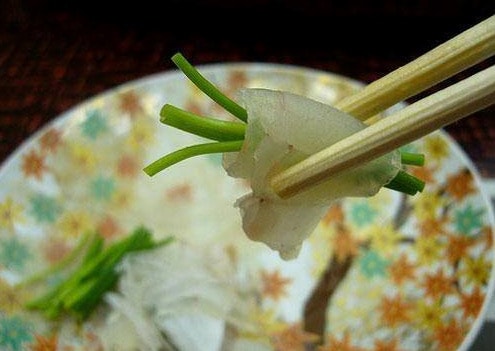
Illustrative image
2. Aw Tẩu porridge
Au Tau porridge, also known as poisonous porridge, is made from the Au Tau root. This dish, originating from Ha Giang province, is considered extremely nutritious, believed to help relax muscles and tendons, relieve muscle aches and pains, and even treat boils, especially for men as it is said to increase libido.
However, the Aconitum tuber is extremely poisonous, capable of causing the user's entire body to convulse and leading to death. To prepare this porridge, the tuber must be soaked in thick rice water, then simmered for 4-5 hours to remove the poison, until it becomes a thick, paste-like consistency. Only then is it cooked into porridge. Aconitum porridge has a rich, fragrant, spicy, and especially bitter taste, characteristic of the Aconitum tuber. It has a bitter, nutty flavor; it's difficult to swallow at first, but after a few spoonfuls, it becomes sweet, and eating more can lead to addiction.
However, if the Aconitum tuber is not soaked and simmered to remove all toxins, it can be very dangerous to health, even life-threatening if consumed.
3. Raw oysters
Oysters are a type of seafood rich in protein and zinc, easily digestible, and beneficial for the body's metabolic processes, helping to improve the health of both men and women. However, because they live in coastal and estuary areas, they can be contaminated with various bacteria and parasites, including tapeworms.
If oysters are harvested during a season when toxic algae blooms, they can become contaminated with these algae and cause poisoning and diarrhea in people who eat them raw.
According to the U.S. Food and Drug Administration, oysters are one of the foods that pose a high risk of stroke. Raw oysters contain two disease-causing viruses: Norovirus and Vibrio. Norovirus can cause enteritis and gastroenteritis, while Vibrio is a bacterium that causes cholera with symptoms such as high fever, septic shock, skin blistering, and even death due to blood infection.
People with liver disease, diabetes, leukemia, etc., are at even greater risk of severe viral infections. Only thoroughly cooking seafood, including oysters, can kill parasites and worms.
4. Fermented pork sausage (Nem chua)
Nem chua is a dish enjoyed by many for its unique flavor. It's made from raw pork mixed with roasted rice powder, garlic, and chili peppers, and after three days of fermentation, it's ready to eat. However, because it's made from pork and not cooked, nem chua can be contaminated with Streptococcus suis.
According to the Ministry of Health, symptoms of streptococcal infection in pigs include high fever, often accompanied by chills, fatigue, body aches, headache, nausea and vomiting, abdominal pain, diarrhea; in severe cases, delirium, drowsiness, coma... and can lead to death. To avoid contracting streptococcal infection, people should avoid dishes made from undercooked pork such as fermented pork sausage (nem chua), raw pork sausage (nem chạo), and blood pudding (tiết canh).
According to Young Knowledge - NM


