
6 habits of scooter riders that can easily damage their vehicles.
Seemingly harmless habits of riders, such as improper engine starting, neglecting regular maintenance, or sudden acceleration and braking, can easily cause scooters to malfunction and deteriorate during use.
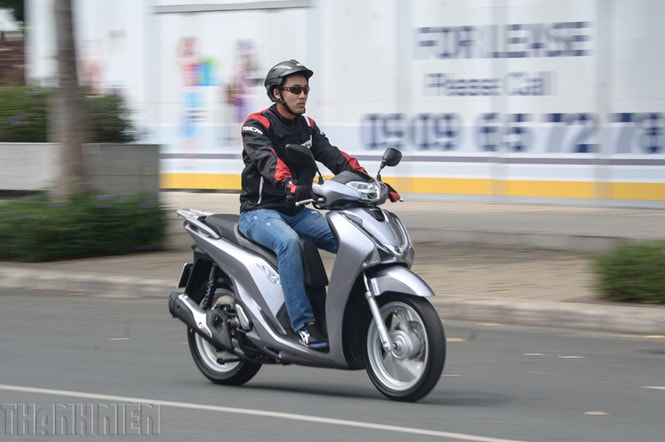 |
Seemingly harmless habits of riders can easily cause damage to scooters. |
The trend of Vietnamese consumers shifting from conventional manual motorcycles to scooters is accelerating. Compared to other models, scooters boast fashionable and modern designs, along with numerous convenient features, making them increasingly popular.
Vietnamese people are increasingly shifting from conventional manual motorcycles to scooters. |
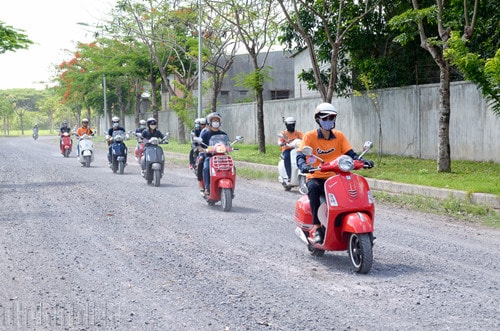
However, according to Honda's technical experts, the structure of some parts on scooters differs from that of conventional motorcycles, so during use, certain driving habits over time can easily damage and reduce the lifespan of scooter parts.
Turn the ignition key and start the engine while the fuel injection (FI) light is still on.
Starting the engine immediately after turning the key is a common habit among people who used to ride manual motorcycles when they switch to scooters.
Do not start the engine while the fuel injection (FI) light on the dashboard is still on. |
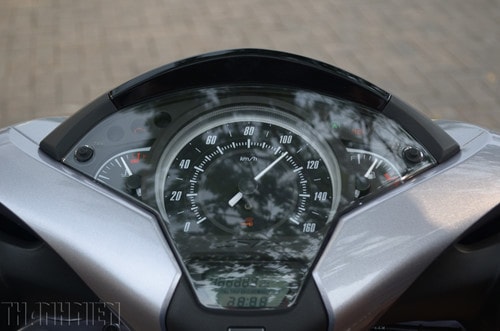
However, unlike manual transmission motorcycles, most modern scooters are equipped with engines that integrate an electronic fuel injection (FI) system. Typically, immediately after turning the ignition key, the FI indicator light, represented by an engine icon on the dashboard, will illuminate for about 2-3 seconds. This allows the vehicle time to activate, check the sensors, and fill the fuel pump with fuel, ready for starting. If the driver turns the ignition key and starts the engine before the FI light turns off, it will eventually damage the fuel pump system. Therefore, after turning the ignition key, be sure to wait for the FI indicator light to turn off before pressing the engine start button.
The car started up and went into operation immediately.
Rushing to accelerate and start the engine immediately after starting is a common habit among many motorcycle and scooter users. Over time, this practice affects the engine, reducing smoothness and often resulting in rattling noises and jerking during operation. This is because the engine operates while still cold, and the low temperature reduces the lubricating ability of the engine oil.
After starting the engine, let it run for about 2 minutes before operating. |

Typically, scooter engines have a higher RPM than geared motorcycles. Therefore, every morning after starting the engine, it's advisable to let the scooter idle for about 1 minute before riding. Additionally, riders should gently twist the throttle; when the engine runs smoothly and the sound is consistent, the scooter is ready to operate.
Accelerate and brake suddenly, just like... riding a manual transmission motorcycle.
Minimize sudden acceleration and braking when riding a scooter. |
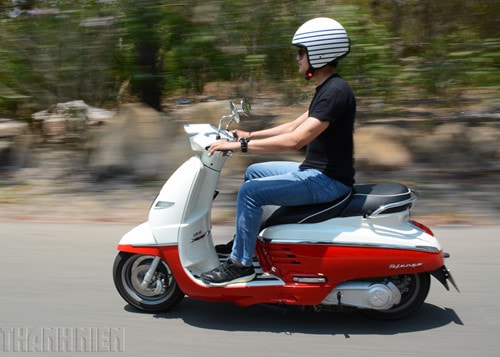
The habit of revving the engine or braking suddenly when riding a manual transmission motorcycle, if repeated frequently when using a scooter, will quickly reduce the lifespan of the clutch assembly and drive belt, and increase fuel consumption. Therefore, when using a scooter, riders should pay attention to maintaining a steady speed and avoiding sudden braking. In addition, avoid simultaneously revving the engine and applying the brakes in traffic jams or at red lights, as this will reduce the lifespan of the braking system and cause the engine to jerk.
Abusing the front brake
Instead of coordinating the use of both the front and rear brakes, many scooter riders tend to overuse the front brake when needing to slow down or in unexpected situations. Currently, most scooters use disc brakes on the front wheel. Continuously applying the front brake will cause the brake pads and disc to overheat quickly, leading to reduced braking efficiency and premature wear.
When riding a scooter, riders should pay attention to coordinating the use of both the front and rear brakes to ensure safety. |
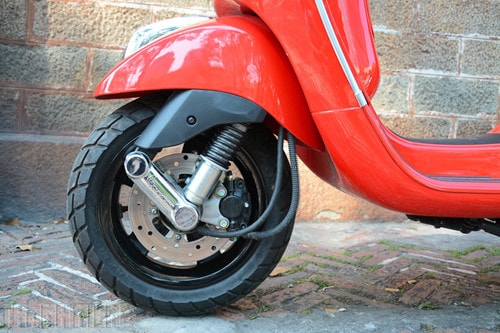
Furthermore, overuse of the front brake in unexpected situations or while traveling at high speeds can easily cause the scooter to skid, due to its small wheel diameter and short suspension travel. Therefore, with scooters, riders should pay attention to coordinating the use of both the front and rear brakes to ensure safety.
Not afraid to drive through water.
Unlike motorcycles with gears, the engine and air filter on scooters are positioned quite low, and the transmission assembly has many air vents, making it very susceptible to water ingress when driving through flooded areas. However, many people don't mind driving their scooters through water. Water submersion can damage the engine system. Furthermore, if not properly maintained, the internal components can rust.
Neglecting regular maintenance
Similar to manual motorcycles, every part of a scooter requires regular maintenance and care after a period of use. However, the reality is that many scooter users today pay little attention to cleaning the fuel injectors, fuel float, or even changing the engine oil, gear oil, coolant, or cleaning the drive belt... as recommended by the manufacturer after a period of use. Meanwhile, regular maintenance is one of the important factors determining the durability, smooth operation, and stability of the scooter.
Regular maintenance is important to minimize damage to your scooter. |
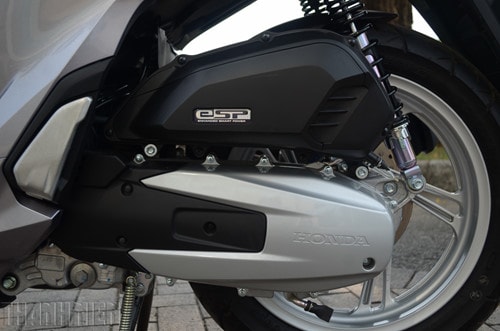
Besides some parts that need regular cleaning such as the radiator, fuel injectors, and fuel float, most components like engine oil, air filters, and spark plugs have a limited lifespan after a period of use. According to Honda technicians, the engine oil in a scooter should typically be replaced after approximately 1,000-1,500 km of operation, and the gear oil should be changed after every three engine oil changes. After about 10,000 km, the fuel injectors should be cleaned, and the air filter and coolant replaced.
To minimize damage and ensure the smooth operation of their scooter, users should pay attention to regular maintenance schedules, avoiding systemic problems that can lead to time-consuming and costly repairs.


