
6 key concerns in building materials production
Building materials are considered the bridge between the industry and the construction sector. The production of building materials currently faces several issues that need attention.
The first issue, which is both a positive outcome and a current problem, is that the growth rate of construction materials is generally higher than the growth rate of the construction industry's output value.
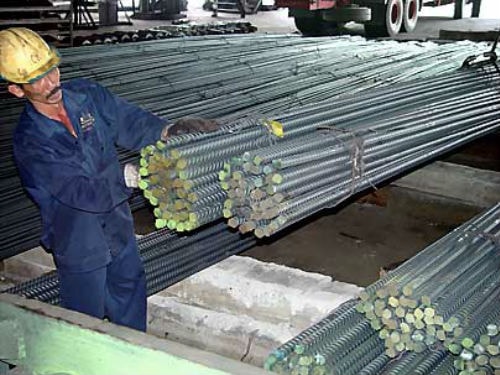
However, there have also been times when production has exceeded demand, and the volume of imports of some building materials remains high, especially basic materials such as iron, steel, tiles, furniture, and the prolonged freeze in the real estate market has led to an oversupply, resulting in reduced consumption of building materials and consequently a decline in production over the past few years. Specifically: fired bricks decreased by 1.6% in 2011; rolled steel decreased by 3.9% in 2011 and 5.5% in 2012; cement decreased by 3.1% in 2012,…
Secondly, most businesses are not utilizing their full production capacity, resulting in low capacity utilization rates. According to Dr. Tran Van Huynh, Chairman of the Vietnam Building Materials Association, the capacity utilization rate for construction glass is below 50%, non-fired building materials below 55%, ceramics below 70%, and cement below 80%... While some building materials production facilities are not operating at full capacity, some newly established facilities are not only facing production difficulties but are also heavily indebted due to construction investment capital…
The third issue relates to scale and technological equipment. Besides a few large-scale factories with advanced technology, the majority of other building materials factories are small-scale, use outdated technology, consume a lot of raw materials and energy, cause environmental pollution, and have low efficiency and competitiveness compared to imported goods, despite having cheaper labor and not incurring transportation costs from abroad…
The fourth issue is that environmental protection has not received sufficient attention, not only in terms of fuel-intensive technologies as mentioned above, but also in the slow adoption of non-fired building materials to replace fired clay bricks and tiles (in 2012, over 19 billion fired clay bricks were still produced; in the first five months of 2013, although production decreased by 2.9% compared to the same period, it still reached nearly 6.6 billion bricks; in 2012, over 560 million fired tiles were still produced). The exploitation of sand (not only for domestic use but also for export), gravel, and pebbles amounts to around 60 million cubic meters annually, but poor management has caused landslides in many areas.
The fifth issue is planning. The construction materials industry is resource-intensive, using a lot of natural resources and energy. The extraction and production processes can easily have negative impacts on the environment, so planning is very important. The national master plan is not detailed enough; plans in some localities are either non-existent or overlap with the national plan; and even when plans exist, development does not follow them.
Sixth, in the first five months of 2013, the production of building materials in general increased at a faster rate than the entire industry (such as cement increasing by 7.4%, rolled steel by 17.4%, steel bars and angles by 7.4%...). This may be due to building material manufacturers increasing production to capitalize on the opportunity presented by the more positive signs in the construction and real estate markets. This is also good news for businesses and workers in the aforementioned sectors. However, attention needs to be paid to restructuring this industry in terms of planning, technology, efficiency, and competitiveness to prevent imported goods from taking market share.
Theobaocongthuong - PH


