
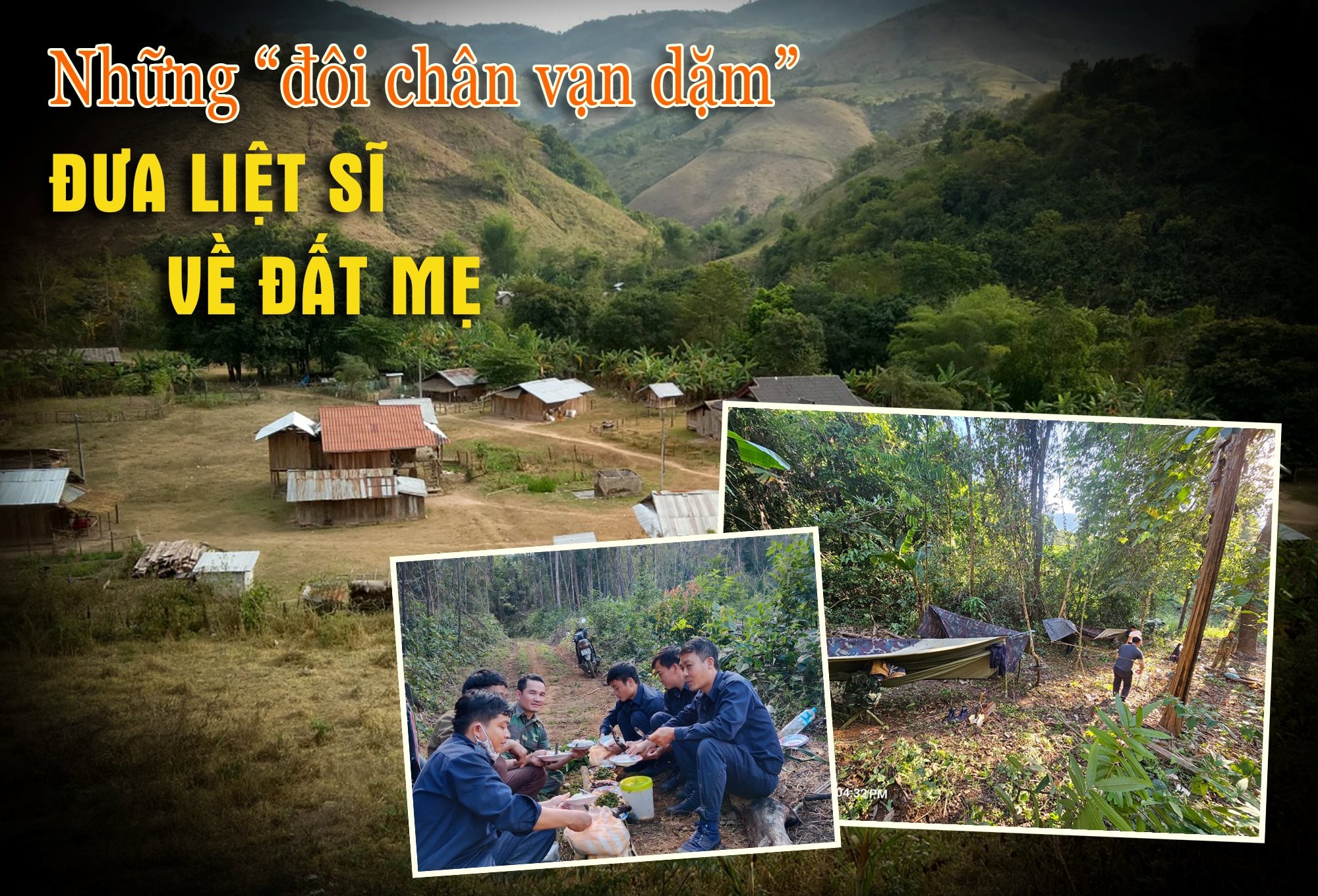
Lesson 2: A Journey Without Stopping
With backpacks on their shoulders, bucket hats on their heads, and digging tools in their hands, the soldiers involved in the repatriation effort leave their families and hometowns for months at a time to carry out their mission. Clearly aware that this is a major policy of the Party and State, and the heartfelt aspirations of the entire nation, they brave harsh weather, disease, and live in makeshift shelters in the forest to gather information, search for, and exhume the remains of fallen soldiers who bravely sacrificed their lives for the noble cause of international duty. All are united in writing a journey that never stops…
A PERSON SEARCHING FOR MARTYRS
BECOME A MARTYR AGAIN…
Even now, Ms. Nguyen Thi Phuc (born in 1969) still hasn't gotten over the loss of her husband, Hoang Van Quang (born in 1964), a martyr who died while on a mission to collect remains in Laos in 2004. A native of Nghi Huong commune, Cua Lo town, Mr. Quang possessed the upright character and unwavering spirit characteristic of coastal people. Therefore, throughout his work searching for and collecting the remains of martyrs, he dedicated himself wholeheartedly to overcoming all difficulties, with the sole desire to complete his assigned task to the best of his ability.
In 2004, while excavating rocks and soil in the high mountains of Xieng Khouang province to search for the remains of fallen soldiers, a heavy rainstorm struck. As he was moving to a sheltered spot, he was unfortunately struck by lightning and passed away. His comrades brought him back, their hearts aching, for just moments before he had been there, chatting and working enthusiastically, and now he lay motionless. He had been searching for fallen soldiers, but ultimately became a fallen soldier himself in a foreign land.
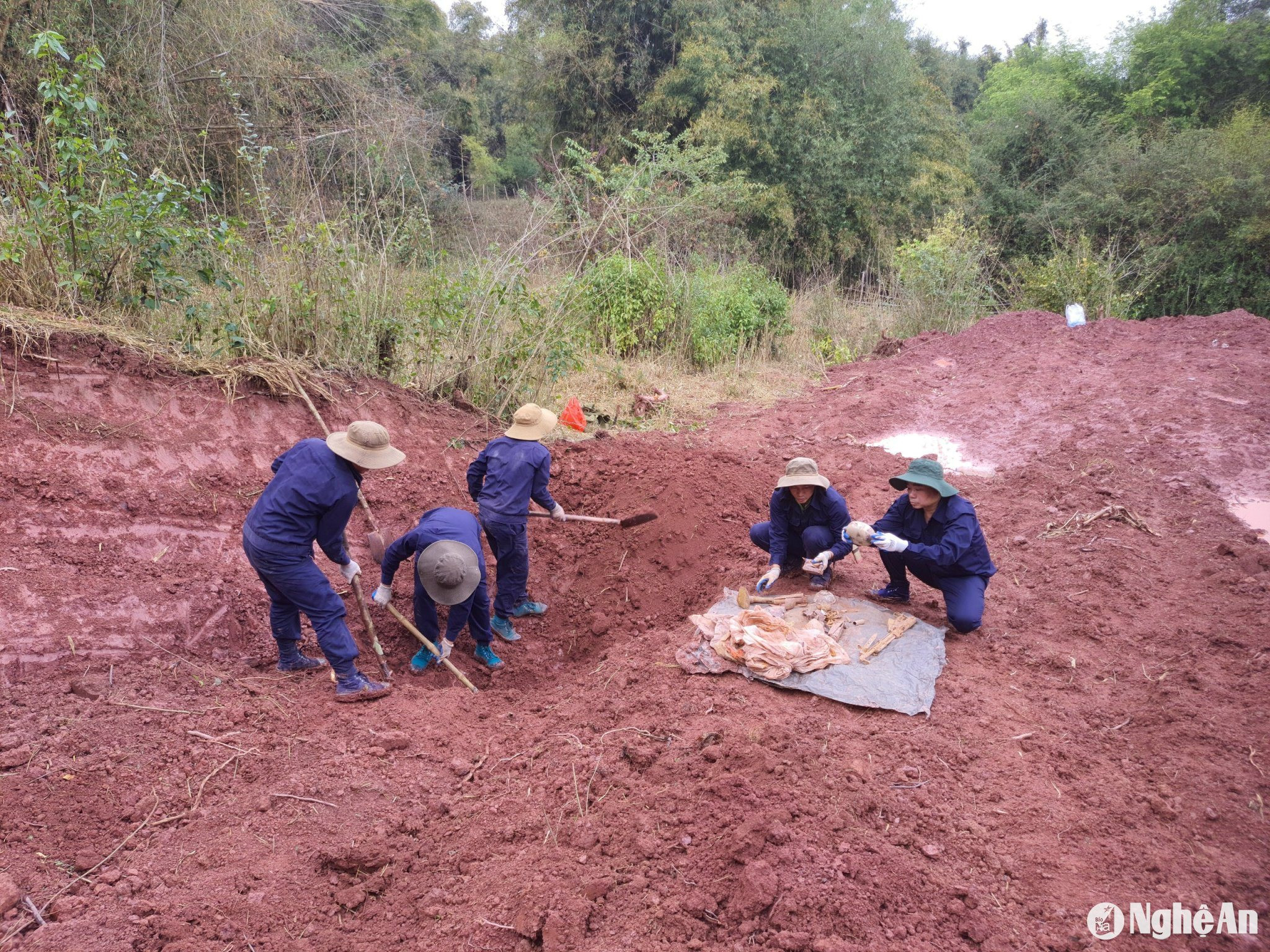
This was not the only loss the soldiers of the Remains Collection Team had to endure, as during the mission, 9 comrades sacrificed their lives and 13 were wounded, and 26 suffered from serious illnesses, bearing the burden of lifelong disabilities. On the Lao side, 5 comrades sacrificed their lives and 9 were wounded. However, overcoming all obstacles and upholding their vow to bring the fallen soldiers back to their homeland, the officers and soldiers of the Remains Collection Team steadfastly continued their journey.
SILENT SACRIFICES
“The repatriation process doesn’t always yield the planned results. We even face more failures than successes,” shared Major Duong Duc Nhan (born in 1984), a repatriation officer from the Repatriation Team of the Nghe An Provincial Military Command.
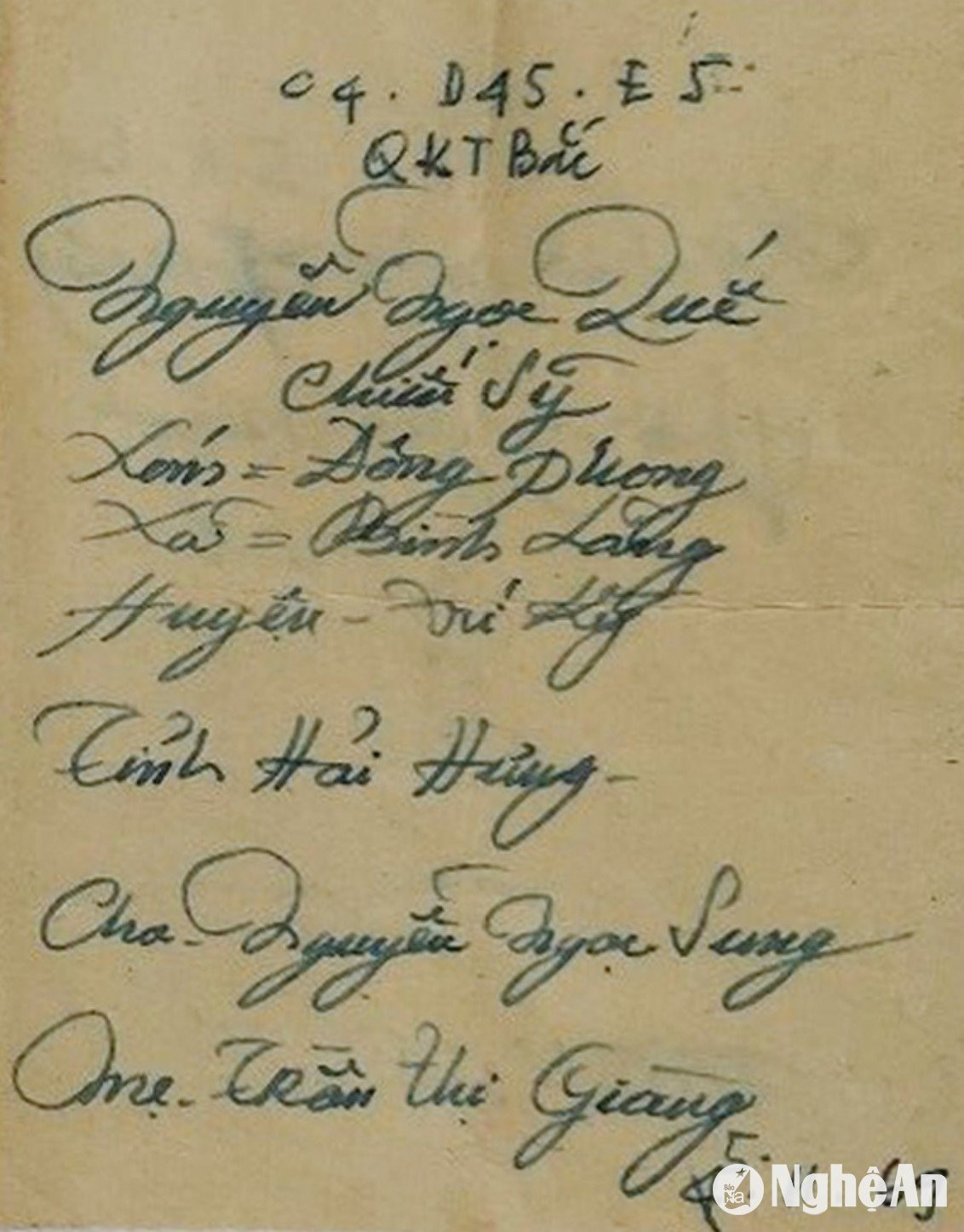
He continued by recounting his recent experience during a 10-day search from March 31st to April 10th, 2024. At that time, officers and soldiers in the unit received information from a veteran from Duc Tung commune, Duc Tho district, Ha Tinh province, who had fought and buried three fallen comrades in Laos. He stated that the burial site of his comrades was in Thom Lung commune, Pha Xay district, Xieng Khouang province, Laos.
With valuable information, the Search and Recovery Team dispatched a group of nine comrades to the location to conduct the search. However, after five days of digging through mountains and rolling rocks to search, they were still unable to find their comrade. Because the terrain had been eroded and deposited by rain and floods over a long period, the search area had changed significantly or completely erased all traces, making it very difficult for witnesses to accurately identify the location. And that was just one of many failures that the officers and soldiers of the Search and Recovery Team had to endure.
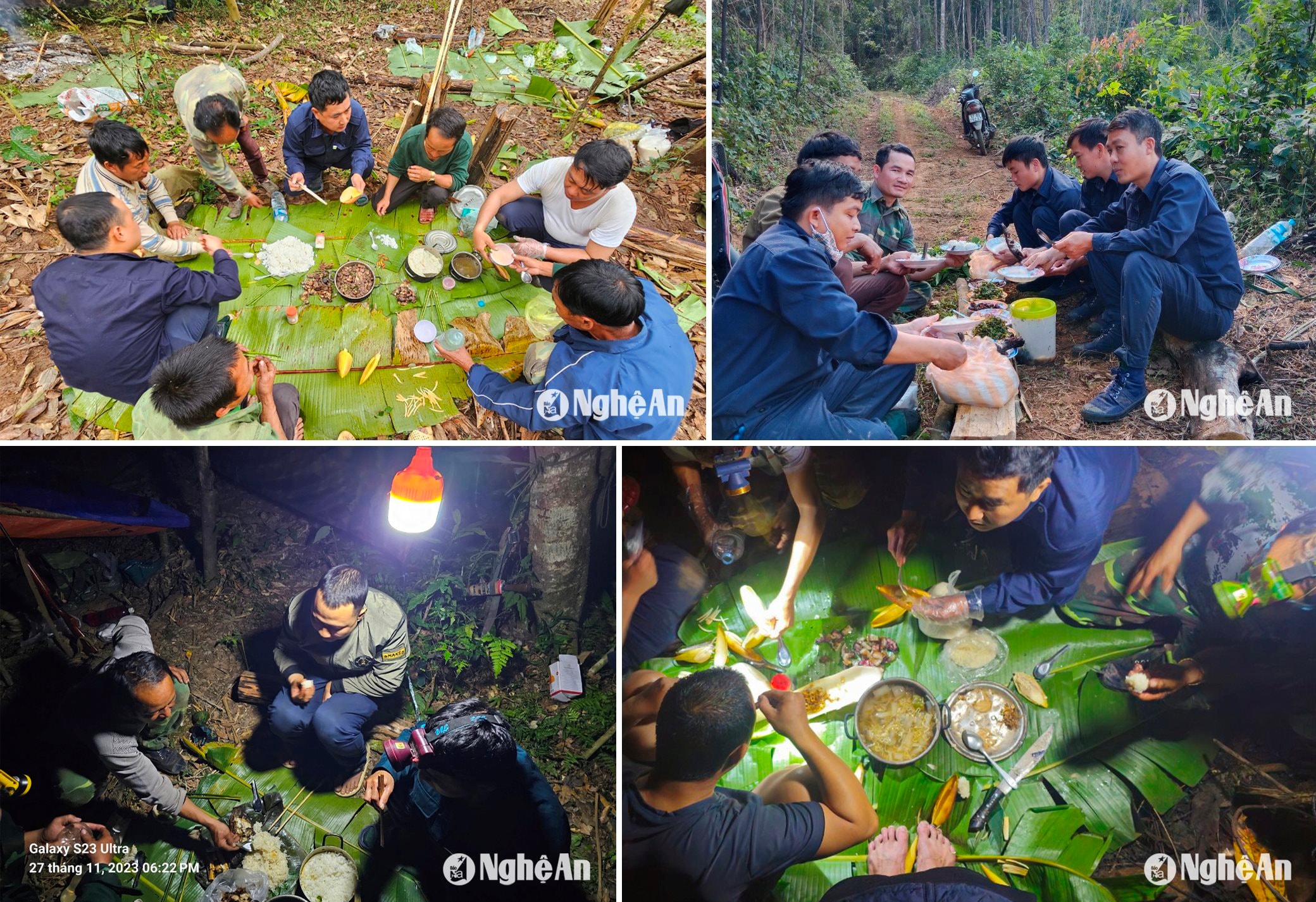
The passage of time has made the task of collecting the remains of fallen soldiers even more difficult. Information about the location, site, and terrain has changed over time due to harsh weather and climate, or due to farming practices by the local people over the years, causing the graves to be washed away or leveled, leaving no trace. Some locations are now inhabited by large, dense forests that no longer match the provided maps, or in rocky mountain caves that have been buried under thousands of tons of earth and rocks by bombs. Furthermore, surviving witnesses are aging and frail, lacking the mental capacity to accurately remember the burial places of the fallen soldiers. Meanwhile, the battlefields where the soldiers lie are often in rugged, complex mountainous areas with extremely difficult roads, high passes, and deep ravines. To carry out the work of searching for, excavating, and collecting the remains of fallen soldiers, it is mainly necessary to march on foot, sometimes hundreds of kilometers, in many places still containing unexploded bombs, mines, and chemical weapons left over from the war, thus facing countless dangers.
Our "baggage" consisted of a few essential supplies, a hammock, a hoe, a shovel, but most importantly, our manpower and the camaraderie we felt for those who had fallen. Many graves took years to find, sometimes requiring us to dig 2-3 meters deep, hundreds of meters down.3Using only rudimentary tools, they finally found the exact spot where the fallen soldiers were buried.
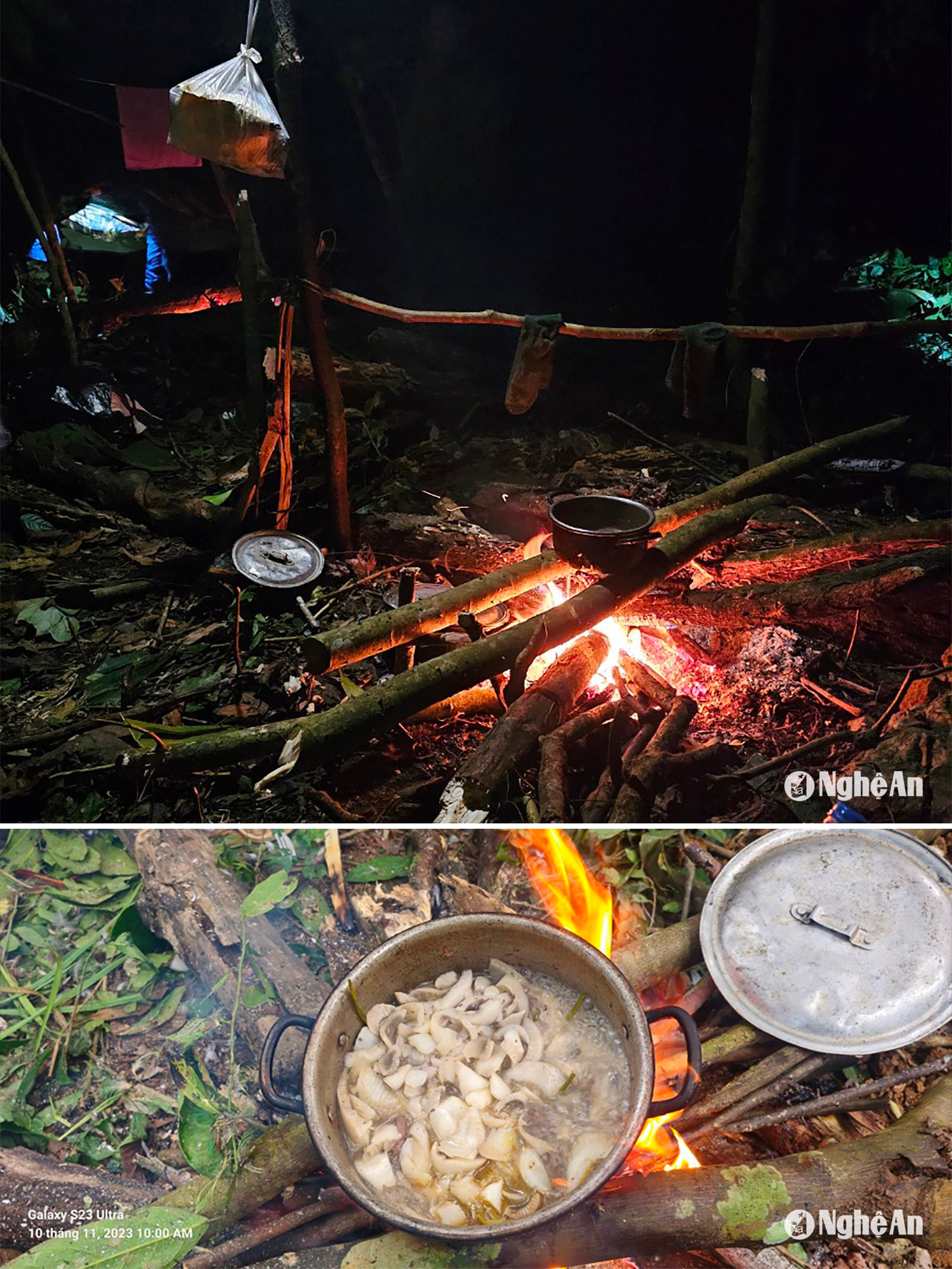
“Whenever we discover the graves of fallen soldiers, we are moved to tears, filled with emotion. Some graves only contain a few bone fragments or pieces of cloth, or scraps of Vietnamese soldiers' uniforms, without a single name, address, or other information. Then, each of us meticulously carries out our tasks, carefully removing layers of soil and rocks to excavate the remains, cleaning them with alcohol, measuring, and meticulously recording each bone fragment and artifact to ensure the remains are as intact as possible, because they are the soul, the flesh and blood of our heroic martyrs. Perhaps that is the spiritual strength that allows us to overcome difficulties and fulfill the sacred tasks entrusted to us,” Major Duong Duc Nhan shared.
CONTINUING THE JOURNEY WITHOUT TIRES
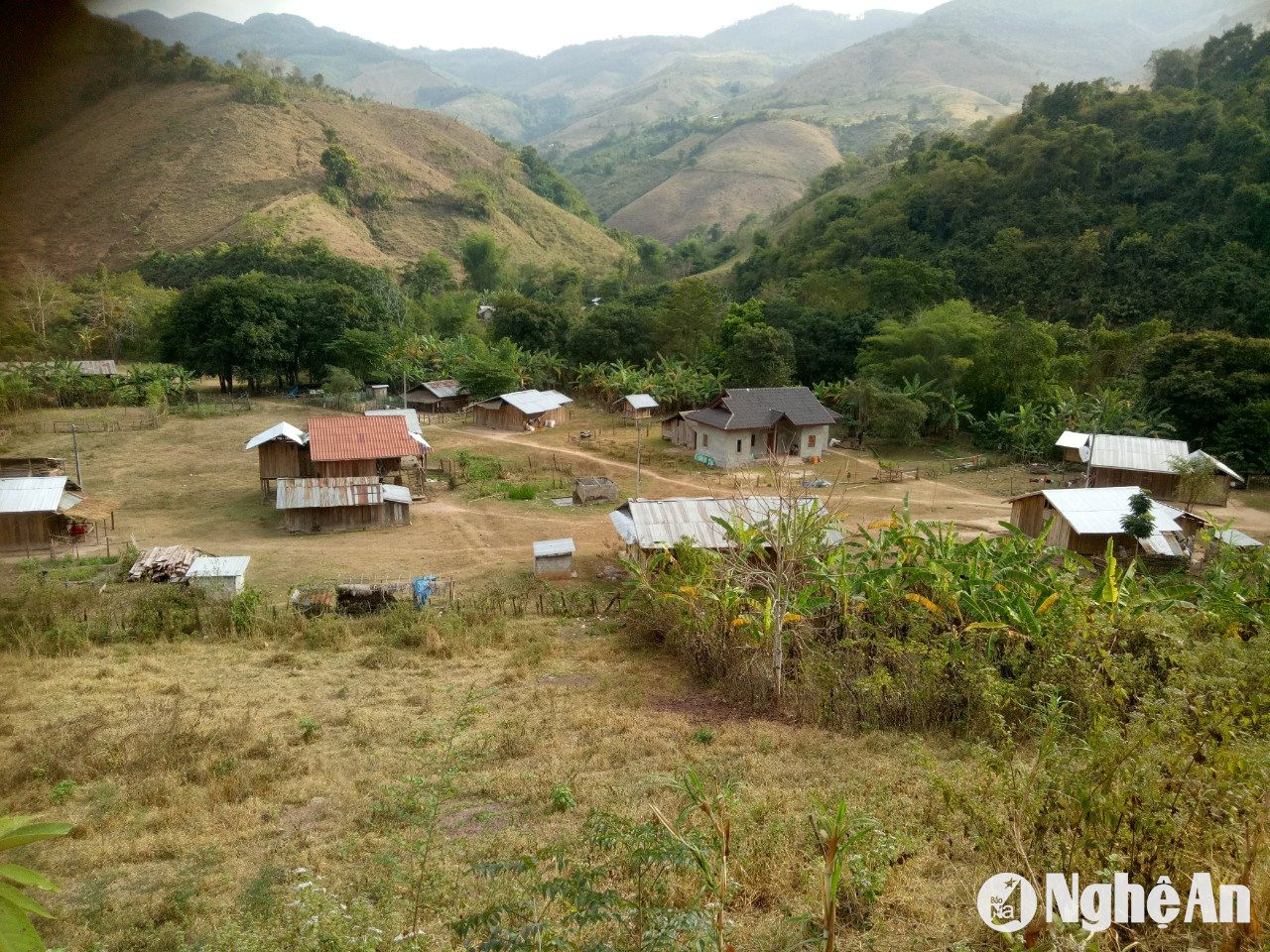
Lieutenant Colonel Che Ngoc Ha, Team Leader of the Search and Collection Team, Nghe An Provincial Military Command, shared that, in parallel with the task of searching for and collecting the remains of fallen soldiers, Team K72 always focuses on military diplomacy, people-to-people diplomacy, and civilian outreach in the spirit of "each officer and soldier is an ambassador of peaceful culture." Officers and soldiers of Team K72 always maintain a strong relationship of solidarity with the government, specialized committees, armed forces, and people of the neighboring country. Strengthening their presence in the area, the Search and Collection Team has divided its resources into smaller units, focusing on deep integration and effectively implementing the "four together" principle: "Eating together, living together, working together, and speaking the Lao language together" to integrate and understand local customs and traditions, and to grasp the political and security situation of the locality.
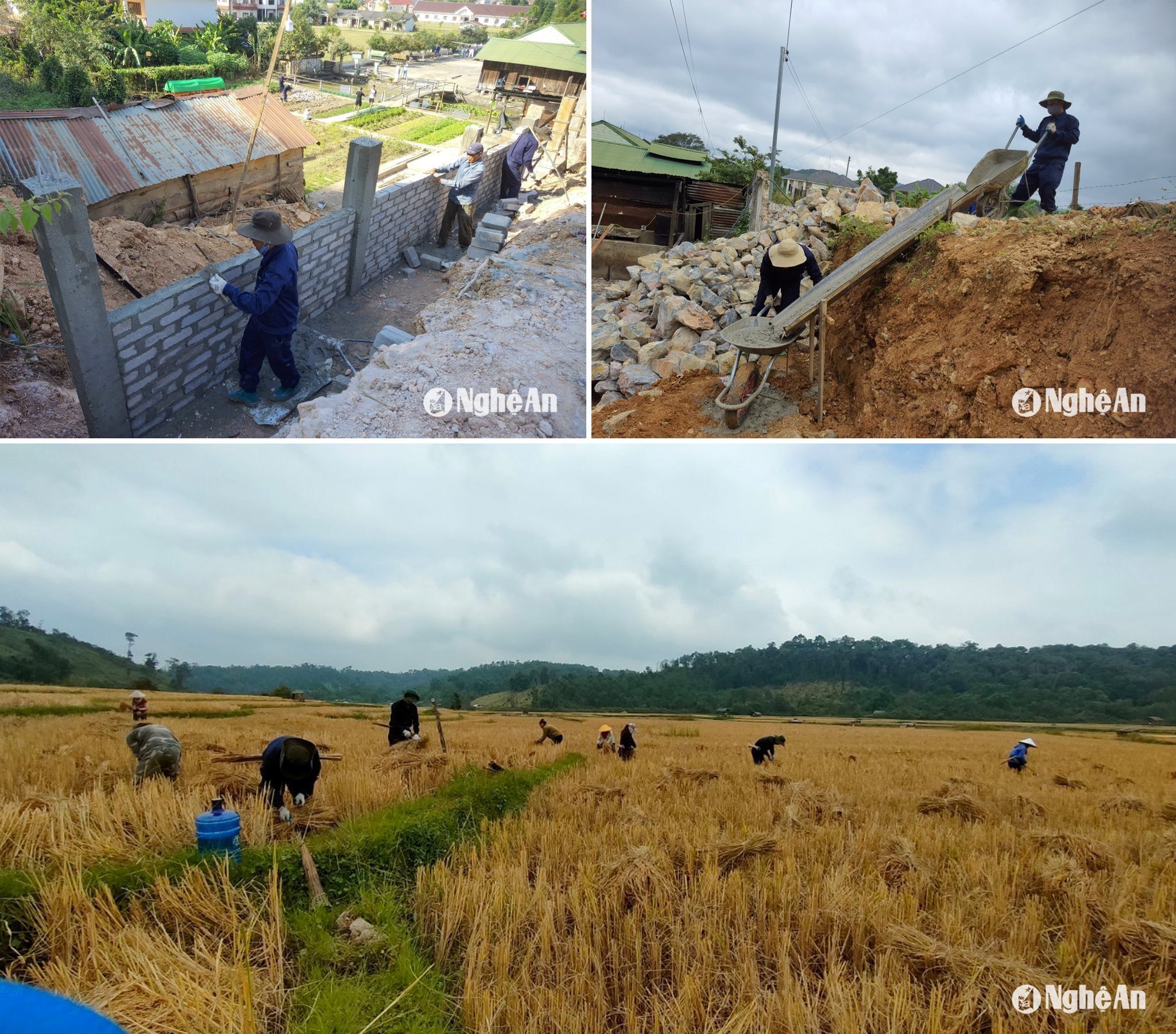
At the same time, the team also coordinated and promoted the implementation of the project to help the armed forces of the neighboring country organize medical examinations and treatment, distribute medicine, and donate clothes to the people, benefiting more than 4,300 people; visiting and giving gifts, helping people harvest hundreds of hectares of fields; cleaning village roads, repairing cultural centers and houses for the people.
These specific actions have contributed to economic and social development, helping the people of neighboring provinces stabilize their lives, maintain political security in the area, and strengthen the special solidarity and friendship between the Vietnamese and Lao peoples in general, and between Nghe An province and Xieng Khouang, Vientiane, and Xaysomboun in particular. This serves as a foundation for building trust among the armed forces and people of neighboring provinces in guiding, protecting, and providing information about the graves of fallen soldiers in the most accurate and effective way.
During the 2023-2024 dry season alone, the Search and Recovery Team of the Nghe An Provincial Military Command surveyed, searched for, excavated, and recovered 87/80 remains of fallen soldiers, achieving 108.7% of the plan. Specifically, in Xieng Khouang province, 75/71 remains were recovered (105.6%); in Vientiane province, 3/3 remains were recovered (100%); and in Xaysomboun province, 9/6 remains were recovered (150%).
Following those efforts, in 2021 the Recovery Team was awarded the Third-Class Military Merit Medal by the President of Vietnam, and received Certificates of Commendation from the Prime Minister, the Minister of National Defense of Vietnam and Laos, and the People's Committees of four provinces (Nghe An, Xieng Khouang, Vientiane, and Xaysomboun) for many consecutive years.
The 40-year journey of the Remains Recovery Team will continue, as countless families still ache with the unceasing sorrow of losing loved ones on the battlefield, yet to return to their homeland. The feet of the officers and soldiers will move forward together, fulfilling the orders from the hearts of soldiers in peacetime!


