
A herbal steam remedy for relieving colds.
This herbal steam bath remedy uses familiar and easily available leaves and roots.
When should you take a steam bath? When you have "water poisoning," your body feels achy, you are sensitive to wind and cold, accompanied by a runny nose, sneezing, or fever without sweating, then you should take a steam bath.
What to use for steaming? Use several types of fresh leaves and herbs, wash them thoroughly, boil them, and use the resulting steam for steaming. The main groups of leaves for steaming are as follows:
- Leaves that have a cooling effect include: bamboo, fig, star fruit...
- Leaves with antibacterial properties: onions, garlic leaves or bulbs, papaya, mango, mugwort, etc.
A herbal steam remedy for relieving colds.
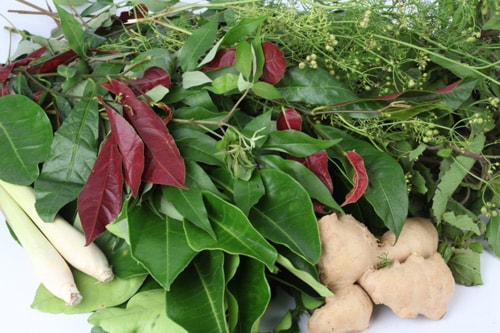 |
- Leaves containing essential oils: five-fingered plant, purple basil, lemongrass, lemon, grapefruit, eucalyptus, mint, basil, betel leaf, ginger leaves or roots…
Depending on local conditions, it's not necessary to have all the types of leaves listed in the recipe; just a few types like bamboo leaves, pomelo (or lemon) leaves, papaya leaves, lemongrass, betel leaves, mugwort, and fresh ginger root are enough to make a steam bath.
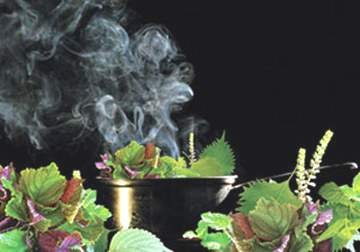
How to prepare herbal steam baths? Fill a pot with water 2/3 full, adding the leaves that help reduce fever first. When the water is almost boiling, add the leaves with antibacterial properties, and finally, add the essential oil leaves. Don't add all the leaves at once, as essential oils evaporate easily and this will reduce their therapeutic effect. Maintain a moderate heat, keep the pot tightly covered, and once the water boils again for 2-3 minutes, remove from the heat and begin steaming immediately.
How to use the steaming method:The steam room needs to be airtight. When the pot of steaming water is about to boil, have the patient remove their outer clothing. The patient should sit on a flat surface, cross-legged or with their legs to one side, head held high, tilted to one side to avoid the hot steam blowing directly into their face. Place the pot of steaming water in front of them, cover themselves with a blanket, and slowly open the lid slightly to allow the steam to escape, ensuring the temperature is comfortable. Breathe deeply and forcefully to allow the essential oils to penetrate deep into the alveoli. The steaming time should be about 10-15 minutes. Afterwards, remove the blanket and wipe away the sweat with a clean, dry towel. You can take a cup (about 50ml) of the clear water from the pot of steaming water for the patient to drink, and add warm water to the pot until it reaches 37-38°C. Then, bathe in a draft-free room, dry the body, and put on clean clothes. For elderly patients, those with chronic illnesses, or those with general weakness, a caregiver should sit behind them to support their shoulders and prevent them from falling.
 |
After steaming, a bowl of porridge is needed to relieve cold symptoms; cook plain rice porridge, pour it into a bowl, add purple basil, thinly sliced onions and garlic, pepper, season to taste, and a beaten egg yolk. Eating it hot will help the patient recover quickly.
Some things to keep in mind when using a sauna.The method of steaming with boiled leaves can help patients recover quickly, but it's not always suitable. Steaming with leaves should only be used during the first 1-2 days of illness. At this time, toxins and harmful winds are still present in the lower extremities, so steaming helps to expel them. If the cold has spread deeply into the body, steaming should be avoided; other appropriate treatment methods should be used instead.
This therapy should not be applied to people who sweat excessively, are dehydrated, have lost a lot of blood, are dizzy, are elderly and confused, have skin diseases, are seriously ill or recovering from illness, have high blood pressure, cardiovascular disease, pregnant women, or children under 12 years old.
During the steaming process, if you experience shortness of breath, chest tightness, dizziness, weakness, etc., stop immediately. In case of severe shock, take the patient to the hospital for emergency treatment. If the patient has a high fever or convulsions due to infection (such as sore throat, cough, injury, infection, etc.), they should not use steam therapy without consulting a doctor and should seek medical attention.
According to Health and Life


