
What do you know about 'supermoons'?
(Baonghean.vn) - The supermoon that appeared tonight (November 14th) this year is the largest supermoon in nearly 68 years and will reappear on November 25th, 2034. So what is a supermoon? Do you understand anything about supermoons? Below are some discoveries about the supermoon phenomenon.
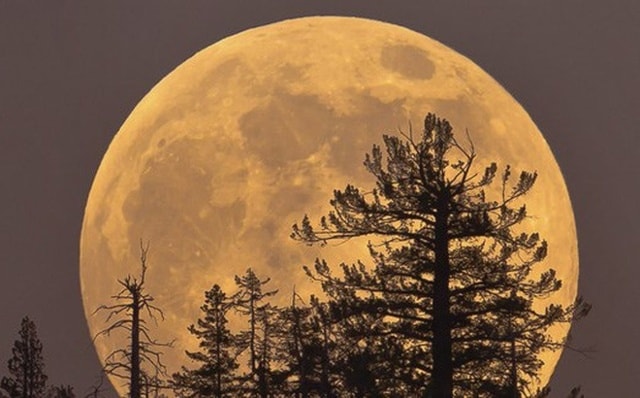 |
| The largest supermoon of the 21st century will appear on November 14, 2016. |
1 - What is a supermoon?
A supermoon is a term used to describe the Moon's closest point to Earth during its orbit around the Earth. According to the National Aeronautics and Space Administration (NASA), the Moon orbits in an elliptical shape, with one end called the perigee (the point closest to Earth). This point is 48,280 km closer to Earth than the end called the apogee (the point farthest from Earth).
The time when the Sun, Moon, and Earth are aligned is called syzygy (new moon day). When perigee coincides with the new moon day, the Moon appears much larger and brighter than usual and is called a supermoon or perigee full moon.
During a supermoon, the Moon is at its closest point to Earth, approximately 360,000 km away. A supermoon will appear 14% larger and 30% brighter than when the Moon is at its farthest point from Earth in its orbit.
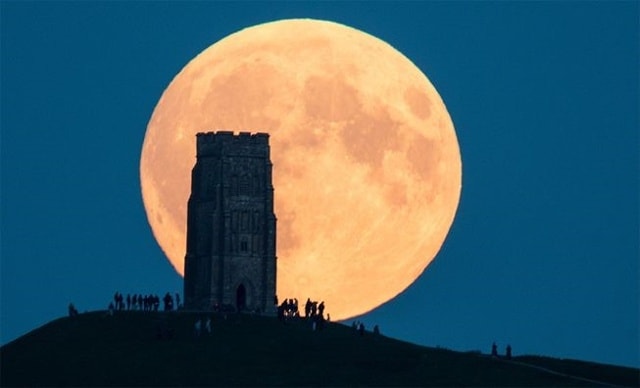 |
| The Moon will reach perigee at 8:52 AM Eastern Standard Time on November 14th (EST, 8:52 PM Hanoi time on November 14th), and the full moon will peak approximately 2-3 hours later. Photo: Getty. |
2 - A supermoon occurs once a year.
Supermoons occur about once a year, possibly more often, and are visible in both the northern and southern hemispheres. This year's supermoon on November 14th is the largest supermoon of the 21st century. If you miss it this Monday night, you'll have to wait until November 25th, 2034, for another chance to see such a large supermoon.
3 - Supermoons do not affect Earth or humans.
A supermoon occurs when the moon is at perigee – the point in its orbit that brings it closest to Earth – and is in its fullest phase. Supermoons are a normal phenomenon because the moon moves in an elliptical orbit, and it will not affect Earth's orbit.
Studies also indicate that full moons of all kinds do not affect human behavior. Full moons and supermoons do not cause mental disorders, psychological disturbances, motives for murder, or any other crimes, as some theories have suggested.
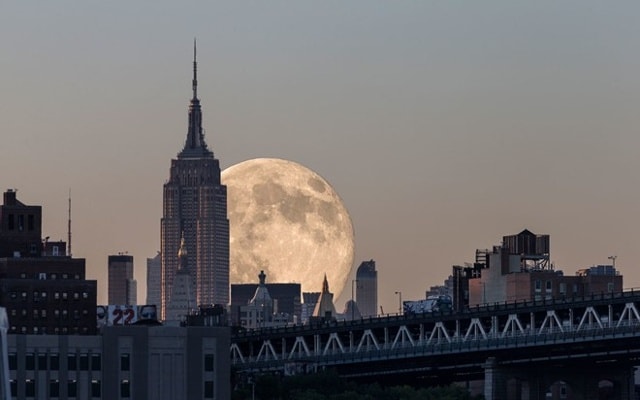 |
| Following November 14th, the third supermoon of the year will appear on December 14th, but it will not be as large or bright. Photo: Getty. |
4 - Not all supermoons are the same.
The perigee (the point between the Earth and the Moon) can vary by an amount equal to the Earth's diameter in any given month. While this may sound like a large number, on average, the Moon is about 30 times the Earth's diameter away from our planet. The Sun's gravitational pull is the cause of this orbital variation.
5 - Winter supermoons look bigger.
Does the moon look bigger in winter? Yes. The Earth is closest to the sun in December each year, meaning the sun's gravitational pull draws the moon closer to our planet. Because of this effect, the largest supermoons always appear in winter.
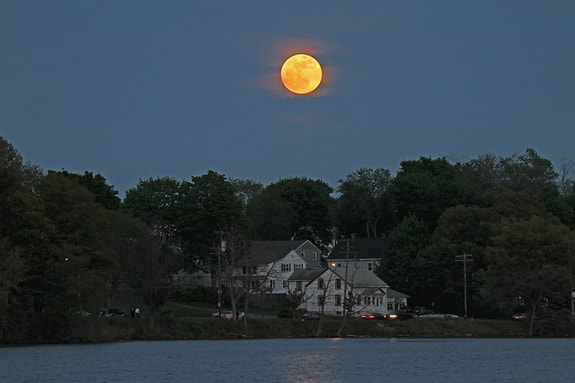 |
| Supermoon on May 5, 2012 in Woburn, Massachusetts. |
6 - Supermoons do cause changes in tides, but not very significant ones.
A supermoon may have some effect on tides, but it certainly won't cause any natural disasters. The full moon causes the tides to rise slightly higher than usual. A supermoon only increases the tide by about 2.54 cm...
7 - Future supermoons will be smaller.
Because the moon is slowly moving away from Earth at a rate of about 3.8 cm per year, future supermoons will appear smaller than they do now.
Scientists estimate that when it first formed, the moon was about 22,530 km from Earth, but today it is an average of about 384,402 km away.
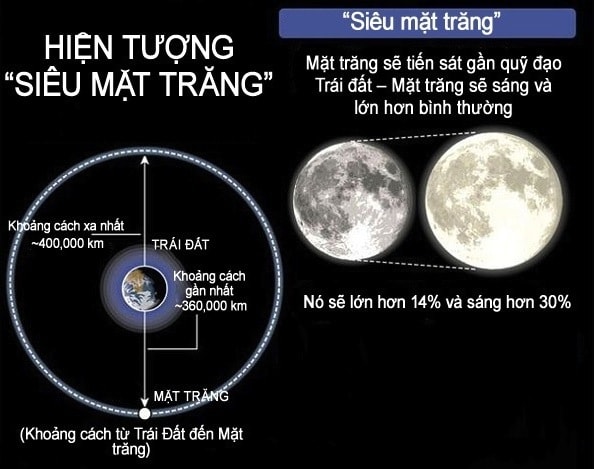 |
| The Moon's orbit around the Earth (image from thuvienvatly). |
8 - Supermoon in Vietnam on November 14, 2016
According to Sciencealert, on November 14, 2016, the Moon appeared closest to Earth since 1948, allowing astronomy enthusiasts to admire images of the supermoon. This special event shouldn't be missed, as you'll have to wait another 18 years until November 25, 2034, to see it again.
According to experts, this is the third supermoon of the year, but it is the most impressive, largest, and most anticipated. In Vietnam, we can also observe the supermoon phenomenon. The peak will occur at 7:52 PM on November 14, 2016.
Peace
(Synthetic)
| RELATED NEWS |
|---|


