
Ensuring citizens' freedom of the press and freedom of speech.
The draft Law on the Press (amended) will be submitted by the Government to the National Assembly on the afternoon of November 4th. This amendment aims to develop the press while ensuring its effective management; guaranteeing the freedom of the press and freedom of expression in the press for citizens; and establishing enforcement mechanisms to ensure that no one abuses the freedom of the press and freedom of expression in the press to infringe upon the interests of the State, or the legitimate rights and interests of organizations and individuals.
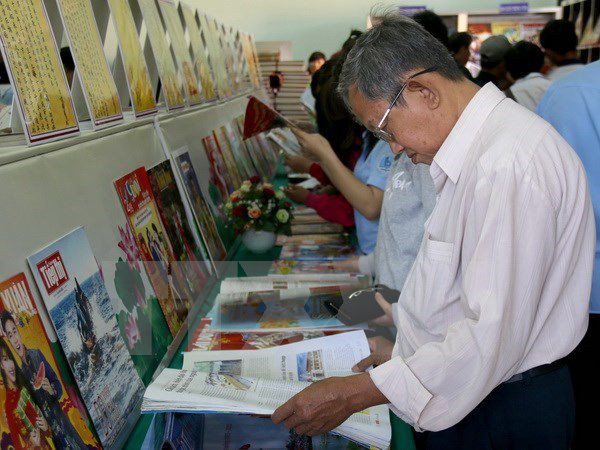 |
| Illustrative image. |
The government affirms that the amendment to the current Press Law is to implement the 2013 Constitution and to ensure that the current legal provisions on the press are consistent with the new requirements set forth by the 2013 Constitution. These include ensuring the exercise of the right to freedom of the press and freedom of expression in the press for citizens; the right of the press to access information; the responsibility of agencies and organizations in providing information to the press; and acts and content prohibited from being reported in the press to ensure "respect for the rights or reputation of others; protection of national security or public order; health or social morality."
The 2013 Constitution stipulates the principle that "human rights and civil rights... are recognized, respected, protected, and guaranteed according to the Constitution and laws" and affirms that these rights "can only be restricted by law in necessary cases for reasons of national defense, national security, public order, social safety, social morality, and public health" (Article 14).
According to international law, freedom of the press (essentially the freedom of expression of citizens through the press) is a limited right, and restrictions on this right need to be specifically stipulated in law when necessary, as prescribed in Article 14 of the 2013 Constitution. Therefore, the amended Press Law needs to establish regulations on the freedom of the press and the freedom of expression in the press for citizens based on the implementation of Articles 14 and 25 of the 2013 Constitution.
Over the past 16 years of implementation, the Press Law and its guiding documents have created a legal framework for the remarkable development of journalism and related activities. The people's right to freedom of the press and freedom of expression in the press has been guaranteed and promoted within the framework of the 1992 Constitution and laws; Vietnamese journalism has developed strongly in terms of quantity, types, and quality of information, thereby effectively serving the cause of national construction and defense.
However, recent journalistic practices have revealed worrying issues such as media outlets failing to adhere to their principles and objectives; the increasing prevalence of false information; the slow pace of "commercialization"; and the continued dissemination of information that violates moral standards. Much of the information in the press lacks selectivity, focusing heavily on the negative aspects of society; many news articles are sensationalist and attention-grabbing; and the integrity of journalism has declined.
Regulations concerning the rights and obligations of journalists, the responsibilities of heads of media organizations, prohibited acts, providing information to the press, the role of state management, and the role of press agencies... have not kept pace with emerging issues in journalistic practice, and have not effectively enhanced the efficiency of state management of the press in the current period; regulations on freedom of the press and freedom of expression in the press exist, but the mechanisms for guaranteeing these rights are not yet specific.
In practice, many issues in journalism have gone beyond legal regulations, such as media outlets operating in various formats, collaboration in journalistic activities, the economics of journalism, and the naming and responsibilities of the head of a media organization. Furthermore, regulations concerning journalism are scattered and overlapping across many documents, requiring codification and inclusion in law to enhance their legal validity and facilitate implementation.
To overcome the limitations and shortcomings of the press and to strengthen the Party's leadership and improve the effectiveness of state management of the press, the Politburo issued Notices No. 162-TB/TW, No. 41-TB/TW, and No. 68-TB/TW on some measures to strengthen leadership and management of the press; the Prime Minister issued Directive No. 37/2006/CT-TTg dated November 29, 2006, on implementing the Politburo's conclusions on some measures to strengthen leadership and management of the press, which assigned the Ministry of Culture and Information (now the Ministry of Information and Communications) to "conduct a review of the implementation of the current Press Law to make recommendations and proposals for appropriate amendments and additions."
In particular, one of the tasks outlined in the section on press work of the Resolution of the 5th Plenum of the 10th Central Committee on ideological, theoretical and press work in the face of new requirements clearly states: "Research and supplement the Law on the Press and related legal documents." These are the reasons why the Law on the Press needs to be comprehensively amended and supplemented to meet the requirements of developing and managing press activities in the new situation.
The draft Law on Journalism (amended) is being developed to ensure the Party's leadership and the State's management of the press; to maximize positive aspects and minimize shortcomings and weaknesses in journalistic activities; to ensure the uniformity and consistency of the legal system on journalism, based on the codification of existing legal regulations on journalism; and to ensure the feasibility of legal regulations on journalism in the political, economic, social, and journalistic context of Vietnam.
The 1989 Press Law consists of 7 chapters and 31 articles; the 1999 Law amending and supplementing certain articles of the Press Law has 36 articles. This draft Press Law comprises 6 chapters with 60 articles, including 31 newly drafted articles and 29 articles amending and supplementing the provisions of the current Press Law.
According to the program, on the afternoon of November 14th, National Assembly delegates will discuss the draft Law on the Press (amended) in their respective groups, and on November 26th, they will discuss it in the plenary session.
According to Vietnamplus
| RELATED NEWS |
|---|


