
Alarm raised over rat infestation in Ky Son.
(Baonghean.vn) -According to records from the authorities of many communes in Ky Son district, the area of upland rice cultivation...The damage caused by rats may have reached hundreds of hectares.
There were more rats than ever before.
According to information from the Bảo Nam commune authorities in Kỳ Sơn district, the rat infestation has been occurring for the past 3-4 weeks, but the level of damage is alarming due to the unprecedented number of rats. All 10 villages in the commune are affected by rat damage to crops, mainly upland rice. Currently, Bảo Nam has 650 hectares of upland rice, which is the main food source for the local people.
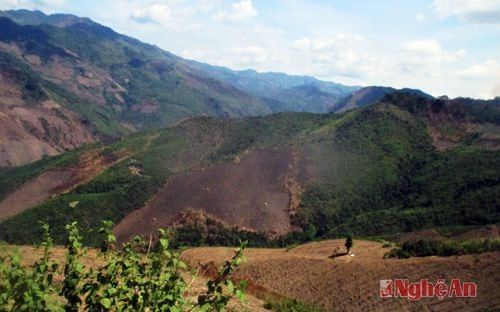 |
| In Bao Nam commune, out of 650 hectares of upland rice fields, 60% of the newly sown area has been damaged by rats. |
Mr. Xeo Xuan Huong from Nam Tien 2 village (Bao Nam commune) said: "This year, my family sowed 2 quintals of rice seeds (Khmu people in Bao Nam, as well as people who cultivate upland rice in many areas of Ky Son, don't calculate by area but by the amount of rice seeds sown on the field - ed.). We sowed them the day before, and the next day when we went to check on the field, we found rats digging and eating all the rice seeds. In the fields, the rice plants had sprouted a few centimeters, but the rats had gnawed away at them, leaving only bare leaves. In just over a week, seven-tenths of my family's field was destroyed by rats."
Despite being over 50 years old, Mr. Huong has never seen so many rats causing damage as this year. Every evening, they swarm into the fields and devour all the freshly sown seeds.
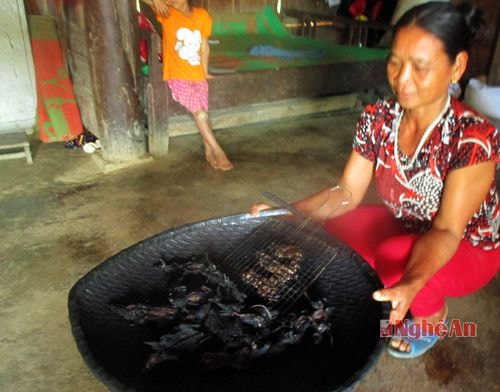 |
| The unwanted "spoils of war" for the people of Bao Nam. |
Mr. Xeo Pho Peng, head of Nam Tien 2 village, said the village has 47 households with 233 inhabitants. 100% of the households cultivate upland rice, which is their main food source. It is estimated that out of 68 hectares of upland rice fields in Nam Tien 2 village, more than 60% have been damaged by rats.
Mr. Xeo Pho Peng added: This is only the second time in his life he has seen so many rats in this area. The last time was in 1964. At that time, rats also destroyed all the rice crops, and soon after, the people faced famine and crop failure. According to the experience of the elders in the highlands, when bamboo and reeds bloom, rats multiply faster than usual. Bamboo and reed flowers are a favorite food source for these rodents. When the bamboo and reed flowers begin to fall, and there is no longer a main food source, the rats come to the rice fields and destroy the crops. In many areas, rats even appear and destroy crops in broad daylight.
Many communes in Ky Son are facing a similar situation.
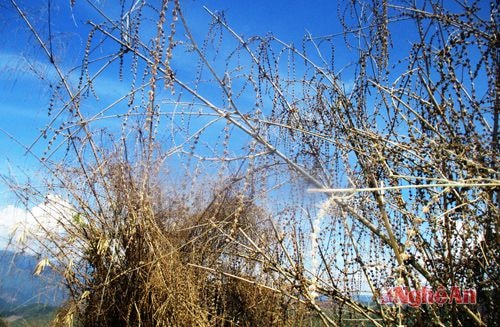 |
| Bamboo and reed flowers are believed to be "bait" that attracts rats, causing them to destroy crops. |
Faced with the unusual damage caused by rats, people in Nam Tien 2 village, as well as other affected areas, have been trying every means to eradicate them. Mr. Xeo Pho Thuyen from Nam Tien 2 village said: "My family's rice field, with 50kg of rice seeds, has been severely damaged by rats. Every night, my family and I take our crossbows to the field to shoot them, and in just a few hours we've shot 30-40 rats. Despite our efforts to kill them, it hasn't been effective. In just one week, the rats have destroyed almost all of my family's rice field." Using poison, slingshots, or crossbows are currently the main methods people use to kill rats. However, these methods don't seem to be very effective. The rat infestation continues to worsen every day.
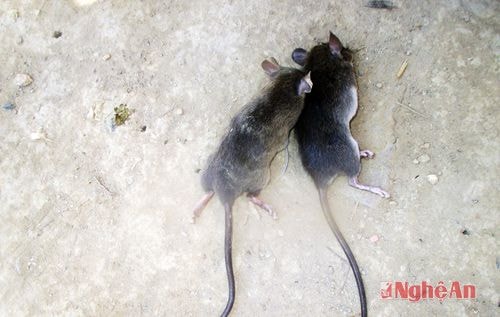 |
| The "culprit" that destroyed hundreds of hectares of rice paddies belonging to local people in Ky Son district. |
According to local authorities, the communes of Bao Thang, Huu Kiem, and Huoi Tu are currently experiencing a rat infestation destroying rice crops. Mr. Denh Ba Long, Vice Chairman of the People's Committee of Huoi Tu commune, stated that over 700 hectares of upland rice fields across 13 villages have been damaged by rats. Local residents believe the increased rat population is due to the flowering bamboo and reeds. Currently, the villages most severely affected are Trung Tam, Huoi Kha, and Huoi Dun. Residents in Huoi Tu are using rat poison, but this method is only effective for the first few days; the rats then avoid the bait. Using slingshots and crossbows is also difficult because the rats are only slightly larger than a thumb. Currently, the commune authorities are unable to assess the extent of the damage as the rat infestation continues.
In Bao Thang commune, all five villages are experiencing rat infestations. According to Mr. Moong Van Loi, vice chairman of the commune's People's Committee, preliminary estimates indicate that damage has reached 60% of the total area of upland rice fields in the commune. The most severely affected area is Xa Va village, which has many rice fields belonging to the Khmu ethnic community.
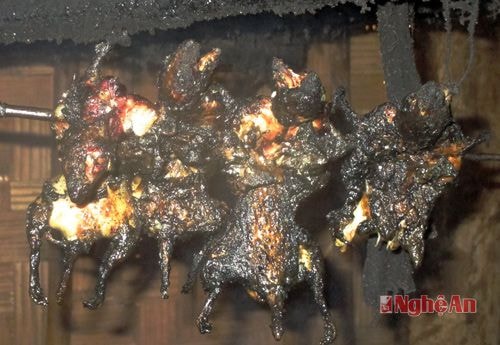 |
| Never before have the kitchens of households in Ky Son been so infested with rats. |
According to our investigation, in Huu Kiem commune, there are currently three villages with rice fields damaged by rats: Huoi Tho, Dinh Son 1, and Dinh Son 2. Mr. Luong Van Hien, secretary of the Party branch of Dinh Son 1 village, said that the village has 67 hectares of rice-growing land. Those who have planted rice have had about 70% of their crops damaged by rats.
The prolonged drought and rat infestation are truly weighing heavily on the lives and economy of many villages and hamlets in the highlands. Among them is the "major rat plague" in Ky Son district. Currently, people in villages and hamlets with crop damage caused by rats in Ky Son district are very worried because all the rice seeds they had stored at home have already been planted. "If the rats continue to destroy the crops like this, I'm afraid we'll starve at the end of the year, and there won't be any rice seeds to plant next year," shared Mr. Xeo Pho Peng, head of Nam Tien 2 village, sadly.
Text and photos: Huu Vi


