
'Super Tuesday' Elections: Identifying the Two-Dollar Race!
(Baonghean) - The Democratic Party's "Super Tuesday" election race in the US has concluded with a rather overwhelming victory for former Vice President Joe Biden in many key states.
This victory can be said to be creating very good momentum for candidate Biden in the long race ahead, with about 60% of the delegate votes still to be cast nationwide. The results of this Super Election Day have also clearly shaped the two-way race between Biden and Bernie Sanders to find the single candidate who will ultimately represent the Democratic Party against President Donald Trump later this year.
Candidate screening
With the conclusion of Super Tuesday elections in 15 US states and territories, along with foreign delegates, the internal race among Democratic candidates has gradually revealed the leading contenders. As expected, the two most prominent figures, former Vice President Joe Biden and Senator Bernie Sanders, have taken the lead in the race.
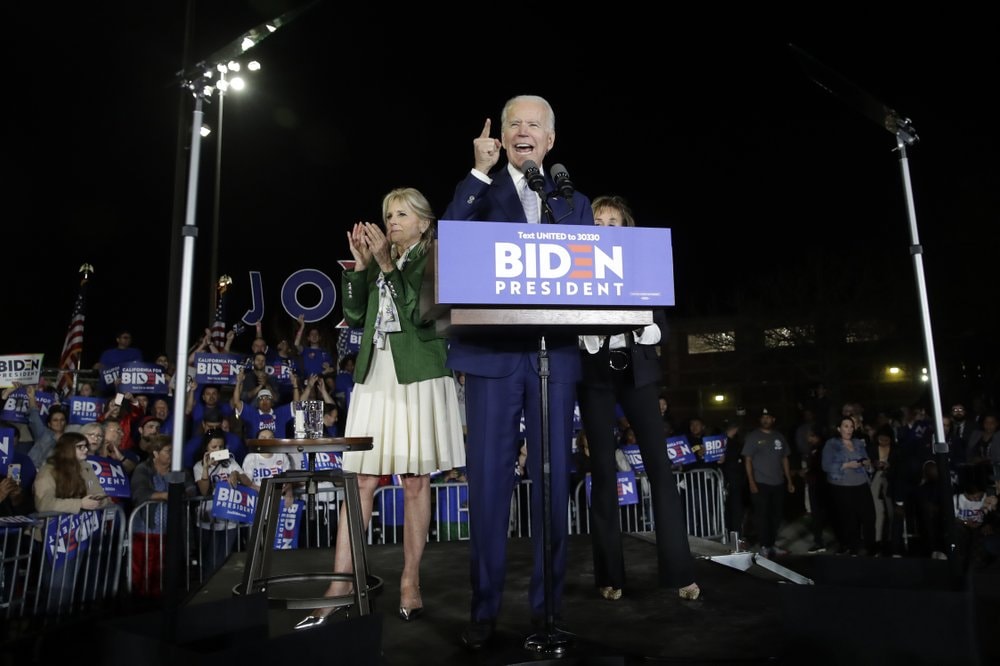 |
| Former Vice President Joe Biden. Photo: AP |
The two candidates shared victories in the two most crucial states: Texas with 228 delegates and California with 415 delegates. In total, as of yesterday afternoon (March 4th), Joe Biden had received the support of at least 450 delegates. Senator Sanders came in second with over 380 delegates. Senator Elizabeth Warren temporarily moved up to third place with at least 50 delegates.
With the number one position, candidate Joe Biden won in 10 states: Texas, Virginia, Alabama, North Carolina, Oklahoma, Tennessee, Minnesota, Arkansas, Massachusetts, and Maine. Meanwhile, Senator Bernie Sanders won in 4 states: Colorado, Vermont, Utah, and California. Most disappointing was billionaire Michael Bloomberg, who made a large investment on Super Tuesday but only won in the territory of Samoa, securing 5 out of 6 delegates from that region. To date, Bloomberg has only reached the 30-vote threshold.
With these results, observers believe that sooner or later, the three weaker candidates – billionaire Michael Bloomberg, Congresswoman Tulsi Gabbard, and Senator Elizabeth Warren – will likely drop out of the race. This also means that the upcoming race will essentially be a two-way contest between the two leading candidates, Joe Biden and Bernie Sanders. However, analysts believe that the gap with Joe Biden after Super Tuesday is significant, making the upcoming race for Bernie Sanders quite difficult unless he makes breakthroughs in the upcoming states.
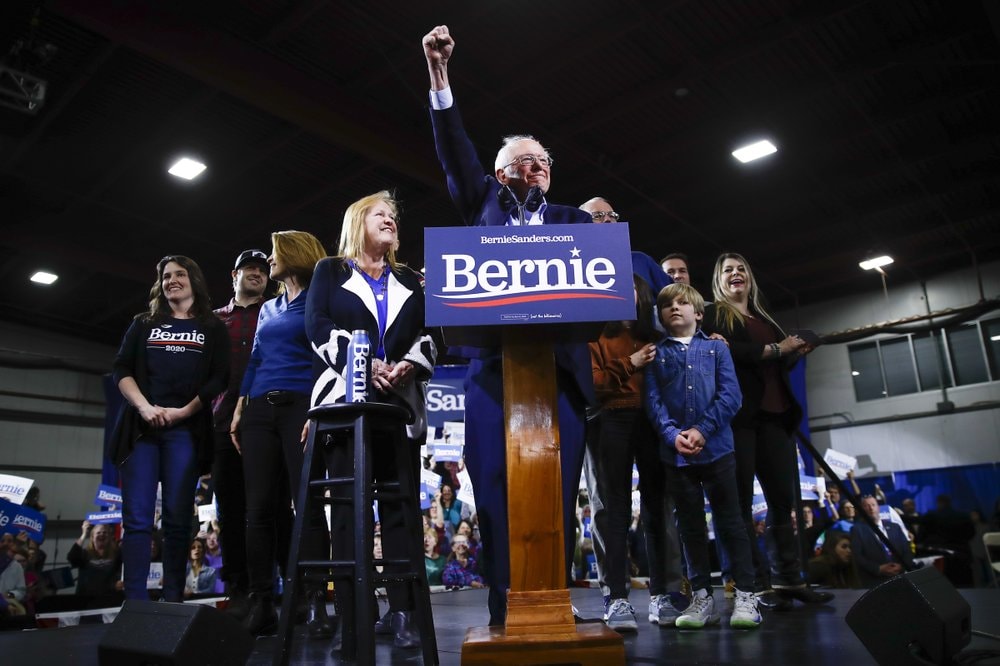 |
| Senator Bernie Sanders. Photo: AP |
Who will reach the 1,991 mark?
Thus, after Super Tuesday, 1,357 delegate votes have been determined. Adding the 155 delegates elected in the four states earlier, the total number of delegates now stands at 1,512 out of 3,979 nationwide, equivalent to 39% of the total. This means that Democratic candidates will still be competing for 2,467 delegate votes until the presidential election. However, it's worth noting that while the race theoretically ends before the November election, the outcome could be decided before July 13th, the date of the Democratic National Convention. Traditionally, a candidate who secures at least 1,991 votes out of 3,979 before this event will become the party's final nominee.
At this point, public attention is focused on the two candidates most likely to make it to the final round: Joe Biden and Bernie Sanders. Joe Biden enters the race with an impeccable political record and significantly more years in politics than any other candidate. Unlike Trump, coming from a working-class family, Biden finds common ground with the American working class. Upon running, Biden also received endorsements from numerous Democratic leaders and former President Barack Obama.
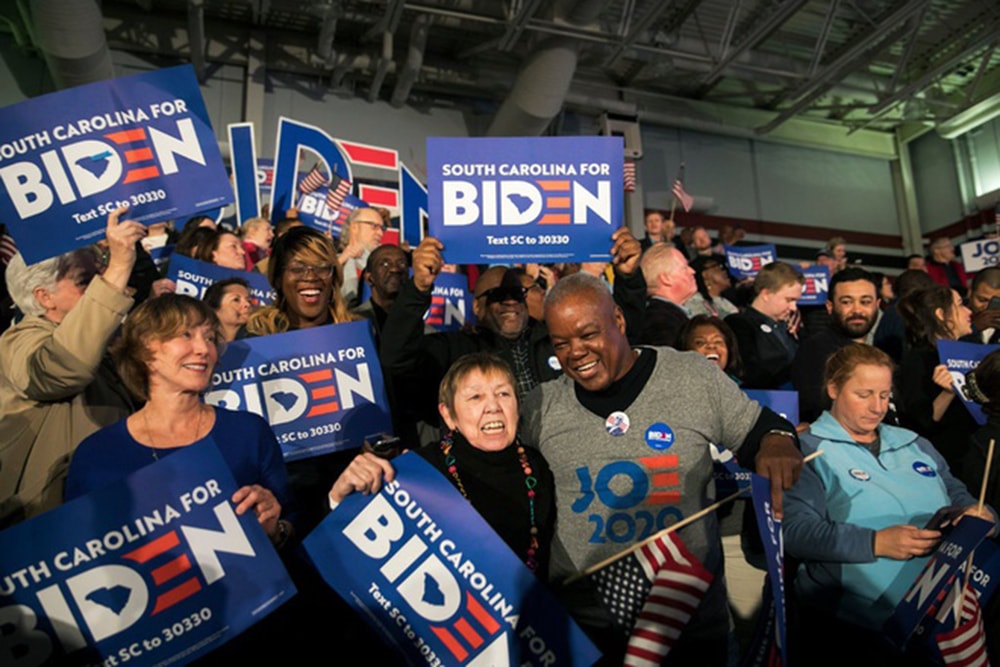 |
| Coming from an ordinary working-class family, Biden finds common ground with the working class in America. Photo: New York Times |
As for candidate Bernie Sanders, since 2016, he has built a rather impressive strategy focusing on expanding his appeal to young voters, voters of color, and working-class voters. Experts also believe that Sanders has a much stronger fundraising capability and advantage than Biden. He himself has stated that he is a "billionaire-funded candidate" and has connections across various regions, focusing on issues such as tax fairness and healthcare reform.
However, just before Super Tuesday, unfavorable news emerged in the US that Russia was interfering to support candidate Sanders in this election. Despite Sanders' strong denials, voters likely raised questions about the candidate they were considering. Importantly, both Biden and Sanders are not considered the most anticipated Democratic candidates. Sanders, born in 1942, is 78 years old, while Biden, born in 1941, is 79. Furthermore, given his current winning streak within the Democratic party, if he wins the presidential election later this year, Biden would become the oldest president in US history. Meanwhile, facing a formidable opponent in President Donald Trump, who is also 74 years old, the Democratic party is seeking a fresh, younger, and truly different approach. Therefore, Biden's strength in experience and extensive political experience is actually a disadvantage in this race.
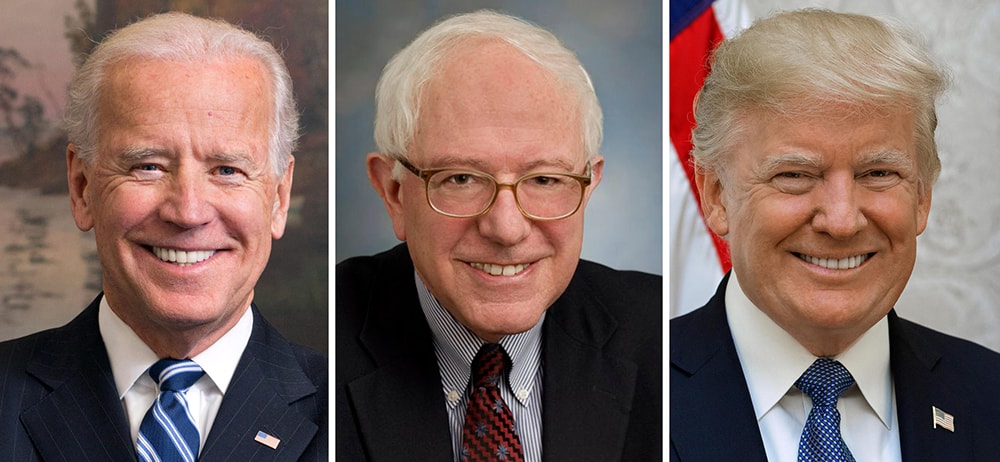 |
| Who will be President Donald Trump's direct opponent in the race this November? Photo: White House |
Of course, with no other options left, Democratic voters will have to choose one of the two candidates, both nearing 80, for the final race. At this point, Biden has the advantage of leading in several major states, and now also has the support of delegates who previously supported the recently withdrawn candidates Klobuchar and Pete Buttigieg. Meanwhile, Sanders is likely to receive the support of delegates who supported Warren – should he decide to drop out of the race.
Following Super Tuesday, Democratic candidates will soon face each other again in crucial election days such as March 10th, with over 350 delegates determined, and March 17th, with 577 delegates in key states like Florida, Illinois, and Ohio. The early final round is expected in late April, with a battle for 650 delegates across a range of states. Between now and then, there is likely still plenty of time for candidates to win over voters, and undecided delegates will have ample time to consider their options.


