
Secrets to growing and caring for vegetables on the rooftop.
(Baonghean.vn) - The hobby of growing clean vegetables on rooftops is no longer uncommon in urban areas. However, not everyone can become a true "urban farmer." Below are some things to keep in mind when growing vegetables on your rooftop to supplement your family's safe and fresh produce.
Prepare irrigation water lines.
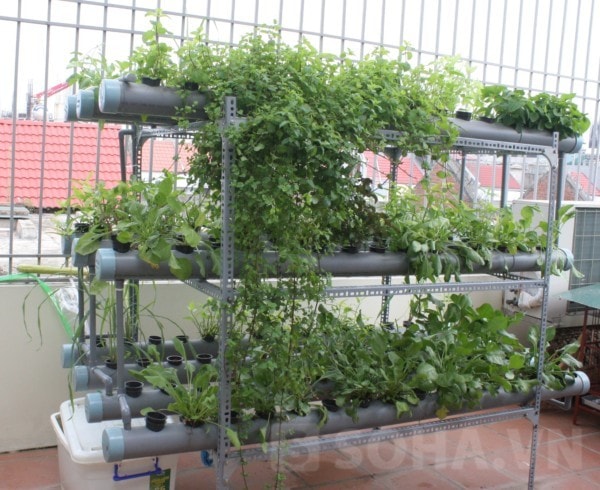 |
Many families plant vegetables and sow seeds first, then pay attention to watering the plants. This makes growing vegetables quite difficult and laborious, as they have to carry water from the lower floors up to the rooftop to water the plants.
To prepare for gardening, you should design a watering system. If you don't have the means, you can buy and install plastic pipes connecting from the adjacent floor to the rooftop. If you can afford it, you can install an automatic watering system to save time and ensure your plants continue to thrive while you're away on business for a few days.
Pay attention to the sunlight.
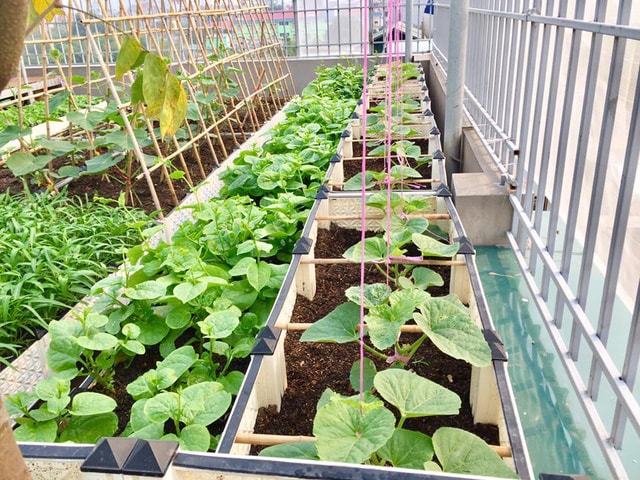 |
If you want to grow vegetables on your rooftop, have you considered the amount of sunlight it receives each day? Plants always need sufficient light for photosynthesis and healthy growth. Therefore, if your rooftop is shaded by surrounding tall buildings, choose shade-loving plants.
A rooftop that receives too much sun can also cause plants to grow slowly and become stunted. If you live on a high floor, consider choosing heat-tolerant plants. However, if you want to grow a variety of vegetables, you should consider installing shade netting to reduce the amount of sunlight reaching the rooftop.
Improve the soil after each crop.
The soil for growing vegetables on the rooftop will become depleted after 1-2 harvests because the plants consume all the nutrients, so you need to improve the soil. After harvesting all the vegetables, spread the soil out to dry in the sun for 5-7 days before proceeding with soil improvement.
First, sprinkle a small handful of lime powder into each vegetable pot and mix well. Drying the soil and applying lime helps eliminate pathogens and pest larvae in the soil.
Increase soil aeration by mixing in materials such as rice husks, sawdust, and coconut fiber.Mix fertilizer into the soil.
One thing to note is that you shouldn't plant the same type of vegetable in the same pot for two consecutive seasons to avoid pests and diseases.
Choose the right container or pot.
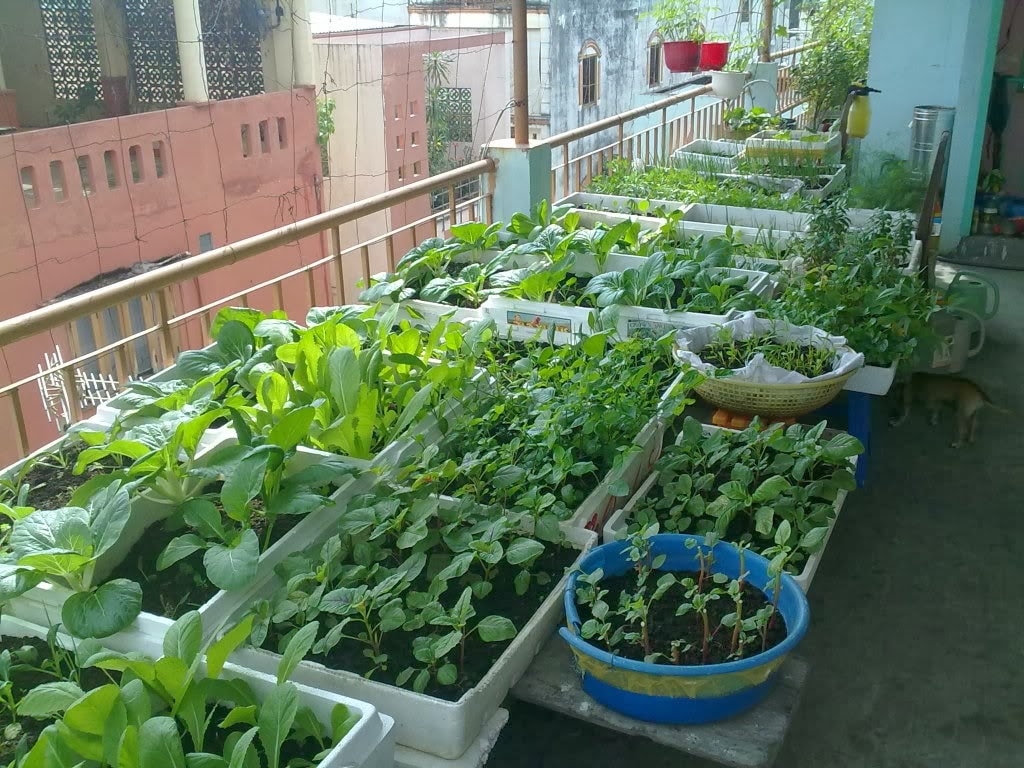 |
Pots are essential when growing vegetables on a rooftop; you need to choose pots that are suitable for each type of vegetable you intend to grow.
For short-term leafy vegetables such as bok choy, lettuce, water spinach, amaranth, etc., choose pots that are about 12-15cm high and fill them with a layer of soil about 10-12cm thick.
For root vegetables like carrots and radishes, the pots must be more than 20cm tall, ensuring that a 20cm thick layer of soil can be added.
For long-lasting vegetables like kohlrabi, cauliflower, cabbage, and some types of melons such as watermelon, cucumber, and cantaloupe, large-sized styrofoam containers should be used.
The next step is to drill drainage holes: You should drill holes in the body of the container, about 5cm from the bottom. This will help prevent irrigation water from draining away completely and avoid washing away fertilizer.
Seed selection and treatment
Seeds should be purchased from reputable sources, within their expiration date, and in intact packaging. For some types of seeds with hard shells, such as cucumber, watermelon, and pumpkin seeds, you need to pre-treat them before sowing: Soak them in warm water overnight, then wrap them in a clean cloth to germinate, ensuring the cloth remains moist throughout the process. Once the seeds sprout, sow them in the soil.
Note: The sprouts that grow from the seed are radicles; when sowing, you need to point these sprouts downwards into the soil.
Proper fertilization
Fertilizer is a crucial factor when growing vegetables on a rooftop, as it helps plants grow and develop. Fertilization needs to be tailored to the type of vegetable and its growth stage: leafy vegetables require more nitrogen, stem and root vegetables require more phosphorus, and fruit vegetables require more potassium. Fertilizers can be inorganic (chemical) or organic.
You should choose organic fertilizers because they are environmentally friendly. Chemical fertilizers, if used improperly, can acidify and compact the soil and affect health if the waiting period before harvesting is not properly observed. You can buy organic fertilizers at agricultural supply stores, such as vermicompost or processed cow manure; you can also utilize household waste to make fertilizer.
Plant at the right time.
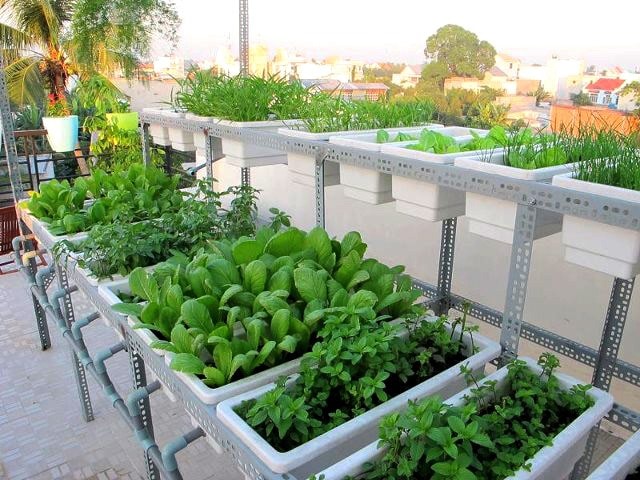 |
Nowadays, most vegetables can be grown year-round; however, planting them at the right time of year will help them grow best and avoid pests and diseases.
Irrigation water
Water is essential for the growth of plants and vegetables. For families growing vegetables on their rooftops, the main source of irrigation water is tap water. To ensure optimal vegetable growth, you should pump the water into a container, let it sit for about two hours to allow the chlorine to evaporate, and then use it to water the plants.
Regularly check and water the plants, ensuring they are neither dehydrated nor waterlogged. During the dry season, water twice a day, in the early morning and late afternoon. During the rainy season, water according to the weather.


