Abandon fragmented thinking in tourism development.
(Baonghean) - In the context of the country's deep integration into the global economy, tourism has been identified as one of the key economic sectors due to its ability to bring both economic value and social benefits. With the desire to maximize the natural and human resources of Nghe An in particular, and the North-South Central region in general, the first ever regional tourism development cooperation scientific conference was held in Nghe An on February 20, 2016.
Besides the presence of central and local leaders, the workshop was also attended by more than 400 invited delegates, including representatives from foreign embassies in Vietnam, businesses, international organizations and projects, and experts in socio-economic research.
At the conference, invited delegates were not only delighted by the unique products and specialties that localities in the North and South Central regions brought to display at the exhibition booths, but also listened to many insightful discussions and shared experiences in tourism development from representatives of localities, organizations, and projects with established brands in the tourism industry.
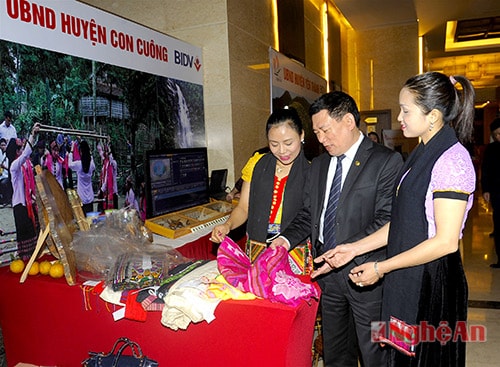 |
| The exhibition showcased local products at the Scientific Conference on Tourism Development in the North-South Central Region. |
Based on the current state of the region's uncoordinated tourism development.
In his opening remarks and report at the workshop, Mr. Tran Bac Ha, Chairman of the Board of Directors of the Vietnam Investment and Development Bank (BIDV), the main sponsor of the event, noted that the North-South Central region, comprising 13 provinces and 1 centrally-governed city, forms a geographical corridor extending along the coastline and border with Laos and Cambodia. This area shares many similarities in history, culture, and natural conditions, creating favorable conditions not only for local areas to develop intra-provincial tourism but also for the potential to form a chain of interconnected regional tourism products and services.
In the future, forming strong links between the North and South Central regions will enhance the effectiveness of exploiting the unique "heritage route" with 5 out of 8 UNESCO-recognized tangible world heritage sites, including: Ho Dynasty Citadel (Thanh Hoa), Phong Nha - Ke Bang National Park (Quang Binh), Hue Imperial City Complex (Thua Thien Hue), Hoi An Ancient Town (Quang Nam), and My Son Sanctuary (Quang Nam).
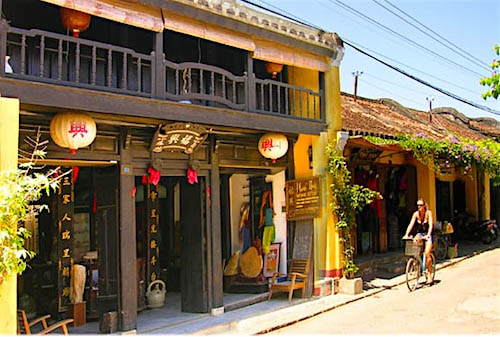 |
| The ancient town of Hoi An is one of the most popular destinations for foreign tourists on Vietnam's "heritage route". |
The region also boasts intangible cultural heritage recognized by UNESCO, including Hue Royal Court Music (Thua Thien Hue), Nghe Tinh folk songs, and soon, Bai Choi folk songs from the South Central region. At the same time, it is also the most beautiful "coastal and island tourism route" in Vietnam, with a coastline nearly 1,900km long and many beaches and bays ranked among the most beautiful in Vietnam.
However, the level of development and value generated by the tourism industry in the North and South Central regions has not been commensurate with the inherent natural and cultural resources. This is due to inadequate tourism infrastructure, low scale and quality of human resources, and unbalanced tourism development among localities within the region.
For example, the South Central region is estimated to have earned over 32 trillion VND from tourism in 2015, double the revenue of the North Central region; the number of 3-5 star accommodation establishments in the North Central region is only 32% compared to the South, and high-end, large-scale tourist areas are currently mainly concentrated in the South Central region…
The need to change the mindset in tourism.
Based on the resource advantages and the current state of tourism development in the North and South Central regions, the workshop outlined groups of issues for delegates to present and contribute their opinions.
Associate Professor Dr. Tran Dinh Thien - Director of the Vietnam Institute of Economics, offered a new perspective on tourism in Central Vietnam when he commented:
"For a long time, Central Vietnam has mainly used its beaches for tourism, while many other resources remain untapped. The way we think about and perceive tourism resources must change to reflect the times and its true potential."
For example, the ancient capital of Hue should be considered a heritage of humanity, not just of Vietnam. Or the Lao wind – which we often consider a disadvantage – is unique to the world and can certainly be turned into a tourism attraction.”
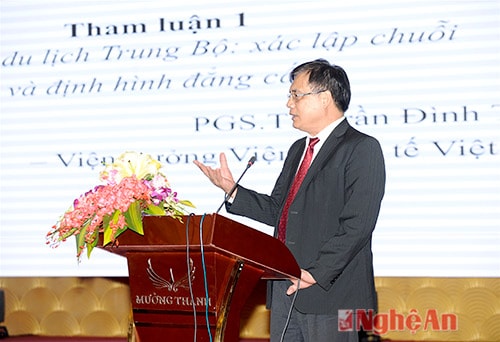 |
| Associate Professor Tran Dinh Thien, Director of the Vietnam Institute of Economics, believes that high-class tourism should be developed from ordinary things that reflect local identity. |
His presentation emphasized the value of diversity, highlighting the richness and uniqueness of the local nature, culture, and people, even in the most ordinary aspects. This further affirmed the necessity of establishing a regional tourism linkage chain to increase the "content" and quality of tourism, providing visitors with a rich and distinctive experience.
Delivering a keynote address and guidance at the workshop, Comrade Vuong Dinh Hue, Member of the Political Bureau and Head of the Central Economic Committee, affirmed that tourism development is a task that the Party and State always prioritize, with a vision to make Vietnamese tourism a key economic sector by 2020. The central provinces need to have a deep understanding of the static and dynamic advantages of each locality, and accurately assess the current state of the region's tourism industry. At the same time, they need to learn from the experiences of other countries' tourism industries, and strengthen inter-industry and inter-regional linkages to develop the "smoke-free" industry.
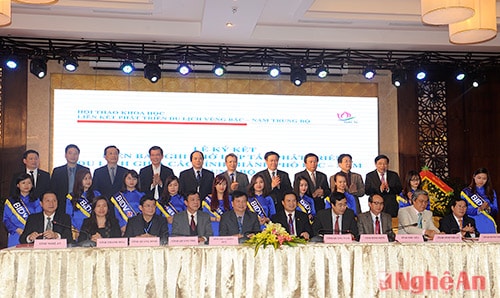 |
| Leaders of provinces in the North and South Central regions signed an agreement to cooperate in tourism development. |
Concluding the workshop, Comrade Ho Duc Phoc - Member of the Central Committee of the Party, Secretary of the Provincial Party Committee, and Chairman of the Provincial People's Council of Nghe An province - expressed his confidence in the future development of tourism in the North and South Central regions in general, and Nghe An in particular:
“Through today’s workshop, we are determined to create and consistently implement mechanisms, policies, and action programs to develop tourism. Nghe An is committed to working with provinces nationwide, especially in the North Central region, to create linkages between provinces, coordinating and supporting each other to boost the development of our tourism industry.”
Reporters' Team