
The quickest way to distinguish between a rash fever and dengue fever.
(Baonghean.vn) - Both measles and dengue fever initially present with symptoms of high fever (39-40°C) and red spots under the skin. So how can you correctly identify the disease for effective treatment? Below are the differences in the causative agents and symptoms of these two diseases.
Pathogen
Rash fever:There are many different diseases and pathogens, but they all generally involve fever and rash. In Vietnam, the most common diseases with rash are measles (caused by the measles virus), rubella (caused by the rubella virus), and Rickettsia infections. Of these, scrub typhus is the most common. Measles and rubella are transmitted through the respiratory tract, while scrub typhus is transmitted by red mites. Children can experience rashes multiple times in their lives.
Dengue fever:The causative agent is the Dengue virus, and the disease is transmitted from infected individuals to healthy individuals who have not developed immunity against the Dengue virus via mosquitoes. There are two species of mosquitoes that transmit dengue fever: the Aedes aegypti and the Asian tiger mosquito. A person can contract dengue fever up to four times in their lifetime due to the four different strains of the virus that cause the disease.
 |
| Monitor body temperature and look for any unusual signs when your child has a fever. |
Signs to correctly identify the disease
Rash fever:Most cases begin with intermittent high fever (39-40°C). This is followed by cough, sore throat, runny or stuffy nose, and fatigue; lymph nodes in the head, face, and neck area are often swollen, painful, and may be visible or palpable. Most patients recover from the fever by the fourth day, regain their appetite, and may develop a rash for 3-5 days before it subsides.
Dengue fever:The disease usually begins 3-6 days after being infected by a mosquito. Initial symptoms include a high fever of 39-40°C; headache in the temples; muscle and joint pain; vomiting; and in children, abdominal pain and sore throat may also occur. Later, petechiae (small hemorrhagic spots) appear under the skin. Signs suggesting the disease is worsening include severe abdominal pain and vomiting, shock, cold extremities, nosebleeds, bleeding gums, bruising at injection sites, and black stools due to internal bleeding.
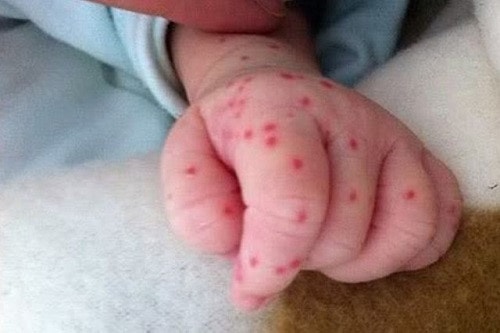 |
| Petechiae (small hemorrhagic spots) under the skin are a symptom of dengue fever. |
The quickest way to distinguish between rash fever and dengue fever.
To differentiate, use your thumb and index finger on the same side to stretch the skin around the rash. If the red spots disappear and reappear immediately when you release your finger, it's a rash caused by a fever. If the tiny spots remain, or if the red color reappears after 2 seconds, it's dengue fever.
Hoa Le
(Synthetic)
| RELATED NEWS |
|---|


