
How to distinguish Chinese vegetables and fruits from Vietnamese vegetables and fruits.
Vegetables and fruits are now widely available on the market, both branded and unbranded. Among them, Chinese vegetables and fruits make up the majority; you see them everywhere you go.
China has become notorious for its unclean fruits and vegetables, heavily contaminated with chemicals and chemical residues. While Chinese produce is no longer as popular, many products are still sold in China, making it difficult for housewives to distinguish between those made in China and those made in Vietnam.
You can refer to the 12 types of vegetables and fruits below, which have been identified as originating from China and Vietnam.
1. Cauliflower:
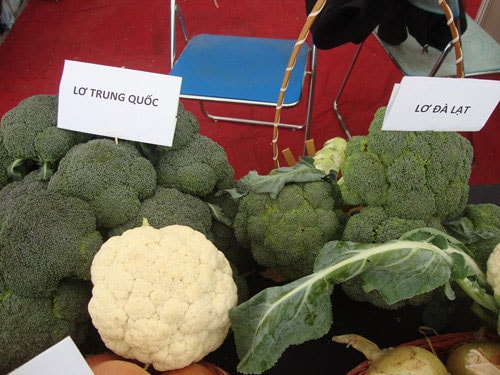 |
From the outside, Da Lat cauliflower has a significantly larger stem and florets compared to Chinese cauliflower. Chinese cauliflower is usually a darker green than Da Lat cauliflower, and its florets are larger. In the picture, the Chinese cauliflower has been stored for 26 days but is still fresh and green, while the Da Lat cauliflower, after only 2 days, is already showing signs of turning yellow.
2. Cabbage:
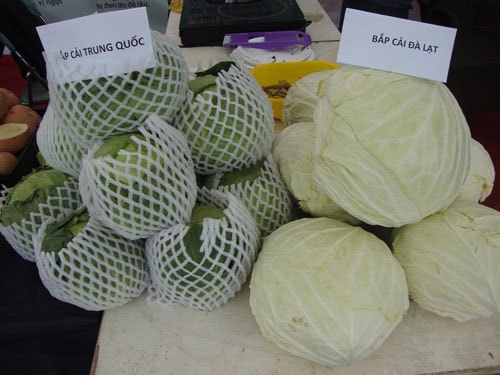 |
Da Lat cabbage is white and larger in size. Chinese cabbage is dark green and smaller, appearing uniform in size.
3. Strawberries
 |
4. Ginger
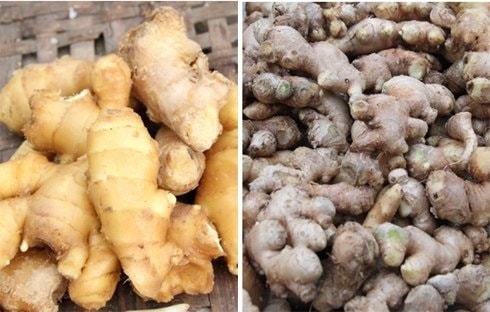 |
The image on the left shows Chinese ginger, which is smooth, shiny, juicy, yellow-fleshed, and has few fibers. Vietnamese ginger (on the right), although less visually appealing, is very fragrant.
5. Onions:
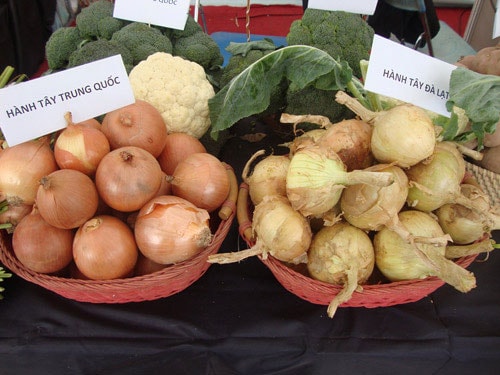 |
Da Lat onions have large bulbs with a white, easily scratched outer skin, while Chinese onions have a yellow, purple, or glossy white outer skin and are round or oval in shape.
6. Carrots:
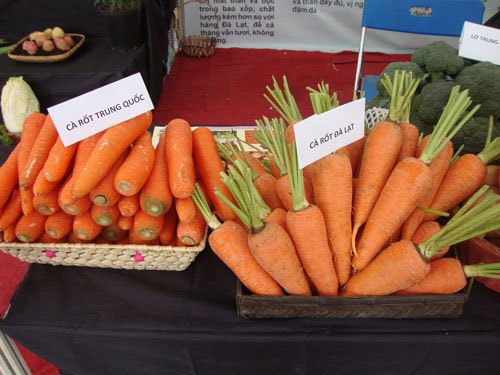 |
Da Lat carrots are small, dark in color, fresh, and usually have stems. Chinese carrots are shiny, uniformly sized, large, and often lack stems or have black ends due to being stored for a long time.
7. Pumpkin:Vietnamese carrots are small, dark in color, fresh, and usually have stems (right), unlike Chinese carrots (left) which are shiny, uniformly large, stemless, or often have blackened ends due to prolonged storage.
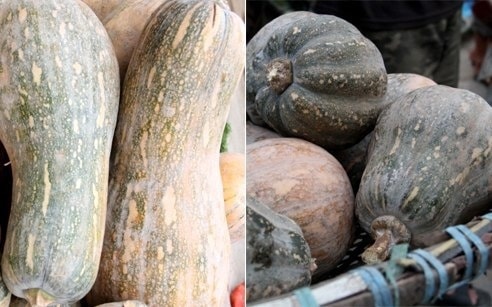 |
The small, rough-skinned pumpkins are ours. Chinese pumpkins, on the other hand, are usually two or three times the size of ours, and are longer, shinier, and more attractive (left).
8. Tomatoes:
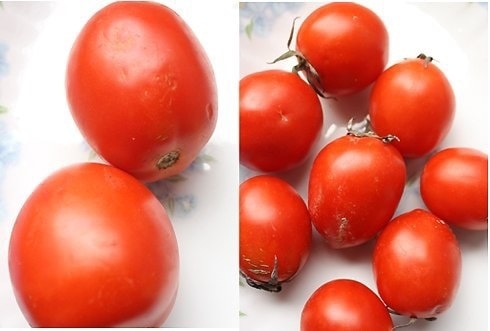 |
Chinese tomatoes (left) are always large, uniformly shiny, and stemless because they are preserved for a very long time. Vietnamese tomatoes usually have stems and are fresher. In the photo (right) are Vinh Phuc tomatoes, which are pointed and significantly smaller.
9. Potatoes
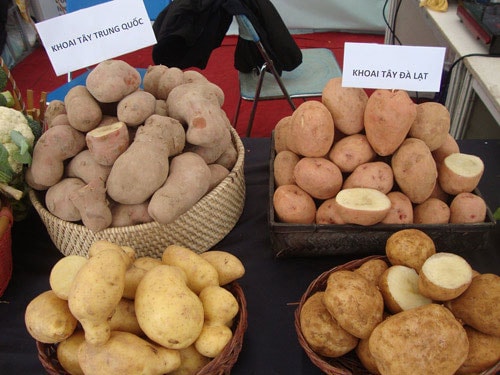 |
Da Lat potatoes are round, have shallow eyes, thin skin, and are easily scratched. Chinese potatoes are uniform in size, large and long, have deep eyes, smooth and shiny skin, and are less prone to scratching.
10. Onion:
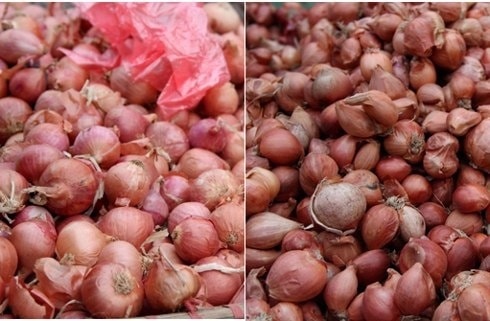 |
Chinese onions (left) have large bulbs, only one clove, are not fragrant, and have thin skins. Vietnamese onions usually have several cloves per bulb, are very fragrant, and have thick skins.
11. Garlic:
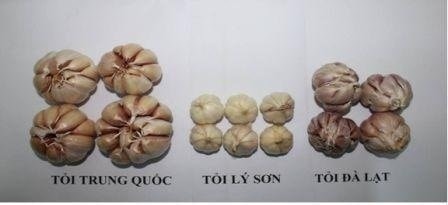 |
Chinese garlic (left) typically has many cloves, large bulbs, thin skin, is very easy to peel, and has a pungent, spicy taste. Vietnamese garlic comes in many varieties, but the bulbs are smaller, harder to peel, and have a very distinctive aroma.
According to Discovery


