
How to properly handle cramps and jellyfish stings while swimming in the sea.
(Baonghean.vn) - When going to the beach, besides worrying about jellyfish stings, you also need to be aware of muscle cramps. Because if you don't know how to handle it in time, it can lead to drowning and death.
When stung by a jellyfish
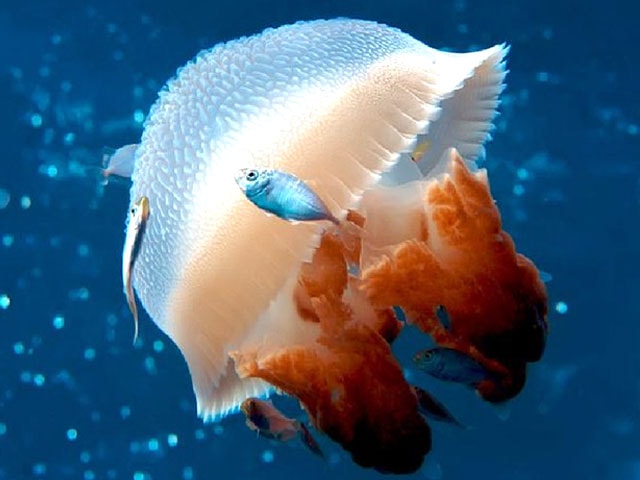 |
Stings and bites from certain fish (such as stingrays), jellyfish, and other marine animals are very painful and can cause serious complications such as necrotizing dermatitis, hemolysis, muscle and nerve paralysis, or heart and respiratory problems. The best course of action is to follow these methods:
- Quickly rinse the wound with seawater to clean away any unactivated venom-releasing cells (do not rinse with fresh or hot water as this will worsen the injury).
- Remove the bitten animal's body.
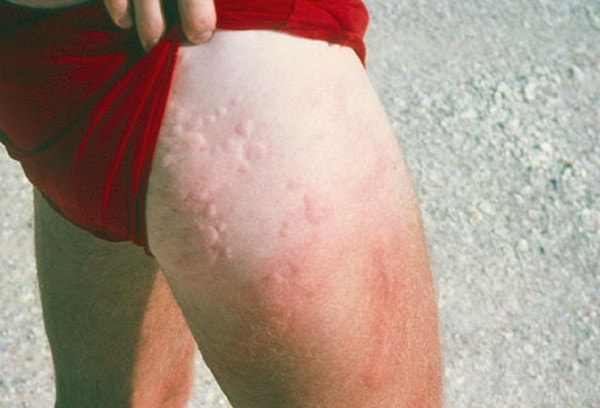 |
| Jellyfish sting. Illustration. |
- Mix a solution of 10 parts water with one part ammonia, vinegar, baking soda, or MSG, then apply it to the injured area (if these chemicals are not available, you can rub lemon on the wound).
- Use a knife or other sharp object (spoon, ice cream stick, etc.) to scrape the affected area.
Jellyfish stings typically cause red, straight or spiral-shaped lesions that are intensely painful. When experiencing such a sting, limit movement, avoid touching the affected area, and apply a cold compress within the first hour to reduce pain. After the sting area has dried, use topical corticosteroids, antihistamines, or apply a numbing cream every four hours for several days.
- Seek medical help if the victim: has an allergic reaction to the sting, is stung in the face or neck, or the situation worsens (e.g., difficulty breathing).
Note If you have been bitten and experience itching in many places on your body, take a bunch of sea morning glory leaves, crush them, mix with clean water, and strain to obtain a concentrated solution. After showering with fresh water, apply this solution to your body to reduce swelling, redness, and itching. |
When you get cramps
Even top swimmers fear getting cramps. The pain from cramps can impair swimming ability or, in more serious cases, lead to drowning.
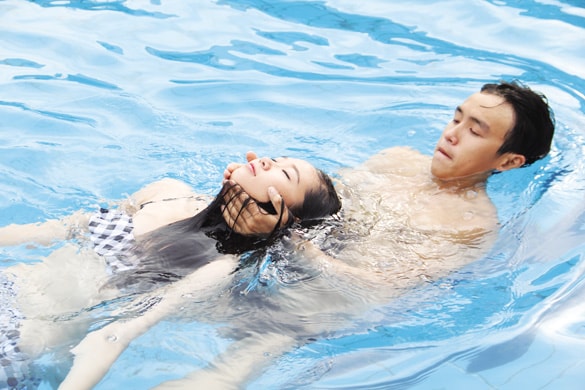 |
| Illustrative image. |
Recognition phenomenonMuscle cramps are sudden pain in the calf, abdominal muscles, or arm, preventing you from bending or straightening your arm normally due to the pain.
Reason:Muscle cramps can be caused by many factors, such as exercising too intensely without warming up beforehand, which can affect the muscles, or it could be due to low salt levels in the blood.
The risks of hypothermia, chills, and hypoglycemia leading to cramps often occur in people who stay in the water for a long time, go into the water at dawn or dusk, or skip meals beforehand.
How to handle it:
If this unfortunately happens while you're submerged in the water, remember that if you can't swim to shore, the more you panic and thrash around, the faster you'll sink. Therefore, if the waves aren't too big, calmly float on your back and wait for someone to rescue you.
 |
| When raising your hand for help, only raise one hand. (Illustrative image.) |
When raising your hand for help, only raise one hand while using the other to paddle to keep your body afloat. If you experience cramps, do not go back into the water; rest and try swimming the next day.
- If you experience abdominal cramps (which are very dangerous), remain calm and relax your entire body with your arms and legs spread wide. Slowly take deep breaths and use your hands to press on the pressure points around the cramped area, gently massage the area, and then ask someone nearby to help you get to shore.
- When experiencing cramps in other muscle areas, try to get to shore or at least crawl to shallow water, then treat the cramps yourself or with the help of friends using the following methods:
+ For calf cramps (the most common), try standing up and straightening your leg, standing on your heels and toes to stretch the calf muscles. You can also call for help by lying down with your leg as straight as possible and asking someone to push your toes back towards your knee.
+ For thigh cramps, have the person sit down. The helper should straighten the victim's leg, simultaneously lifting the heel while using the other hand to firmly press down on the knee.
- In case of rib muscle cramps, you should breathe deeply to relax the diaphragm while gently massaging the muscles around the rib cage. Drink hot sweetened tea, sweetened coffee, oral rehydration solution, orange juice, lemon juice, etc. After the pain subsides, you can take a hot bath at home to relax your muscles.
Note:
Muscle cramps caused by lack of oxygen can be treated by deep breathing and muscle relaxation.
- Muscle cramps caused by dehydration and lack of salt can be treated by relaxing the muscles, drinking more water, and eating more salt.
Ways to prevent cramps while swimming in the sea. - It's important to warm up and practice some basic movements before entering the water. If you don't warm up and run straight into the water, your muscles won't have time to adapt, which can lead to cramps. Simple warm-up exercises such as wrist and ankle rotations, neck rotations, jogging in place, or light short-distance running are recommended. Avoid strenuous exercise or overly intense workouts, as these can negatively impact your health before swimming. A warm-up of 10-15 minutes is sufficient. - In addition, you can drink more mineral water or lemon water. Remember to drink enough water daily and don't let yourself get thirsty when you go into the water. - Avoid swimming or bathing in the sea on an empty stomach, after motion sickness, when you are sick, or tired. Additionally, you shouldn't go into the water after a meal because it's easy for the muscles to lack oxygen, making them more prone to cramps. - After warming up, when entering the water, you should do it slowly and not rush. Entering the water gradually will help your body adapt to the underwater environment more easily. - When feeling muscle fatigue, swimmers should gradually reduce their speed, swim closer to the shore or rescue equipment, then relax their entire body in a floating position for 3-5 minutes before getting out of the water. - If you feel cold while swimming, get out of the water immediately, find a sheltered place or a fire to warm yourself; you can also drink some hot sweetened tea. |
Hoa Le
(Synthetic)
| RELATED NEWS |
|---|


