
Be cautious when using rectal suppositories to reduce fever in children.
Many mothers, when their children have a fever, immediately think of using rectal suppositories to reduce fever, to avoid the child vomiting after taking oral medication. However, overdosing or using them too frequently is very dangerous to a child's health.
Consequences of indiscriminate use of suppositories
Every time her 2-year-old daughter, Anh Thu, had a fever, Ms. Van Anh (Ngoc Khanh Ward, Ba Dinh District) would immediately buy paracetamol suppositories to reduce the fever. Because her daughter would vomit after taking oral medication, giving her fever-reducing medicine was a nightmare for her. This time, her daughter had a high fever, so she used the suppositories again. The fever subsided significantly, but on the second day, the child developed diarrhea. However, thinking it might be a viral fever accompanied by diarrhea, she didn't take her to the doctor.
When her husband returned from a business trip, while their child was using the toilet, he noticed the child's stool contained mucus resembling blood, and the anus was red, swollen, and painful. They rushed the child to the doctor and learned that this was a side effect of overuse of rectal suppositories for fever reduction during the child's fever.
According to Master's degree holder and doctor Le Thi Phuong Hue (Thanh Nhan Hospital), parents should not overuse suppositories when their children have a fever because the medication can cause side effects. Ideally, parents should accurately measure their child's temperature and then give them oral medication in the appropriate dosage and amount. Suppositories should only be used as a last resort, and even then, they should not be used excessively.
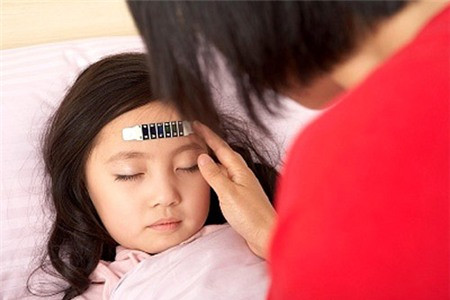 |
| Lowering a child's fever with oral medication or suppositories requires a doctor's prescription. (Illustrative image) |
If a child develops diarrhea after using rectal suppositories for a few days, stop immediately and regularly check the child's anal cavity for any adverse effects. Using suppositories while the child is experiencing diarrhea can easily lead to poisoning, anal infection causing swelling, pain, and even proctitis or diarrhea.
Similar to Ms. Van Anh's case is that of Mr. Hieu and Ms. Ngan's 19-month-old son (Dong Ngac - Tu Liem), who also has difficulty taking medicine when sick. Due to difficult economic circumstances and lack of childcare, the couple had to send their child to daycare early. Because their son's health is not good, he frequently gets fevers. Each time he has a fever, the couple loses sleep and appetite because their son, Mạnh, cries, vomits, and turns blue whenever he takes fever-reducing medicine. Worried, they resorted to using suppositories to stop their son's fevers.
When they first started using the suppositories, Ms. Ngan found them very effective because the fever subsided quickly, and she thought that was a good sign. Later, whenever her child had a fever, she and her husband immediately thought of paracetamol suppositories. Normally, they only needed a few suppositories for each illness, but for some reason, during recent fevers, they used the suppositories continuously without seeing any improvement. Furthermore, occasionally, their child would have a yellowish discharge from the rectum with a very foul odor, like feces, and also experience diarrhea.
Parents should be aware of the risks associated with using rectal suppositories for fever reduction.
Regarding this, Doctor Phuong Hue explained that suppositories are effective in reducing fever in both children and adults. These suppositories are often used for children who frequently vomit or regurgitate after taking oral medication. Because suppositories are absorbed into the bloodstream just like oral medication, they still pass through the liver if overused. Therefore, children and adults with liver disease should not use these suppositories.
Therefore, to have solid knowledge in caring for children when they have a fever, mothers should not overuse rectal suppositories and should not use high doses, as excessive use can cause rectal inflammation, ulcers, and drug poisoning. When medication is administered directly rectally, it is absorbed very quickly, affecting liver function. Therefore, when parents administer medication to children with fever, they should consult a doctor and avoid self-administering excessive doses, which can harm the child's health. When a child has a fever, it is necessary to accurately measure their temperature before administering medication.
However, before inserting suppositories into a child's anus, mothers need to perform an additional step: thoroughly cleaning the child's anus. Position the child with their buttocks raised to make insertion easier, and be gentle when inserting the suppository, avoiding forceful pressure. In some cases, the child tenses up during insertion, so parents often use force to try and push the suppository into the anus, causing the child pain.
Furthermore, suppositories should not be used in any case for children with anal fissures, anal infections, dysentery, diarrhea, liver disease, kidney disease, or paracetamol allergy.
When a child has a fever, parents should absolutely avoid dressing them in too many clothes, give them plenty of fluids, and allow them to eat more fruit. Since fever often leads to dehydration, it's necessary to replenish fluids and electrolytes by dissolving one 27.5g packet of Oresol powder in 1 liter of cooled boiled water and giving it to the child to drink throughout the day. If Oresol is unavailable, you can substitute it with orange juice, lemon juice, rice water, or a salt and sugar solution. Divide meals into several small, liquid portions throughout the day and carefully monitor the child's body temperature.
When a child has a fever, mothers need to wipe away the sweat, and sometimes we have to bathe the child in a warm room to keep them clean and prevent infection from dirt accumulating on their body. In addition, mothers can also use a warm towel to lower the temperature by wiping areas such as the armpits, groin, neck, and other areas with thin skin to help dissipate heat quickly.
If a child has a fever accompanied by other symptoms, parents should take them to a medical facility for examination. Even in cases of simple fever, it's advisable to consult a doctor for medication. If the fever persists after 3 days without other symptoms, a doctor's visit is also necessary.
According to PLXH


