
Medicinal plants
According to traditional medicine, the fig tree has a bitter and astringent taste, a cooling nature, and is used to clear heat and detoxify, promote blood circulation, stop bleeding, and kill bacteria.
In many places, the fig tree has been used to treat various ailments, including toothaches and diarrhea. Its bark is used to treat rheumatic pain, tooth decay, stomach aches, fever, and diarrhea.
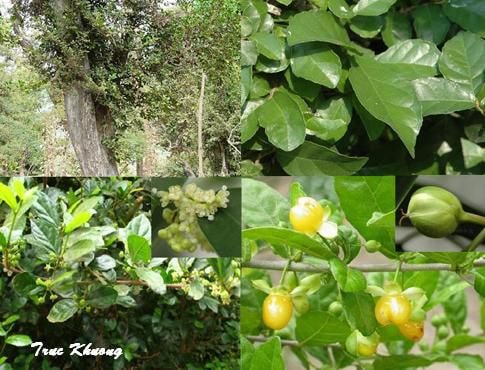
The fig tree, also known as rough fig, is called "may xoi" by the Tay people. It grows wild in many places in Vietnam. It is a woody tree, reaching up to 10m in height, and the entire tree contains white latex.
Leaves are stiff, alternate, obovate, about 3-7 cm long and 3 cm wide, with serrated edges and a very rough surface. Flowers are unisexual and dioecious; the male inflorescence is a head-shaped cluster with a short stalk, bearing 10-12 flowers. Female flowers are green, growing singly or in pairs.
The fruit is a slightly flattened, spherical berry, 8-10 mm in size, with persistent sepals partially enclosing it. When ripe, it is yellow, edible, and sweet. The flowering and fruiting season is from June to November. All parts of the plant can be harvested year-round, used fresh or chopped, dried, and roasted for medicinal purposes.
 |
Traditional folk remedies
Treating painful, swollen boils (before pus breaks):The sap of the Ficus microcarpa tree is soaked into a piece of paper and then applied to the pimple for 3 hours, changing it twice a day.
Treating urinary retention and scanty, reddish urine caused by heat:Wash 20g of the branches and roots of the Ficus microcarpa plant, slice thinly, and put into a pot. Add 500ml of water and simmer until only 250ml remains. Divide into three doses and drink throughout the day. One course of treatment lasts 10 days. Alternatively, use the following remedy: 20g each of the bark and roots of the Ficus microcarpa plant, roasted until golden brown. Add 750ml of water and simmer until only 300ml remains. Divide into three doses and drink throughout the day. One course of treatment lasts 10 days.
If accompanied by painful urination or cloudy urine:20g each of the bark of the Ficus microcarpa tree and the root of the Loranthus chinensis tree (roasted until golden), 30g of Imperata cylindrica root, 30g of corn silk, 30g of Plantago major flower, and 20g of Polygonum multiflorum. Add 750ml of water, decoct until 300ml remains, and divide into 3 doses to be taken throughout the day. One course of treatment lasts 10 days.
Treating toothache caused by cavities:Take 20g of the bark of the Ficus microcarpa tree, slice it thinly, and boil it to make a concentrated decoction for gargling.
Treat headaches, pain in the temples, and forehead pain caused by changes in weather:Spread the resin of the Ficus microcarpa tree onto two pieces of white paper, each 3cm in diameter. Add a small amount of slaked lime (about the size of a green bean) to the resin, mix the lime thoroughly, and then stick the two pieces of paper to your temples. Do the same with a piece of paper 1cm in diameter, sticking it to the Yintang acupoint (the point between the eyebrows). Do this 1-2 times a day. It has a noticeable pain-relieving effect.
In addition, in some localities, people also use the leaves of the golden-yellow fig tree to treat postpartum hemorrhage, dysentery, and as a lactation-boosting remedy.
According to Health and Life


