
Cat's whiskers plant - promotes urination, eliminates kidney stones.
There's a plant that looks very much like a cat's cute whiskers, and that's the cat's whiskers plant. Not only is it beautiful, but the cat's whiskers plant is also known for its special effects on the urinary tract...
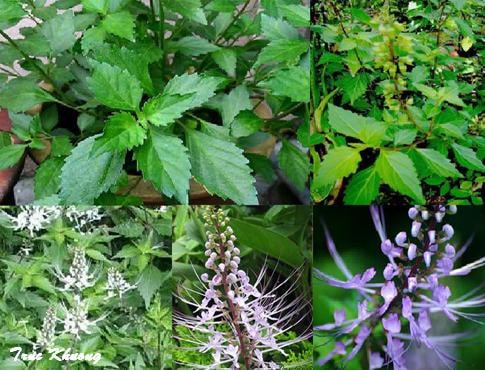
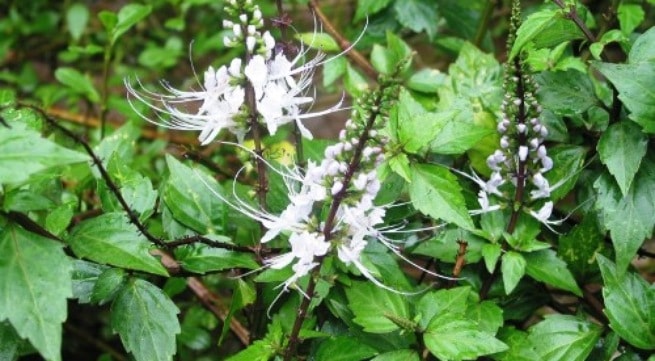
Cat's whiskers plant, also known as silver cotton plant, has the scientific name Orthosiphon stamineus Benth., belonging to the mint family (Lamiaceae).
Globally, the cat's whiskers plant is a relatively typical tropical tree, growing naturally and commonly found in India, Indonesia, Malaysia, Thailand, Indochina, and also in Africa.
Cat's whiskers plant is a traditional Vietnamese medicine used to treat kidney stones, increase excretion, and lower blood sugar. In Vietnam, cat's whiskers plant is scattered across plains and mountainous areas such as Cao Bang, Thanh Hoa (Vinh Loc), Hanoi (Ba Vi), Lam Dong, Phu Yen (Tuy Hoa), Ninh Thuan (Phan Rang), and Kien Giang (Phu Quoc)... Although widely cultivated, it still does not meet the demand. According to the Institute of Medicinal Materials, Vietnam imports tens of tons of cat's whiskers plant medicinal herbs from China and Cambodia every year.
 |
| Cat's whiskers plant |
According to Traditional Chinese Medicine, the cat's whiskers plant has a sweet, mild, slightly bitter taste and a cooling nature; it has diuretic, heat-clearing, and dampness-removing effects. It is used as a strong diuretic and bile-clearing agent in the treatment of kidney stones, gallstones, cholecystitis, acute and chronic nephritis, cystitis, urinary tract stones, etc.
Some notable uses of the cat's whiskers plant
Increased urine output and excretion: According to authors Chow SYLiao JF (Taiwan), extracts from cat whiskers in experimental dogs, administered intravenously at a dose of 18.8 mg/kg/minute, increased urine output and excretion of electrolytes Na+, K+, and Cl-.
Diuretic effect: Authors GA Schut and JHZwaving (Netherlands) determined the diuretic effect of two flavones, sinensetin and 3-hydroxy-3,6,7,4-tetramethoxyflavone, administered intravenously at a dose of 10g/kg. The urine output after 140 minutes was 410mg, while sinensetin at the same dose resulted in 614mg after 160 minutes. In contrast, the control group of mice showed no urine output after 120 minutes. Comparing the effects of these two flavones at the same dose of 1mg/kg with hydrochlorothiazide, the diuretic effect was found to be weaker and slower-onset.
Kidney disease and kidney stonesAccording to Indian authors, cat's whiskers are very useful for treating kidney disease and edema. In patients, cat's whiskers have a blood-alkalizing effect; the presence of the active ingredient orthosiphonin and potassium salts in the herb helps keep uric acid and urate salts in a soluble form, thus preventing their deposition to form kidney stones. In Thailand, experiments on healthy volunteers showed that cat's whiskers extract increased the excretion of citrate and oxalate; high levels of oxalate can increase the risk of kidney stone formation.
Low blood pressure, decreased respiratory rate:In animal studies, methylripariochromene A (MRC), extracted from cat's whiskers leaves, has been shown to lower blood pressure (especially systolic blood pressure) due to its vasodilating effect, reduced cardiac afterload, and diuretic properties. In white mice, intraperitoneal injection of cat's whiskers at a dose of 2-4 g/kg reduced the mice's motor activity. In dogs, intravenous infusion at a dose of 0.179 g/kg lowered blood pressure and reduced respiratory rate.
 |
| Cat's whiskers plant |
Hypoglycemia:Cat's whiskers leaf extract has a hypoglycemic effect in diabetic patients, but this effect is not consistent; the mechanism of action may be due to stimulation of glycogen formation in the liver. Ursolic acid lowers blood glucose and is used to treat diabetes (in Taiwan).
Protect your liver:Methanol extracts from cat's whiskers leaves have been shown to protect liver damage caused by paracetamol overdose.
Boost your immune system:The flavonoids in cat's whiskers have antioxidant effects and trap free radicals, which are substances that damage cells and the body's immune system; therefore, cat's whiskers also help boost the body's resistance.
Acne treatment effectiveness:In two acne treatment experiments, one in France on Europeans and one in Thailand on Asians, a cosmetic emulsion containing 2% cat's whiskers leaf extract showed a reduction in sebum and acne size in oily skin due to its effect on reducing 5-alpha reductase type 1 isozyme and decreasing squalene production, a major component of sebum that causes acne. The effect of the cosmetic containing cat's whiskers extract was better compared to a conventional acne treatment containing 1% zinc gluconate.
Cat's whiskers (or cat's whiskers) are used alone or in combination with other medications to treat conditions such as gout, rheumatism, extra-articular rheumatism, edema, nephritis, urinary stones, oliguria, hepatitis, jaundice, fever, influenza, chickenpox, measles, diabetes, and hypertension.
Instructions and dosage:
The commonly used herbs are branches and leaves bearing flowers at the beginning of bloom, 20-60g fresh or 12-30g dried per day, in the form of a decoction, brewed like tea, or processed into an extract. Alternatively, 5-6g of the powdered herb is mixed with half a liter of hot water, divided into two doses, and drunk 15-30 minutes before meals. Treatment usually lasts 8 days, followed by a break of 2-4 days.
The dried branches of the plant are boiled to make a decoction, which is a strong diuretic and beneficial for urination. In cat's whiskers, potassium, orthosiphonin, and mesoisonitol have diuretic effects, increasing the excretion of waste products such as urea, uric acid, Na+, Cl-… and, notably, do not cause as much potassium loss as Western diuretics.
Cat's whiskers grass is also used as a medicine to treat kidney stones and gallstones. The daily dose is 15-40g in the form of a decoction or infusion. A liquid extract can also be made. It is usually taken continuously for 8 days, followed by a break of 2-4 days.
According to documents, India considers an infusion of cat's whiskers leaves as a specific treatment for kidney and bladder diseases, as well as rheumatism and gout. The dosage is 5-12g of leaves infused in boiling water, divided into two doses to be taken 15-30 minutes before meals. It should be drunk while the infusion is still hot, or the leaves can be decocted and drunk.
Western medicines derived from the cat's whiskers plant, such as orthosiphon and betasiphon, are available in liquid extract form in ampoules; simply dilute them in boiled water before drinking.
Experiences in treating illnesses with cat's whiskers plant.
Treatment of small urinary stones:Take 6-10g of dried cat's whiskers (Aristolochia debilis), wash them thoroughly, and steep them in half a liter of boiling water like tea. Divide into two doses and drink twice a day, 15-30 minutes before meals. Drink hot, continuously for 10 days, then rest for 4 days, and then start another course.
Alternatively, take 30g each of cat's whiskers grass, serrated dogwood, and basil. Wash all ingredients thoroughly, add 800ml of water, and simmer until reduced to 250ml. Drink this decoction throughout the day, before meals, while still hot. Use for 5-10 days as a course of treatment.
Support for diabetes treatment:50g of fresh cat's whiskers, 50g of bitter melon (vine, leaves, young fruit, fresh), 6g of mimosa (Mimosa pudica). Wash all ingredients thoroughly and boil in 800ml of water until reduced to 250ml. Drink throughout the day. Use continuously for one month, then check blood sugar levels.
Treatment for urinary retention (painful urination, difficulty urinating):Wash 40g of cat's whiskers and 30g of white basil thoroughly, add 750ml of water, simmer over low heat, add 6g of talc, and drink throughout the day. Drink for 5 consecutive days. If urination becomes normal, stop the medicine.
Treating urinary stones, blood in urine, and painful urination:Take 40g of cat's whiskers and 30g of white thistle. Boil them in water, then add 6g of talc powder and drink the decoction throughout the day, divided into 3 doses. Continue for 5-7 days.
Treating urinary tract infections:Take 30g each of cat's whiskers, *Thài lài* (a type of herb), and *Chó đẻ răng cưa* (a type of herb), decoct and drink. Use for one week.
To treat chronic nephritis, cystitis, arthritis, rheumatism, and enteritis: take 40g of cat's whiskers (Aristolochia debilis), 30g each of Dioscorea opposita and Coix lacryma-jobi root. Boil in water and drink the decoction. Use for 3 weeks, then rest for 1 week.
Treatment of nephritis with edema: decoct 30g each of cat's whiskers, plantain, and white snake tongue grass. Note that this must be combined with the full course of antibiotics prescribed by modern medicine.
To treat kidney yang deficiency accompanied by lower abdominal pain: 16g of cat's whiskers, 20g of plantain, 12g of cogon grass root, 12g of sappan wood, 16g of prickly grass root, 12g of chicken gut root. The dried herbs are decocted with 150-200ml of water in half a liter, divided into two doses to be taken before meals.
To treat viral hepatitis, jaundice, pale and yellowish skin, and chronic constipation: 30g of cat's whiskers, 30g of snake's tongue grass, 30g of dog's ear plant, 20g of artichoke, and 30g of ink grass. Boil the dried herbs in 1 liter of water until reduced to 3/4 liter, then drink throughout the day. Use for 3 weeks, rest for 1 week, then continue for several months.
Treatment for chronic constipation: 30g dried silverweed, 30g snakegrass, 30g Euphorbia hirta, 20g artichoke, 30g Eclipta alba. Wash all ingredients thoroughly, put them in a pot, add 1 liter of water, and simmer until reduced to 3/4 liter. Drink throughout the day. Use for 3 weeks, rest for 1 week, then continue for another month.
Treatment for diabetes: 50g fresh cat's whiskers, 50g bitter melon (vine, leaves, young fruit, fresh), 6g dried mimosa plant. Wash the fresh herbs thoroughly, chop them finely, roast the mimosa until golden brown, add 1 liter of water and decoct until 3/4 remains. Drink throughout the day. Use continuously for 3 months and then have a blood test.
Note: At normal doses, cat's whiskers plant does not appear to cause acute toxicity. However, due to its effects on the balance of K+, Na+ ions and other chemical compounds, cat's whiskers should not be used frequently or for long periods at high doses.
Caution should be exercised when using this medication in pregnant women, especially during the first three months of pregnancy.
According to Health and Life


