
Chairman of the People's Committee of Nghe An province, Nguyen Duc Trung, inspected and directed the response to typhoon No. 3.
Inspecting the response to Typhoon No. 3 (Typhoon Yagi) in coastal localities, Chairman of the Provincial People's Committee Nguyen Duc Trung requested Party committees, authorities, agencies, and units to focus on leadership, direction, organization, inspection, supervision, and decisive, timely, and effective implementation of typhoon prevention and response work at the highest level to ensure maximum safety of people's lives and property.
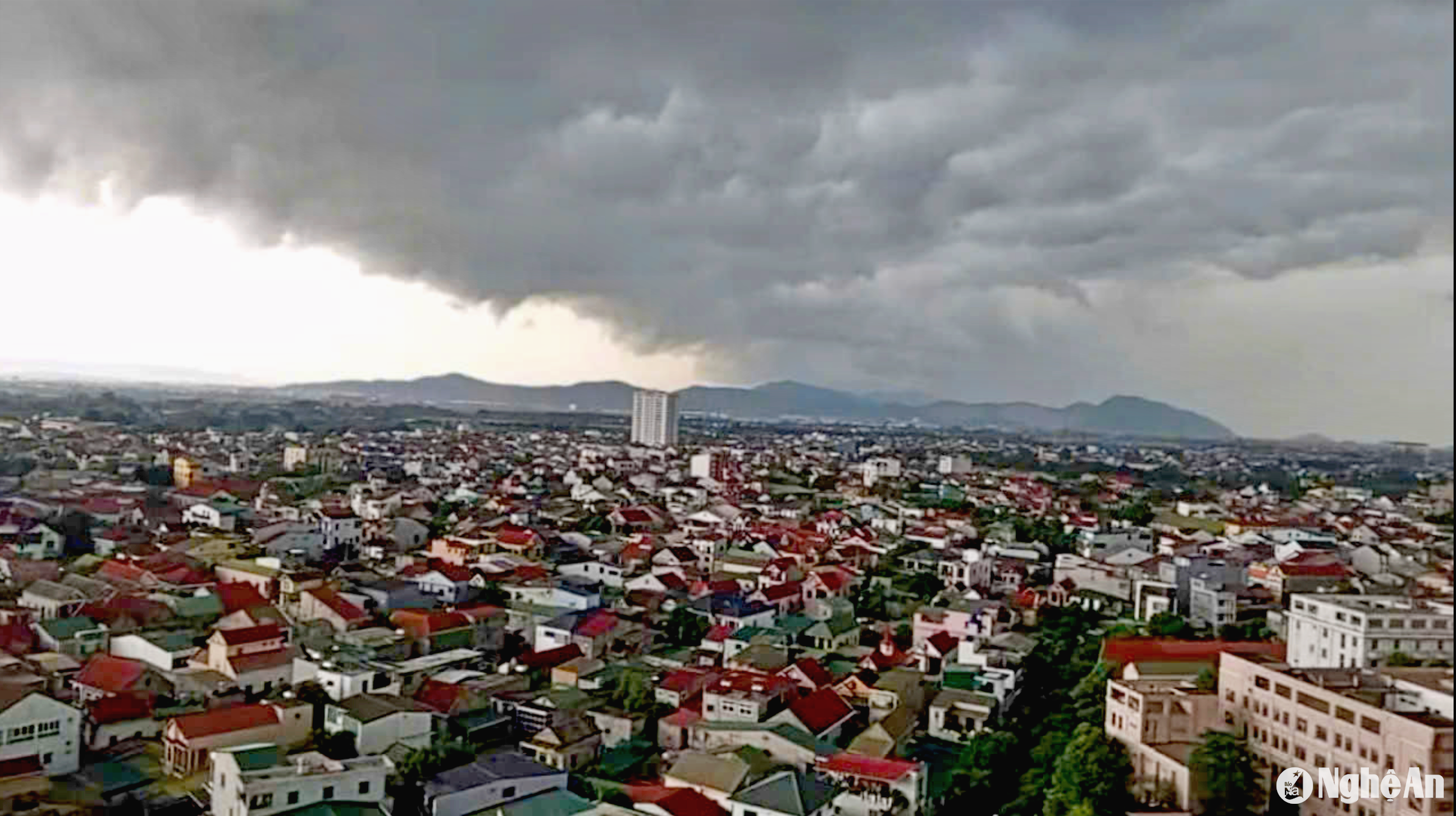
On the morning of September 6th, Comrade Nguyen Duc Trung - Deputy Secretary of the Provincial Party Committee and Chairman of the Provincial People's Committee, along with leaders of various departments and agencies, inspected and directed the work.Responding to Typhoon No. 3(Typhoon Yagi) in coastal areas.
Joining the delegation were leaders from the Provincial People's Committee Office; departments and agencies: Agriculture and Rural Development, Planning and Investment, Transport, Industry and Trade; the Provincial Military Command, the Provincial Border Guard Command, and the Provincial Police.
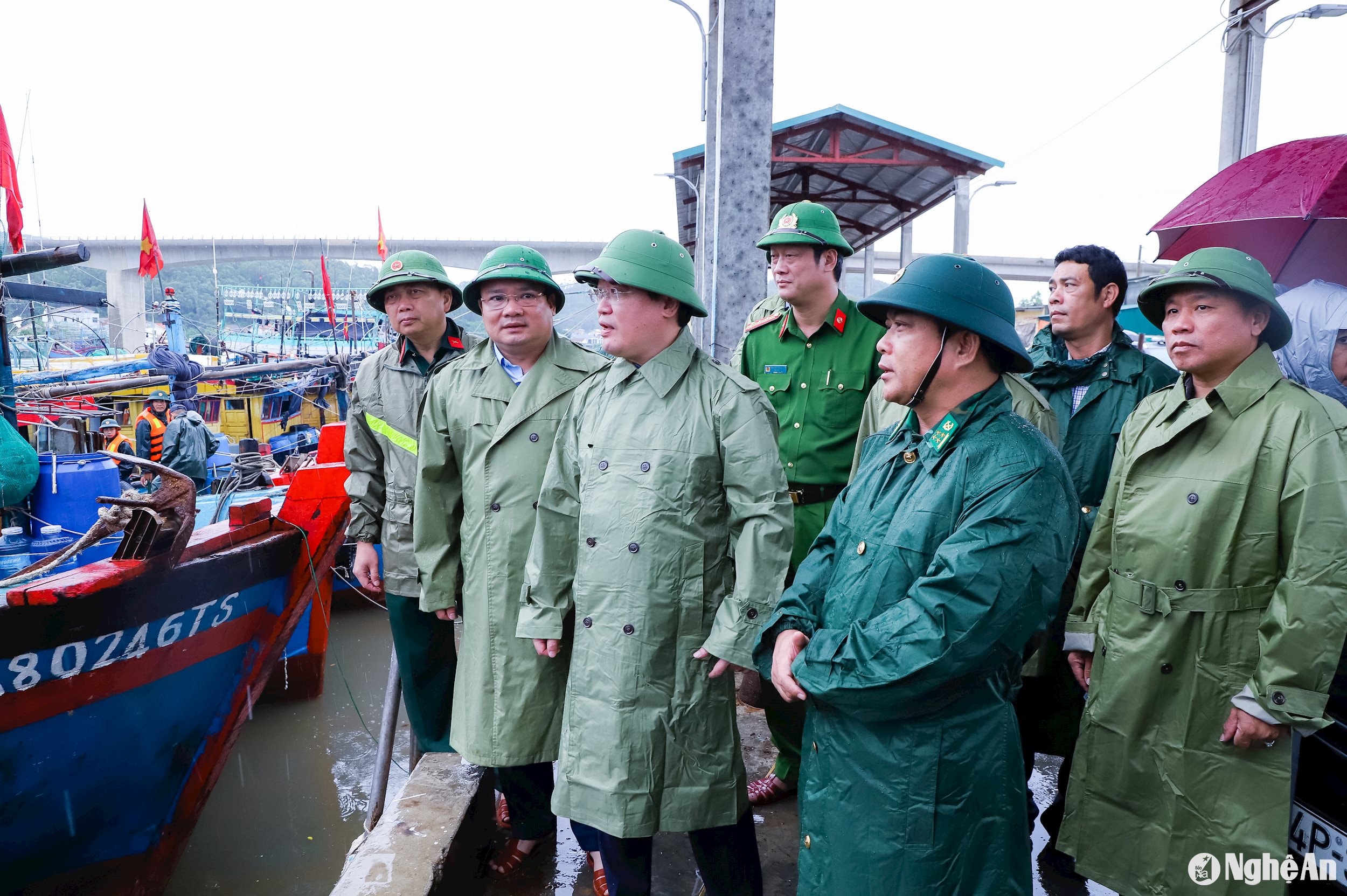
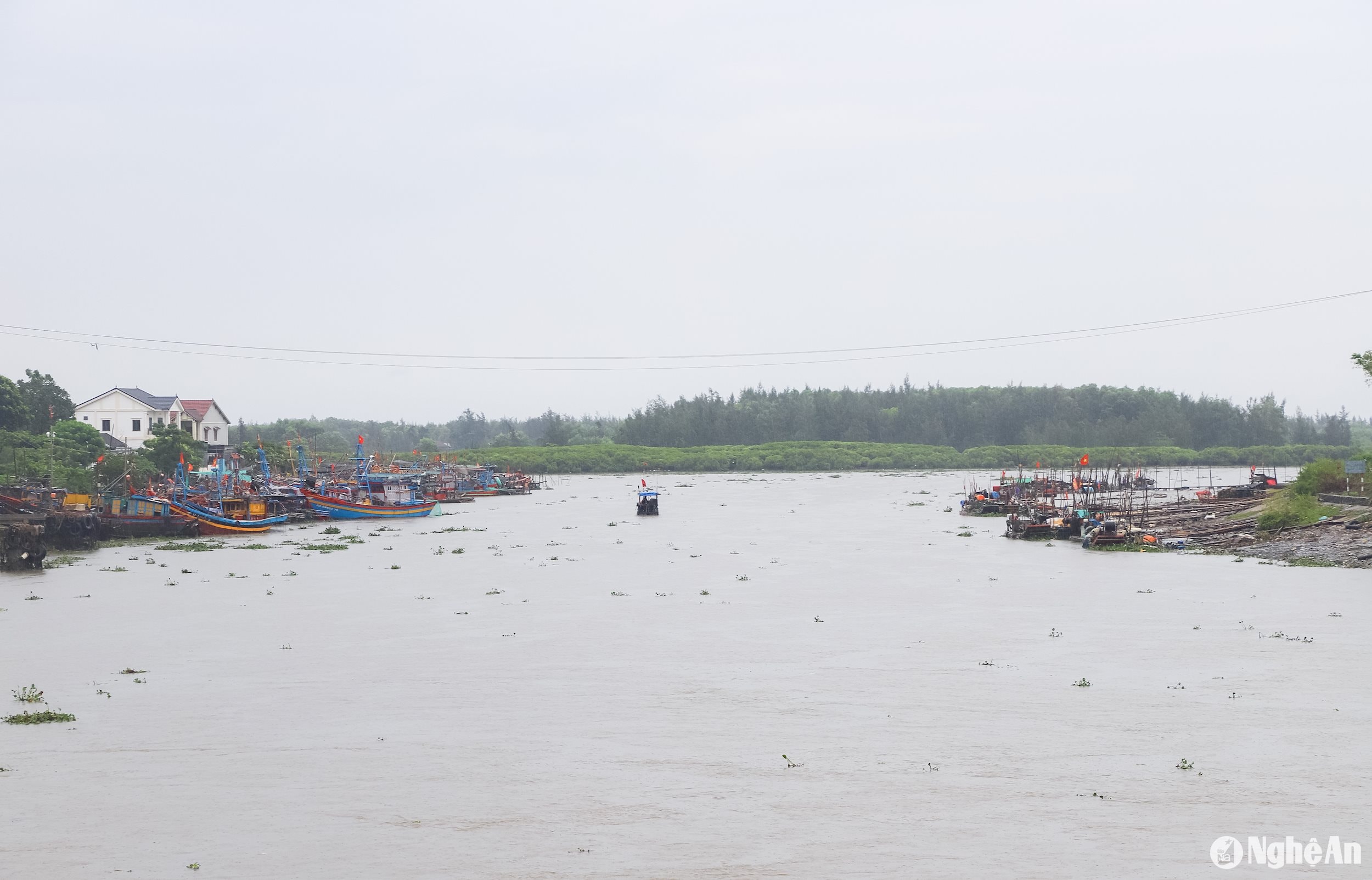
Chairman of the Provincial People's Committee Nguyen Duc Trung and his delegation inspected the response to Typhoon No. 3 at the Lach Quen fishing port area, in Quynh Thuan commune, Quynh Luu district.
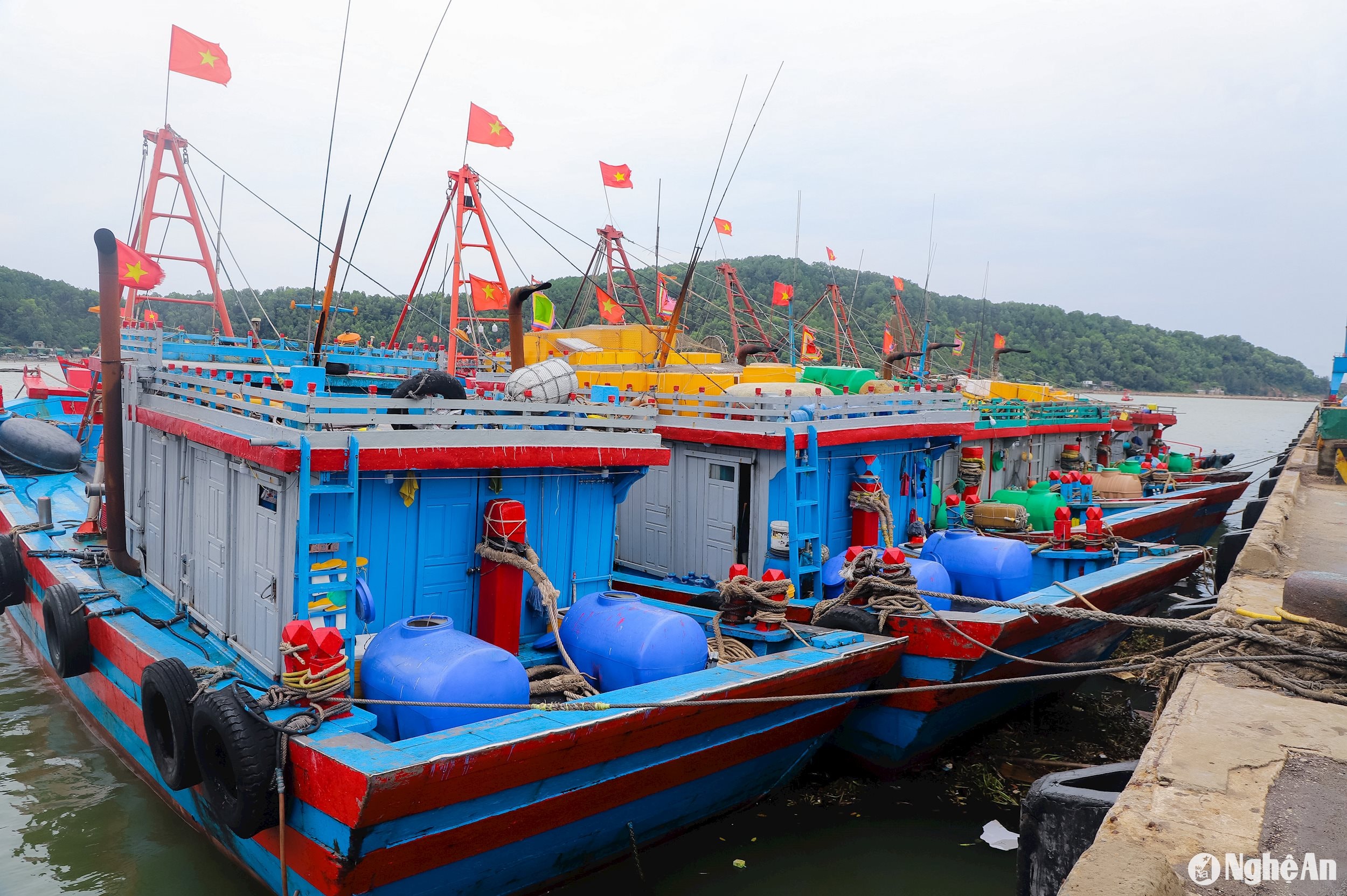
After the upgrade and expansion were completed, Lach Quen fishing port now meets the needs of 500-700 local fishermen's boats for safe mooring and shelter from storms.
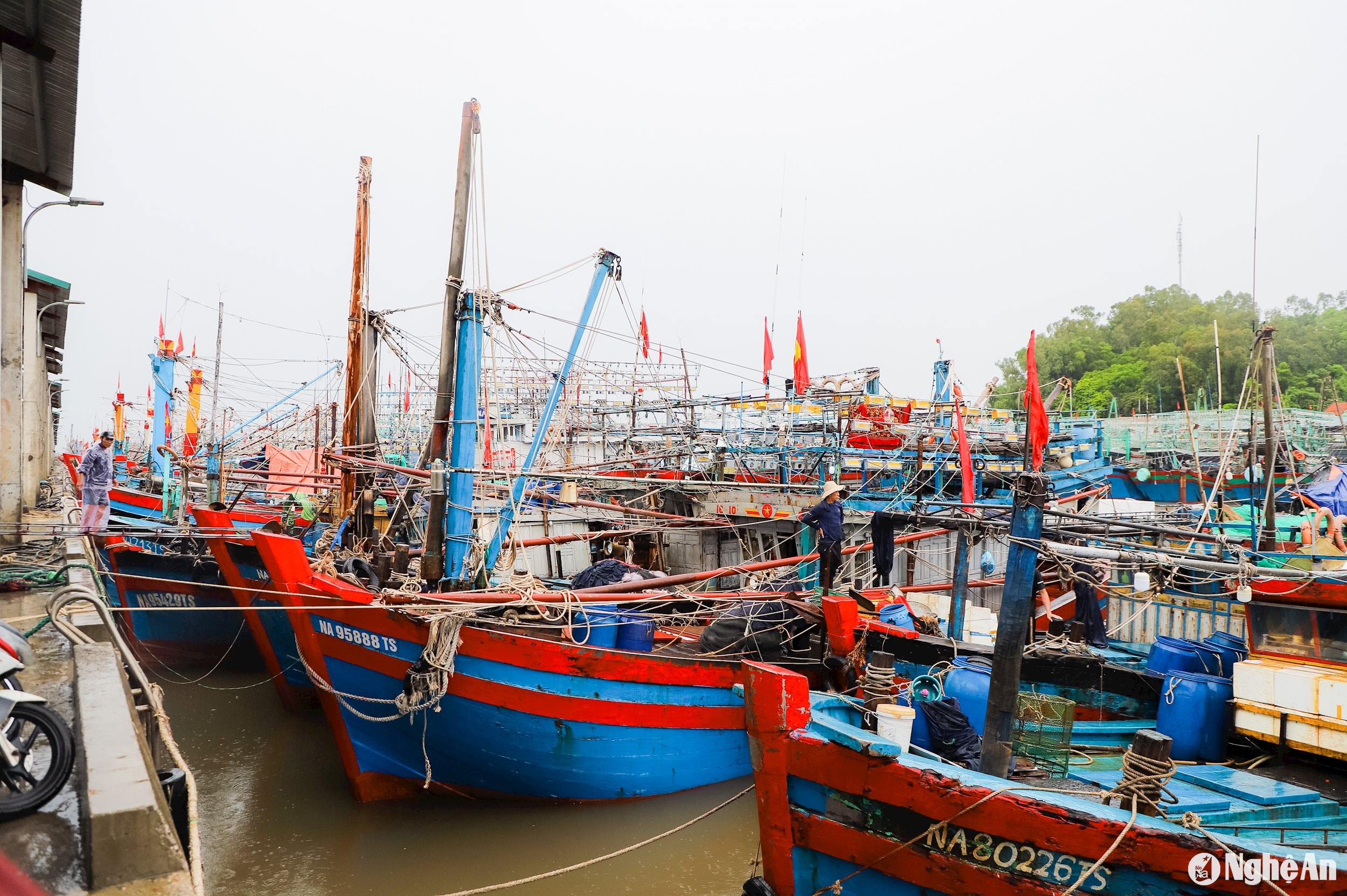
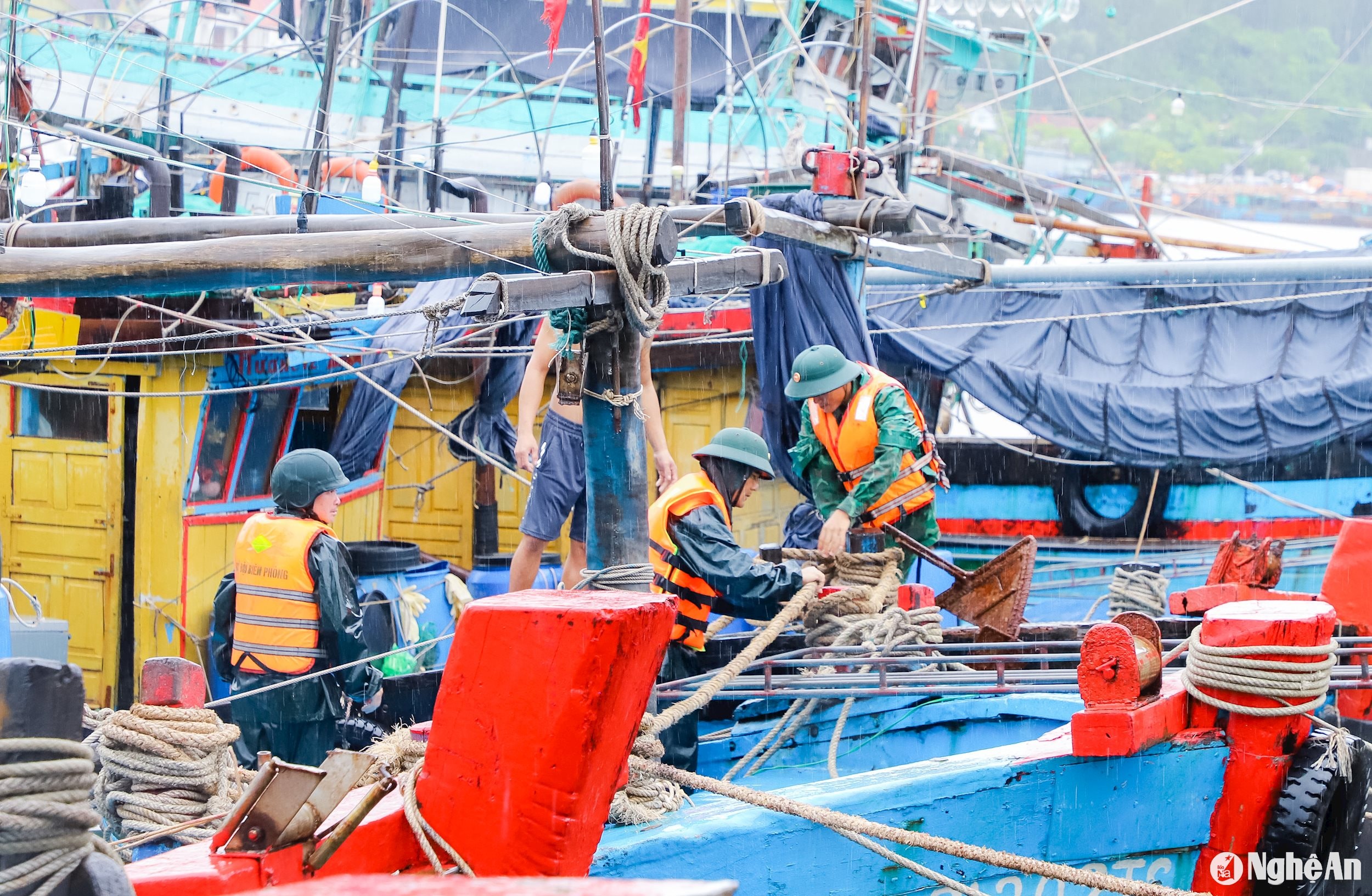
According to a report from the leaders of Quynh Luu district, in implementing the directives of the Prime Minister and the Chairman of the Provincial People's Committee, the district has established inspection teams to monitor disaster prevention and control work in communes and towns.
By the morning of September 6th, all 683/687 boats and ships in the district had returned to safe shelters. Currently, 4 vessels with 23 workers are still at sea in the Nghe An - Ha Tinh area and are heading back to shore. According to the district's plan, when strong winds of level 7 or 8 occur, the local authorities and organizations will mobilize and require households in 9 coastal communes to evacuate to safe areas.
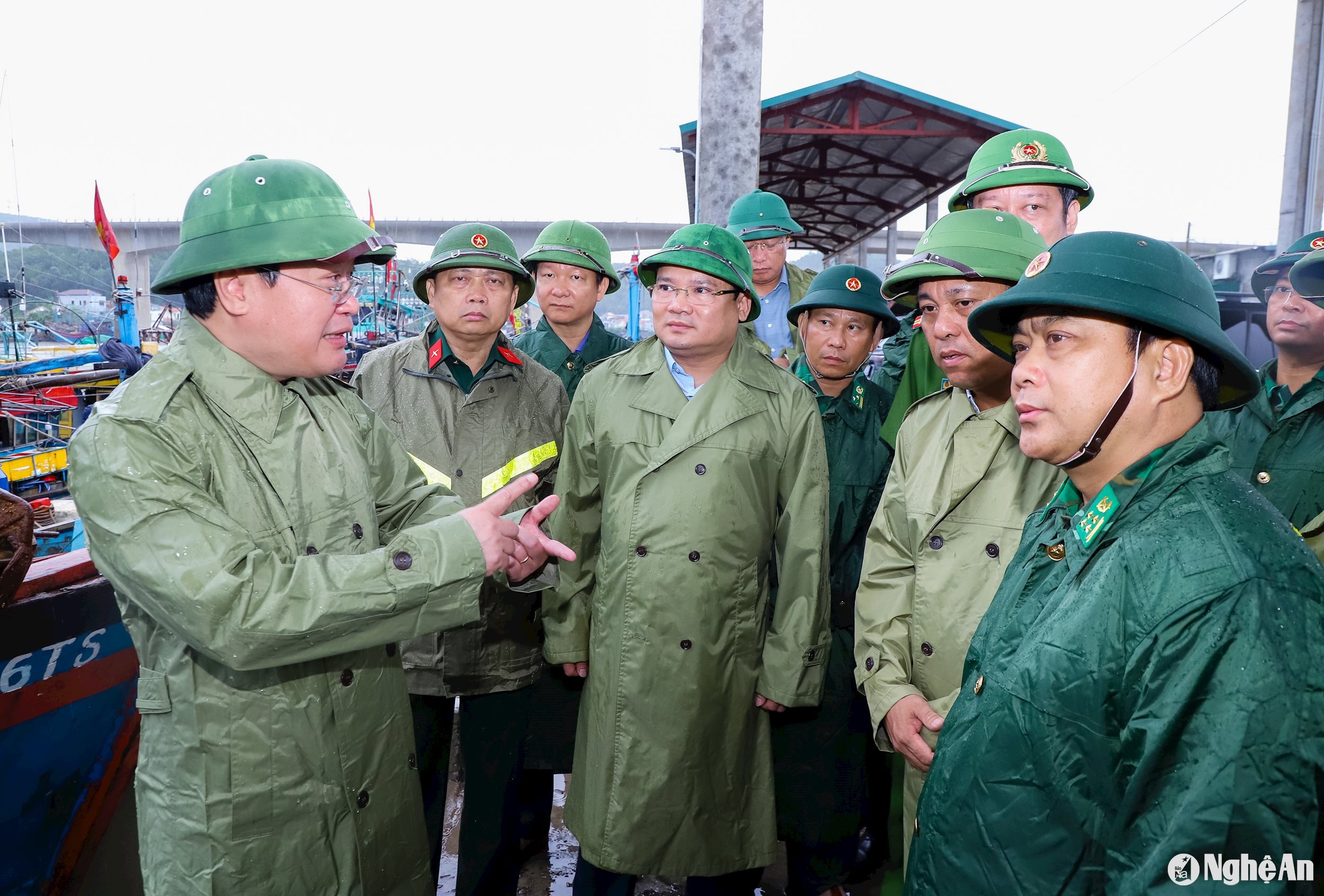
After inspecting the site and hearing reports, Chairman of the Provincial People's Committee Nguyen Duc Trung requested Quynh Luu district to arrange the safe mooring and arrangement of fishermen's boats, preventing collisions and effectively preventing fires and explosions.
We are determined to prevent people from remaining on aquaculture rafts, watchtowers, and boats, in order to ensure maximum safety when the storm directly impacts and causes heavy rain and flooding. If necessary, we must proactively enforce evacuation to ensure the safety of people's lives.
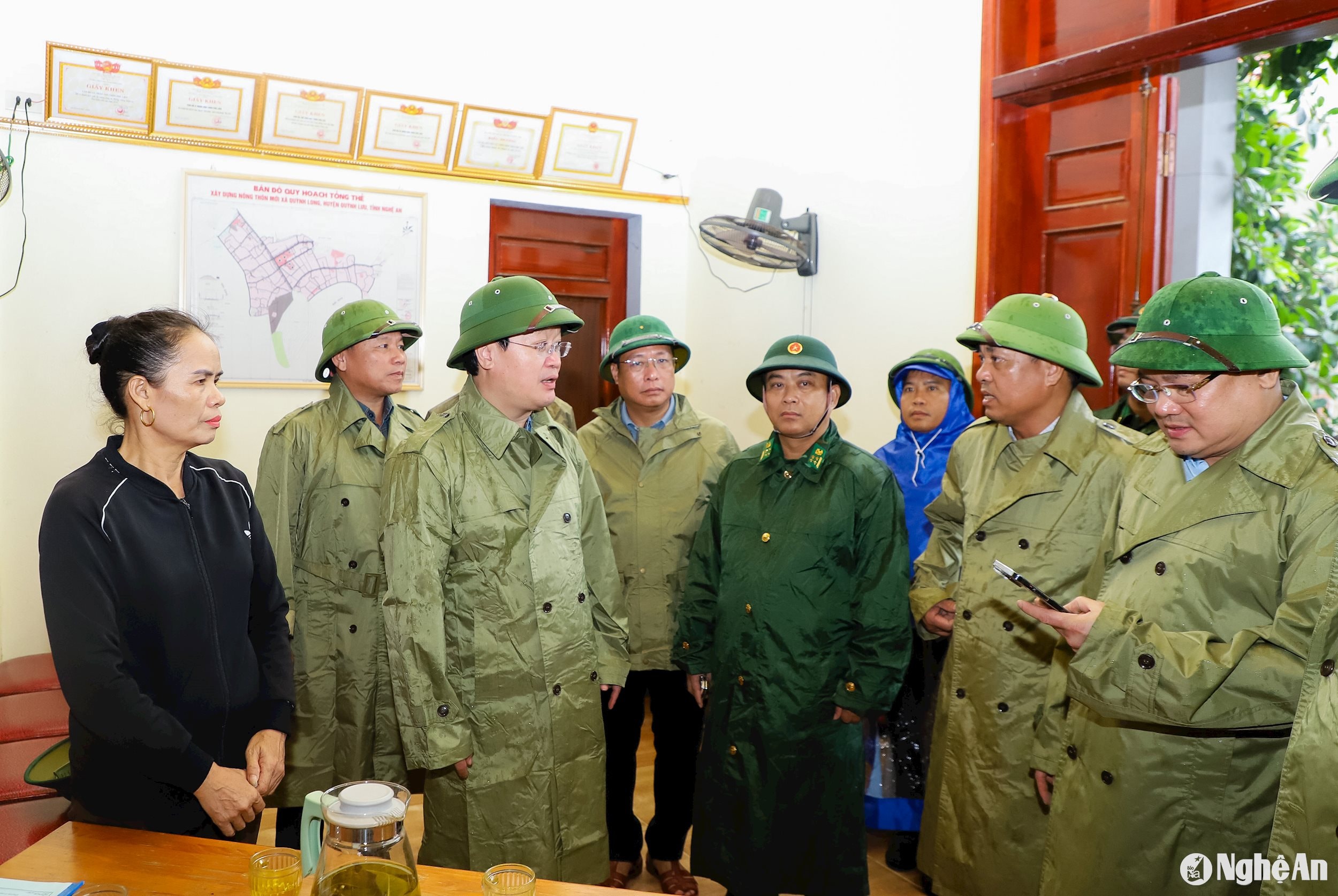
Proactively organize the evacuation of people from weak, unsafe houses and areas at risk of deep flooding and landslides, especially at river mouths and coastal areas. In cases where people must be relocated, local authorities must proactively arrange and prepare sufficient medicine, food, and drinking water for the displaced people.
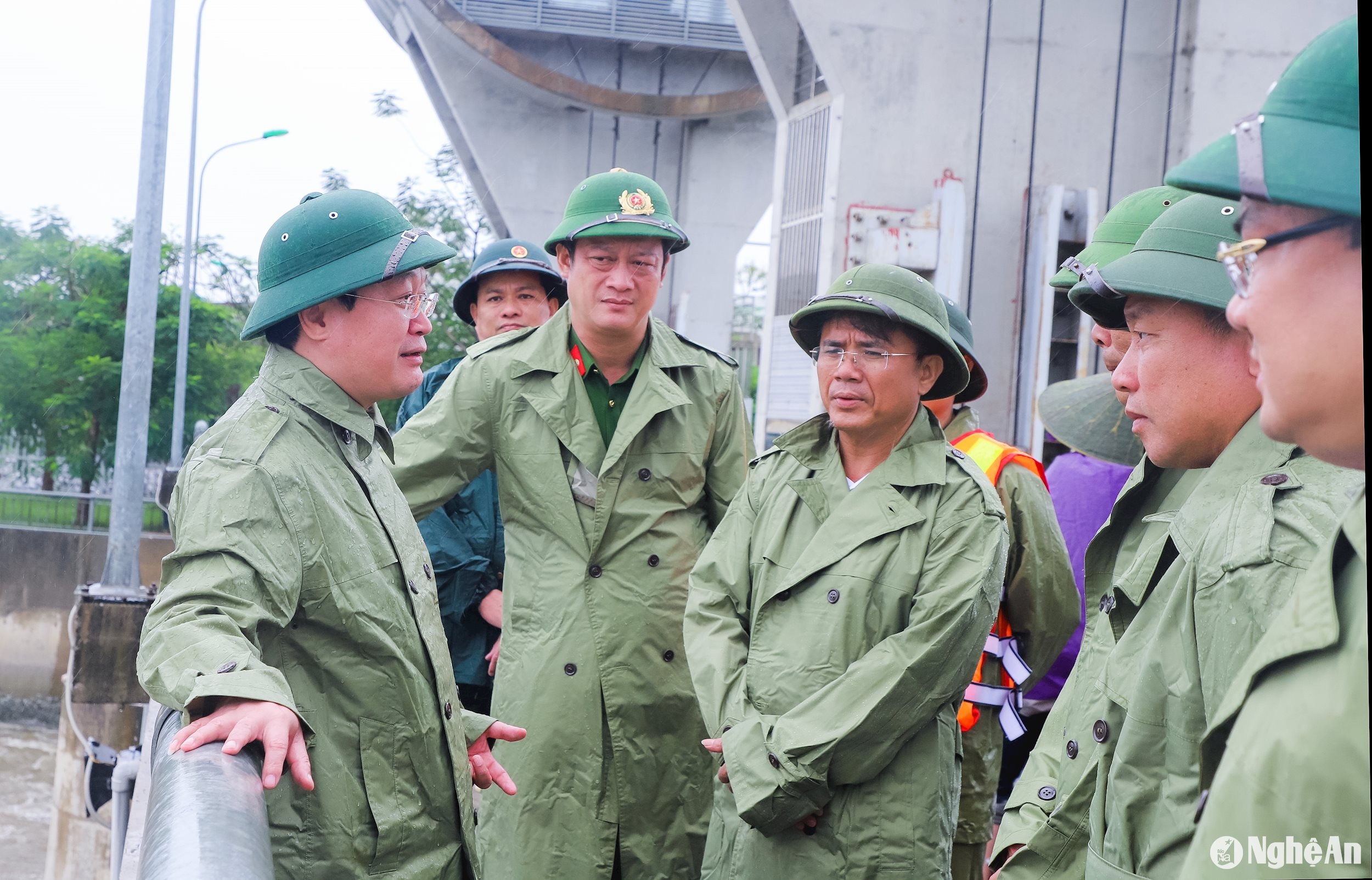
Next, Chairman of the Provincial People's Committee Nguyen Duc Trung and the delegation inspected the Dien Thanh sluice gate in Dien Chau district. This is a project within the Northern Irrigation System of Nghe An province.
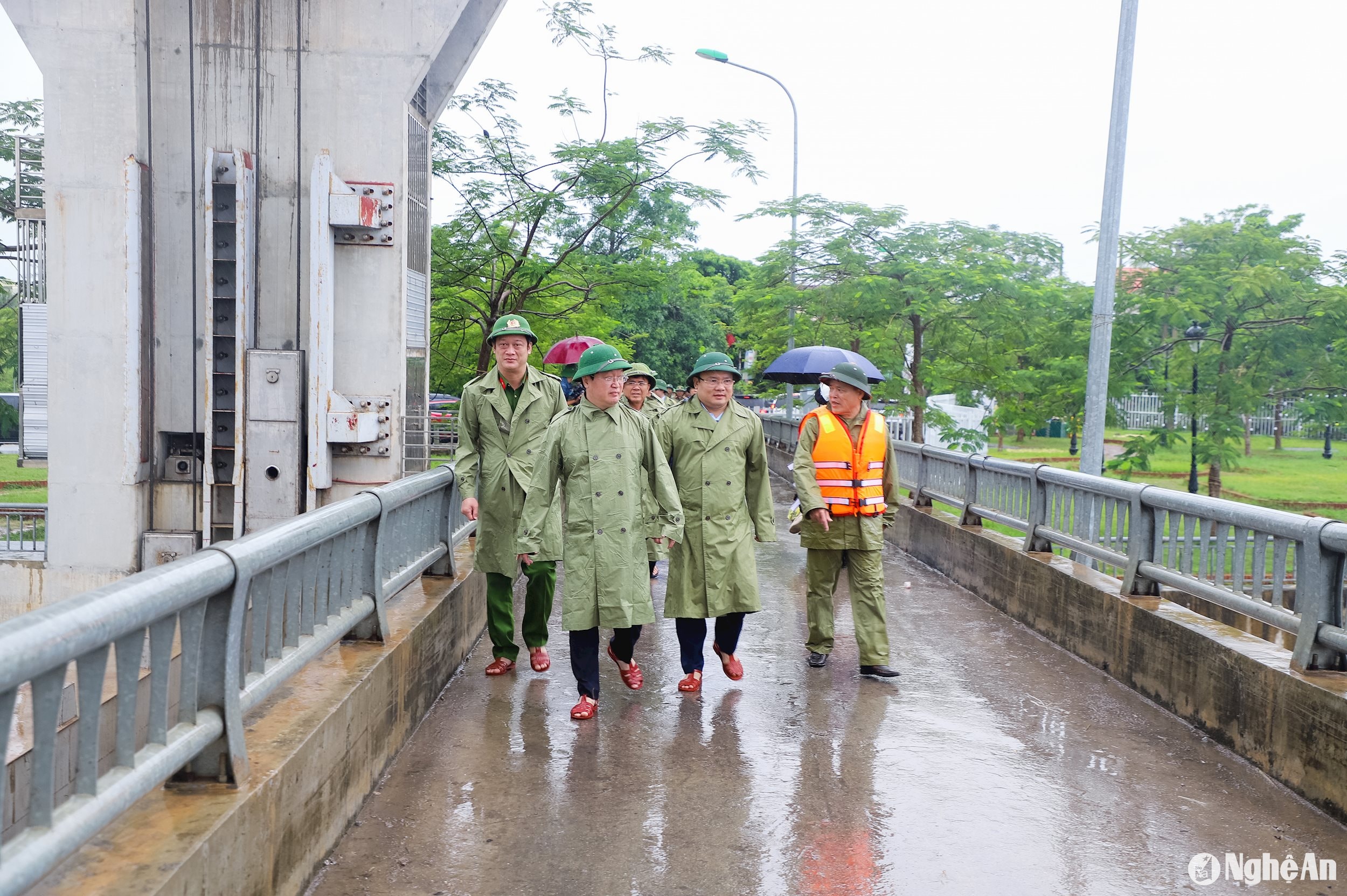
After the upgrade and expansion were completed, the Dien Thanh sluice gate will be responsible for draining water and reducing flooding in 15,000 hectares of low-lying areas in Yen Thanh and Dien Chau districts during the rainy season; and preventing saltwater intrusion and preserving freshwater during the dry season.
In this area, border guards and local authorities are coordinating to urge boat owners to relocate their moored vessels, in order to ensure the free flow of water in case the sluice gates are operated to drain water or prevent tidal surges.
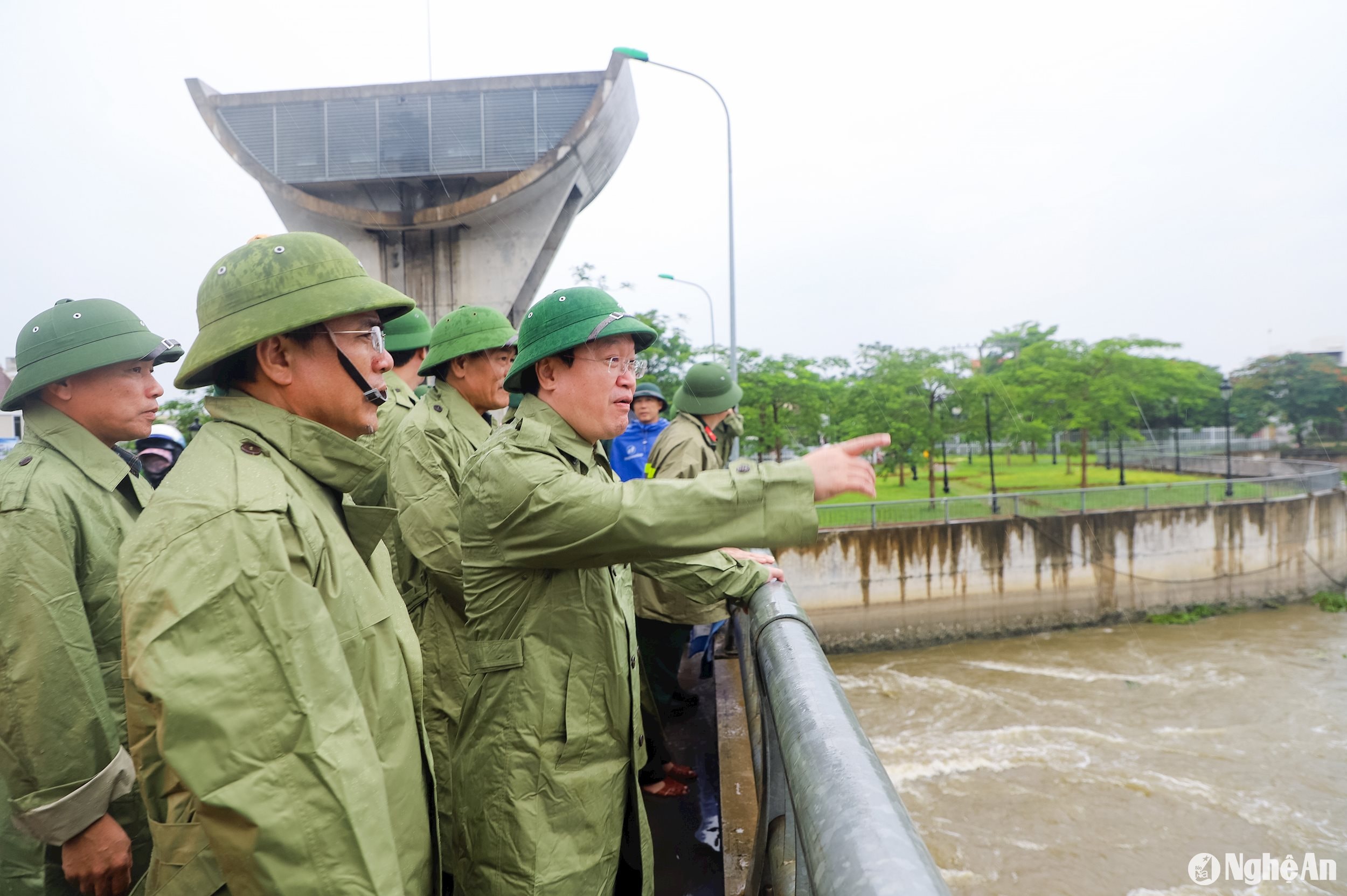
At the scene, Chairman of the Provincial People's Committee Nguyen Duc Trung emphasized the consistent principle of proactively preventing and responding to Typhoon No. 3 at the highest level; absolutely no complacency or negligence is allowed; and the "4 on-the-spot" and "3 ready" plans must be implemented.
Proactively organize the evacuation of people from weak, unsafe houses and areas at risk of deep flooding and landslides, especially at river mouths and coastal areas. In cases where people must be relocated, local authorities must proactively arrange and prepare sufficient medicine, food, and drinking water for the displaced people.
Proactively organize and closely monitor forecast information and developments regarding storms, rain, and floods, promptly directing and implementing response measures according to the "four on-the-spot" principle within assigned tasks and authority, avoiding passivity and surprises, in order to ensure the safety of lives and minimize property damage for the people.
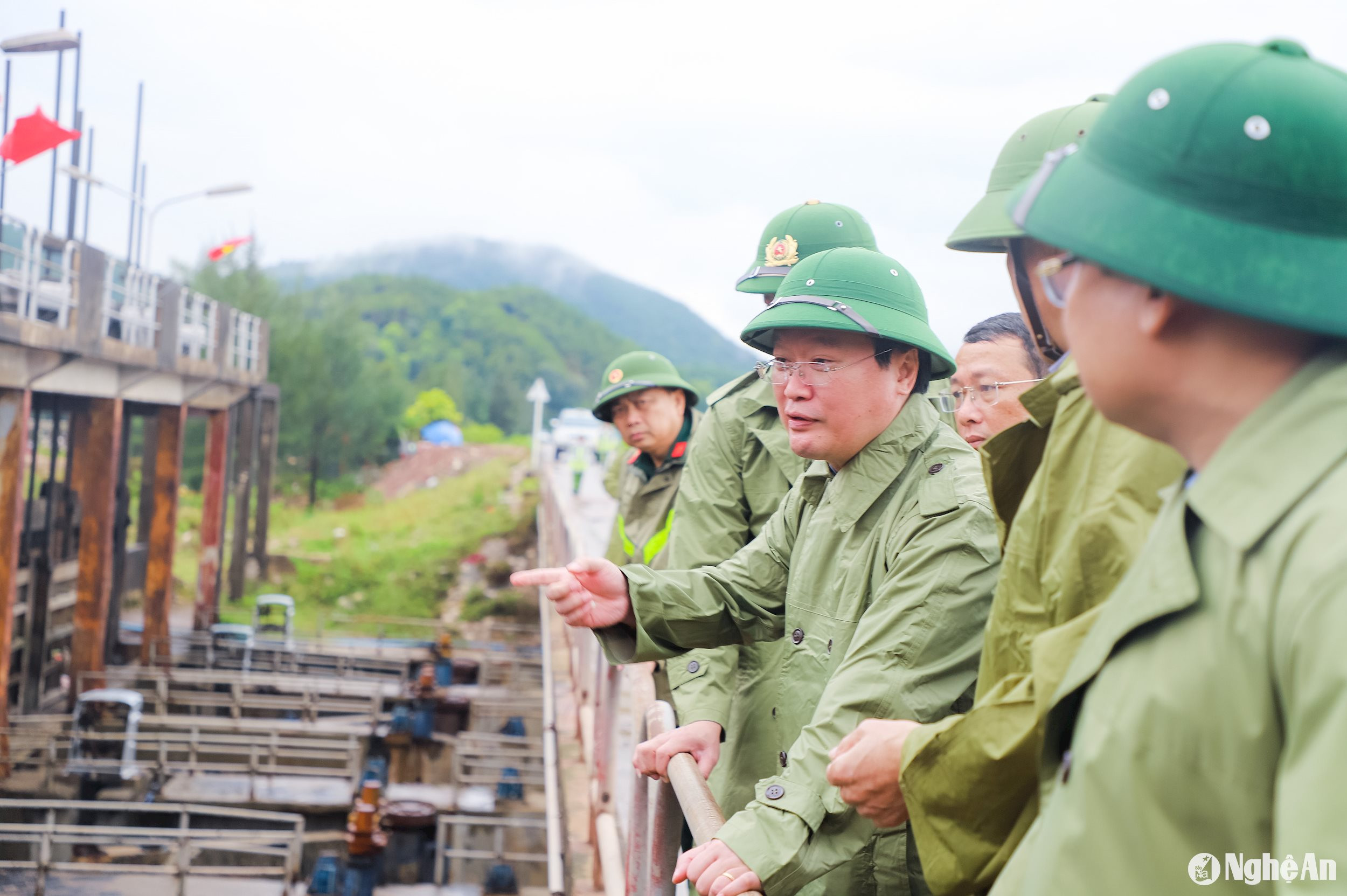
Chairman of the Provincial People's Committee Nguyen Duc Trung also inspected the Nghi Quang sluice gate and the Nghi Quang storm shelter area in Nghi Loc district. Currently, 310 fishing vessels with 1,012 local workers have returned to the mooring area to avoid the storm.
After hearing the report, the Chairman of the Provincial People's Committee highly appreciated the proactive and positive spirit of the local authorities and functional forces in calling on and organizing boats to return to safe shelters from the storm.
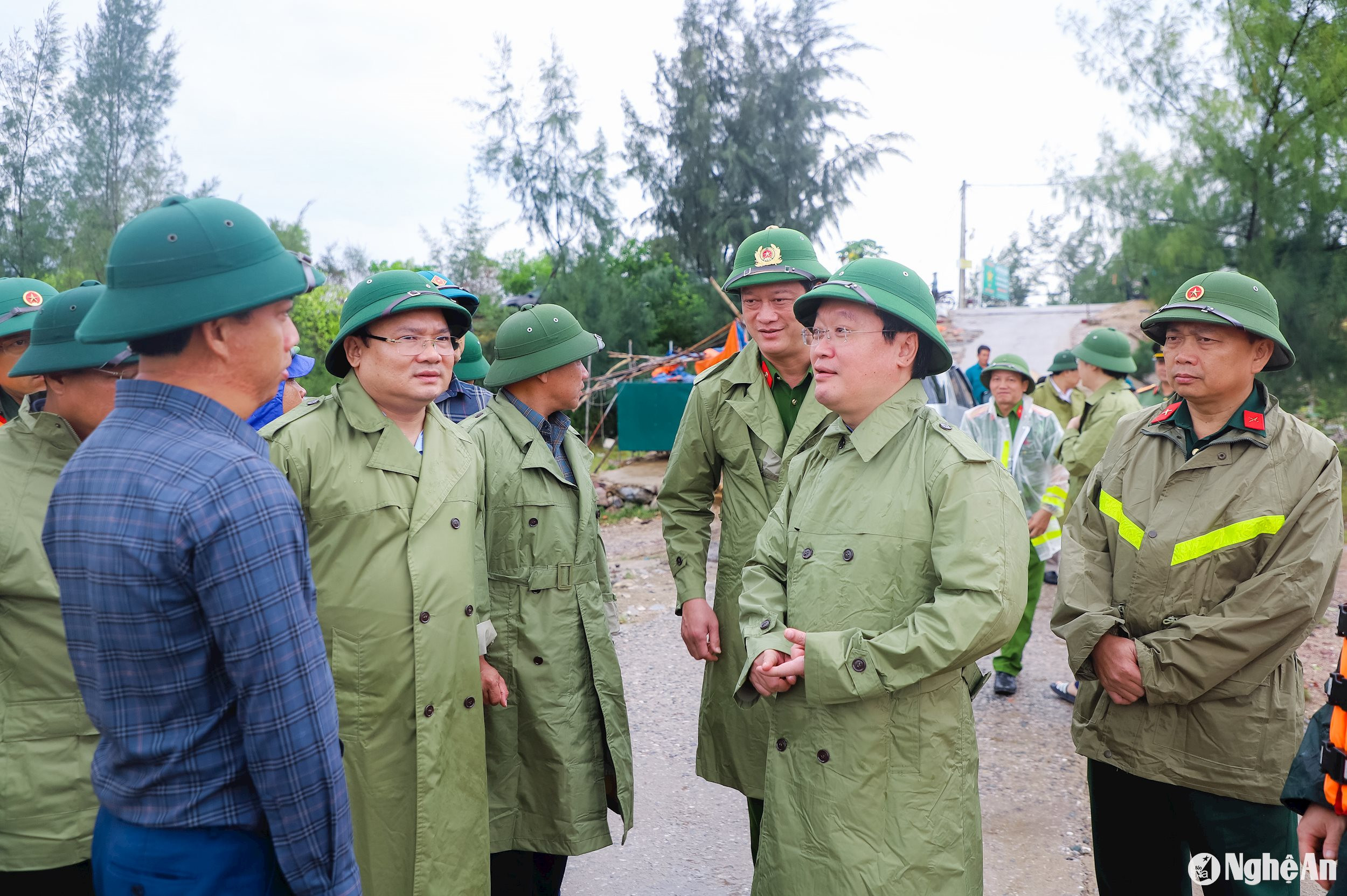
The Chairman of the Provincial People's Committee also inspected the vulnerable area at risk of landslides in Rong hamlet, Nghi Thiet commune. In this area, dozens of houses belonging to local residents are located at the foot of the mountain, and landslides could occur when heavy and prolonged rain occurs.
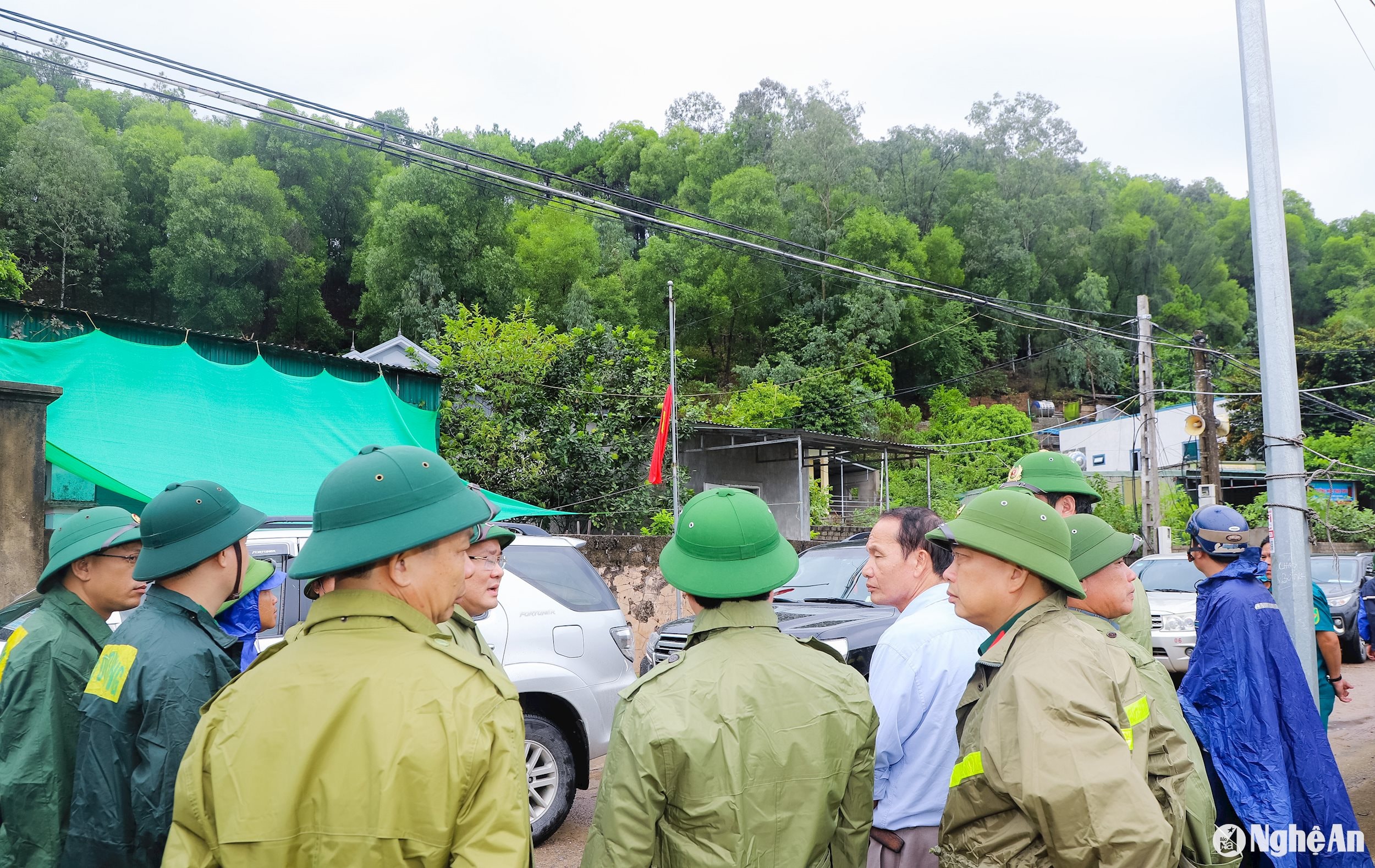
To ensure maximum safety of people's lives and property, the head of the Provincial People's Committee requested Nghi Loc district, Nghi Thiet commune, and relevant organizations and associations to proactively monitor the developments of the storm and rain, and to proactively evacuate people to safe places when dangerous conditions arise.
In the event of relocation, local authorities must proactively arrange and prepare sufficient medicine, food, and drinking water for the residents.
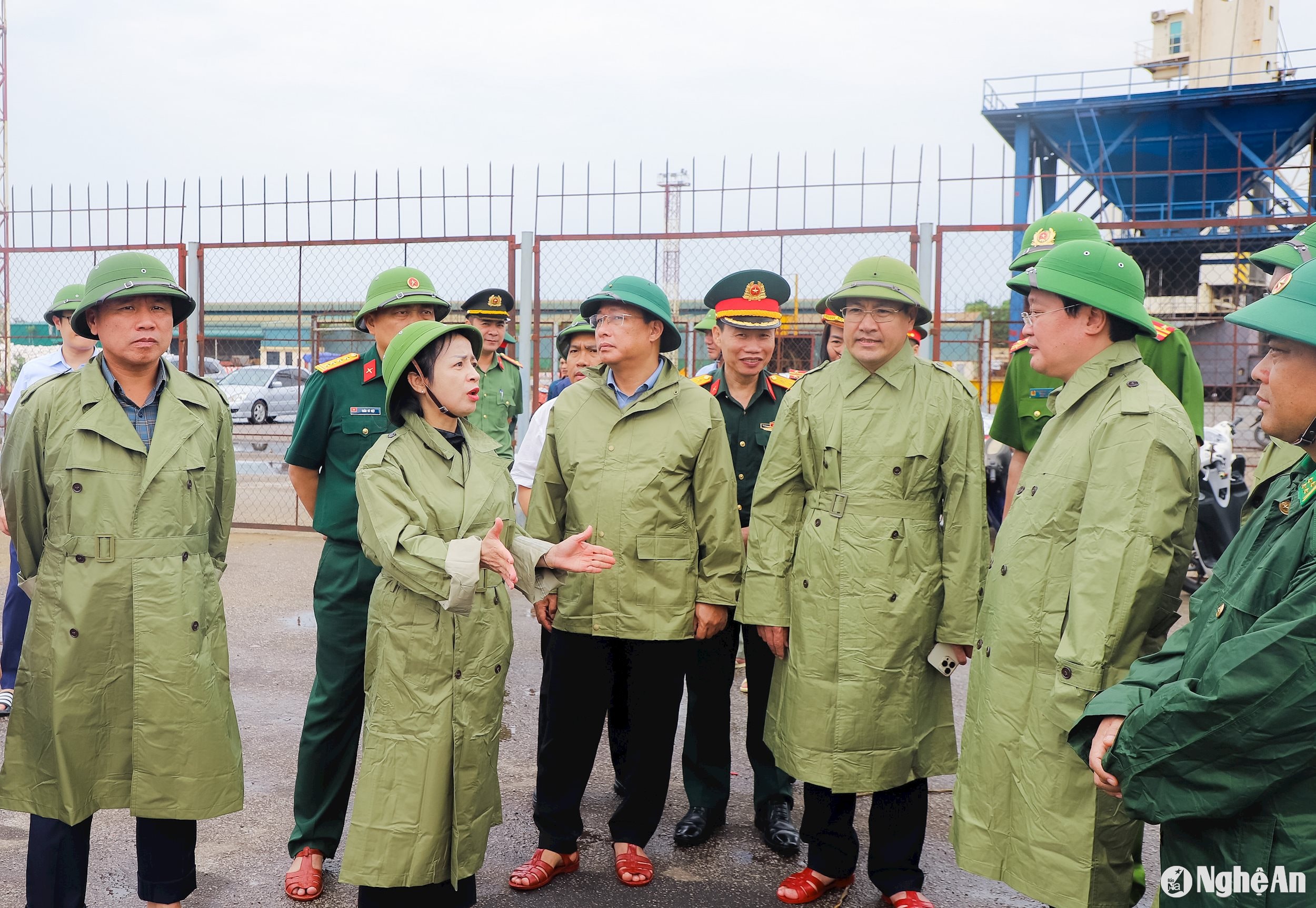
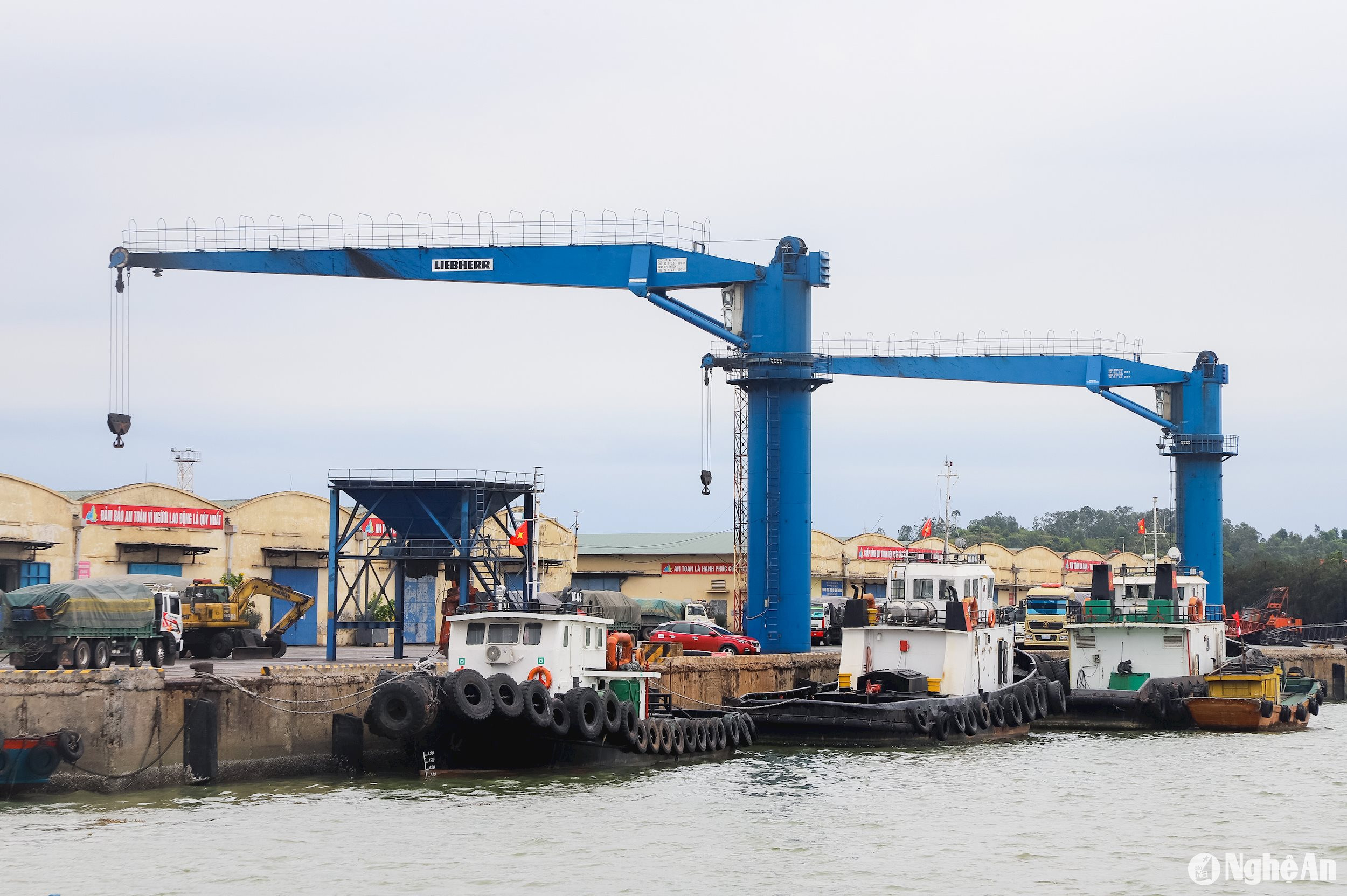
In Cua Lo town, the Chairman of the Provincial People's Committee inspected the response to Typhoon No. 3 at Cua Lo Port. According to the leaders of Cua Lo town, to date, 218 boats and ships in the area have returned to safe mooring places; people and functional forces have organized the securing of boats and ships to prevent collisions and being swept away by rising sea levels. Cargo handling activities at Cua Lo Port have also been temporarily suspended.
Cua Lo town has also organized numerous inspection teams to disseminate information, mobilize support, and guide households in coastal areas to reinforce their houses and restaurants. Furthermore, the town has developed plans to relocate residents in vulnerable areas in case of rising sea levels.
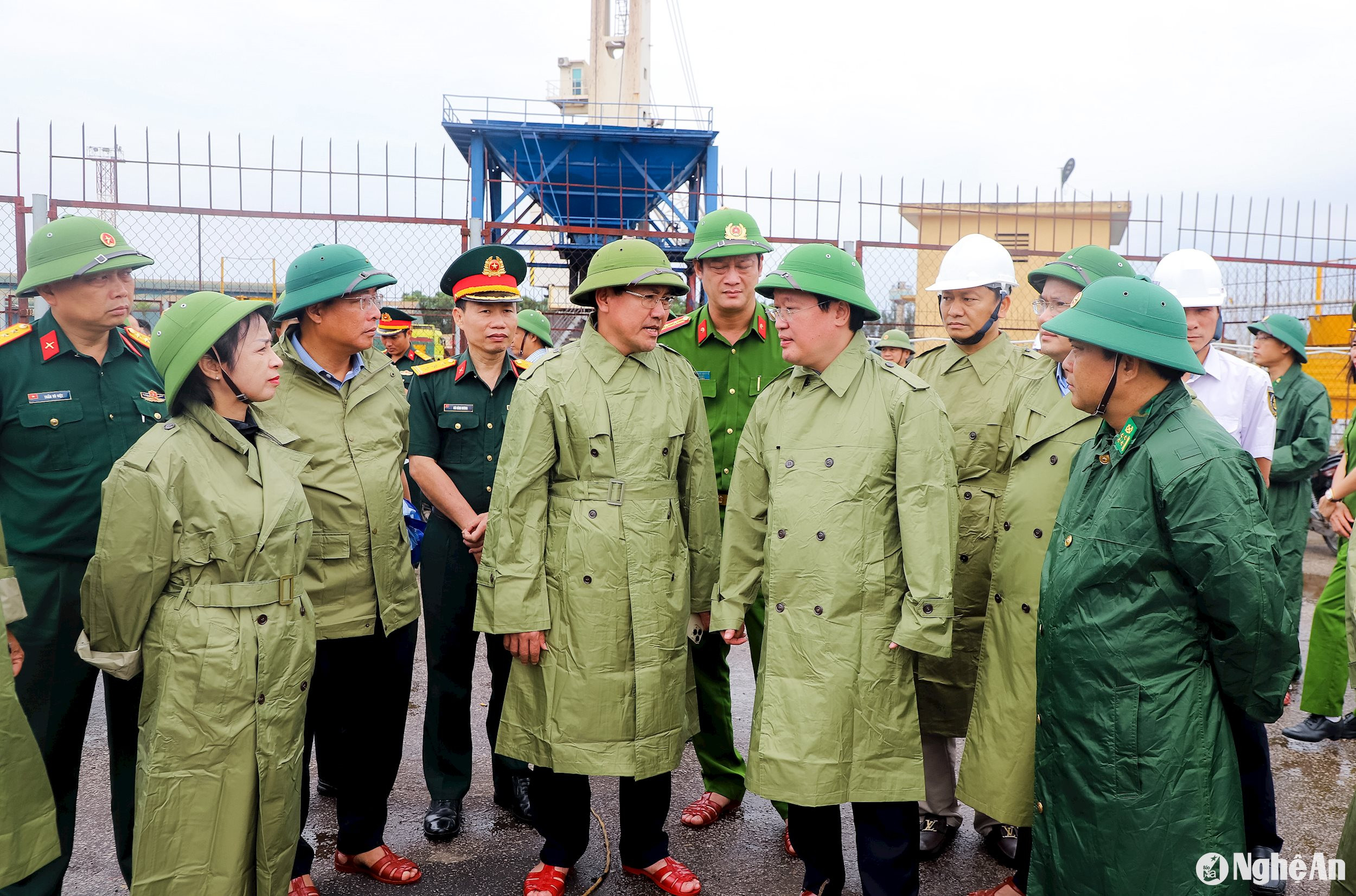
During his inspection visits to various localities, Chairman of the Provincial People's Committee Nguyen Duc Trung requested that Party committees, authorities, and relevant agencies and units focus on leading, directing, organizing inspections, and urging the decisive, timely, and effective implementation of storm prevention and response measures with the highest level of commitment to ensuring the safety of lives, especially children and vulnerable groups, and minimizing damage to people's and state property.
For coastal areas, border guards and local authorities arrange for the safe mooring and anchoring of fishermen's boats, preventing collisions and effectively preventing fires and explosions.
In particular, both the political system and the people must not be complacent or negligent; they must always be proactive in responding to typhoons and their aftermath.
We are determined to prevent people from remaining on aquaculture rafts, watchtowers, and boats, in order to ensure maximum safety when the storm directly impacts and causes heavy rain and flooding. If necessary, we must proactively enforce evacuation to ensure the safety of people's lives.
In addition, the local authorities coordinate with relevant units to ensure the safety of dikes, reservoirs, and dams, traffic safety, and to minimize damage to houses, warehouses, offices, public works, industrial zones, factories, and enterprises; to protect agricultural production and prevent flooding in urban and industrial areas.
Proactively deploy forces and resources in key vulnerable areas to be ready to promptly handle any situations arising from storms and floods; control travel, organize traffic diversion and guidance, and restrict people from going out during storm landfall and heavy rain and floods to ensure safety.


