
The story of politician Nguyen Phu Trong
Through a few stories about the great politician and "furnace burner" Nguyen Phu Trong, one can see that he is a great yet humble man.
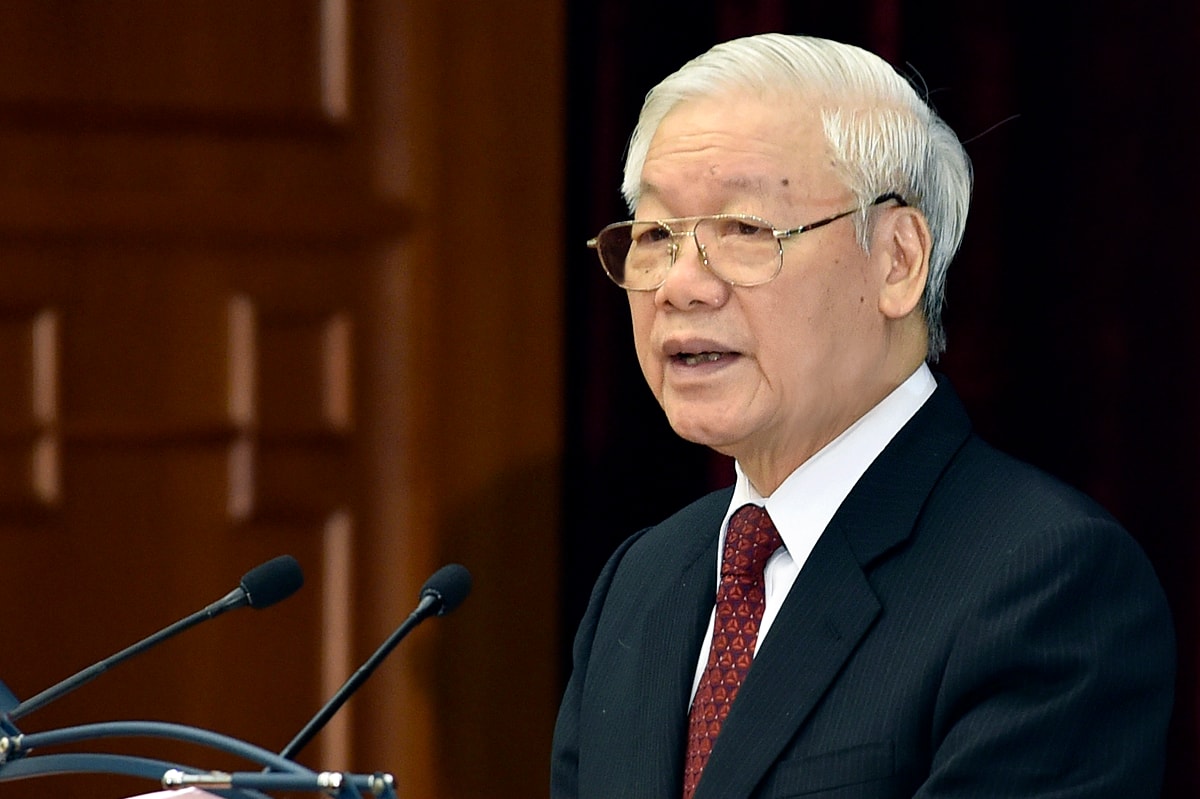 |
| General Secretary and President Nguyen Phu Trong. |
General Secretary and President Nguyen Phu Trong was a student in the 8th cohort of the Faculty of Literature, Hanoi University. More than half a century ago, becoming a student in the prestigious Faculty of Literature usually meant being a top student in Literature from high school, having passed the Northern region's Literature Olympiad. I am also very honored to be a student in the 11th cohort of the Faculty of Literature, three cohorts after Mr. Trong's.
Trọng's Literature class, Batch 8, was quite special, not only because it had the largest number of students in that cohort, but also because of its diverse composition. Some were students returning from Eastern Europe for special reasons. Others were students sent from the Library Science department of the University of Culture, and the rest were high school students with excellent Literature skills. Trọng was among them.
The 8th grade class entered the 1963 school year, the year when the American forces began to assess the situation. Therefore, the 8th grade Literature class had to move repeatedly from the Chinese High School to the dormitory in Me Tri, and in 1966, the final year, they were evacuated to Van Tho commune, Dai Tu district, Bac Thai province. When our 11th grade Literature class arrived at the evacuation site, we were greeted by the 8th grade Literature seniors who came to the Doi stream, the starting point of the evacuation area.
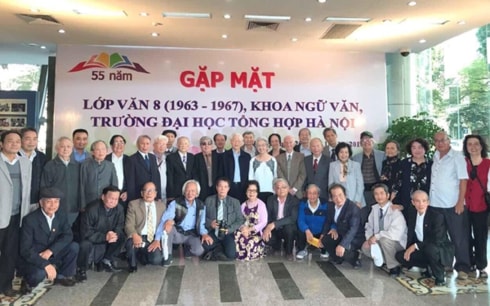 |
| General Secretary and President Nguyen Phu Trong poses for a commemorative photo at the reunion of the 8th grade Literature class (1963-1967), Faculty of Literature, Hanoi University. |
More than half a century has passed, and even now I cannot forget the picturesque places of the evacuation zone: Mount Tuong Tu, Doi Stream, Trang Duong Valley… but also the hardships and difficulties of climbing steep slopes into the forest to cut bamboo for houses, gathering firewood for the communal kitchen, and the days lying flat on the rice paddies watching flocks of planes fly overhead, bombing and strewn the town of Thai Nguyen, Dong Bam Bridge, and the beloved capital city of Hanoi.
Shortly after starting our studies, we, the younger students of the 11th grade Literature class, witnessed another unusual event in our senior 8th grade Literature class: more than half of the class, after completing their third-year thesis, were successively deployed to the battlefield, leaving only 30 students behind to work on their theses, including student Nguyen Phu Trong.
Back then, compared to the other students in the 8th grade Literature class, Trong was just like any other student. He didn't stand out with any special talents like some city students who played musical instruments or sang. He also wasn't among the upperclassmen who would come down to chat and socialize with the female students or those who enjoyed sports and arts activities like me.
In the 8th grade Literature class, Trong was purely a diligent, serious country boy who always complied with all the department's requirements, from the smallest things like having his hair cut short, tucking his shirt into his pants, and wearing sandals with all the straps. He fully participated in all daily routines and contributions, from going to the forest to gather bamboo and firewood, to guarding at night... This seriousness, combined with his attitude and consistently top-ranking academic results, led to him being elected the class's Youth Union Secretary in his second year and becoming one of the few students in the school to be admitted to the Party. As the Youth Union Secretary, Trong always arrived early for every meeting, waiting for everyone else.
All the students in the 8th grade Literature class, when recounting their experiences to the author of this article, commented that the class's Youth Union Secretary, Nguyen Phu Trong, spoke and behaved calmly and clearly. He was thoughtful, attentive to his friends, and remembered things related to them for a long time. Photographer Vu Huyen recounted that his older brother, Vu Trung Truc, unfortunately died of illness, and even six years after graduation, when they met again, Mr. Trong still inquired about his well-being and offered condolences.
Throughout our lives, we often encounter people who have undergone significant changes in their relationships with friends, classmates, and neighbors across different stages of life. How different are their humble beginnings and their successful careers? But with General Secretary and President Nguyen Phu Trong, it's different.
The 8th grade Literature class graduated in 1967, but due to job assignments and the demands of the newly graduated students, especially during wartime, the students in the class did not have the opportunity to meet each other.
From 2000 to the present, for various reasons, the 8th grade Literature class has only recently had the opportunity to meet again, and class reunions are held almost annually. During this period, most of the former 8th grade Literature students have retired. While working, they were editors-in-chief of major newspapers, national news agencies, general directors, deputy ministers, and ministers; now they are all ordinary citizens. The only exception is the former student – the kind, simple, and thoughtful Youth Union Secretary Nguyen Phu Trong – who remains a leading and important politician in Vietnam.
Normally, there is a considerable distance between an ordinary citizen and the General Secretary and President. Their common ground is the bond of shared school days and old friendships. However, this distance was quickly bridged by General Secretary Nguyen Phu Trong's statement at a class reunion: "Each of us holds different social positions, but the most precious thing I always respect and that will forever remain is the bond between teacher and student, of fellow students." With this mindset, the General Secretary and President is one of the most frequent attendees of class reunions, unless he is busy, and he always informs his classmates so they can ask for his permission.
Upon receiving the class reunion notice to celebrate Mr. Trong's nomination to the Central Committee, he carefully asked for permission from the class because he had already taken his wife on his motorbike to visit his old teacher at Nguyen Gia Thieu School. Another class reunion was held at the Cultural Preservation Center on Hang Bong Street. It was a holiday, so Mr. Trong called journalist Vu Huyen – a classmate who lived nearby – to give him a ride on his motorbike to the meeting. During the meeting, he chatted and joked with his classmates. Journalist Tran Dinh Thao even jokingly asked him, "Have you paid your class fund yet?" He smiled, but before he could answer, Ms. Thai Thanh from the class's liaison committee happily announced, "Mr. Trong always pays in full and on time."
Once, the class returned to Trang Duong, their former evacuation site. At that time, Mr. Trong was the Chairman of the National Assembly, and his wife accompanied them in a large car. On that occasion, they bought a television to donate to the former evacuation community, and when handing it over, Mr. and Mrs. Trong announced that it was a gift from the Literature Class of 8th Grade. Journalist Vu Huyen recounted that during that trip, Mr. Trong instructed the class organizers to take good care of the driver and declined the planned reception that Mr. Nguyen Bac Son – then Secretary of Thai Nguyen – intended to organize. He said, “I am a former student returning to visit the people who sheltered us during the evacuation; I request that there be no lavish reception.” At a class reunion, which coincided with his election as General Secretary of the Party, someone suggested congratulating the General Secretary. Mr. Trong immediately replied, “That is my assigned duty; at the class reunion, I am just like any other classmate.” Afterward, he respectfully presented gifts to the teachers and contributed to the class, as he did at every other reunion.
Once, while visiting photographer Vu Huyen's home, cameraman Vu Duong, Vu Huyen's son, remarked, "Your hair is so white, you must work a lot." Mr. Trong smiled and jokingly replied, "Everyone in my class and your father's class worked a lot. Many people worked even more than me. Like back in school, when my class performed the play 'Rising Wind,' Mr. Tran Duc Chinh played Lieutenant Phuong, and Ms. Hong Due played Ms. Van. Your father held the loudspeaker to announce that everyone should sit quietly; I was just helping him carry the battery."
There are many stories about the renowned politician – the great "furnace burner" Nguyen Phu Trong – but through just these few anecdotes, we understand that the man who ignited the blazing furnace that consumed countless corrupt elements is a great yet humble man. He understands that titles and positions are fleeting illusions of life. He respects integrity and dedicates his strength and intellect to the cause he pursues. He does not crave empty fame and does not compromise his dignity for personal gain. That is the character of a true scholar and statesman.


