The Thai Lao demonstration of September 12, 1930 - a day of struggle.
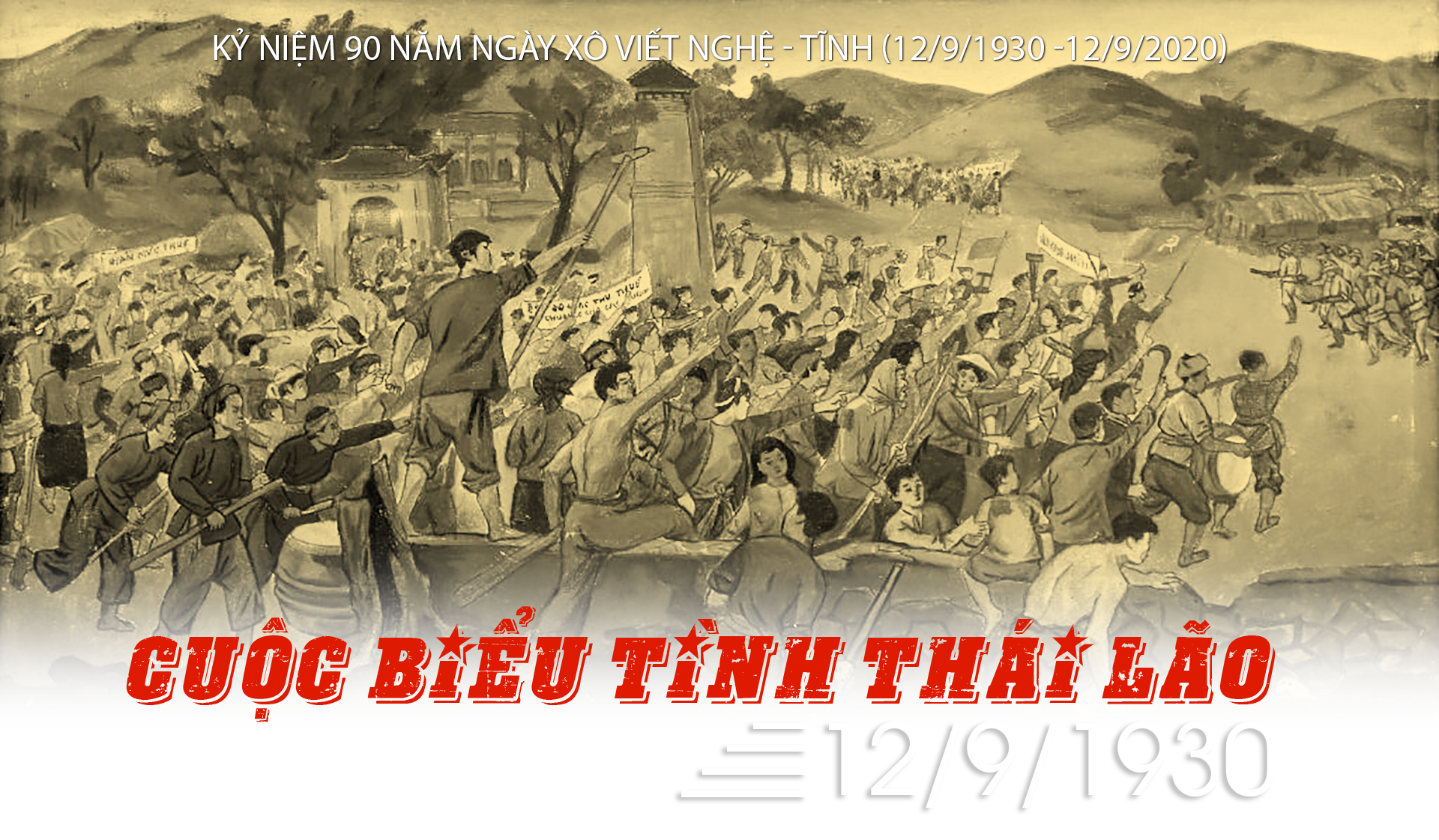
(Baonghean.vn) - The protest march was majestic and boisterous. Many people working in the fields grabbed hoes and rakes and followed along, their trousers rolled up and their feet covered in mud. The shouts of "Exemption from taxes," "Delay taxes," and "Increase wages" drew an ever-increasing crowd to this day of struggle.
Chu Trong Huyen • September 11, 2020 08:12
“We can’t just sit here and wait to die, we must stand up together!…” Crowds of people surged forward, their voices echoing the words of Ms. Nguyen Thi Phia.(1)The speech attracted even more crowds. These were farmers from various places: Pho Dong, Pho Tu, Quang Xa, Nam Kim (Nam Dan district), Lang Dao, Thinh Qua (Duc Tho district, Ha Tinh province); Long Xuyen, Xuan Trach, Mai Son, Dong Chau (belonging to Phu Long commune, Hung Nguyen district)... They all streamed in, their footsteps echoing loudly. People kept coming, filling the courtyard and even the lawn in front of Pho Dong temple.
As soon as the speech ended, cheers and drums and gongs resounded throughout the villages and communes of Trung Can, Duong Lieu, Hoanh Son, and Dong Son (belonging to Nam Kim district, Nam Dan county)... urging everyone on.farmers, young menLet's set off together. Indeed, not a single alleyway was left unawakened.
With prior preparation, the large and small boats of the two water-dwelling villages, Van Con and Van Set, were mobilized to transport everyone unfamiliar with crossing the bridge. And, right on the northern bank, was the Yen Xuan train station.
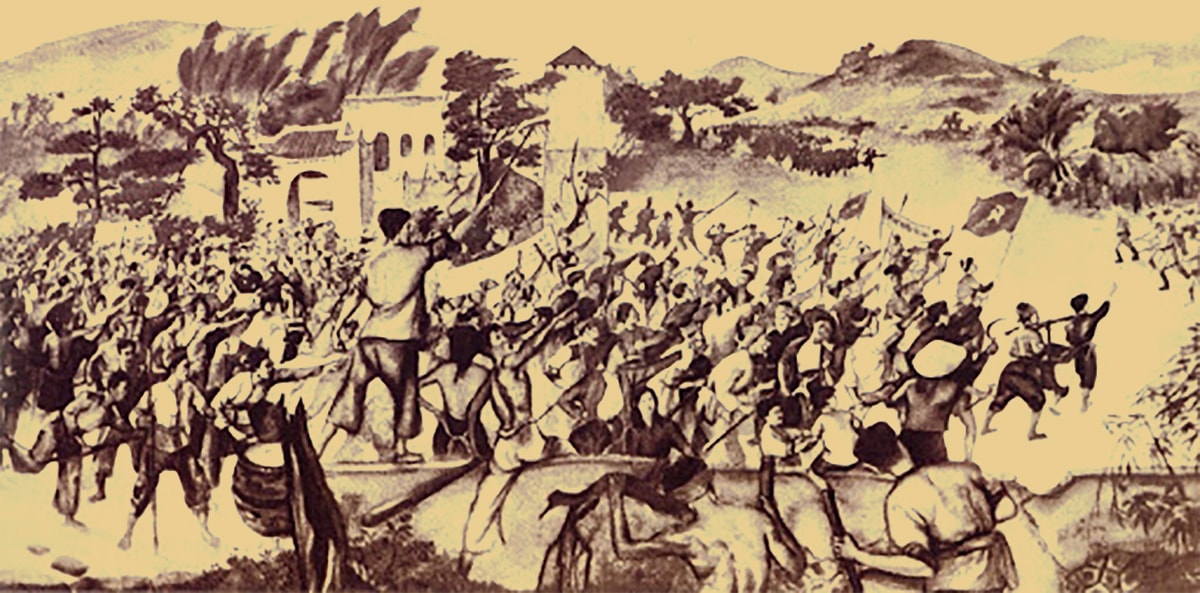
The speech attracted even more crowds. They all streamed forward in a clamor, their footsteps echoing loudly.
From around the end of the Hour of the Ox to the beginning of the Hour of the Tiger on September 12, 1930, as soon as dawn broke, the people had crossed to the left bank of the Lam River, crowding the dike. The drums beat louder than even during the times when the floodwaters were rising and the dike was about to break.
Then people, from the foot of Mount Thanh and down from Cho Lieu, kept pouring in. They all advanced towards Yen Xuan station, 9 kilometers from the center of Vinh by rail. There, in the middle of the night, thanks to a report from the Phu Long district chief, the station master called the French Consulate. As a result, another group of soldiers arrived at dawn, but they couldn't do anything. By then, the protesting people had crowded the station, the railway tracks, and the embankment. Then a woman stood up and gave a speech.(2):
– Do you know, for generations, our ancestors, living on both banks of the Ca River, have toiled, raised silkworms, traded cloth, carried goods on their backs, burned charcoal, and worked in mines, yet still remained poor. Recently, the French imperialists have used every trick in the book, exploiting us, causing us to lose our land and homes, and die of hunger and cold. If we just sit here and endure this, we will lose our entire race.
The crowd shouted in unison:
Down with French imperialism and the feudal regime of the Southern Dynasty!
– Increase wages, reduce working hours.
– Exemption from taxes, deferral of taxes, allocation of public land to the military!…
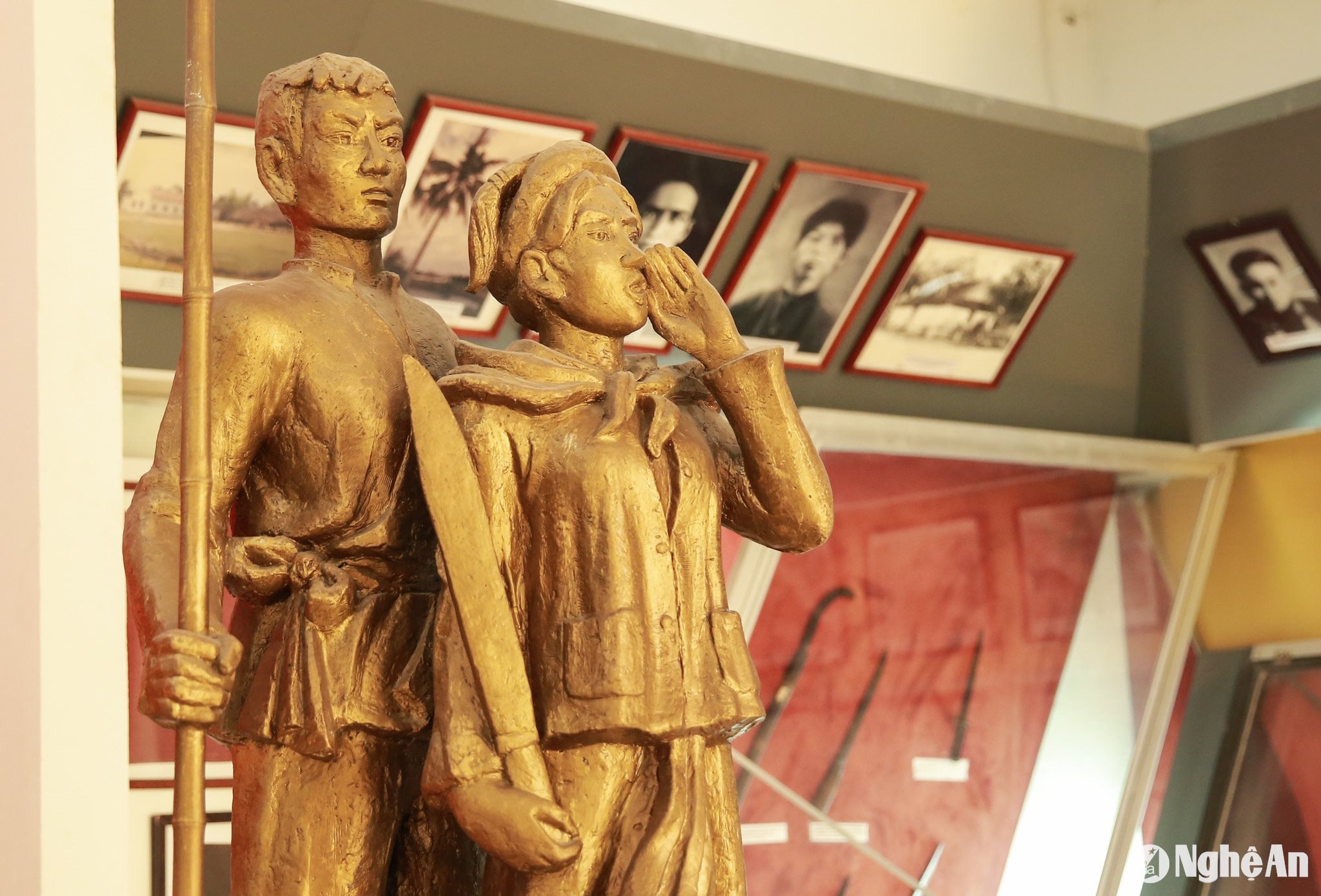
The calls for "exemption from taxes," "tax deferral," and "wage increase" drew ever larger crowds into the protest movement.
As soon as the chants ceased, the passenger train from Vinh arrived. By order of the Vinh Consulate, the railway officials had started the train half an hour early, but the protesters still managed to throw numerous leaflets into the carriages. The soldiers had no choice but to stand still and let the crowd act. The station master was forced to cut the telephone lines and was then swept away by the protesters.
From there, the procession moved like a great storm, sweeping away obstacles along the way, heading up to Cho Vuc and then following the district road, passing through the villages of Phuc Hau, Phu Xa, Thong Lang, Hoang Can, and on to Thai Lao before descending to the district capital at Cau Duoc.
The protest march was majestic and boisterous. Many people who were working in the fields grabbed hoes and rakes and followed along, their trousers rolled up and their feet covered in mud. The shouts of "exemption from taxes," "postponement of taxes," and "increase in wages" drew an ever-increasing crowd to this day of struggle.
The flag bearer led the way to Mung Bridge, and the last group crossed Can Market. In this manner, everyone marched forward in a resounding rush, aiming to pass the Governor's Residence at Duoc Bridge and reach the Vinh Consulate.
The slogans put forward by the peasants were essentially the very real interests of the workers and farmers, and there was nothing unreasonable about them. However, down in Vinh at that time, Commissioner Martin, Governor-General Pham Ba Pho, Chief of Secret Police Robert, and Military Commander Petri... were all panicking and scrambling to find a way to escape after sending more soldiers to suppress the demonstration. Martin himself telegraphed the French Governor-General's office about such a large and tireless demonstration.
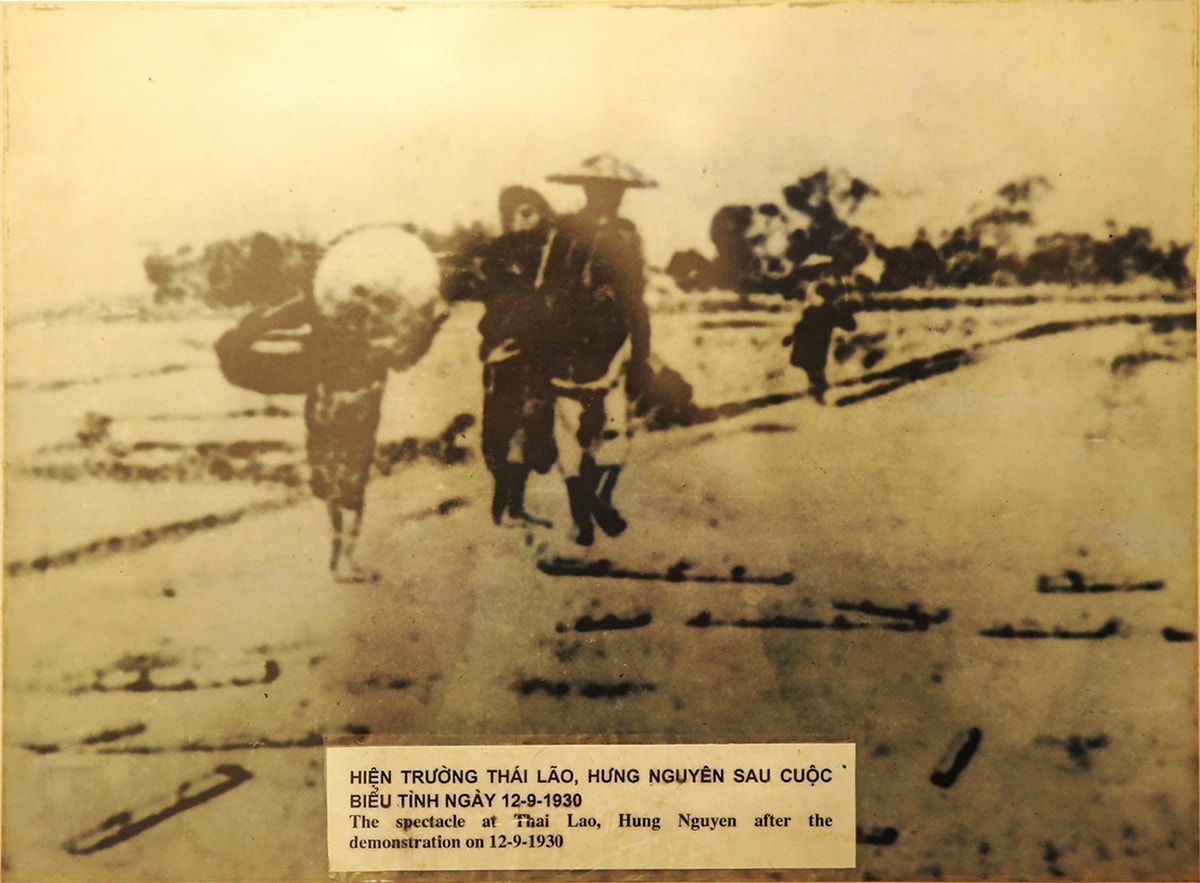
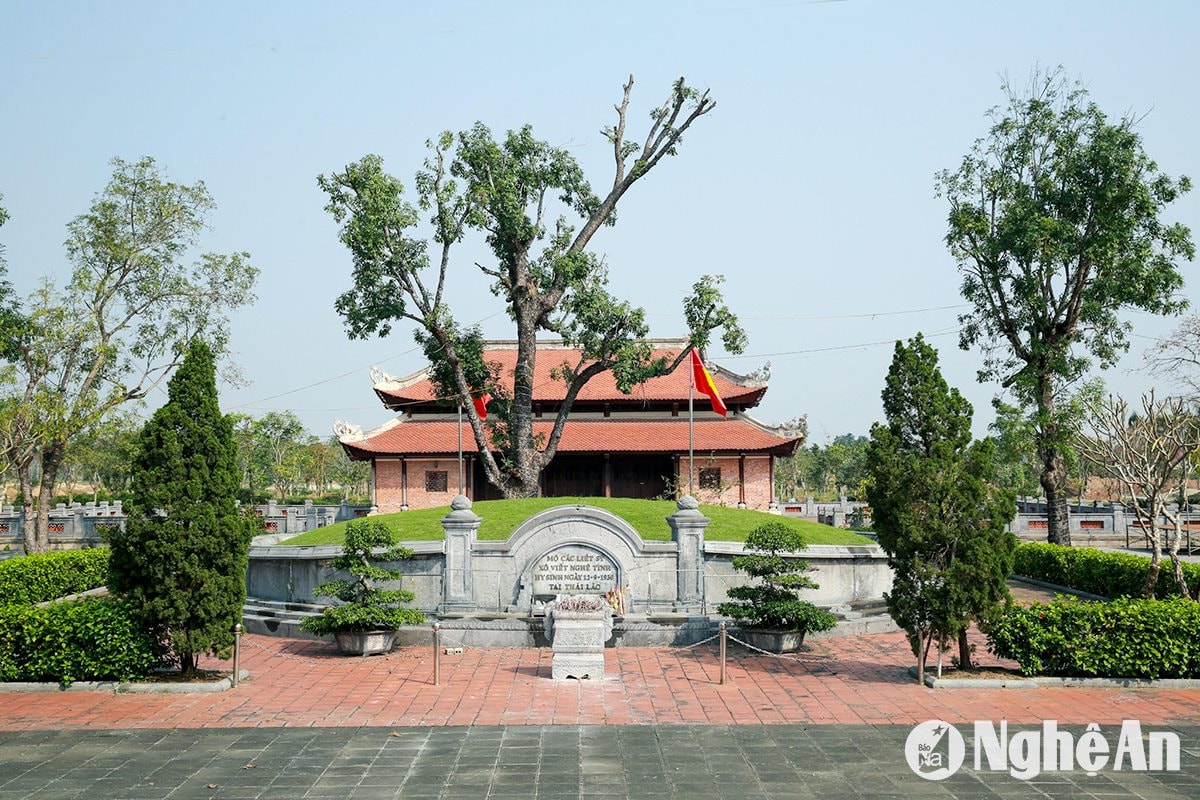
As the unarmed protesters reached the Đồng Quan field of Thái Lão village (where the Memorial site is now located), a group of three planes swooped down and dropped bombs.
Smoke from gunfire filled the sky, mingling with the earth, sand, and vegetation, and even parts of the bones and flesh of those who protested unarmed. A heinous crime committed by the French empire against our compatriots who loved freedom and longed to live peacefully on the banks of the Lam River!
Nguyen Nam, a severely wounded Red Peasant Union commander, his brown shirt soaked with blood from his chest, reached out and handed his walking stick and a bundle of rice wrapped in banana leaves to the person next to him. Looking around at his fellow farmers, at his comrades sharing the same meager meals and patched clothes, he spoke in his final breath:
– Everyone, advance! Keep advancing and kill all the foreign invaders!
The protesters obeyed. In the ranks, many carried the sticks or spears of those who had just fallen, with a heavier sense of responsibility. The struggle acquired new slogans:
"Down with the French imperialists who massacred the protesters!"
"We are determined to avenge those who died from enemy bombs."
At the same time, the entire town of Vinh - Ben Thuy was in a state of alarm. In many places, including the French Consulate, the Governor's Palace, and the Military Barracks, there was chaos. Foreign Legionnaires, red-uniformed, green-uniformed, and yellow-uniformed soldiers, along with all kinds of weapons, were deployed by their commanders to protect government offices and fortifications! They sent a detachment of troops up to the district capital to join the already stationed soldiers, hoping to intercept the protesters from afar. But before the protesters could reach the city, the commanders had already fled into the villages to hide. Meanwhile, the soldiers were pushed aside by the protesters, standing trembling. The protesters continued to advance.
In the ranks, many carried the staff or spearhead of a fallen soldier, a symbol of their increased sense of responsibility.
Suddenly, our commanders received a report that the Prefect of Hung Nguyen, Pham Huu Van, had abandoned his office, taking his wife, children, and several officials with him, and fled to Vinh, seeking refuge behind the machine gun emplacements of the Foreign Legion soldiers.
Upon receiving that news, Mr. Lu(3)Standing atop a raised mound of earth, with neatly trimmed hair and a tanned complexion, he declared solemnly and seriously:
"The enemy has abandoned this office and fled. They, the French colonialists and the Southern Dynasty officials, may hide their faces, but they cannot escape responsibility, nor can they erase their crimes. This blood debt will be paid by our people for generations to come. We are ready to suffer losses in this struggle to achieve ultimate victory, forcing the colonialists and feudalists to return the factories to the workers, return the land to the peasants, and grant freedom to all the suffering people. This is only the first battle. The struggle is still arduous and fierce, but the enemy must certainly pay for their blood debt. Our revolution will certainly succeed. I urge our people to return home and prepare for tomorrow's battles."
On the afternoon of September 12th, under the leadership of several Party branches, members of the Communist Youth League and the Red Self-Defense Force were gathered to help families bury their fallen comrades when a former reactionary village chief, eager to gain favor, rushed down to the provincial capital to report that the people were protesting again. And so the French invaders came again to drop bombs!
On September 12, 1930, amidst the brutal massacre by the French imperialists, 217 of our compatriots were killed and 125 were wounded.
The martyrs of Thai Lao fell for the independence of the Fatherland and the happiness of the people. At the same time, Soviet power was established in many rural areas of the two provinces of Nghe An and Ha Tinh.
(Recorded in August 1976, based on the account of Mr. Nguyen Ngoc Cac (1902-1984), from Hung Long commune, Hung Nguyen district)
(1) She has the pseudonym Lam, from Trung Can village, Nam Kim commune, a party member of the combined branch of two communes: Phu Long (Hung Nguyen) and Nam Kim (Nam Dan).
(2) According to the protesters at that time, it was Ms. Nguyen Thi Quang Thai, the younger sister of Ms. Minh Khai (her maternal hometown is in Dao village, Duc Tho, Ha Tinh).
(3) Chắt Lũ, also known as Lê Xuân Đào, was the organizer and leader of this demonstration, but publicly, before the masses, the Party branch chose Nguyễn Ngọc Ngoạn as the General Commander. Comrade Ngoạn was then being monitored by the Communist Party branch for potential membership.