
Da Nang has dominated the PCI ranking for three consecutive years.
The Provincial Competitiveness Index (PCI) 2015 recorded Da Nang ranking first for the third consecutive year...
The 2015 Provincial Competitiveness Index (PCI) ranking recorded Da Nang maintaining its top position for the third consecutive year, with a score of 68.34, and this is also the sixth time the city has led the country since the index was first published 10 years ago.
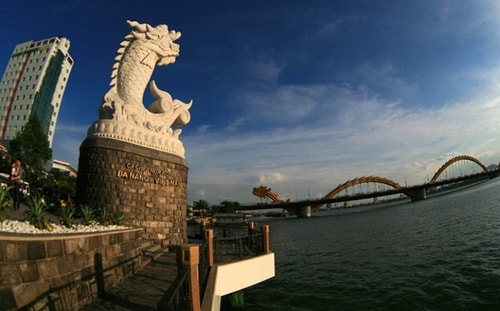 |
| A corner of Da Nang |
Hanoi disappoints
According to the PCI 2015 report published by the Vietnam Chamber of Commerce and Industry (VCCI) on the morning of March 31st, the organization conducted the PCI 2015 survey based on feedback from 11,700 businesses, including 10,200 domestic private enterprises operating in 63 provinces and cities, and nearly 1,600 foreign-invested enterprises operating in 14 provinces and cities nationwide.
The 2015 PCI ranking placed Dong Thap in second place after Da Nang with 66.39 points and Quang Ninh in third place with 65.75 points. The Vietnam Chamber of Commerce and Industry (VCCI) stated that the top positions were occupied by provinces and cities that had implemented numerous administrative reform initiatives and improved the quality of governance.
The next two localities in the group with good governance quality in the 2015 PCI are Vinh Phuc (62.56 points) and Lao Cai (62.32 points) - provinces that have previously achieved good results in the PCI in previous years.
The top 10 provinces and cities with the best governance quality in 2015 also include: Ho Chi Minh City, Thai Nguyen, Quang Nam, Long An, and Thanh Hoa. These localities all received many positive reviews from private businesses.
At the bottom of the 2015 PCI ranking were the provinces of Lai Chau, Ha Giang, and Dak Nong.
Notably, while Ho Chi Minh City ranked 6th, Hanoi only improved by two places, ranking 24th with 59 points. Several localities that were expected to perform well still had low results, such as Nghe An, Hung Yen, Binh Duong, Ha Tinh, Hai Duong, etc., all struggling in the lower half of the ranking.
VCCI Chairman Vu Tien Loc said that Vietnam's competitiveness is largely determined by the quality of governance and the favorable business environment at the provincial level. Therefore, the dynamism, pioneering spirit, and diligence of the local civil service are determining the speed and direction of Vietnam's development in the coming period.
The bigger the business, the more it gets "harassed".
According to VCCI, the overall quality of economic management in provinces and cities continues to improve. Many administrative procedures related to registration and access to information have also seen positive changes.
However, informal costs remain prevalent, and an unequal competitive environment continues to be a major obstacle, according to many domestic businesses.
Dedicated an entire chapter to the business environment, the 2015 PCI survey also noted positive signs in Vietnam's business environment. The percentage of private enterprises increasing their investment capital continued to rise slightly (10.9%), and the average capital size of enterprises increased significantly, reaching an average of VND 16.5 billion, double that of 2006.
The percentage of businesses hiring additional workers was 12%, double that of 2012. In 2015, nearly half of businesses indicated they would expand their production and business operations in the near future, the highest level in the last five years since the PCI (Provincial Competitiveness Index) was published.
The PCI 2015 report also reflects businesses' opinions on the business environment in 2015. According to the survey results, small and medium-sized enterprises (SMEs) have not been able to seize market opportunities effectively, with most remaining confined to the domestic market and experiencing relatively lackluster business results.
These businesses continue to face difficulties in accessing capital, land, and legal information, while also bearing a heavy burden of informal costs and not receiving quality business support services at reasonable prices.
What is even more concerning is that the larger the business, the greater the burden of administrative procedures and inspections from local government agencies.
The majority of businesses support the TPP.
According to the PCI 2015 report, based on the perceptions of 1,584 FDI enterprises, Vietnam continues to be positively evaluated compared to competing countries in terms of policy stability, low risk of asset seizure, high participation of foreign businesses in the policy-making process, and reasonable tax rates.
However, Vietnam's business environment remains unattractive due to informal costs, regulatory burdens, and the quality of infrastructure and public services.
FDI investors are concerned about macroeconomic risks and changes in regulations or taxes that could reduce their profits, in a context where information transparency remains limited.
The 2015 PCI survey also showed that awareness and support for the Trans-Pacific Partnership (TPP) agreement among the business community had increased compared to the 2014 survey. The percentage of businesses aware of the agreement increased from 68% to 78%, and the level of support increased from 62% to 72%.
However, domestic businesses have a lower level of awareness about the TPP than FDI businesses.
According to VnEconomy
| RELATED NEWS |
|---|


