
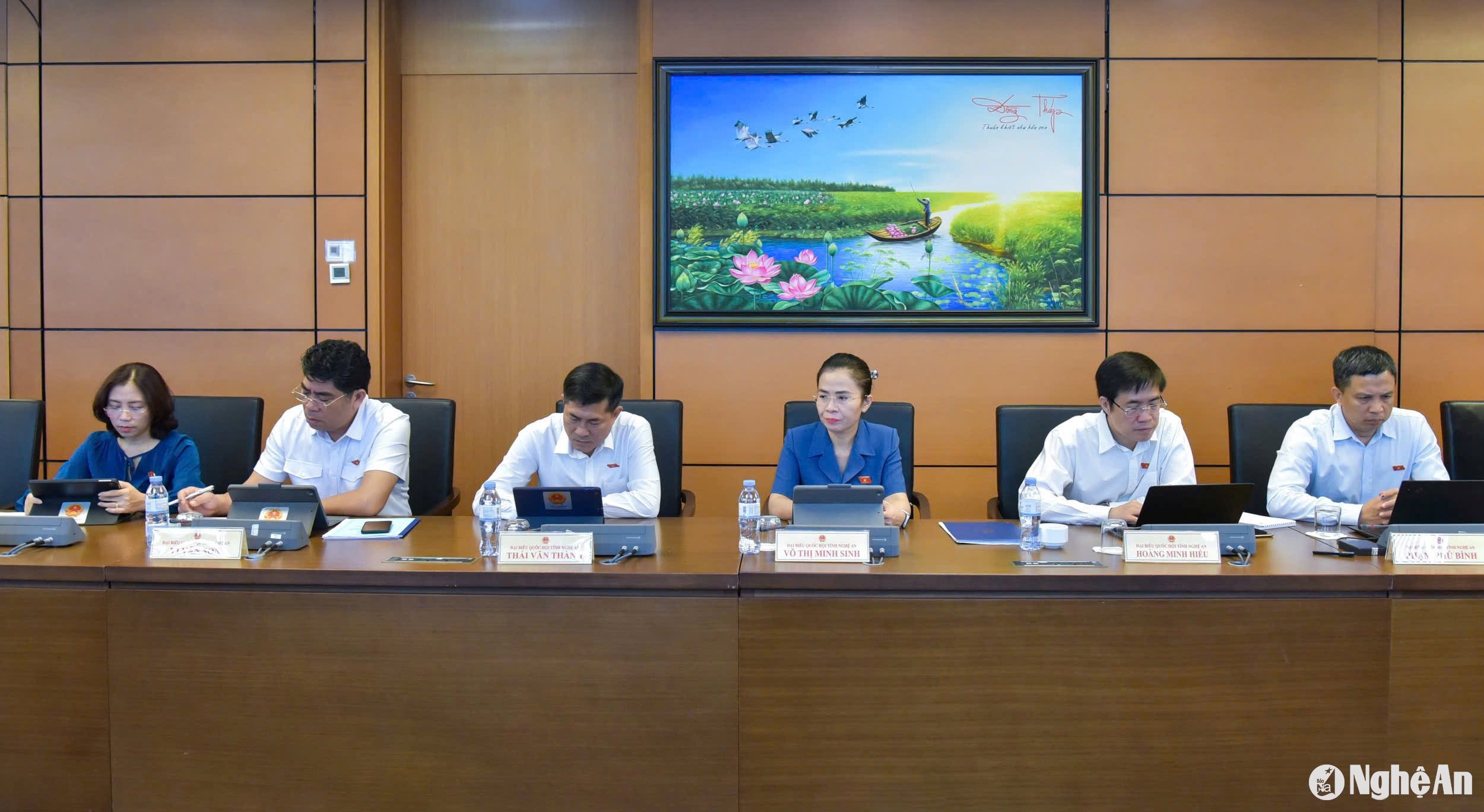
National Assembly delegates from Nghe An province conduct group discussions.
On the morning of October 26th, the National Assembly held group discussions. The Nghe An delegation participated in Group 3 along with delegations from Bac Giang and Quang Ngai provinces.
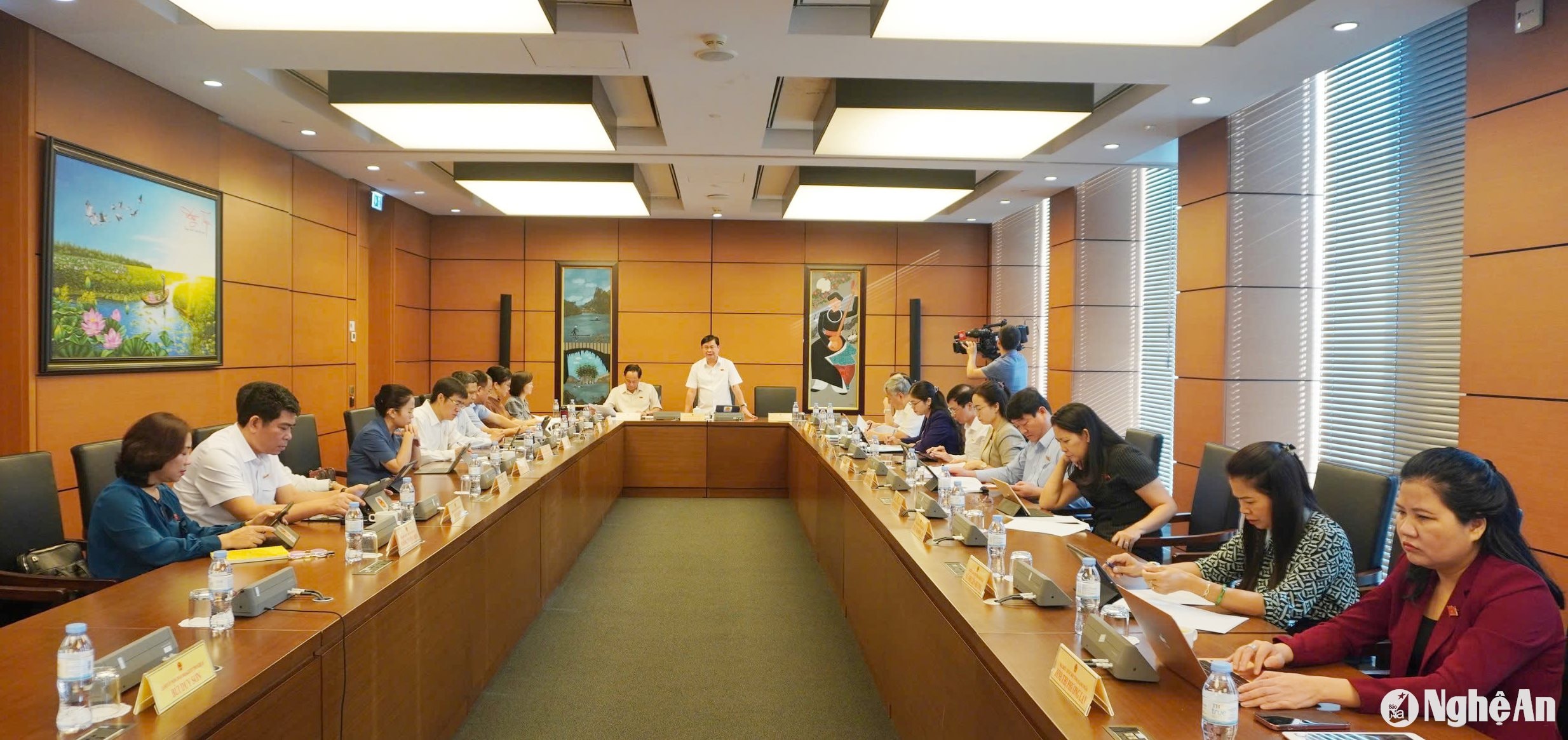
Attending the discussion session was Lieutenant General Tran Quang Phuong - Member of the Central Committee of the Party, Vice Chairman of the National Assembly, and National Assembly delegate from Quang Ngai province.
Comrade Thai Thanh Quy - Member of the Central Committee of the Party, Secretary of the Provincial Party Committee, Chairman of the Provincial People's Council, and Head of the National Assembly Delegation of Nghe An province - chaired the discussion session.
The discussions focused on evaluating the results of the 2024 socio-economic development plan; the projected socio-economic development plan for 2025; the implementation of the Constitution; and the implementation of laws and resolutions of the National Assembly, ordinances, and resolutions of the Standing Committee of the National Assembly.
The report covers the implementation of the 2024 state budget, the state budget estimates, and the central budget allocation plan for 2025 (including the 3-year state financial and budget plan for 2025-2027; the implementation of the public investment plan using state budget funds in 2024, and the projected public investment plan using state budget funds in 2025; the implementation of the 2024 financial plan and the projected 2025 financial plan for state-owned off-budget financial funds managed by the central government); and some adjustments and additions to the state budget estimates.
Policies to adjust the National Land Use Planning for the period 2021-2030, with a vision to 2050; policies to invest additional state capital in Vietnam Foreign Trade Commercial Bank (VCB).
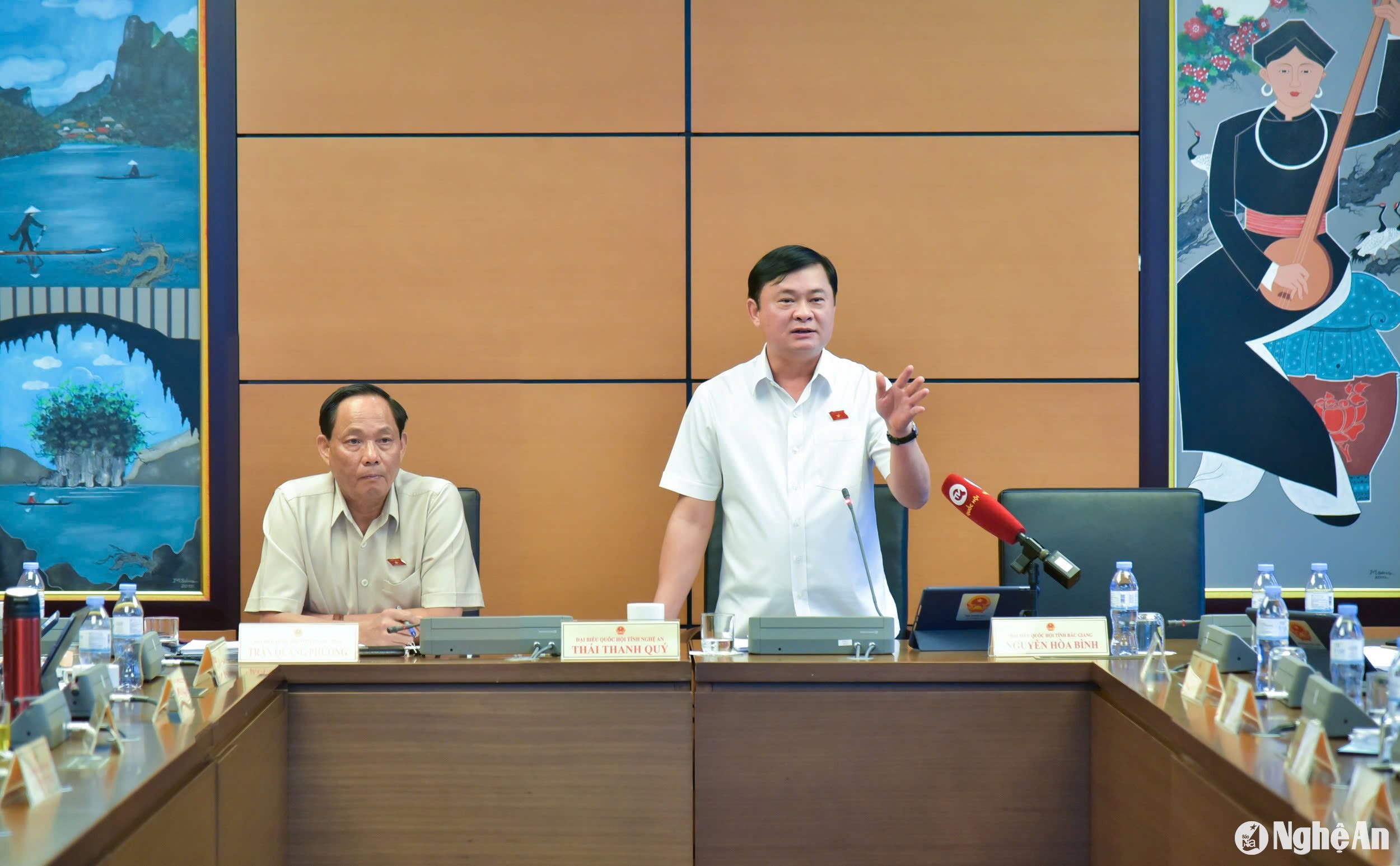
Speaking in the discussion, the Head of the National Assembly Delegation of Nghe An province, Thai Thanh Quy, shared that, based on practical experience in the locality, there are currently obstacles and outstanding issues in investment projects that have been subject to inspection, examination, and auditing, revealing violations related to cases and incidents.
Accordingly, although violations have been basically reviewed and dealt with, there are still significant difficulties in establishing mechanisms to resolve issues, leading to wasted state and social investment.
The Head of the National Assembly Delegation of Nghe An Province stated that the Politburo has issued Conclusion 77, allowing five localities to pilot a review of all programs and projects in areas facing difficulties and obstacles, and to report on solutions for the Central Government to provide guidance. He acknowledged that this is a very practical and realistic policy and expressed his hope that it will be summarized and studied soon, allowing localities nationwide to compile statistics, review, and propose solutions to resolve outstanding issues in their localities in order to implement investment projects, including state-owned and private investment projects.
Regarding public investment, the Head of the National Assembly Delegation of Nghe An province, Thai Thanh Quy, stated: According to current law, the new National Assembly (from the 16th term) will decide on the medium-term public investment plan for the period 2026-2030; and the first session of the new National Assembly is expected to take place in July 2026. This creates a problem: almost no public investment capital for the new period will be allocated in 2026; at the same time, the implementation of public investment procedures will extend into 2027. This leads to a time gap in the allocation of public investment capital. Therefore, the delegate proposed studying and considering amending the law to allow the previous National Assembly to decide on public investment for the next term, so that public investment resources can be implemented in 2026 and throughout the period.
During the discussion session, the Provincial Party Secretary and Head of the Provincial National Assembly Delegation also shared experiences in the rapid implementation of key projects, especially the recent 500kV circuit 3 power line project. A crucial lesson learned was the political commitment from the Central Government, which created confidence and motivation for the entire political system at all levels, including the province, to participate for the common national interest.
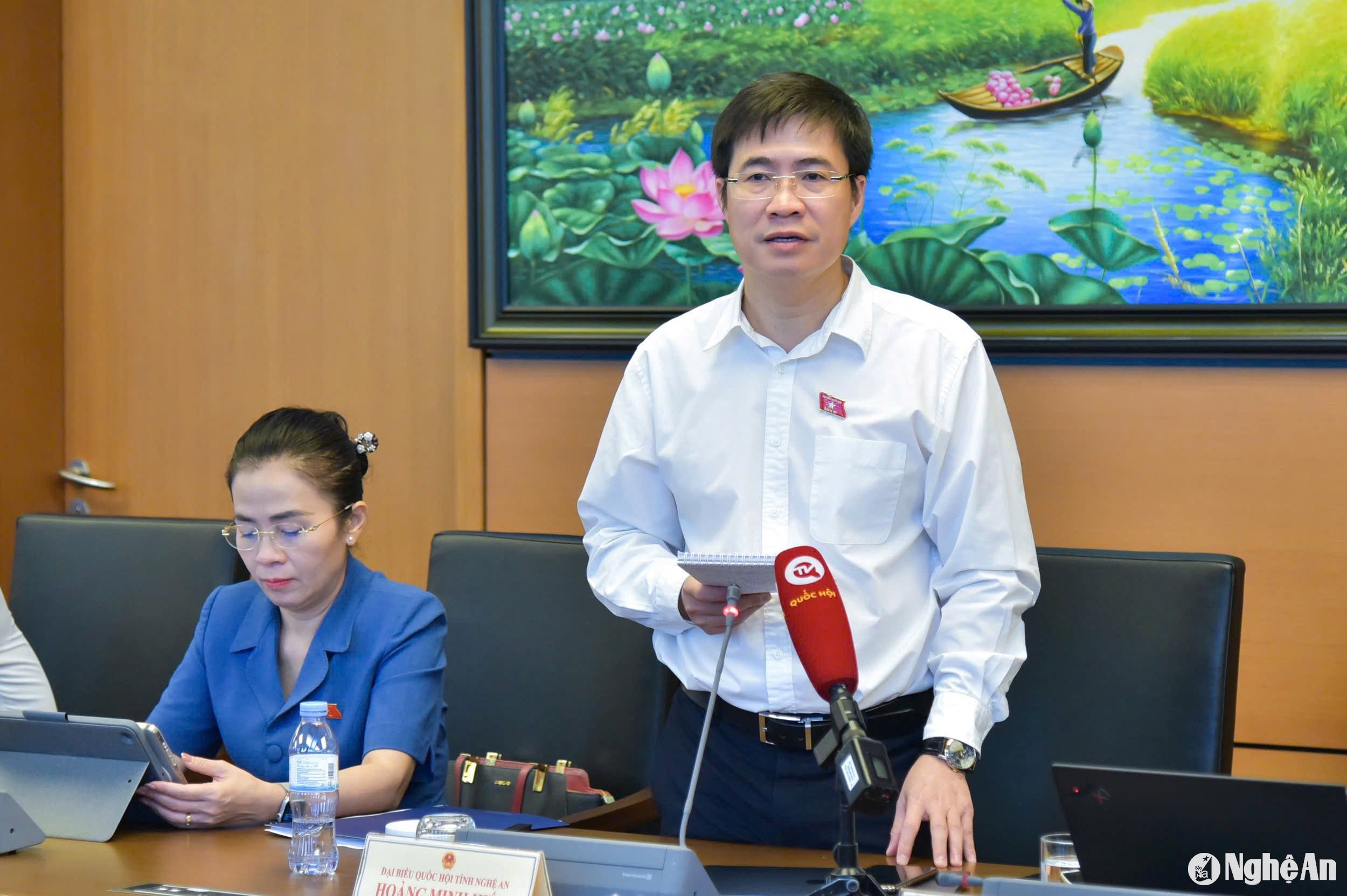
Speaking during a discussion on the socio-economic situation, delegate Hoang Minh Hieu - Standing Member of the National Assembly's Law Committee, and delegate from Nghe An province - emphasized the importance of human resources in the public sector; and therefore proposed that the Government pay attention to this issue, allocating resources to build institutions and take care of officials and civil servants who build these institutions.
.jpg)
The delegates also suggested that the National Assembly's supervisory delegation on high-quality human resources in the future should include a very specific assessment of the regulations and policies; the development of policies for public sector human resources to identify the current situation, existing problems, and limitations in order to improve policies and legal frameworks for building a better public sector human resource pool.
Representative Hoang Minh Hieu also suggested continuing to study and implement Resolution 27 of the Central Committee, including the issue of paying salaries according to job positions to encourage competent personnel to participate in the public sector.
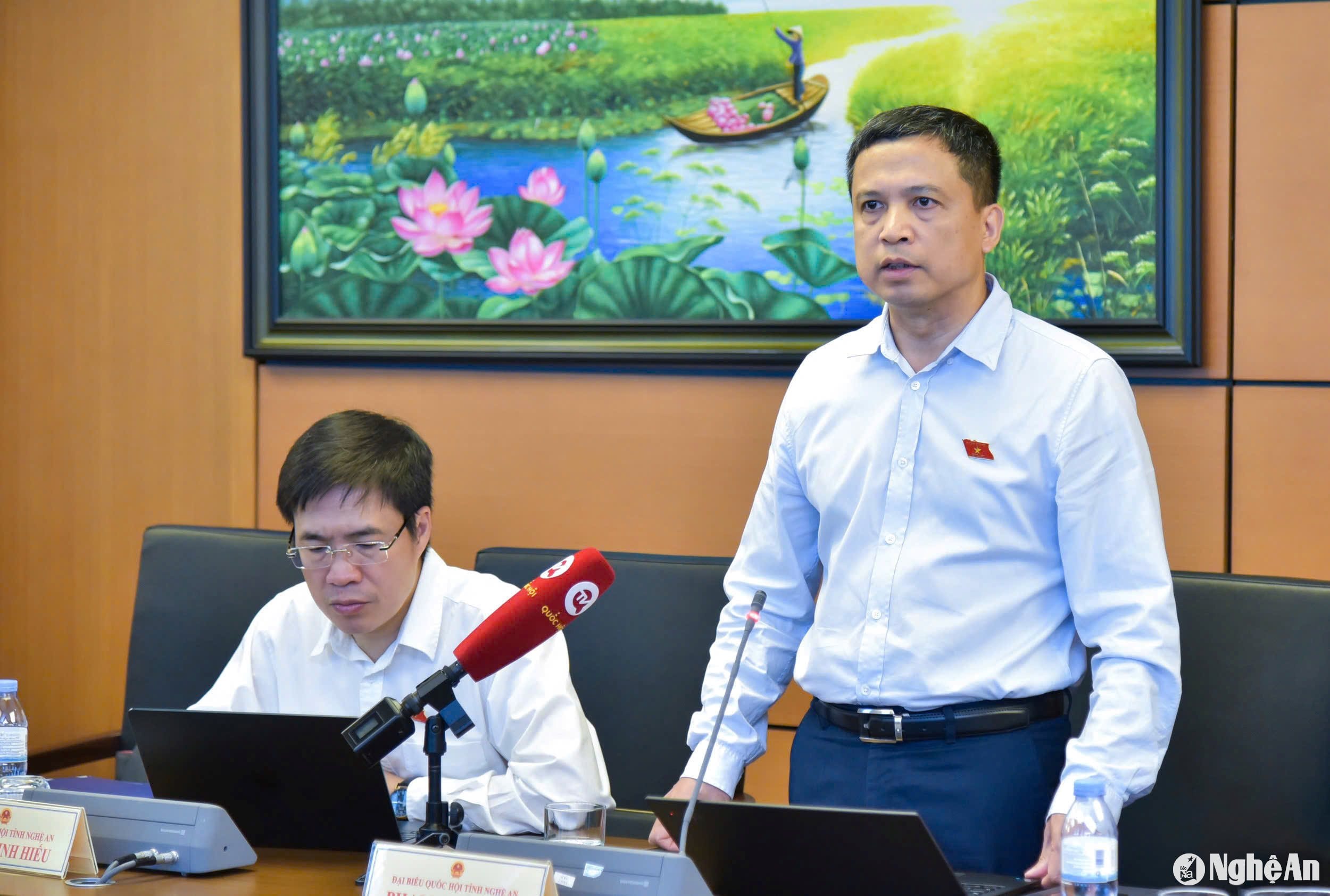
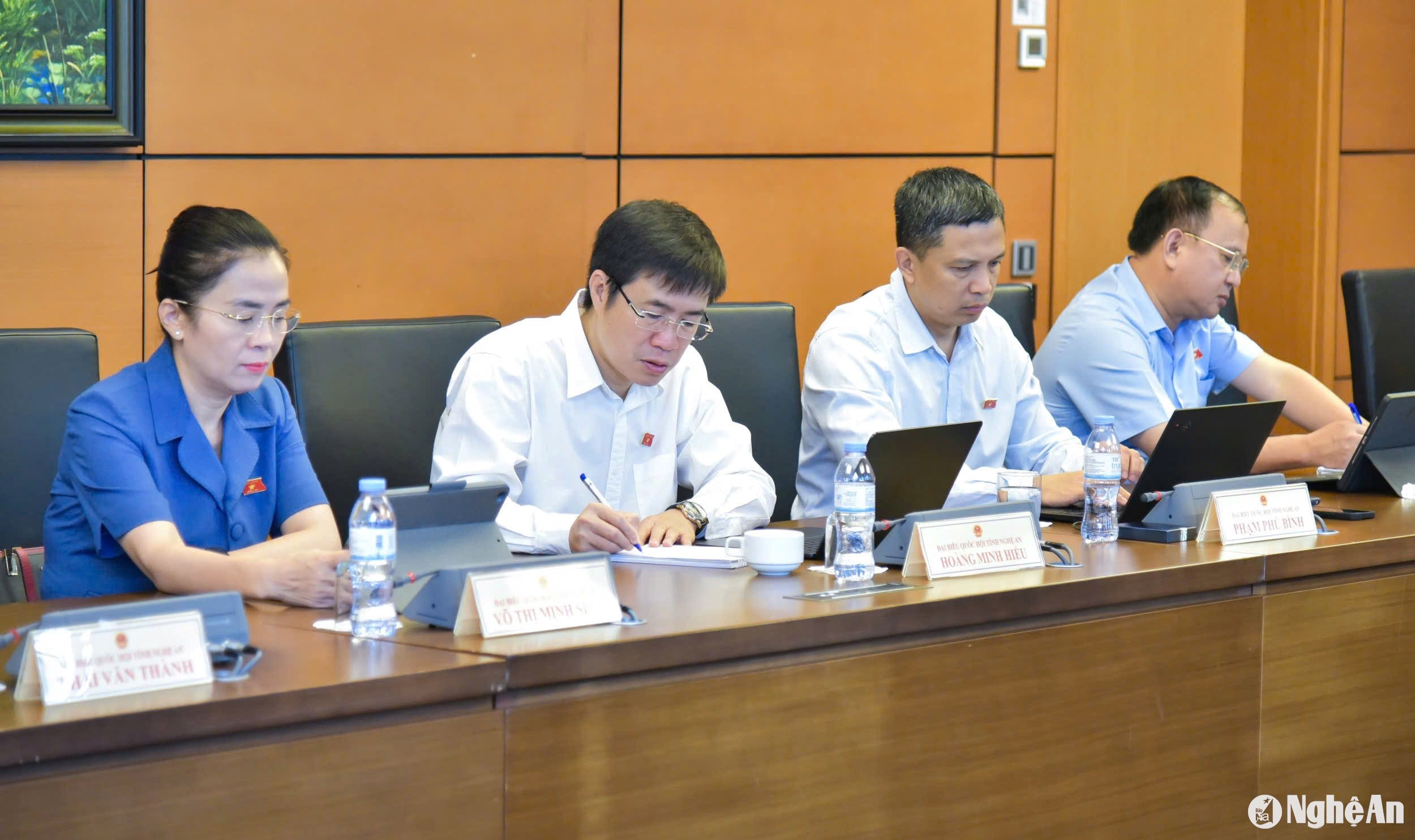
Representative Pham Phu Binh - Standing Member of the National Assembly's Foreign Affairs Committee, representing Nghe An province - suggested that the report assessing the economy and society, especially the forecast for the coming period, should more clearly analyze the global context; pay attention to the quality of new transportation projects and the maintenance of old ones; respond to natural disasters and climate change; the ability to meet electricity demand; and the role and accuracy of economic growth forecasts.
Delegates also suggested that a more comprehensive assessment is needed regarding the strategic development direction for 2025 and the coming period; especially the biotechnology development strategy, as it was not mentioned in the report despite a Central Committee resolution on this matter in 2023.
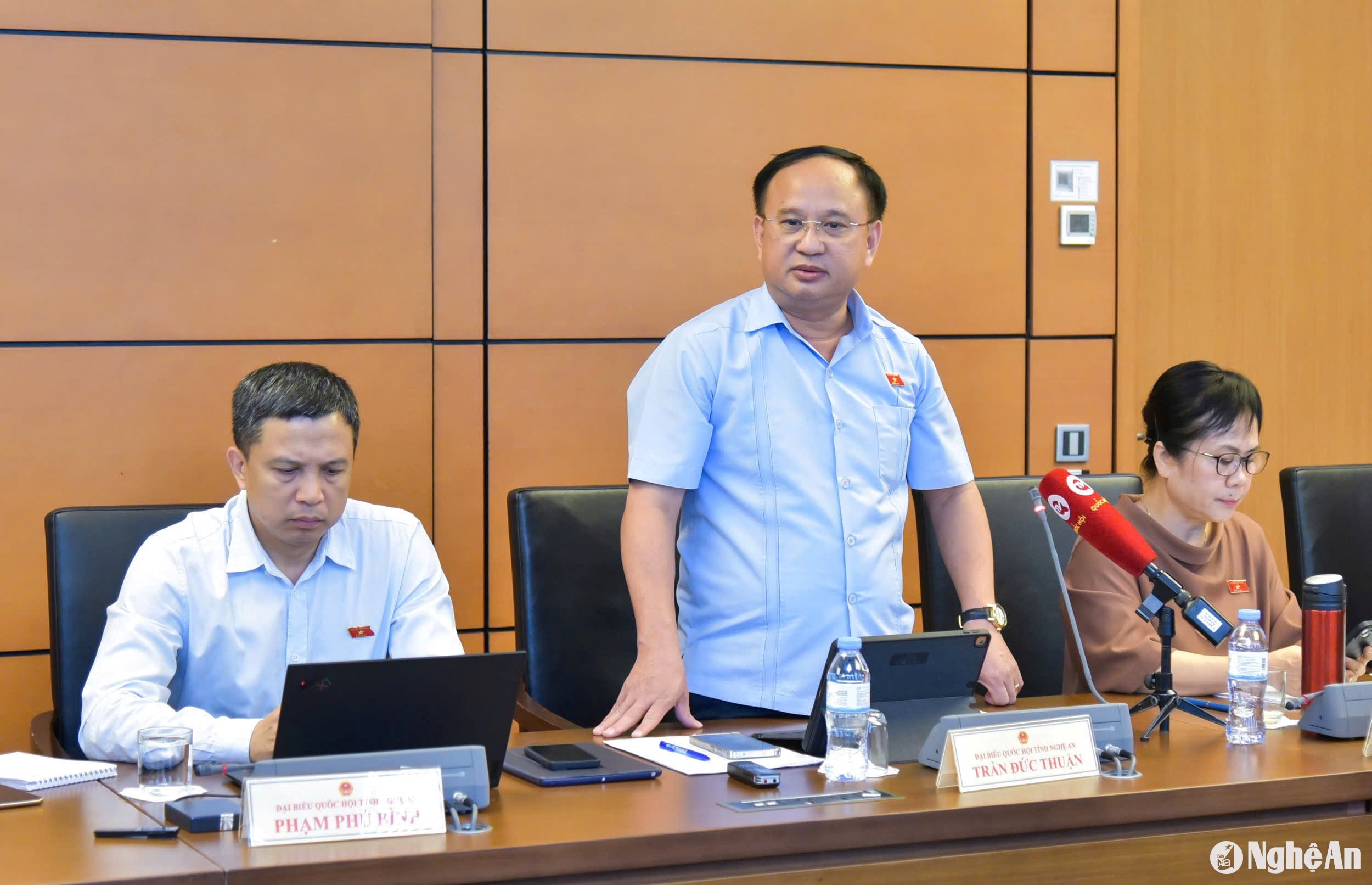
Meanwhile, Major General Tran Duc Thuan - Standing Member of the National Assembly's Committee on National Defense and Security, and a representative from Nghe An province - raised a series of issues that need attention and solutions, such as: consumer demand, disbursement of public investment capital; the number of businesses withdrawing from the market is higher than the number of newly established businesses; the real estate market is showing signs of recovery but with instances of "price manipulation and speculation"; and the rapid aging of the population.
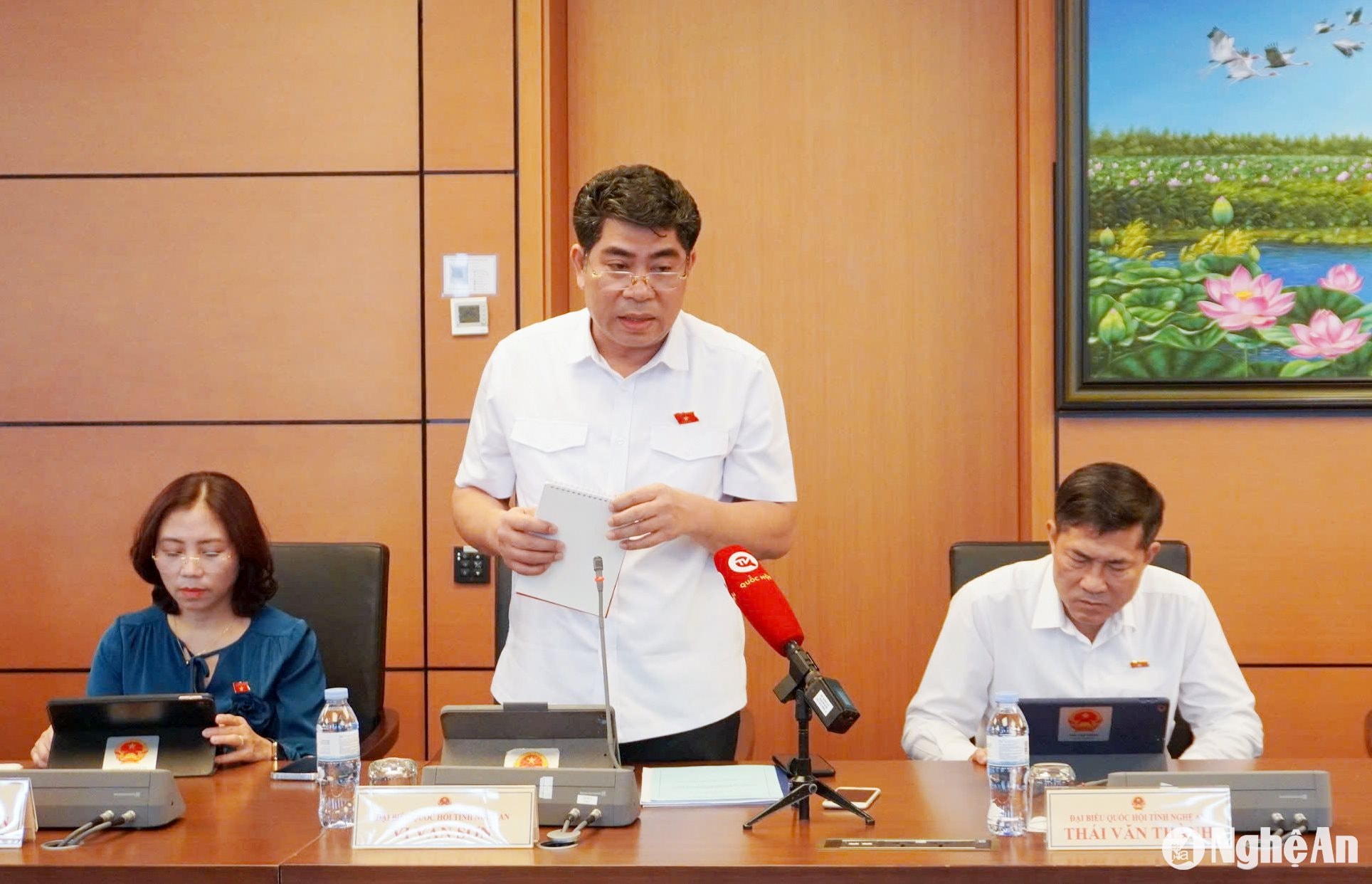
Delegate Vi Van Son - Member of the Provincial Party Committee, Head of the Ethnic Affairs Committee of Nghe An province - also analyzed the current situation and reasons for the slow disbursement of public investment capital, especially in the National Target Program for the Development of Ethnic Minority and Mountainous Areas, including both subjective and objective reasons; among which, a fairly common subjective reason is the fear of making mistakes and violating the law, so many related issues require consultation.
To resolve this issue, delegates proposed that relevant authorities promptly amend Decision No. 1719/QD-TTg of the Prime Minister: Approving the National Target Program for socio-economic development in ethnic minority and mountainous areas for the period 2021-2030, Phase I: from 2021 to 2025; providing specific guidance on the implementation of Resolution 111/2024/QH15 on some specific mechanisms and policies for implementing national target programs; allowing the extension of capital disbursement until December 31, 2025; and simultaneously requesting that when developing the plan for the period 2026-2030, detailed allocation should not be based on projects and sub-projects, but rather allocated to create greater autonomy for localities.


