
Ensure that the vaccination rate for livestock in the spring reaches 80% or more of the total herd.
(Baonghean.vn) - Deputy Director of the Department of Agriculture and Rural Development Tran Xuan Hoc requested localities to focus on directing the vaccination of livestock and poultry in the spring of 2023, ensuring that the vaccination rate reaches 80% or more of the total herd.
On the morning of March 16th, the Department of Agriculture and Rural Development organized a conference on livestock development, disease prevention and control, and the implementation of vaccination programs for livestock and poultry in 2023. Mr. Tran Xuan Hoc, Deputy Director of the Department of Agriculture and Rural Development, chaired the conference; also in attendance was Mr. Le Dinh Hue, Head of the Veterinary Sub-Department of Region 3.
 |
Comrade Tran Xuan Hoc - Deputy Director of the Department of Agriculture and Rural Development, chaired the meeting. Photo: Xuan Hoang |
The livestock industry ofNghe AnOver the years, the livestock industry has continued to shift in line with the restructuring direction, gradually transforming small-scale, scattered livestock farming into concentrated farm-based production; forming livestock farming and commodity production zones, linking value chains, and helping to improve efficiency in livestock farming. The growth rate and production value of the livestock industry have continued to increase over the years, the proportion of livestock farming in pure agriculture has increased significantly, making livestock farming a major production sector in the agricultural structure.
According to data from the Provincial Department of Animal Husbandry and Veterinary Medicine, the province currently has a total pig population of nearly 968,000 (ranking 5th nationwide), a total poultry population of over 33 million (ranking 2nd nationwide), and a total buffalo and cattle population that is the highest in the country with over 787,000 head...
Nghe An's targets for 2023 include a total buffalo and cattle population of 793,000, a pig population of 1,150,000, and a poultry population of 34 million. The total output of live meat for slaughter is 285,000 tons.
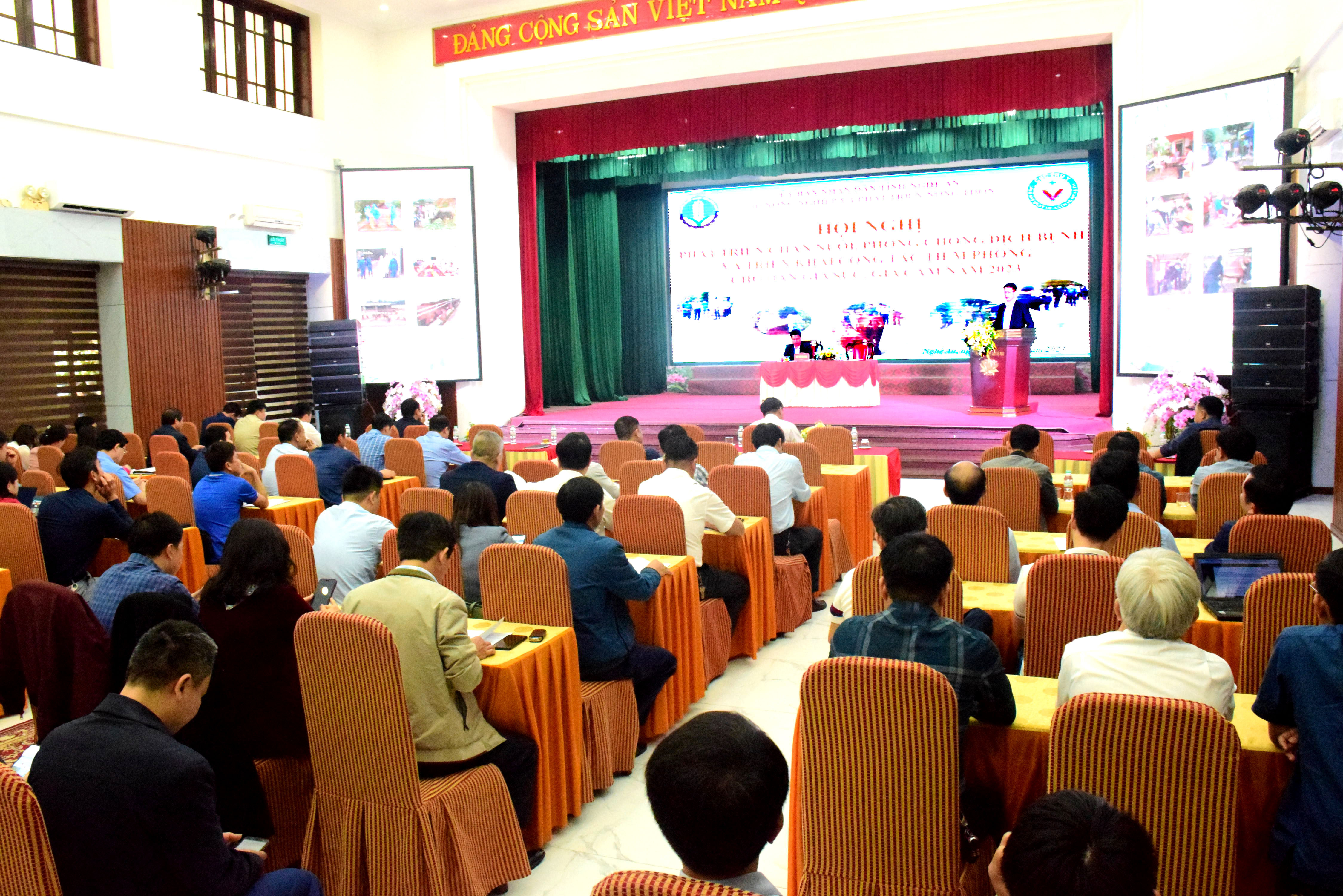 |
Conference scene. Photo: Xuan Hoang |
From the beginning of 2023 to March 15, 2023, several outbreaks occurred in the province.African swine feverIn some localities, the situation has been isolated and has now lasted for more than 21 days.
The provincial livestock and veterinary sector also recognizes the following shortcomings: Small-scale, household-based livestock farming accounts for a high percentage, making it difficult to control diseases and livestock waste. There is a lack of commercially oriented livestock products, livestock farming linkages are unstable and unsustainable, and production costs remain high. The vaccination rate for livestock and poultry in the province is still low.
Local authorities have not been resolute in penalizing violations in the breeding, management, and vaccination of livestock according to regulations, thus failing to deter offenders and raise public awareness in disease prevention and control.
Public awareness campaigns have not been conducted regularly at the grassroots level, focusing only on vaccination campaigns, and the duration of these campaigns has been limited. The development of animal disease-free zones and communities is still very limited, particularly the lack of rabies-free zones at the commune level.
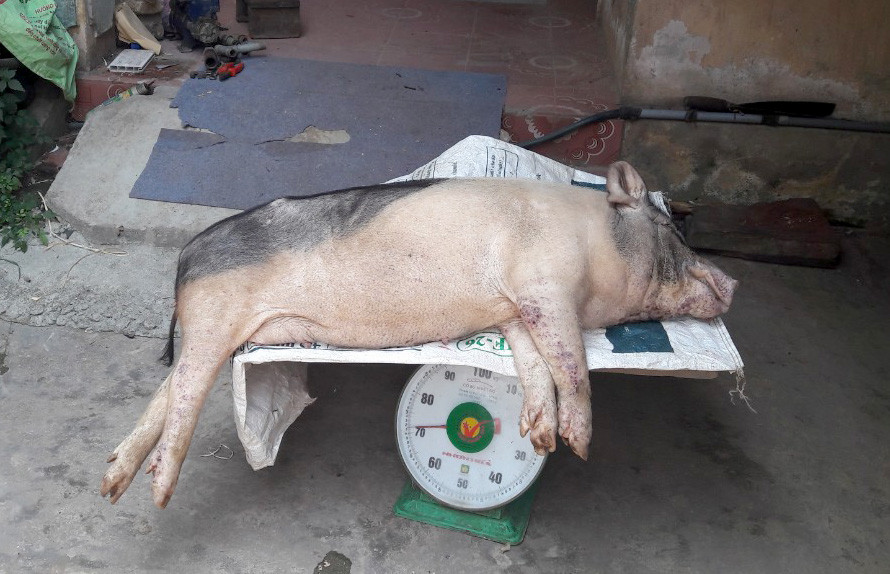 |
From the beginning of 2023 to March 15th, several small-scale outbreaks of African swine fever occurred in the province. (Photo: Xuan Hoang) |
Speaking at the conference, local authorities stated that the reasons for the low livestock population were as follows:The low vaccination rate is mainly due to the fact that people still have a mindset of waiting for and relying on government support policies, in addition, the guidance from the commune-level authorities has not been close and decisive enough; awareness of disease prevention and control among livestock farmers is still limited, leading to difficulties in vaccination work.
Local authorities have suggested that the Department of Agriculture and Rural Development should advise the Provincial People's Committee to promptly allocate funds to mountainous districts and other programs as stipulated, so that localities can implement vaccination plans as soon as possible this spring.
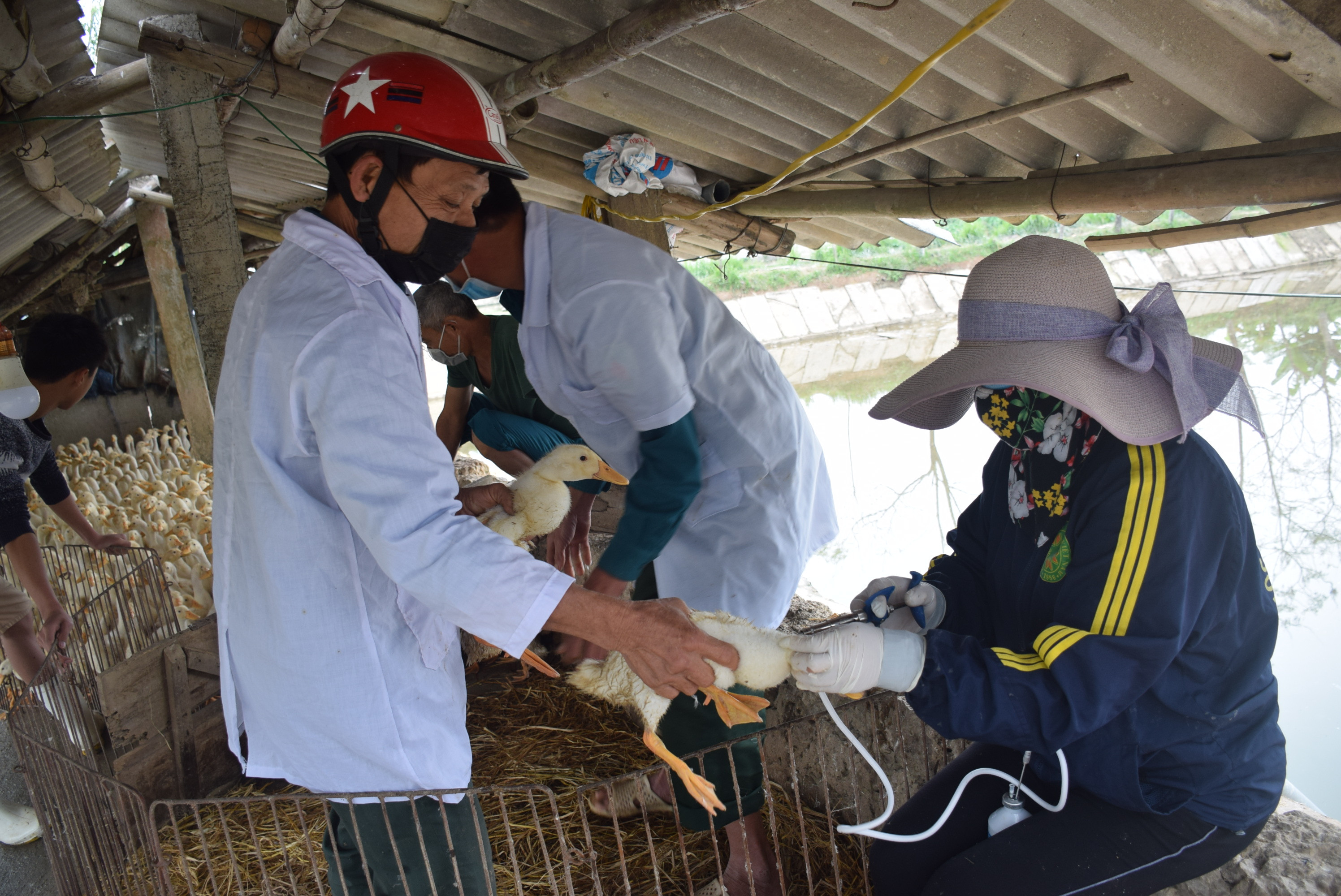 |
Funds for vaccination of ducks in Quynh Luu district. Photo: Xuan Hoang. |
Given the situation where many localities have low vaccination rates for livestock and poultry, with some districts even below 20%, Mr. Tran Xuan Hoc - Deputy Director of the Department of Agriculture and Rural Development - requested that districts, cities, and towns implement the following: Focus on directing livestock and poultry vaccination efforts in the spring of 2023 to ensure a vaccination rate of 80% or more of the total herd. Allocate funds and effectively implement disease prevention and control plans in the area based on the provincial plan.
Focus on consolidating and improving the capacity of veterinary staff at the commune level; establish working groups to inspect, supervise, and guide measures for preventing and controlling animal diseases.
Implement effectively the comprehensive sanitation, disinfection, and sterilization campaign to eliminate pathogens in livestock environments from March 15th to April 15th, 2023, as per urgent dispatch No. 03/CĐ-UBND dated March 3rd, 2023, of the Provincial People's Committee.


