
Unlocking the potential of community-based tourism in Yen Thanh.
(Baonghean) - The very name of the place, "Yen Thanh" (formerly Dong Thanh), already reflects that this is a peaceful and tranquil land, the birthplace or foundation of the careers of many famous figures, scholars, and revolutionary patriots. It is also a land of renowned prosperity: "Nghe Dong Thanh / Thanh Nong Cong," or "When there is no water, there is a water source / When there is no rice, there is rice from Dong Thanh"...
Thus, this land has always been full of charm and allure. These factors also demonstrate that it possesses rich "tourism resources" that are not found everywhere.
| RELATED NEWS |
|---|
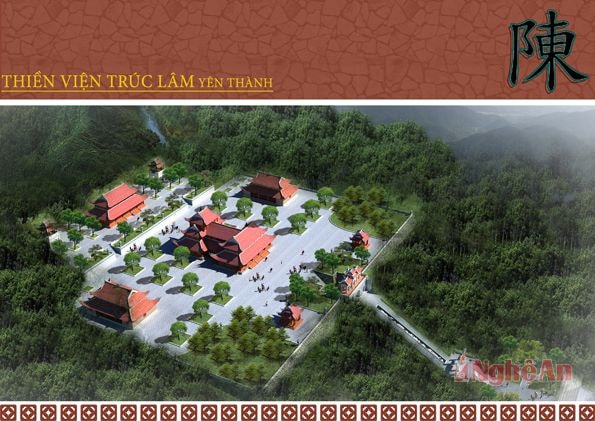 |
| Perspective view of Truc Lam Yen Thanh Zen Monastery. |
These places are captivating!
The writer Nguyen Xuan Phau left behind these verses, expressing deep affection and longing: "The Dinh River, once remembered by both banks / The three-tiered Gam Mountain, cherished for miles." The Dinh River and Gam Mountain are places where the love and longing for the land and people of Yen Thanh are entrusted. Moreover, they are symbols, places that embody and preserve the spirit of the land and its people throughout its long history.
Regarding the western region of Yen Thanh, the patriotic scholar Le Doan Nha once wrote, "Remembering the time when the mountains gathered heroic spirits / Quy Lai's teachings were established, Dong Dinh's swords clanged," a memory from the time under Le Loi's banner, when General Dinh Le used this land to gather forces to fight the Ming invaders. Student Ngo Tri Hop, in his book "Dong Thanh Phong Tho Ky," also summarized the "eight beautiful sights" of the Dong Thanh region, including the spring clouds on the peak of Ru Gam and the lotus pond in Dieu Oc village. Revolutionary Phan Dang Luu affirmed, "The Dinh River and Ru Gam are a scene of divine beauty"... It can be seen that for a long time, this land has had a collection of historical sites and scenic spots, where every place name, village name, mountain name, and river name is more or less connected to legends and stories that leave behind the echoes of history.
Right at Rú Gám, a complex of historical relics has existed since ancient times, including the Gám Temple and Pagoda, Cửa Ông Temple, and the Bạch Y Princess Temple. The Gám Temple and Pagoda are relics that appeared very early, around the beginning of the 10th century, and possess unique architectural and artistic value, still bearing the mark of the "three religions sharing the same origin," most notably the influence of the Trúc Lâm Zen sect.
Surrounding the Gám Temple and Pagoda religious center, there is a large "reserve" of interconnected destinations. Many of these relics possess unique architectural and artistic value, situated amidst the rural landscapes of Central Vietnam, or in semi-mountainous areas with picturesque scenery, offering great potential for rural tourism development. These include: Đức Hoàng Temple (Phúc Thành), Bảo Lâm Temple and Pagoda (Hoa Thành), Bảo Nham Stone Church (Bảo Thành), Sừng Temple (Lăng Thành), Hậu Temple (Bắc Thành), Cả Temple (Hoa Thành)... Several historical revolutionary sites are located in scenic areas, such as: the Ho Chi Minh Memorial Area (Vĩnh Thành), the Phan Đăng Lưu Memorial House (Hoa Thành), and the Tràng Kè historical site (Mỹ Thành)...
The scholar Phan Thúc Trực once wrote, "Yên Thành has flat terrain, its people are virtuous, and its academic achievements and examinations are the best in the province" (Diễn Châu phủ chí). Speaking of Yên Thành is also speaking of a land of scholarly achievement and a love of learning, the birthplace of many heroes. From the Trần dynasty to the Nguyễn dynasty, Yên Thành district had 24 people who passed the highest imperial examinations, from Trạng nguyên (first-place winner) to Bảng nhãn (second-place winner). Among them, four Trạng nguyên were renowned: Trạng nguyên Bạch Liêu – the pioneer of the scholarly tradition in Nghệ An province; and the story of "Three Trạng nguyên in one family / One exemplary mother for generations to come" – with three generations of grandfather, father, and son all being Trạng nguyên: Hồ Tông Thốc, Hồ Tông Đốn, and Hồ Tông Thành, a unique phenomenon in the history of the imperial examinations; in addition, there were Tiến sĩ Trần Đình Phong, Thám hoa Phan Duy Thực, Thám hoa Phan Tất Thông, and Thám hoa Phan Thúc Trực.
Yen Thanh boasts a strategic location, "with a granary in front and a treasure chest behind," making it a strategic position for both offensive and defensive operations. Therefore, from the Northern Dynasties, the Early Le Dynasty, and the Tran Dynasty, it served as the administrative center of Dien Chau and Dong Thanh. This land also served as a military rear base, a stronghold for gathering forces and fostering patriotism and a spirit of self-reliance. Consequently, it's a place where ecotourism can be combined with historical tourism, allowing visitors to reconnect with lessons of love for their roots, homeland, and country. The stories behind the names of mountains and rivers, such as Vu Ky Hill, Voi Hill, Dong Tho Cave, and Dinh River, still sparkle with historical and humanistic value. The anecdotes about the Citadel of Dền, the Thông Pagoda, the stories of the valiant King Phan Cảnh Quang, of the scholar Nguyễn Xuân Ôn, the deputy general of the Cần Vương movement Lê Doãn Nhã, the patriotic landowner Tô Bá Ngọc, of the scholar Tác Bảy - Lãnh Ngợi, the patriotic martial arts graduate Chu Trạc,... and especially the exemplary figure of the outstanding revolutionary veteran of the Party - Comrade Phan Đăng Lưu, truly show that every step taken on this land is like encountering and meeting with the accumulated layers and convergence of a rich history.
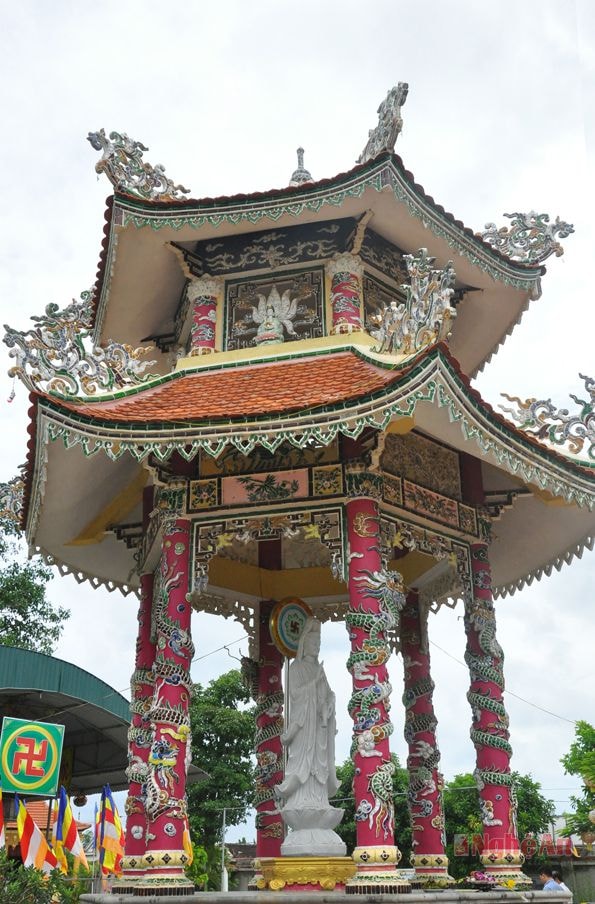 |
| Exquisite details in the architecture of Gam Pagoda. |
Located in the heart of Northeast Nghe An province, Yen Thanh also has the advantage of attracting tourists because it boasts a rich and diverse ecosystem of forests with diverse flora and fauna, such as the Green Gam forest, the Lang Thanh and Hau Thanh primary lim forests, and a vast area of forest land stretching from the north to the west and south of the district (from Duc Thanh to Son Thanh).
With over 220 rivers, lakes, and dams, the area serves both irrigation and scenic beauty, creating a picturesque rural landscape. Many destinations include the Ve Vung Dam, Quan Hai Lake, Lo Noi Dam, Sat Dam, Xuan Nguyen Lake, Dieu Oc Lotus Pond, Len Vu Ky, Thien Tao Pagoda... and natural bird sanctuaries, most notably the over 2-hectare bird sanctuary of Mr. Vu Van Ngan's family in Hamlet 10, Ly Thanh Commune, Yen Thanh District, and the heron island in Ve Vung Lake.
Associated with historical and cultural relics are traditional folk festivals, places where folk cultural activities rich in the characteristics of the rice-farming agricultural community take place, such as: the Duc Hoang Temple Festival (Phuc Thanh), Gam Temple and Pagoda (Xuan Thanh), Ca Temple (Nhan Thanh), Dai Dien - Dinh Mo (Hau Thanh), Ca Temple (Hoa Thanh), Canh Temple (Duc Thanh)... Yen Thanh is also one of the cradles of folk culture and arts. Here, many villages preserve unique folk cultural and artistic activities such as: Tuong opera in Xuan Thanh and Vinh Thanh, Cheo opera in Lang Thanh, and Nghe Tinh folk songs in Phuc Thanh and Dong Thanh...
With its mountainous terrain bordering lakes and dams, and its vast plains stretching as far as the eye can see, Yen Thanh boasts a variety of unique products, both traditional and modern. In recent years, Yen Thanh has become well-known on the national market for its fragrant rice and herbal rice (Vinh Thanh); oranges (Dong Thanh and Minh Thanh); peaches (Kim Thanh and Minh Thanh); mushrooms (Nam Thanh, Son Thanh, Ly Thanh, Long Thanh...); and honey (Minh Thanh, Quang Thanh, Tay Thanh...).
Yen Thanh also maintains and develops traditional craft villages that have existed for hundreds of years, such as: Vinh Hoa noodle and rice cake making village (Hop Thanh), Yen Hoi rattan and bamboo weaving village (Do Thanh), Yen Bang incense stick making village (Phuc Thanh), earthenware pot making village (Vien Thanh), Long Thanh sedge mat weaving village...
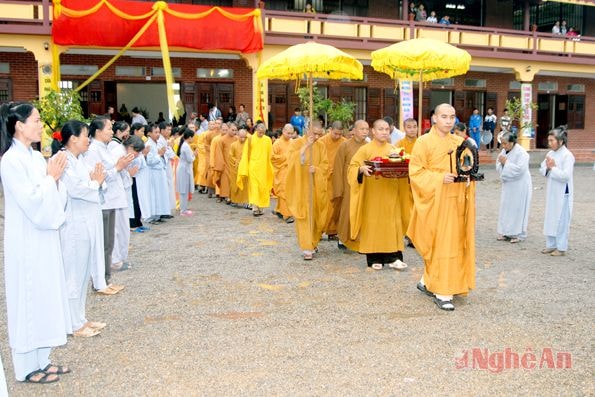 |
| Sacred procession. |
Opening the "warehouse of provisions and treasure chests"
Set against a backdrop of verdant mountains, lush rice paddies, and a blend of classic and modern urban and rural landscapes, Yên Thành possesses both the pristine charm of the countryside and convenient connectivity to other nearby destinations, promising to become a highly attractive region. In Yên Thành, specialized agencies and experts in community tourism, both domestic and international, have affirmed that it is a "promised land" for various types of tourism: spiritual and cultural tourism; resort tourism; ecotourism; culinary tourism; historical and research tourism, etc.
Within a radius of 20-70km, tourists can travel towards the coast to Dien Thanh beach, visit Cuong Temple - Hien Gate (Dien Chau), swim at Lu beach (Nghi Loc), Cua Lo beach... go to Nam Dan to visit the Kim Lien historical site, the birthplace of President Ho Chi Minh, the Phan Boi Chau historical site, or head west to Giang Son hot spring area (Do Luong), Pu Mat National Park (Con Cuong), Milestone 0 of the Ho Chi Minh Trail (Tan Ky)... Therefore, the policy of developing community tourism in Yen Thanh can be considered the "key" to unlocking a "treasure trove of resources," ensuring the preservation and protection of traditional values, environmental protection, employment, and contributing to the dissemination of scientific, social, and humanistic values.
Over the years, the District Party Committee, People's Council, and People's Committee have focused on investing in the development of tourism infrastructure to better serve the needs of tourism development. To date, the road system leading to Yen Thanh district and tourist destinations is beginning to take shape and is undergoing renovation, upgrading, and expansion. Several accommodation facilities have been upgraded and newly built, becoming increasingly spacious and modern. Currently, Yen Thanh district has over 30 accommodation establishments, including 2 hotels and nearly 20 large and small restaurants, providing employment for nearly 1,500 local people. Along with that, the Provincial People's Committee approved, and the Provincial People's Council included in the Resolution, the construction of the Gam Temple and Pagoda Spiritual Ecotourism Area. On April 4, 2015 (corresponding to the 16th day of the 2nd lunar month of the Year of the Goat), the District People's Committee, in coordination with the Pagoda, organized the foundation stone laying ceremony for the Truc Lam Yen Thanh Zen Monastery and commenced the construction of the An Quoc Great Buddha Statue, marking an important starting point in the construction of the Gam Temple and Pagoda Spiritual Ecotourism Area.
Reporters


