
Methadone treatment - effectiveness and concerns
(Baonghean) - The methadone replacement therapy program for drug addiction treatment in our province has been implemented since September 2012. After nearly three years, the program has brought many positive results such as: helping addicts gradually quit drugs, improving their quality of life, reducing the risk of crime, contributing to ensuring social security and order, and limiting the risk of HIV infection and other bloodborne diseases (hepatitis B, hepatitis C...). However, there are still some issues surrounding methadone treatment that need to be discussed.
Expanding treatment facilities
The province's first Methadone treatment facility is located at the HIV/AIDS Prevention and Control Center in Vinh City. To date, the province has established and put into operation four more facilities in the districts of Que Phong, Quy Chau, Tuong Duong, and the No. 1 Labor Education Center. As of June 30, 2015, 936 patients were receiving treatment, achieving 27.53% of the government's target.
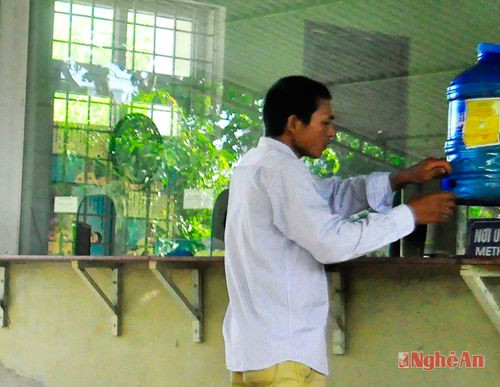 |
| Patients are taking Methadone at the Provincial HIV/AIDS Prevention and Control Center. |
Over time, Methadone treatment has shown quite good results. Many patients, with perseverance and good adherence to treatment, have gradually recovered their health, stabilized their mental state, and been able to work and labor normally, escaping drug dependence. In particular, the Methadone program has reduced the economic burden on the families of addicts, limited the increase in drug-related crimes, drug trafficking, and drug use, contributing to social security and order.
A typical example is the case of Mr. D in Hamlet 13, Dien An Commune, Dien Chau District. After more than two years of Methadone treatment (since June 2013), Mr. D has a much more comfortable, happy, and healthy life. “Before, every time I had a craving, without drugs, I was always tired, restless, and uncomfortable. But after taking Methadone once a day, I no longer crave drugs, and I can eat and sleep well,” Mr. D shared. Many of his family members, friends, and neighbors are also very happy because after a period of Methadone treatment, D has changed his personality, living peacefully, being thrifty, focusing on work, and not spending money on drugs like he did when he was addicted.
According to doctors, the use of Methadone, administered orally rather than by injection, reduces the rate of HIV transmission through injection. This treatment method also offers economic benefits due to its low cost, requiring only one dose per day. In contrast, drug use requires a significant investment, sometimes millions of dong, due to the need for multiple doses throughout the day. Methadone treatment not only benefits addicts but also reduces the burden on families and society, limits HIV/AIDS transmission, and reduces drug-related offenses. According to the plan, by the end of 2015, additional treatment facilities will be established in Thanh Chuong, Dien Chau, Thai Hoa town, Quy Hop, Ky Son, Con Cuong, and Do Luong districts.
Dr. Nguyen Van Dinh, Director of the HIV/AIDS Prevention and Control Center, said: “The program's advantage over the past years has been the strong attention and direction from the province and relevant sectors. In Decision No. 3401 dated July 22, 2014, approving the adjusted plan for implementing the Methadone-based opioid addiction treatment program in Nghe An province for the period 2014-2020, the Provincial People's Committee increased funding for the program. Specifically, while the local budget allocated 1.53 billion VND in 2014, this figure rose to 5.641 billion VND in 2015. Furthermore, the Provincial People's Council recently approved a plan to ensure financial support for the operation of Methadone treatment facilities. In addition, to prepare for the reduction in the number of drugs from central government projects, the Department of Health has also submitted a plan to the Provincial People's Committee for approval. This is a model of socialized Methadone treatment, whereby instead of receiving 100% financial support as is currently the case, patients will contribute a portion ranging from 7,000 to 10,000 VND per dose.
In addition to expanding treatment facilities and focusing on effectiveness and maintaining the number of patients under treatment, the health sector is also directing treatment facilities to prepare for the administrative procedures for admitting patients according to Circular 12/2015/TT-BYT dated May 28, 2015, of the Ministry of Health, which provides detailed guidance on the implementation of some articles of Decree No. 96/2016/ND-CP regulating the treatment of opioid addiction with substitute drugs, effective from August 1st. This ensures that the correct target group and criteria for treatment are met, and reduces waiting times for those registering to participate. Previously, to be admitted to a Methadone treatment facility, patients had to submit an application and have confirmation from the local authorities (ward, commune, town). This regulation created a practical problem: some local authorities, due to a lack of understanding of Methadone treatment and viewing addicts as criminals, still made it difficult for them to obtain confirmation. However, according to Circular 12, in the near future, those registering for treatment will only need to fill out an application form as prescribed, and the treatment facility will be responsible for selecting eligible participants. With this regulation, the process for registering for Methadone treatment will be quick and efficient, with treatment beginning in about a week.
Concerns
As of June 2015, Nghe An province had 7,293 registered drug addicts. Despite being one of the provinces with the highest number of drug addicts in the country, drug rehabilitation (both compulsory and voluntary) at rehabilitation centers in the province is facing many difficulties.
In the first six months of 2015 alone, these centers managed and provided rehabilitation for only 1,069 trainees; facilitated reintegration into the community for 287 trainees, and are currently managing 782 trainees. Thus, the 933 people receiving Methadone treatment represent a very small percentage of the total number of drug addicts in society.
Furthermore, the rate of patients abandoning Methadone treatment in the province remains quite high. By the end of June 2015, out of 933 patients receiving Methadone treatment, only 690 patients continued treatment, accounting for approximately 74%. More than 240 patients stopped treatment due to various reasons: death or other illnesses preventing them from receiving treatment, leaving the area to work elsewhere, being arrested and imprisoned, voluntarily requesting to stop treatment, and especially, abandoning treatment for unknown reasons. According to Dr. Nguyen Van Dinh, although there are no official classification figures yet, it is estimated that more than 100 patients voluntarily requested to stop or abandon treatment.
One of the reasons for this situation is that our province has a large area and complex terrain in many places, but only 5 Methadone treatment facilities (including 2 in Vinh City), making it difficult for many patients to travel to the treatment center. On the other hand, many patients still have misconceptions and lack determination in their treatment. However, according to Dr. Nguyen Xuan Hong, Deputy Director of the Department of Health, there are still some issues that need improvement at the treatment facilities, such as insufficient counseling for patients; a lack of close coordination between treating physicians and counselors; a lack of thorough investigation and analysis of the reasons for patients abandoning treatment; and a lack of proactive efforts to find and encourage those who have abandoned treatment to return to treatment. The Methadone treatment program is also facing difficulties because some districts lack coordinated efforts between the police, labor, war invalids and social affairs, and health sectors in referring and transferring patients.
According to Decision No. 3401 approving the plan for adjusting the implementation of the Methadone-based opioid addiction treatment program in Nghe An province for the period 2014-2020, the goal set for 2020 is that over 40% of opioid addicts with control records in 100% of districts, towns, and cities in the province will participate in the Methadone program. To achieve this goal, it requires the involvement of Party committees, government agencies, departments, and mass organizations at all levels in disseminating information and mobilizing drug addicts to understand the effectiveness of Methadone treatment, thereby encouraging voluntary participation and strict adherence to the treatment process.
During treatment, in addition to performing their professional duties, doctors need to build a strong bond with patients through conversation and counseling to provide timely support and encourage them to maintain treatment. In counseling, doctors and counselors need to help patients and their families understand that Methadone treatment is a long-term, almost lifelong, process. This is to prevent situations where, after a period of treatment, when the craving for heroin subsides, some patients and their families mistakenly believe they have successfully overcome their addiction and abandon treatment to save costs and travel time, unaware that Methadone treatment is a long-term, almost lifelong process. Furthermore, in the future, relevant authorities should research combining the treatment program with vocational training, loan support, and the creation of suitable, long-term employment for patients, helping them stabilize their mindset and prevent relapse. Only then can the Methadone treatment program be more effective and sustainable.
Minh Quan


