
A family in Nghe An has had four generations serving as envoys to the Qing Dynasty.
(Baonghean.vn) - In Nghe An, there is a remarkable family where three generations—father, son, and grandson—have successively earned doctorates. Over four generations, the family has been sent as envoys to the Qing Dynasty (China) five times by the Emperor. Admiring the intelligence and talent of this family, the Qing Emperor even bestowed upon them a horizontal plaque.
"Three Generations, Five Yellow Flowers"
The family we are referring to is the Nguyen Trong family, inTrung Can village, Nam Dan district (Nghe An province). During our research, we had the opportunity to meet Mr. Nguyen Trong Nghia, a descendant of the family currently living in Vinh city, and heard many interesting stories. There was even a scientific conference on the Nguyen Trong family organized in 2015 by the Vietnam Institute of Historical Studies - Nghe An Department of Culture, Sports and Tourism (now the Nghe An Department of Culture and Sports) and the Family Council. Through this, many historical documents and details about the famous family in Nam Dan were published for the first time, or proven and confirmed more clearly. Recalling the past, Mr. Nghia said that in the family's history, there are two details that later generations are extremely proud of: all three members of the family (father, son, grandson) earned doctorates, and four generations of the family were sent as envoys to the Qing Dynasty by the King and the court five times.
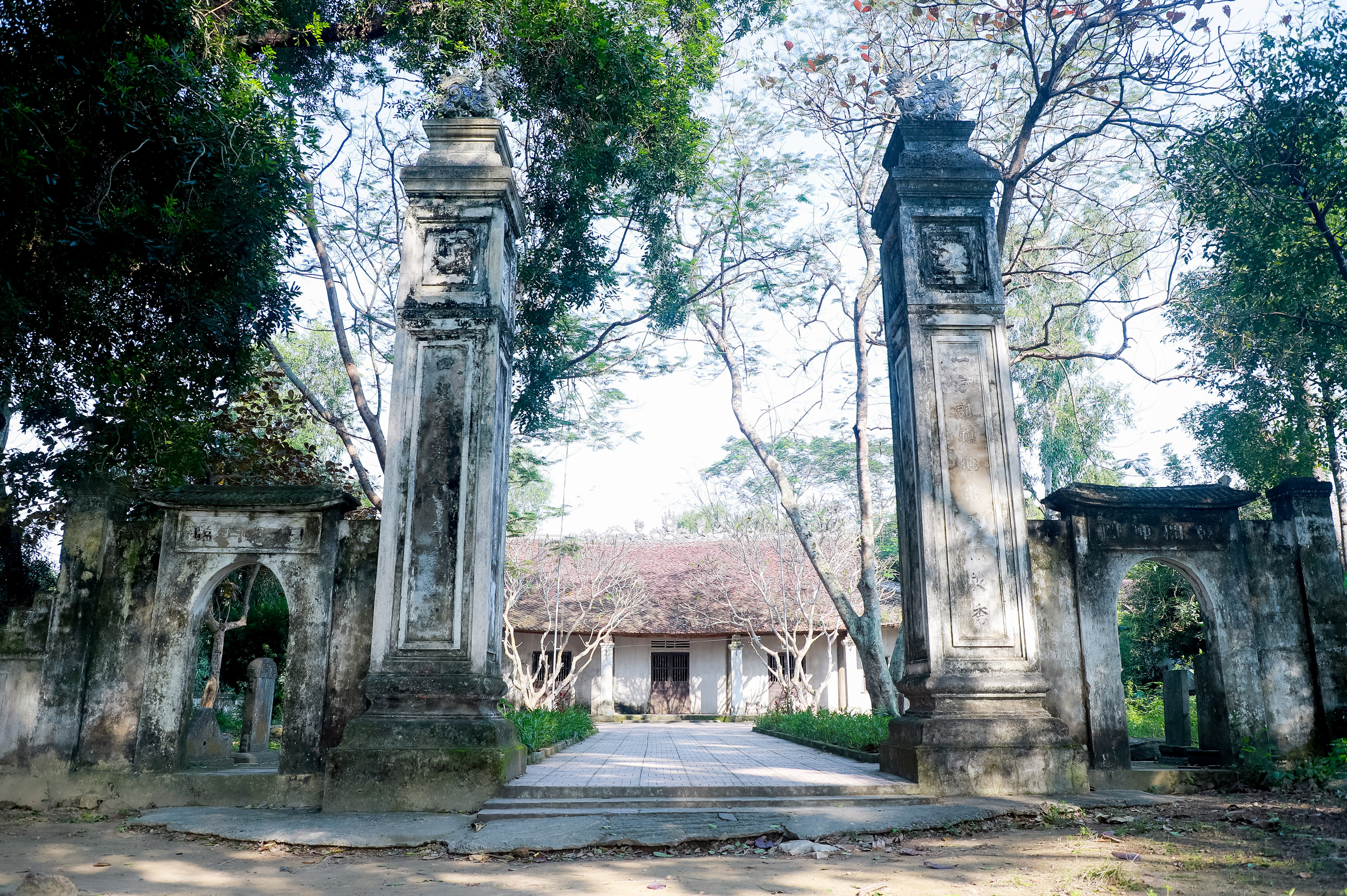 |
| The majestic and ancient appearance of Trung Can communal house, Trung Phuc Cuong commune, Nam Dan district. Photo: Thanh Duy |
Specifically, his father, Nguyen Trong Thuong, earned his doctorate in 1712 during the reign of King Le Du Tong. He was a man of vast learning and extensive knowledge, serving as a high-ranking official in the Ministry of Personnel, holding the title of Can Quan Cong. He was appointed as the chief envoy to the Qing Dynasty. His son, Nguyen Trong Duong (Dang), earned his doctorate in 1769 during the reign of King Le Hien Tong, following in his father's footsteps and also being appointed as a deputy envoy to the Qing Dynasty, receiving the title of Marquis. Each time he went on an embassy, the Qing court bestowed a golden flower to be pinned to the envoy's hat, a rare honor.
His grandson, Nguyen Trong Duong, was the direct descendant of Doctor Nguyen Trong Thuong, and called Nguyen Trong Duong his uncle. He earned his doctorate in 1779 during the reign of King Le Hien Tong. He was appointed by the King to be an envoy to the Qing Dynasty. Nguyen Trong Duong's son, Nguyen Trong Vo, passed the Huong Cong examination and served as a scholar in the Han Lam Vien (Academy of Scholars), also serving as an envoy twice during the reign of King Minh Menh of the Nguyen Dynasty.
According to research documents, the Nguyen Trong family church in Trung Can village currently houses a horizontal plaque, traditionally attributed to the Qing Dynasty Emperor, with the inscription: "Three generations of doctoral graduates and five diplomatic missions." The names and achievements of Nguyen Trong Thuong, Nguyen Trong Duong, and Nguyen Trong Duong are inscribed on stone steles at the Temple of Literature, National University (Hanoi).
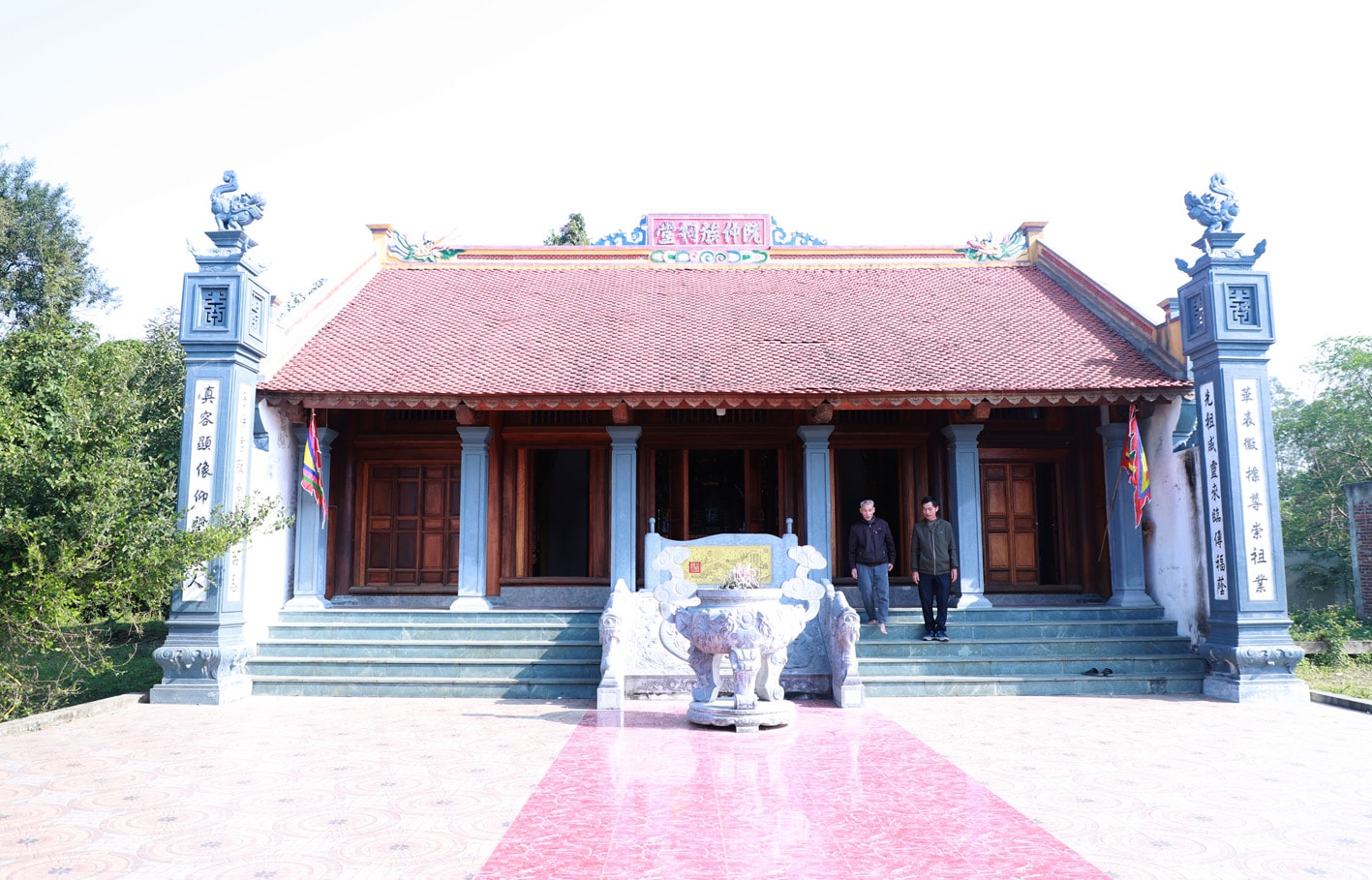 |
| The ancestral temple of the Nguyen Trong clan in Trung Phuc Cuong commune (Nam Dan district). Photo: Thanh Duy |
In Nghe An, there have been historical instances of three generations—father, son, and grandson—all passing the imperial examinations. However, according to some researchers, only the Nguyen Trong - Trung Can family, with three generations (father, son, grandfather, and grandson) being sent on diplomatic missions five times, is a unique case. This also demonstrates that this family produced talented, virtuous, and incorruptible officials, especially those with exceptional diplomatic skills.The academic achievements of the Nguyen Trong familyHe became famous throughout the court, brought glory to his hometown, and was a source of pride for his family and village, leaving a lasting legacy. People have composed folk couplets praising him:"Potatoes for breakfast, potatoes for lunch, potatoes for dinner, and three more potatoes! Father passes the exam, son passes, grandson passes, the whole family passes."
Upholding the virtue of Loyalty and Diligence
For generations, Trung Can village (now part of Trung Phuc Cuong commune, Nam Dan district, Nghe An province)reflections on the Lam RiverSome explain that the two words "Trung Can" mean that the people here are very loyal to the Fatherland; they preserve the customs and traditions, the tradition of studiousness, respect for teachers, and the tradition of diligence, perseverance, hard work, and the talent and creativity of their ancestors. The small village is situated near both water and mountains; to the north and east are the Lam River, and to the west and part of the south are the majestic Thien Nhan Mountains. Trung Can is also located in the "land of spiritual significance and outstanding people," "where the land and mountains converge," making it a blessed land for many scholarly families. From ancient times, the young men and women of Trung Can village have diligently studied to achieve academic success, with the image of "the man's palanquin leading the way, the woman's following behind."
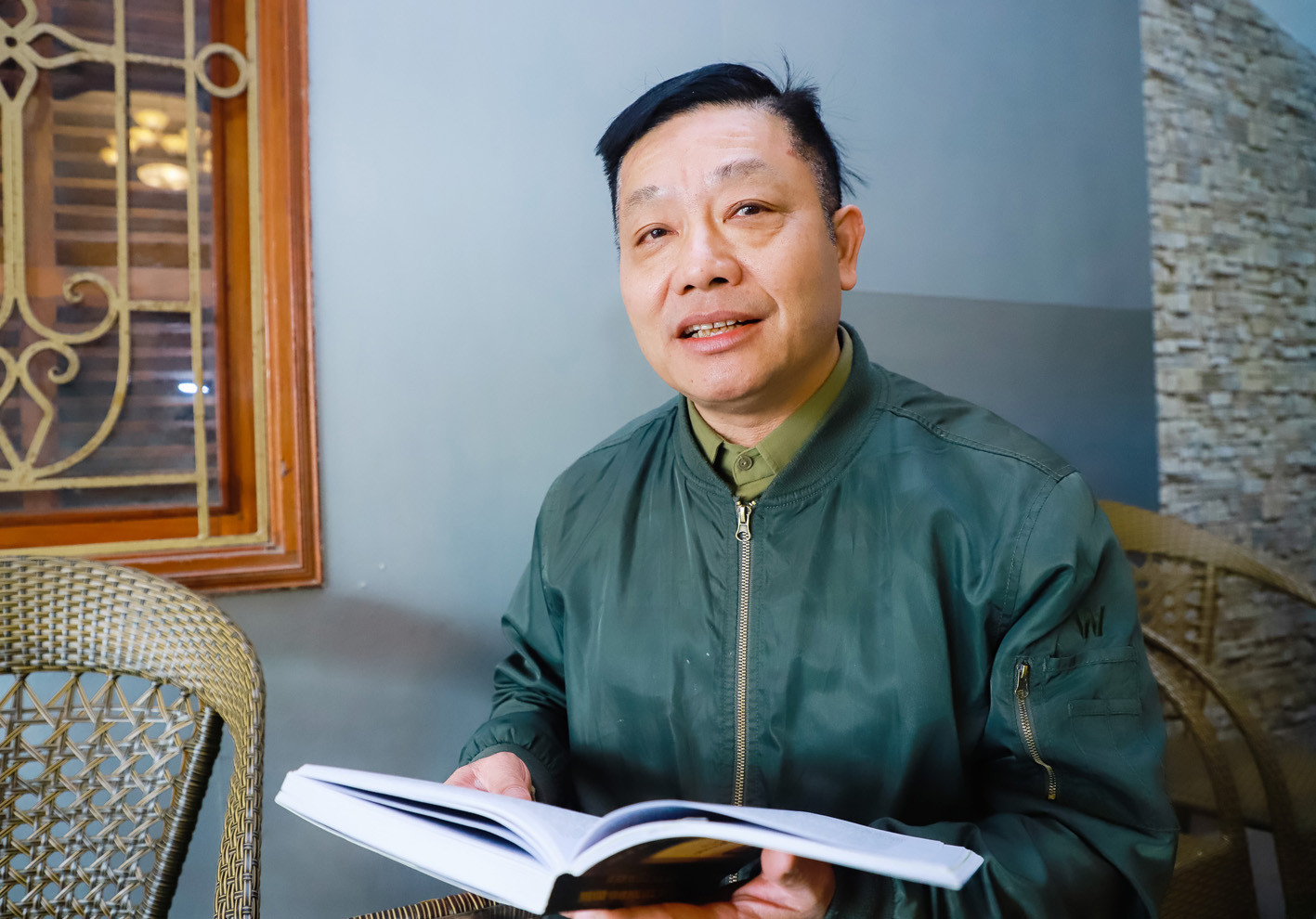 |
| Mr. Nguyen Trong Nghia, a descendant of the Nguyen Trong family, speaks with a reporter. Photo: Thanh Duy |
Having excelled in their studies, held high positions in the imperial court, and contributed to all parts of the country, the homeland always stirred in the hearts of every son and daughter of Trung Can. They always looked towards and made concrete contributions to their hometown. Today, when visiting Trung Can village, we see the majestic and ancient communal house of the same name. Walking under the canopy of ancient trees, through the steps of the Trung Can communal house, we feel as if we are traveling back in time, immersing ourselves in the lively atmosphere of the annual village festival held there.
This is a magnificent structure with exceptional architectural value. The temple has five bays, six trusses, and 24 ironwood columns, with a four-pillar structure, each column reaching 8 meters in height. Each corner beam features a "dragon's nest," eight of which are intricately carved circular wooden beams with dragon heads coiled and nestled in the corners of the roof. On the four sides are 24 wood-carved paintings, masterpieces of ancient Vietnamese sculpture. These depict scenes such as: Emperor Shun plowing the fields at Lich Son Mountain, Emperor Yao abdicating the throne to Emperor Shun in the Imperial Palace – all historical events from China. Other scenes depict folk life: a scholar returning to his village, a musician playing a zither, a buffalo herder playing a flute, a mother breastfeeding her child, young men and women pounding rice, people reading, playing chess, reciting poetry, and riding horses…
The Trung Can communal house is renowned as a typical cultural heritage site, classified by the State as a National Historical and Architectural Art Monument, thanks in large part to the contributions of the Nguyen Trong family. Specifically, fulfilling the wishes of his grandfather, Nguyen Trong Thuong, and his uncle, Nguyen Trong Duong, Mr. Nguyen Trong Duong, along with his clan and villagers, began constructing the Trung Can communal house in the years Tan Suu and Nham Dan (1781-1782). The villagers of Trung Can have a folk song that goes:"With the arrival of three high-ranking officials, the village rejoiced and built a communal house."
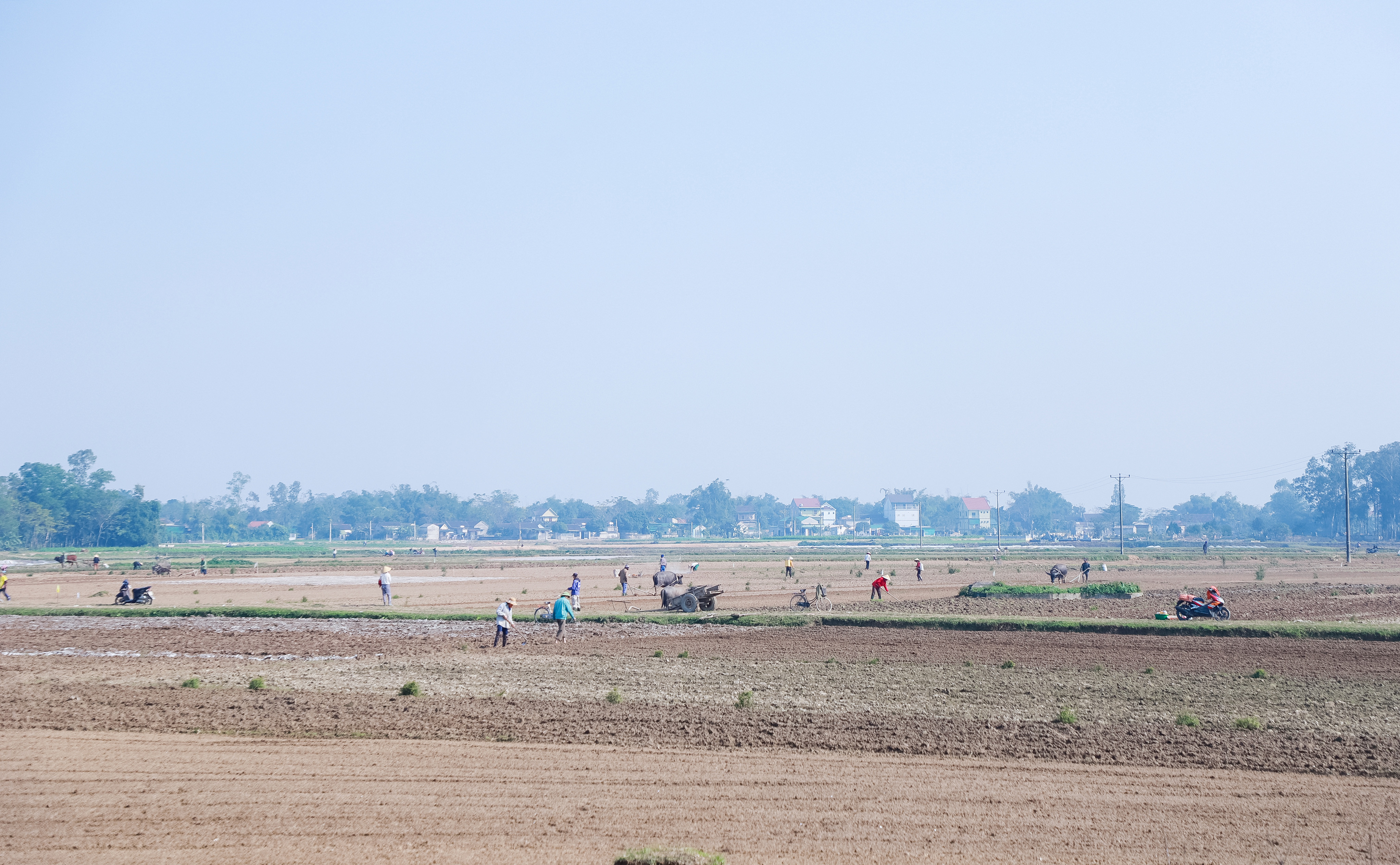 |
| The peaceful scenery of Trung Phuc Cuong commune along the Lam River. Photo: Thanh Duy |
Over the course of 500 years, having migrated from Hung Dao commune, Hung Nguyen district to Trung Can village, Nam Dan district, the Nguyen Trong family has produced many famous figures, "a typical phenomenon in the scholarly community of Nghe An province," making significant contributions to the building and protection of the nation, especially in the field of diplomacy, and leaving their mark on national history. Their names are not only recorded in historical texts and on stone tablets, but are also remembered and honored by future generations.


