
A new breakthrough in the search for a method to neutralize the HIV virus.
Scientists attending the International AIDS Conference in Vancouver, Canada, continue to present new discoveries, offering hope in the search for an effective cure to stop the devastating disease of HIV/AIDS.
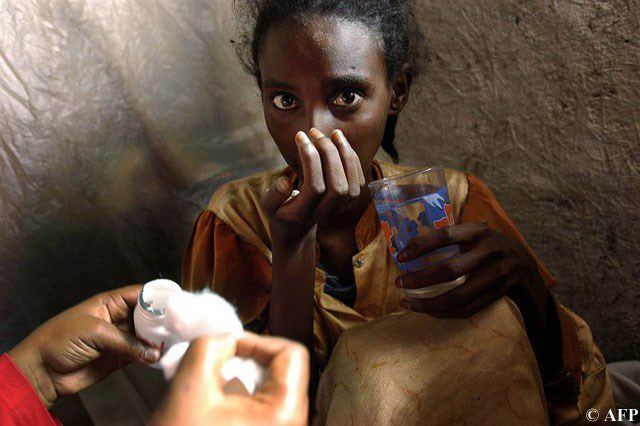 |
| An HIV-infected patient in Africa. (Photo: AFP) |
At this conference, scientists reported advances in gene therapy and antibody therapy to neutralize the HIV virus. These studies aim to answer questions such as why some people with HIV can control their HIV viral load after treatment ends, or the hypothesis of a vaccine that could eliminate the HIV virus from the patient's body.
Researcher Christopher Peterson of the Fred Hutchinson Cancer Research Center in Seattle, Washington, has announced a new discovery in the search for a method to stop the HIV virus: introducing genetically modified stem cells into the body using monkeys as experimental subjects.
According to Peterson, this research yielded promising results, as the "modified" cells prevented the HIV virus from entering the immune system. Peterson concluded that with a sufficient number of protective cells, the HIV virus cannot spread. This offers the prospect of a possible treatment method.
Another study, led by John Mascola of the US National Institutes of Health, focused on the activity of HIV-1 monoclonal antibodies in the bodies of eight HIV patients. The results showed that after three months of receiving a single dose of the antibody, the viral load in the serum of six out of eight patients decreased by 10 to 50 times.
The other two individuals were unable to absorb the HIV-1 antibodies because a type of HIV virus already present in their bodies was resistant to HIV-1. Mascola suggested that there may be several ways to use antibodies in treating HIV patients, including destroying viral reservoirs within the patient's cells.
Although these new findings do not yet offer a viable treatment, experts believe they provide a solid foundation for larger-scale research projects, offering more promising prospects for treating and preventing the deadly disease HIV/AIDS.
According to Vietnam+


