Tourists to Southeast Asia want "Safe Travel" with Children
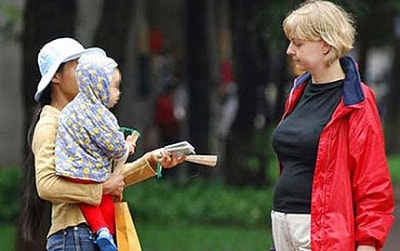 |
| Exploiting children to sell goods in Hoan Kiem Lake area. (photo: internet) |
According to the results of a study published on November 6 called “Project Childhood”, conducted by World Vision in collaboration with Western University (Sydney, Australia), tourists to Southeast Asia want the regional tourism industry to do “more” to protect children from exploitation.
Research shows that among the more than 36 million tourists who visited Southeast Asia (SEA) in 2012, many witnessed the suffering of children.
Through a survey of 270 tourists from 44 different countries, the study found that 95% of the tourists interviewed had contact with local children. In particular, some of these contacts made them feel “sad, guilty, worried and disappointed”.
Three-quarters of tourists surveyed said that cases of child abuse or exploitation were related to the tourism industry. In addition, most tourists expressed a desire to help when a child was in danger, but they did not know what to do.
“Tourists are increasingly aware of the increased risks to child beggars in tourist destinations and children in institutional care that engage in ‘voluntourism’,” said Aarti Kapoor, Regional Manager of World Vision’s Project Childhood.
The study also found that information about safe travel has a direct and positive impact on tourists’ decisions. Accordingly, tourists who are aware of child-safe travel are less likely to give money to children begging, buy goods from children selling on the street and visit children in humanitarian facilities.
Many survey respondents said they supported travel and tourism establishments that operate according to child-safe principles, and expressed a desire to be “child-safe travelers.”
“The report shows that we need a coordinated effort between travellers, the tourism industry and governments. National tourism organisations have agreed to promote child-safe tourism for travellers and tour operators. Each of us can play a part in ensuring children are safe and positively impacted by increased tourism,” said Ms. Kapoor.
Mr. Nguyen Khanh Hoi, Coordinator of the World Childhood Project in Vietnam, said that the report pointed out three realities in Southeast Asian countries, including Vietnam: “At the national level, management agencies need to strengthen control and prevention of the risk of child abuse in some types of tourism such as “volunteer” tourism at humanitarian facilities. Tourists need to be informed so that they can report to relevant agencies and organizations if they discover children being abused or at risk of abuse.”
Within the framework of the “Childhood Project”, TNTG will carry out capacity building activities for children, people, local officials, relevant agencies, restaurants, hotels and travel companies… at many tourist destinations across the country such as Hoa Binh, Lao Cai, Quang Nam, Da Nang, Quang Binh and An Giang.
The Childhood Project, funded by Australian AID with a total budget of US$7.5 million, aims to prevent child sexual exploitation in tourism activities in the Mekong sub-region.
With the participation of the United Nations Office on Drugs and Crime (UNODC), INTERPOL, the project will be implemented in Cambodia, Vietnam, Thailand and Laos, through TNTG. Specifically, TNTG will cooperate with government agencies and communities to prevent child sexual exploitation in tourism, by raising awareness and building response capacity through communication campaigns, capacity building as well as child protection advice lines.
According to NDDT