
Phong Dinh Port Road and its range of emotions
(Baonghean)When a street name is also the name of the land, then the street itself speaks of its unique soul. The streetscape is vibrant and ever-changing, yet the small alleyways at the entrance remain charming. A less crowded stretch of street creates a sense of village life within the city, and when its name is mentioned, it evokes in the mind a historical spirit of revolutionary struggle. Few streets in Vinh City evoke such a wide range of emotions as Phong Dinh Cang Street...
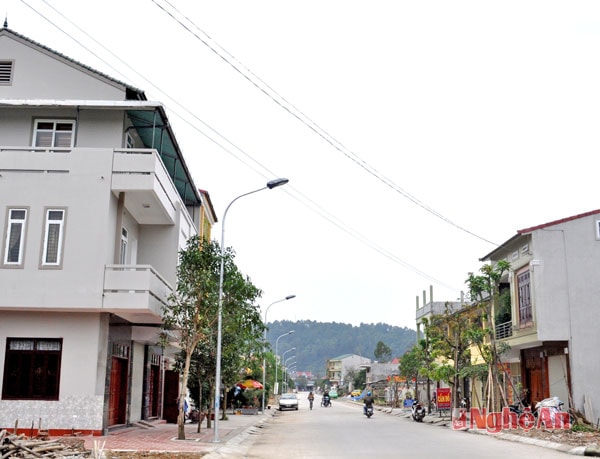 |
| A new section of Phong Dinh Cang Street |
| RELATED NEWS |
|---|
Historical records state: “The Nghệ Tĩnh Soviet movement began with the struggle commemorating International Labor Day on May 1, 1930, by thousands of workers and peasants from Vinh – Bến Thủy. Yên Dũng Thượng commune mobilized over 1,200 people, who on the morning of May 1st joined with peasant groups from lower Nghi Lộc communes, marching and shouting slogans demanding higher wages, shorter working hours, and reduced taxes…” The thunderous footsteps of that fighting crowd stirred up red dust on a winding path through the barren rice fields, which is now Phong Định Cảng road. During the war against the Americans, the road was interspersed with anti-aircraft artillery positions and riddled with bomb craters…
Sacred land doesn't need to preserve the turbulent forms etched into history. People of all times who have been, and are still, connected to this sacred land only need to cultivate goodness to nurture peaceful minds. This reflection comes from a somewhat special citizen of Phong Dinh Cang Street, the poet Duong Huy. He stood thoughtfully on his balcony, gazing at the bare flame tree in winter, and told me about the day he and some members of the Nghe An Literature and Arts Association came here to build a hut, meticulously excavating every inch of land, relocating the remains of those who died of starvation during the famine of 1945, to build houses as a place to "settle down" and "find peace" from the burdensome work of sensitive souls. I was surprised that the wide, bustling street today was, just over ten years ago, a barren field and a desolate graveyard.
And just imagine, Phong Dinh Cang Street, now a residential area for artists and writers in Nghe An, with names like Thach Quy, Duong Huy, Hoang Trung, Hai Tho, Quoc Anh... once had a vibrant, artistic atmosphere. A glimpse of the eastern side of the street, where every morning that poet or painter would intently watch innocent children in their school uniforms, chattering happily on their way to school – could that possibly alleviate the hardships of the times? I recall the poem "Broken Bricks of Thanh Vinh" by the poet Thach Quy, written before he became a resident of the street: "Is there any city like this one? / Before seeing tall buildings, it already shines with a rosy hue / Already seeing the rosy color smiling in the broken bricks?...". Surely, that rosy hue still lingers in the poet's soul and emotions in the bustling street today?
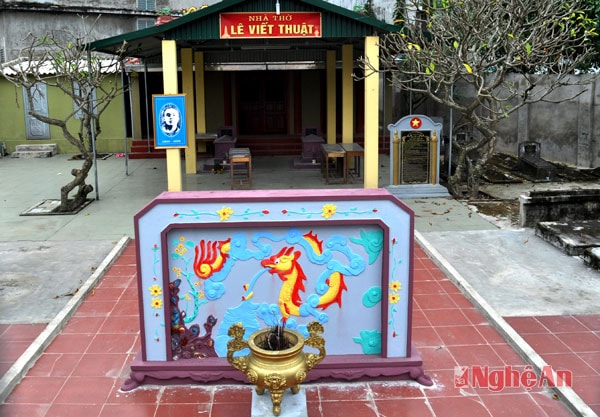 |
| The memorial church of Comrade Le Viet Thuat is located on Phong Dinh Cang Street. |
At nearly 3 km long, Phong Dinh Cang Street is considered one of Vinh's longest streets. However, walking along it, one doesn't feel the hurried rush, thanks to the interplay of old and new streets. The beginning of the street connects to Nguyen Du Street (coinciding with National Highway 1A), showcasing a modern streetscape with contemporary villas and trendy service signs commonly seen in young cities. The street also features the humble, somewhat obscure presence of the Le Viet Thuat Church – the former Secretary of the Central Committee of Vietnam from 1931-1932, a historical figure from Yen Dung Ha – the former Tenth Quarter of Vinh.
Continuing from the intersection with Nguyen Van Troi Street, the western side of the street is characterized by a leisurely pace of diverse small services; the eastern side features moss-covered walls, the old setting of the Vinh Yarn Factory (now belonging to Hoang Thi Loan Textile and Garment Joint Stock Company), the Plastic and Packaging Factory (Economic Cooperation Company of Military Region 4)... Occasionally, you'll spot clumps of bamboo, reminiscent of the countryside, yet not quite keeping pace with the new street construction, adding a unique touch to the street. Along the western side, the same stretch of street is still crowded with workers from the subsidy era, where in the evenings, the smoke from charcoal stoves drifts across the dark brown tiled roofs, mingling with the aroma of grilled meat and lively conversations around small courtyards filled with wine and tea, making the street unexpectedly endearing. Crossing the Phan Dang Luu – Nguyen Viet Xuan axis, the street gradually reveals a more rapid, modern pace, showcasing Vinh's authentic street experiments with many new services...
Phong Dinh Cang Street is also attractive because of the numerous restaurants serving traditional Vietnamese cuisine scattered along the street, with each dish being prepared by only one restaurant on that street. These include restaurants specializing in veal, goat, chicken, crab hotpot, and insect-based appetizers... The breakfast and coffee shops are also small and charming, yet they remain popular, a feature not found on every street in Vinh. Perhaps Phong Dinh Cang Street in Vinh will have a distinctly Vietnamese atmosphere, much like Hanoi or Saigon!
I've lived in the city, been connected to it for a long time, but every time I drive slowly through the streets, I let my mind wander and experience a range of emotions…
| In 1963, when Vinh Town was officially established as a city, Phong Dinh – Cang Road was located in Hung Thuy Commune (comprising the present-day Hung Dung, Truong Thi, and Ben Thuy wards). During the research process for this road, several sources suggested that because it connected the Phong Dinh area of Yen Dung Thuong to the port area of the Lam River in Yen Dung Ha (the area belonging to the present-day Ben Thuy and Truong Thi wards), it was called the road from Phong Dinh to Ben Thuy Port. Later, when the official decision to name the road was made, administrative documents recorded it as "Phong Dinh – Cang Road." However, due to the habit of using abbreviated names, administrative documents and road signs omitted the hyphen (-), resulting in "Phong Dinh Cang Road." Therefore, many people mistakenly believe this is the name of a famous person. |
Text and photos: Dinh Sam


