
Pepper prices today, March 6, 2025: Strong increase.
Today, March 6th, domestic pepper prices are at 158,000 - 161,000 VND/kg, a sharp increase of 1,000 to 1,800 VND/kg compared to yesterday. Indonesian export pepper prices have increased for the third consecutive day.
Domestic pepper prices today
The highest pepper purchase price recorded in key pepper-growing regions (Dak Lak, Lam Dong, Gia Lai, Dak Nong, Ba Ria - Vung Tau, Binh Phuoc) was 161,000 VND/kg.
Specifically, in Dak Nong province, the price of pepper is 161,000 VND/kg, a sharp increase of 1,800 VND/kg compared to yesterday.
In Gia Lai, the price of pepper is 158,000 VND/kg, a sharp increase of 1,000 VND/kg compared to yesterday.
In Dak Lak, the price of pepper is 160,500 VND/kg, a sharp increase of 1,300 VND/kg compared to yesterday.
In Binh Phuoc and Dong Nai provinces, the price of pepper today is 158,000 VND/kg, unchanged from yesterday.
In Ba Ria - Vung Tau, the price of pepper today is 158,000 VND/kg. This is unchanged from yesterday.
Thus, the lowest price for pepper in the domestic market today is 158,000 VND/kg.
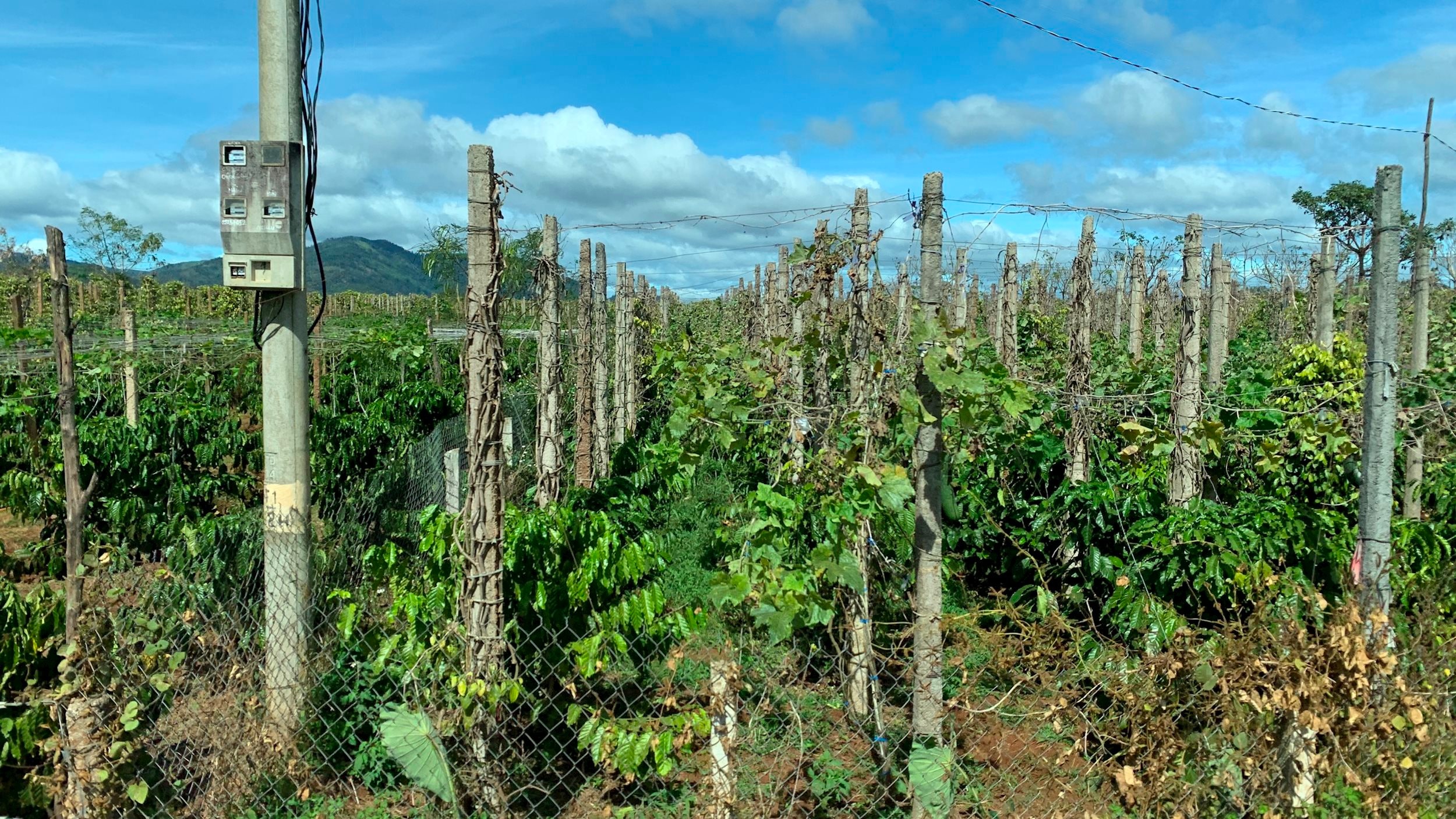
Pepper prices are on a strong upward trend due to a decline in global supply, while demand in major markets such as the US, Europe, and China remains stable. The decrease in pepper production is mainly due to farmers reducing their planting area over the past 10 years, switching to higher-value crops such as coffee and durian.
Despite high pepper prices, experts advise against massive expansion of planted areas. Instead, the industry should focus on improving product quality, promoting organic farming, controlling diseases, and strengthening linkages with businesses. These solutions will help pepper develop sustainably and avoid risks from cyclical market fluctuations.
2024 was considered a successful year for Vietnam's pepper industry. Experts believe the potential for price increases for pepper and other spices remains very high in 2025 and subsequent years. According to the plan for 2030, the pepper cultivation area is expected to remain at around 80,000 - 100,000 hectares, with a yield of 24 - 25 quintals/hectare, and an estimated production of 200,000 - 230,000 tons.
Today's world pepper prices
On the world market, based on quotations from exporting companies and export prices in various countries, the International Pepper Association (IPC) has updated the prices of various types of pepper traded on the international market on March 6th (local time) as follows:
Indonesian Lampung black pepper prices continued to rise slightly compared to yesterday, reaching US$7,360/ton (up 0.43%). Additionally, Muntok white pepper prices also increased slightly compared to yesterday, reaching US$10,220/ton (up 0.44%).
The price of Brazilian ASTA 570 black pepper remained unchanged from yesterday at $6,850 per ton.
Malaysian ASTA black pepper prices remained stable compared to yesterday, currently at US$9,700/ton. Additionally, the price of ASTA white pepper from the same country also remained unchanged compared to yesterday, at US$12,200/ton.
Prices for all types of Vietnamese pepper remained unchanged compared to yesterday. Specifically, the price of Vietnamese black pepper (500 gr/l) reached US$6,900/ton; and the price of black pepper (550 gr/l) reached US$7,100/ton.
Similarly, the price of Vietnamese white pepper remained unchanged from yesterday at $9,900 per ton.
By the end of 2024, the pepper cultivation area reached 110,500 hectares, with an average yield of 26 quintals/hectare, double the global average. Total production reached approximately 200,000 tons, contributing $1.32 billion to export revenue, affirming the important role of the pepper industry in Vietnam's agricultural economy.
Although the area planted with pepper is only 15% of that of coffee and 12% of that of rubber, its export value contributes 23% to the coffee industry (US$5.6 billion) and 38% to the rubber industry (US$3.4 billion). This shows that the pepper industry has great potential if it receives proper investment, improved quality, and increased added value.
The development of pepper growing areas according to standards such as VietGAP, GlobalGAP, and organic farming is being promoted in key provinces such as Dak Nong, Dak Lak, Binh Phuoc, Gia Lai, Dong Nai, Ba Ria - Vung Tau, Lam Dong, and Quang Tri. The goal is to reach 5,000 hectares of organic pepper by 2030, accounting for 5% of the total area.
According to Ms. Hoang Thi Lien, President of the Vietnam Pepper Association (VPSA), Vietnam is shifting from exporting raw materials to deep processing to increase value. However, the industry still faces many challenges such as climate change, pressure from pests and diseases, increasingly high quality requirements from international markets, and rising transportation costs. Proactively adapting to these challenges will determine the sustainable development of the pepper industry in the future.


