
Over 1,500 garment factory workers in Nghe An province have ended their strike and returned to work.
(Baonghean.vn) - After two days of striking, more than 1,500 garment workers have reached some agreements with the factory.
Over 1,500 workers at Haivina Kim Lien Co., Ltd. (Nam Giang Industrial Park, Nam Dan District) went on strike on February 26-27 to protest certain company policies.
Why are workers on strike?
Haivina Kim Lien Co., Ltd. specializes in garment manufacturing for export and currently employs over 3,000 workers. Claiming that the company has not prioritized workers' rights, raising wages while cutting other benefits, and providing substandard working conditions, many workers have staged a collective work stoppage, gathering within the company grounds to demand that company management address their rights.
The reason for the workers' collective work stoppage was to demand rights and benefits that they had repeatedly requested but which the company had not adequately addressed. Specifically, the factory workers demanded that the company address 24 issues. These included requests for an increase in the basic salary as stipulated by the state; periodic salary increases for workers; an end to the reduction of the 300,000 VND/month regional allowance; an increase in hazardous work allowance, transportation allowance, housing allowance; seniority allowance; high production quotas for pregnant women; frequent verbal abuse by managers; labor protection regulations, leave entitlements, and working environment; and an end to forcing workers to stay overtime after working hours…
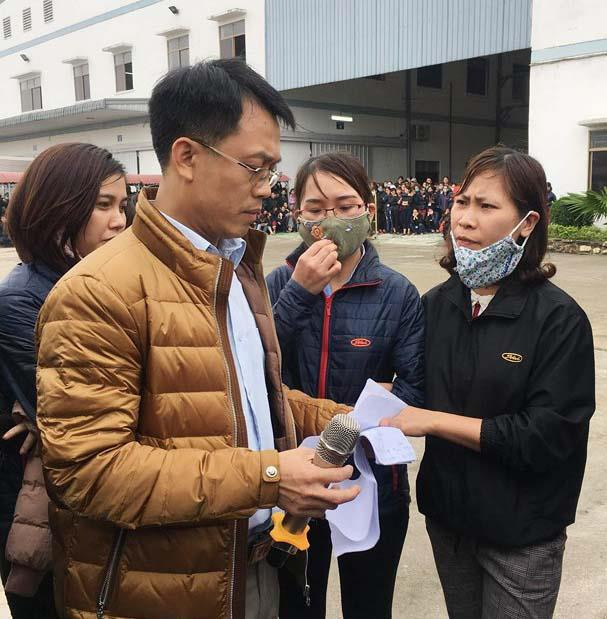 |
| Workers raised several issues with representatives of the Provincial Labor Union that they believe the company has not handled satisfactorily. Photo: Tung Chi |
According to many workers, the company recently announced a basic salary increase of approximately 200,000 VND per month but reduced some allowances. Therefore, although the salary increase is in accordance with regulations, the actual amount received by the workers has not increased. The workers requested that the company clearly separate salaries and allowances and conduct salary increases every three years.
A worker from Quynh Luu district, married to a man from Van Dien commune, Nam Dan district, said that she has been working for 7 years but only receives an additional allowance of 62,000 VND/month from the company, while new workers receive 320,000 VND/month. Both she and her husband work for the same company, and their combined monthly salary and bonuses are only about 8 million VND, which is insufficient to cover their family's living expenses.
A worker in the Sonic department (paint printing department) stated that she is frequently exposed to hazardous substances such as paint, gasoline, and ink, but the working conditions are inadequate, and her hazardous work allowance is only 150,000 VND per month. Therefore, she requested that the company increase the hazardous work allowance and improve working conditions.
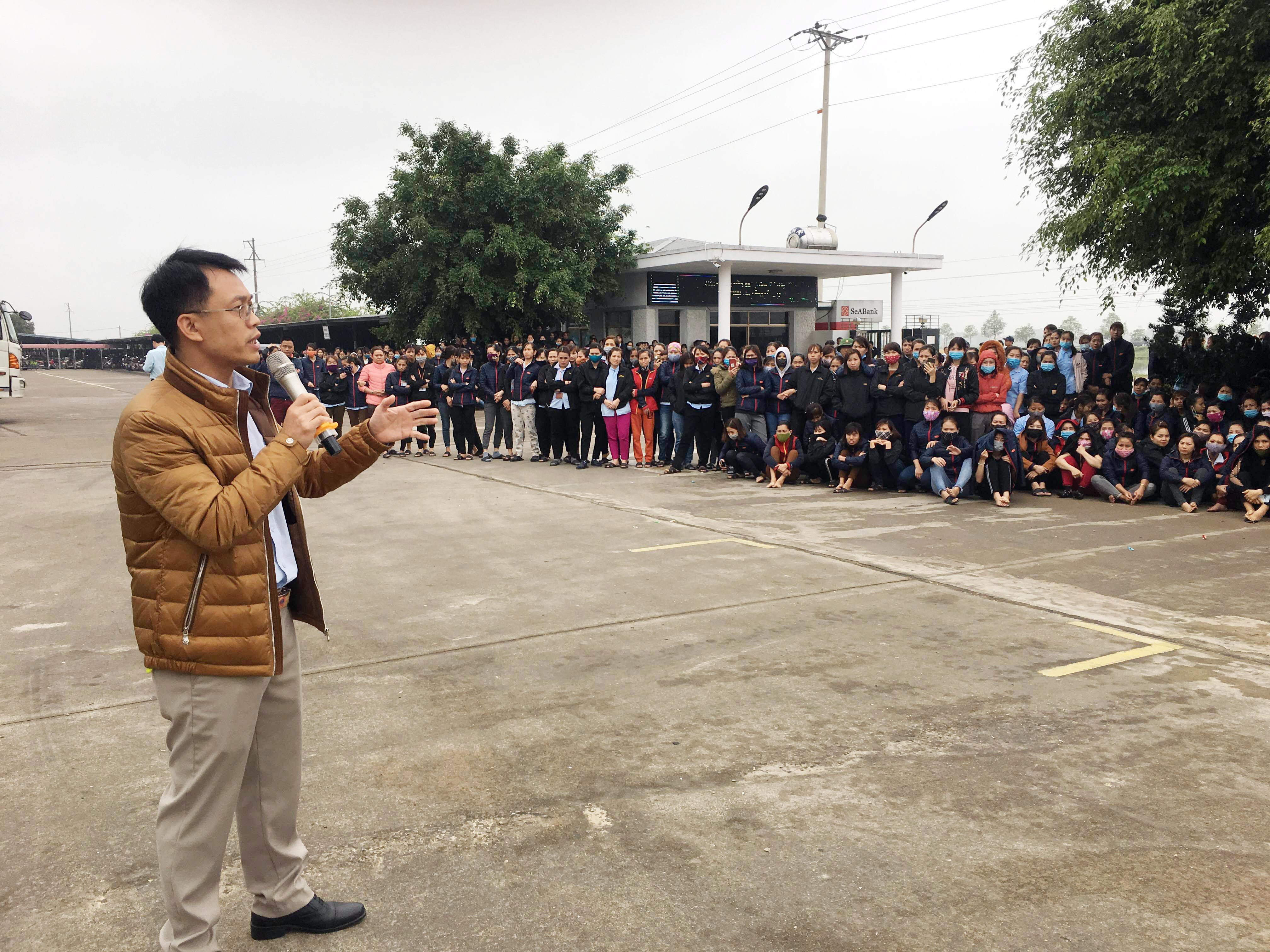 |
| Representatives of the Provincial Labor Union are campaigning to encourage workers to return to work. Photo: Tung Chi |
Many issues beneficial to workers were agreed upon.
According to Hoang Thu Huong, Head of the Policy and Legal Affairs Department of the Provincial Labor Union: After the incident occurred, the provincial and district labor unions, along with relevant agencies, worked with the employer and initially reached an agreement on some of the legitimate demands of the workers.
According to the minutes of the collective agreement meeting between the employer, Haivina Kim Lien Co., Ltd., the company's trade union representatives, the Provincial Federation of Labor, the Nam Dan District Trade Union, and the Provincial Police, the following points were agreed upon:
Increase basic salaryAccording to state regulations, the salary for region 4 is 2,920,000 VND + 5% hazardous work allowance + 7% training allowance = 3,280,620 VND; salary increases are granted periodically to workers every 3 years with a 5% increase; allowances for fuel and housing remain unchanged, increasing by 20,000 VND annually for assistant workers and 30,000 VND for main workers; attendance allowance is 200,000 VND for seamstresses and 180,000 VND for other workers, and 330,000 VND for seamstresses and 270,000 VND for other workers.
The issue of increasing hazardous duty pay (environmental allowance)The company maintains the current rate of 150,000 VND/person/month for the sonic department (the company has already included a 5% hazardous work allowance in the basic salary for all employees). If an employee wishes to transfer to another department, the company will arrange the transfer.
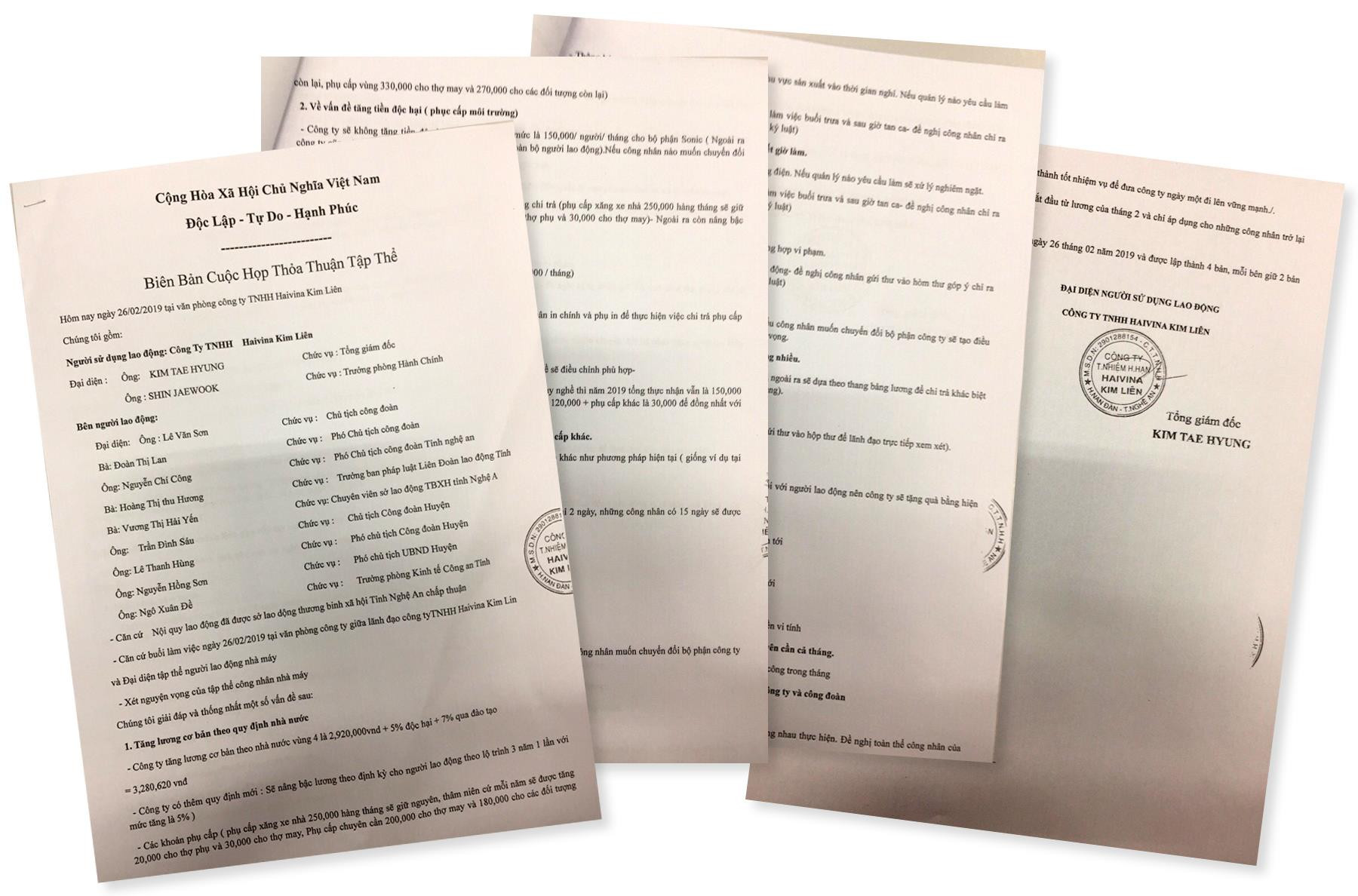 |
| Minutes of agreement between the company and the employee. |
No cuts to allowances:The company also maintained the previously paid allowances; in addition, it increased salaries periodically every 3 years by 5%.
Distinguishing allowances between main printing workers and assistant printing workers:The company will classify the skill allowances of main and auxiliary printing workers in order to make the most appropriate allowance payments;
Regarding the issue of not requiring workers to stay and work overtime after their regular working hours.After 15 minutes of the shift ending, the company will shut down the entire power system. Any manager who requests this will be severely punished; workers are not allowed to work during lunchtime, after-shifts, or overtime. The company also requests that workers send letters to the suggestion box specifically naming managers who pressure workers so that the company can take appropriate action. Managers who verbally abuse workers are strictly prohibited, and those named will be severely punished.
Regarding the work content, even after 6 years of employment, the salary is still based on skill level 10, and the quota is set for pregnant women.The company will investigate, determine the standards, and consider resolving each case individually...
By late afternoon on February 27th, the workers and company management had reached an agreement.
On the morning of February 28th, the workers pledged to return to normal work.


