
Kurt Campbell: The Asian spearhead in the Joe Biden era
(Baonghean.vn) - US President-elect Joe Biden recently appointed veteran diplomat Kurt Campbell to an unprecedented position in his administration: “Coordinator for the Indo-Pacific,” specifically for the Asia region. This move is seen as an attempt to reassure US allies in the region and signal a “major foreign policy” by the Biden administration to counterbalance the rise of China!
Architects "pivot"
Kurt Campbell was a name frequently mentioned during the period when former President Barack Obama was in power and Joe Biden was Vice President. This trio began to focus on "pivoting" US foreign policy towards the Indo-Pacific region, later known as the "Asia rebalancing" policy. Campbell, then Assistant Secretary of State for East Asian and Pacific Affairs, played a crucial, if not the "main architect," role in the Obama administration's pivot to Asia.
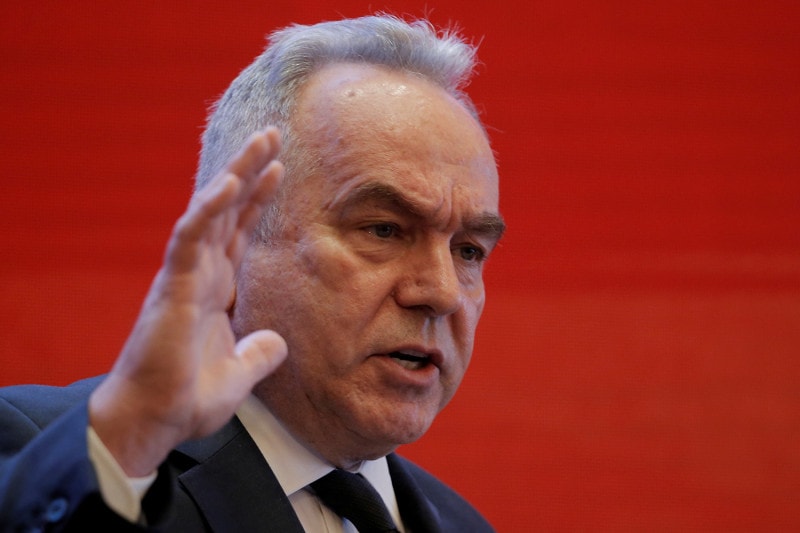 |
| Veteran politician Kurt Campbell has been appointed as the "Indo-Pacific Coordinator" under Joe Biden. Photo: Reuters |
Having worked with Mr. Campbell, former Indian Ambassador to the US Meera Shankar stated that Mr. Campbell was the one who actively promoted this strategy. During that period, the US shifted its naval operations from the Atlantic to the Pacific, cooperating closely with allies such as Japan, South Korea, Australia, and strategic partner India. Looking back to the 1990s, Mr. Campbell was also appointed as a senior US Department of Defense official for Asia. Within two years, he promoted and expanded the US-Japan alliance and established close defense cooperation between Washington and Tokyo.
In 2007, Campbell co-founded the Center for New American Security Studies with Michele Flournoy, a figure who was once considered for the position of Secretary of Defense to the Vice President. Since leaving office in 2013, Campbell has served as Chairman and CEO of Asia Group, a consulting firm he founded. Campbell also has close ties to Jake Sullivan, a close aide to Hillary Clinton during her time as Secretary of State.
In late 2019, these two individuals co-authored an article titled "Competition Without Disaster: How America Can Both Challenge and Coexist with China." Their viewpoint was that the Trump administration was right to...Identifying China as a competitorThis strategy is part of the 2017 National Security Strategy. However, Campbell and his colleagues argue that this competition must be conducted with caution and humility, adhering to the principle of coexistence with China rather than aiming to change the opponent. According to observers, these two figures will further strengthen their relationship as Sullivan is set to return to the Joe Biden administration as National Security Advisor.
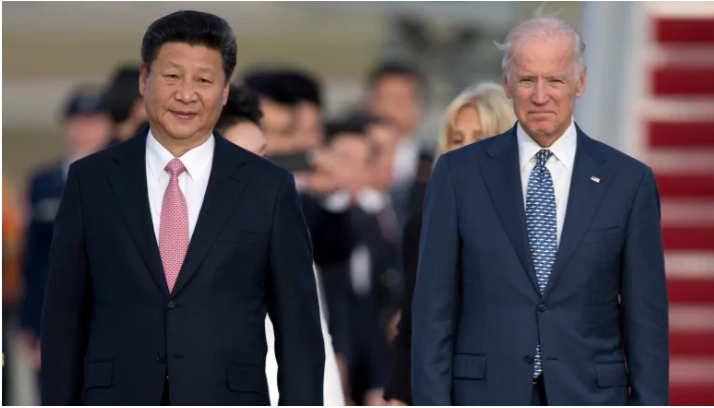 |
| US-China relations are a central focus of Asian policy under Joe Biden. Photo: AP |
Old wine in old bottles?
Born in 1957 in California, USA, Kurt Campbell graduated from Oxford University, the University of California San Diego, and St. Cross College. Campbell is a prominent politician in the region with extensive diplomatic experience. He also has good relationships with politicians from both the Democratic and Republican parties. This is believed to facilitate the upcoming US administration's Asia policies.
Another fact is that although Republicans consistently criticized Biden's team on China during the recent presidential campaign, it can be said that policies on the Asian region were one of the few issues that achieved broad consensus in Congress since the Obama era. The majority of opinions suggested strengthening relations between the US and its allies, or protecting critical technology sectors from rivals from Beijing... Therefore, the selection of Kurt Campbell can be considered a significant move.Joe Biden's strategic moveto seek a bipartisan "nod" on an Asia strategy, including how to deal with Beijing in the coming period.
However, looking back, Biden and his campaign team seem to have ignored the term "Indo-Pacific," just as the current Trump administration disregarded any legacy of Barack Obama's "pivot to Asia" policy. Therefore, many are expressing concerns about the future of the "Indo-Pacific" strategy under the Biden administration. Nevertheless, Biden has stated in several pronouncements that he will continue to focus on China's growing presence and assertiveness in the region, but with a different approach.
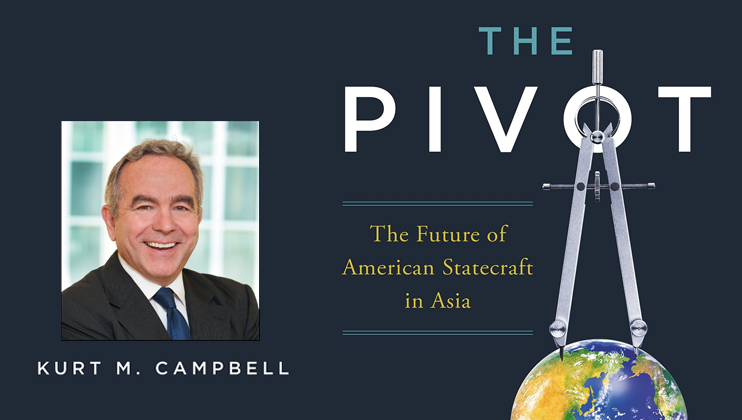 |
| Kurt Campbell previously published the highly acclaimed book "The Pivot: The Future of American Statecraft in Asia". Photo: NCUSCR |
Meanwhile, Kurt Campbell, America's "right-hand man" on Asia, also gained attention for outlining his approach to Asia in his 2016 book, "The Pivot: The Future of American Statecraft in Asia." In it, he emphasized the need for the U.S. to strengthen existing alliances and forge closer ties with countries like India and Indonesia to counter threats.the rise of ChinaTherefore, U.S. allies in Asia can rest assured about the "prioritization" that the Joe Biden administration is giving to the region, with the announcement of the appointment of Kurt Campbell as "Coordinator for the Indo-Pacific." However, the real test ahead is whether Biden will dedicate enough time and resources to realize the strategy outlined in "The Pivot: The Future of American Statecraft in Asia"!
Meanwhile, numerous difficulties and challenges await the administration of President-elect Joe Biden and his "Asia right-hand man," Kurt Campbell. These include the legacy of Donald Trump with the unresolved US-China trade war, the consequences of the US withdrawal from the Trans-Pacific Partnership (TPP), and the shaky alliance relationship as the US threatens to withdraw troops from South Korea. Campbell's task in Asia is further complicated by recent moves by China. Most recently, Beijing has agreed with the European Union (EU) on a highly anticipated bilateral investment deal. This move further complicates the Biden administration's efforts to strengthen transatlantic alliances. It also means Campbell must shoulder the responsibility of balancing and harmonizing Europe's approach to China with Biden's Asia policy.


