
Final part: Persevering with long-term solutions
Many departments and agencies have opened literacy classes in recent times with the hope of raising the intellectual level of the population and giving people more opportunities for economic and social development. However, the work of eradicating illiteracy or preventing relapse into illiteracy still faces many difficulties and challenges.

My Ha - Tien HungNovember 20, 2024
Many departments and agencies have opened literacy classes in recent times with the hope of raising the intellectual level of the population and giving people more opportunities for economic and social development. However, the work of eradicating illiteracy or preventing relapse into illiteracy still faces many difficulties and challenges.

Teacher Ly Ba Cua is one of the teachers who has been involved in literacy programs in Tuong Duong district for many years. Some of these classes were organized systematically by the Department of Education and Training and the Tuong Duong District Education and Training Office. However, Teacher Cua also organized classes spontaneously at the remote school locations where he used to work.
I worked for 15 years in Huu Khuong commune - an isolated area in Tuong Duong district. There, I often taught to help parents in the village learn basic arithmetic. During the teaching process, I often told many funny stories, and from these stories, the people understood the importance of literacy and the ability to read and write..."
Teacher Ly Ba Cua
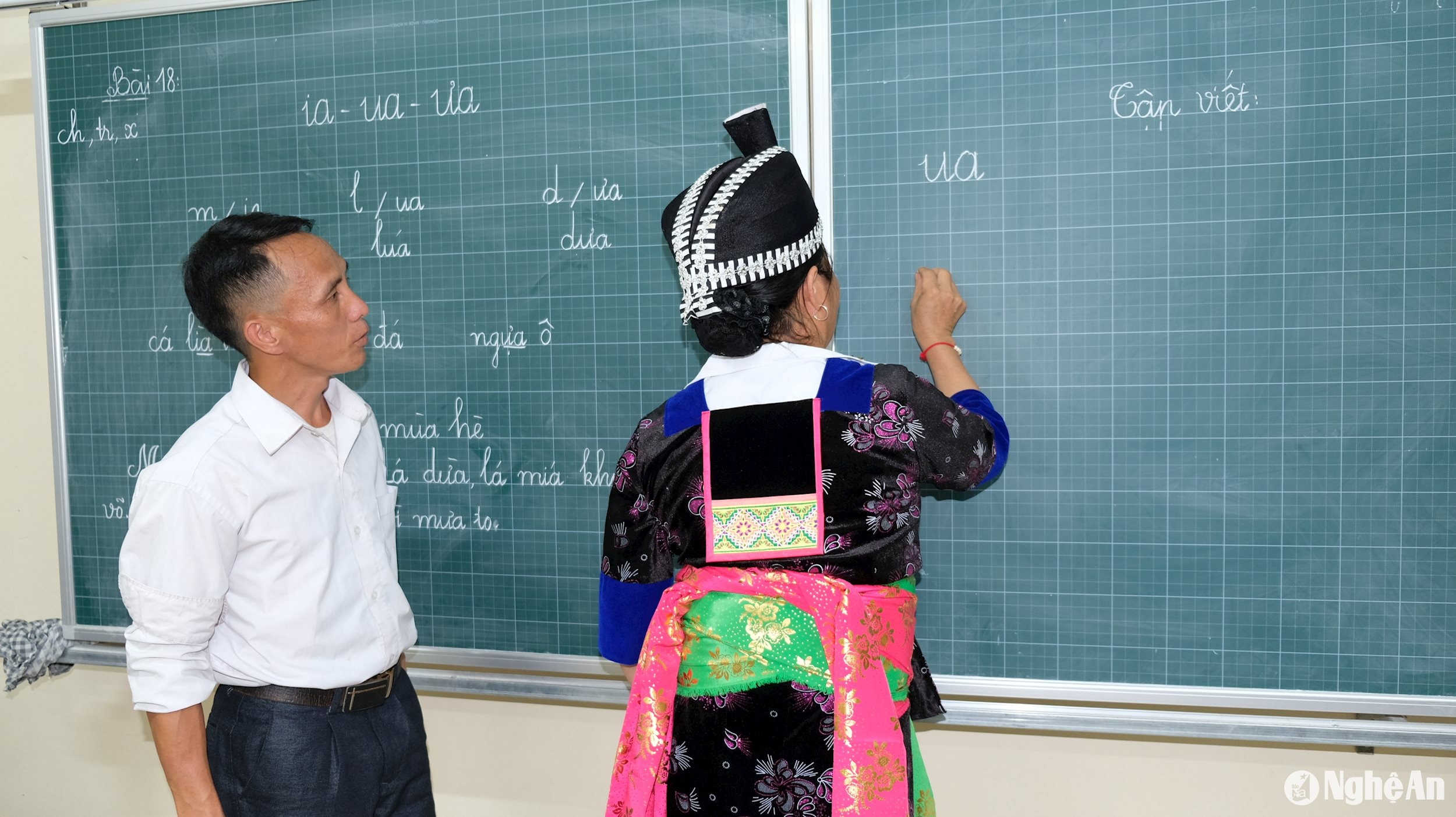
In Xa Luong commune, where teacher Ly Ba Cua works, he is a shining example of overcoming adversity. Nearly 20 years ago, he was one of the first Mong students from Na Be village to pass the high school entrance exam and then go on to university.
Teacher Cua recounted: "From 2001 to 2006, the villagers were only concerned with cutting down pine trees and timber in the forest to earn money. My family had six siblings, but none of us finished junior high school. I finished high school, passed the entrance exam, and completed senior high school at the district's boarding school, but my parents didn't know what grade I was in. They never even attended a parent-teacher meeting for their children. Many times, after I came home from school, my father told me not to go to school anymore. But I didn't want to be uneducated. After finishing school, I studied for a year as a scholarship student and then studied Elementary Education at Hanoi University of Education. As soon as I graduated, the Head of the District's Internal Affairs Department called me back to teach because at that time, the hydroelectric reservoir was being relocated, and many teachers were requesting transfers to the lowlands, so there was a severe shortage of teachers."
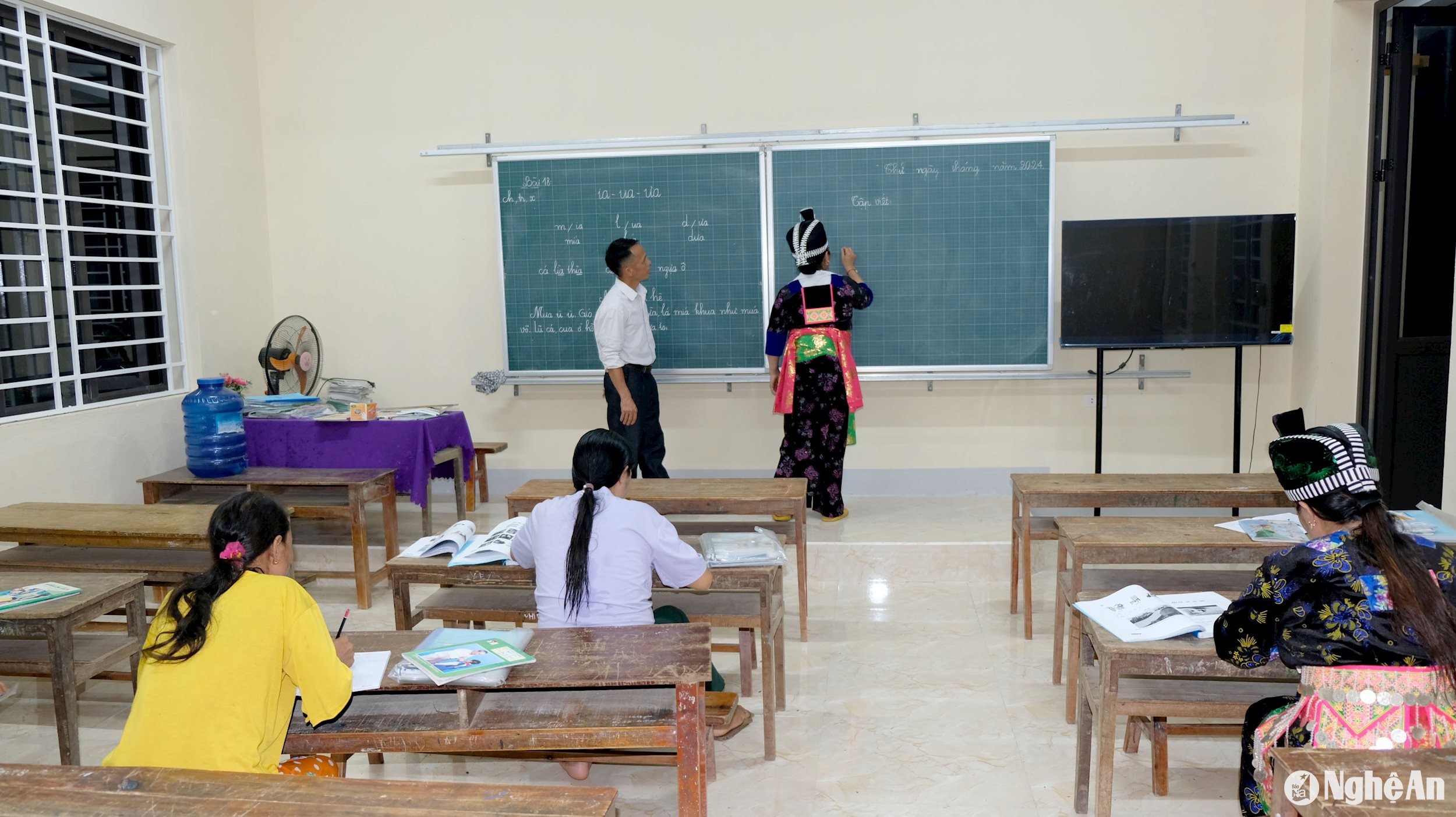
As a teacher, dedicated to teaching literacy and character development, Mr. Cua maintains a simple philosophy: "In education, I must teach people to read and write." With a solid educational background from Hanoi Pedagogical University, Mr. Cua consistently employs creative teaching methods to make his students eager to attend literacy classes. He often combines literacy instruction with outreach and education efforts.
Speaking about this, Mr. Cua added: "Not only in the past but now, many ethnic minority people do not prioritize education. Many Hmong families still hold the view that daughters belong to another family, and they get married at 15 or 16."
Teacher Cua's wife is also Hmong, having grown up in Cha Lang village, Huu Khuong commune, Tuong Duong district. When they got married, Teacher Cua was 26 years old, but his wife was only 17. Before that, partly due to difficult circumstances and partly due to outdated beliefs, his wife had not received an education and was illiterate. Even now, despite numerous attempts by Teacher Cua to encourage her to learn to read and write, his efforts have been unsuccessful!
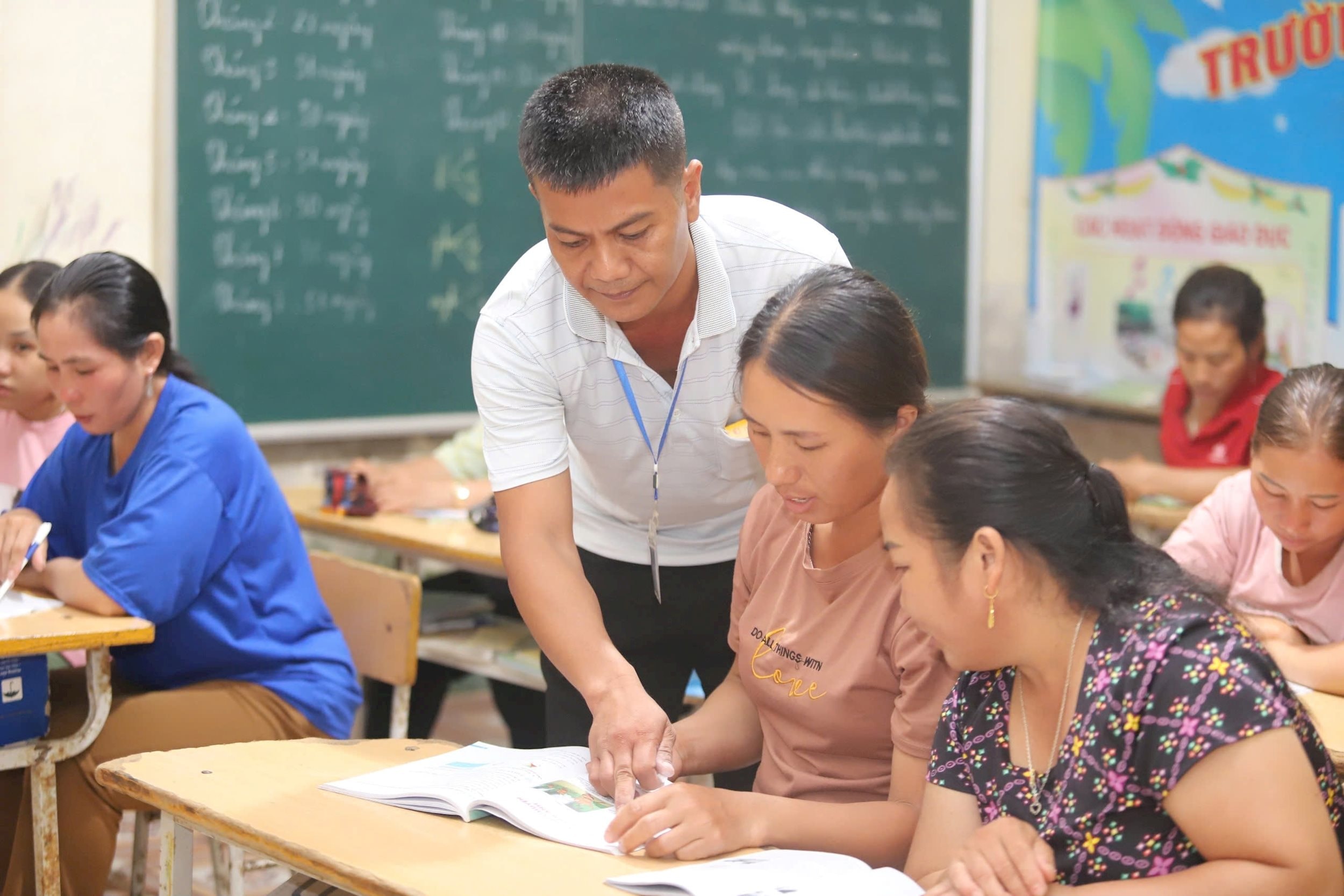
After many years of teaching literacy classes, according to teacher Cua, the biggest worry today is not only the increasing risk of relapse into illiteracy among the elderly, but also the indifference of young people towards learning. Even at his own home, besides his wife who is illiterate and hasn't returned to school, his children only study halfway through before dropping out.
Along with teacher Cua, teacher Cut Hong Quan is also a Khmu teacher with nearly 30 years of experience in the education sector. Having dedicated himself to education in the highlands, his concern is not only about eradicating illiteracy among elderly students, but also about the fact that many young people are no longer enthusiastic about going to school.
Teacher Quân confided: “Nowadays, children only study up to junior high school before dropping out to work as factory workers or to earn money. No one wants to go to school to get a profession, whether big or small, like we did before. I'm a teacher, I have three children, all from the 90s generation, but I feel helpless with them. My eldest daughter, born in 1993, dropped out of school after 9th grade to get married. My second daughter, after finishing 9th grade, also said she didn't want to study anymore and got married. My third daughter, after finishing 12th grade, went to Quang Binh to study at a Medical College for three months, but her husband's family told her to drop out to get married. If they don't want to study, there's nothing I can do, even though I really want them to go to school.”
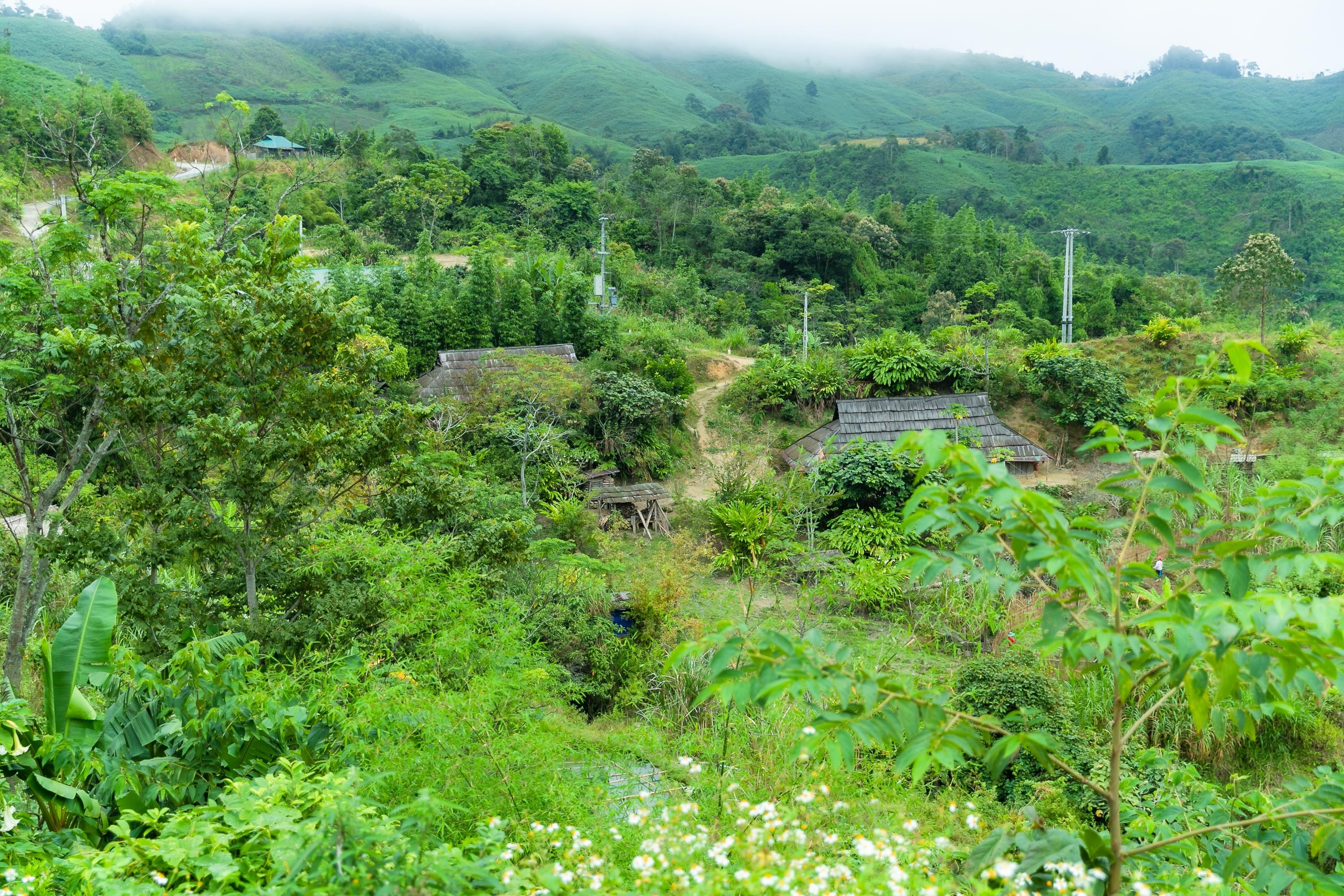

Nghe An is the largest province in the country in terms of area, with a population of over 3.4 million people, of which ethnic minorities and people in mountainous areas account for 36.3% of the total population. Due to unfavorable living and production conditions, the socio-economic development and living standards of the people in mountainous ethnic groups still face many difficulties. This is also one of the reasons why illiteracy and relapses into illiteracy still occur in Nghe An province.
According to the Department of Education and Training's summary, by the end of 2023, the illiteracy rate among the population aged 15-25 in the entire province was 0.1% (499/488,948 people). Meanwhile, this rate was 0.3% (3,664/1,171,389 people) for those aged 15-35 and 0.7% (16,289/2,280,019 people) for those aged 15-60. The summary also shows that the majority of illiterate people, mostly in mountainous districts, are concentrated in poor and near-poor households. Besides illiteracy, relapse into illiteracy is occurring because many learners in literacy classes (mainly women, older people) lack the environment and conditions to practice after literacy training, thus risking relapsing into illiteracy.
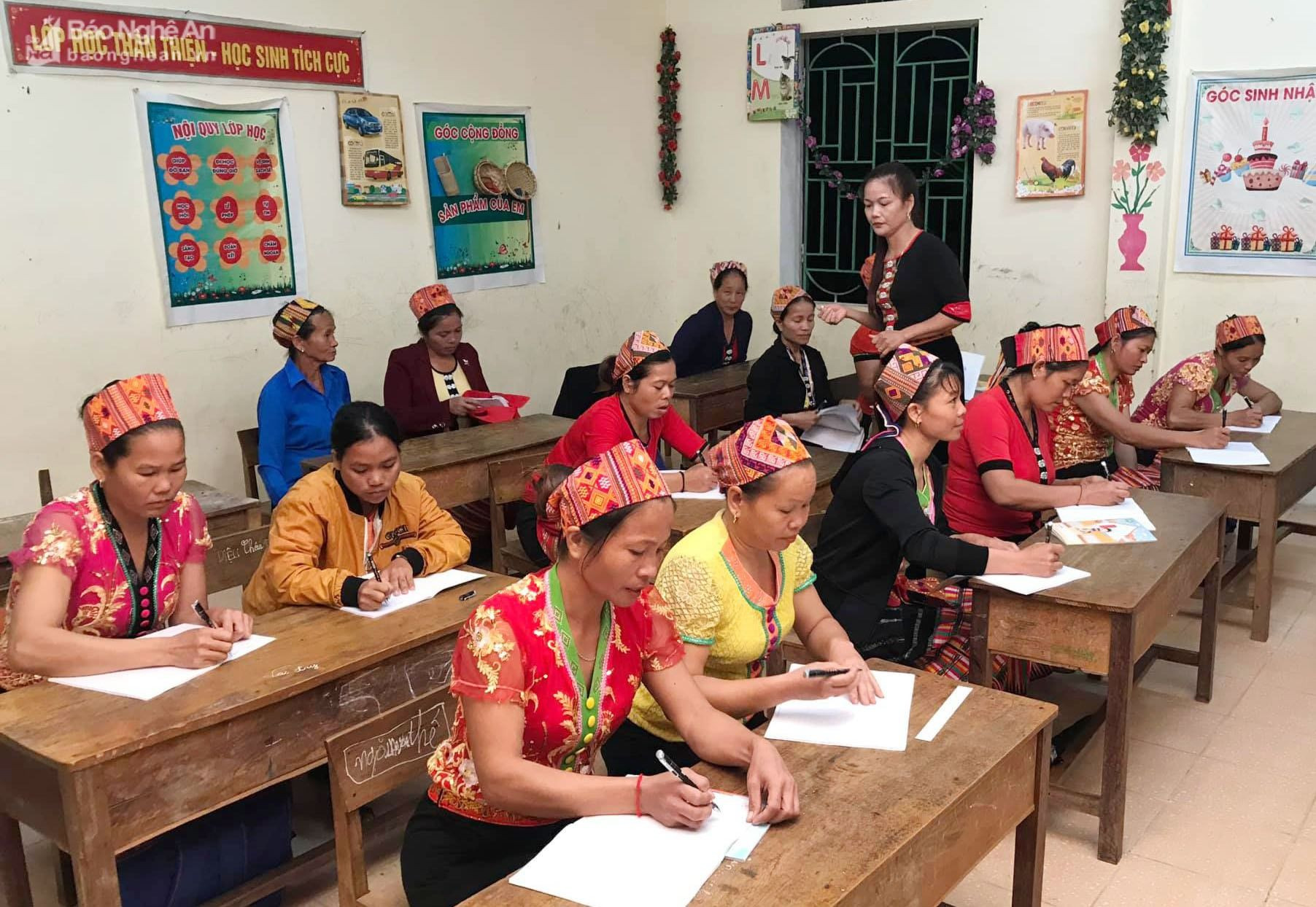
Previously, although the Nghe An Department of Education and Training had issued directives and guidelines annually to the Education and Training Departments and even to educational institutions to develop plans for opening classes, carrying out professional work, and conducting inspections and evaluations, the majority of ethnic minority people did not yet have a correct understanding of the role, position, and importance of literacy education, and lacked self-motivation in learning. Mobilizing students and maintaining consistent attendance was very difficult, as most students were women of working age who often worked far from home and villages during the farming season. Furthermore, the fact that illiterate people were scattered across remote villages made organizing classes very challenging.
It should also be noted that, although literacy eradication efforts have received attention, awareness of literacy eradication among the Steering Committees in some localities remains limited, resulting in a lack of planning and investment for sustainable development. Some localities have not paid sufficient attention to or have not directed decisively the investigation and statistical work on illiterate and relapsed illiterate individuals. During implementation, the professional skills and responsibility of some officials and teachers are still weak, leading to inaccurate information and unclear evidence regarding the investigated subjects. In some places, this is considered a task that has been underway for many years, leading to complacency among some officials and a lack of proactive and decisive action in its implementation.
Regarding literacy programs, at the end of 2023, in Vinh City, the Ministry of Education and Training organized a workshop on the current situation and solutions to improve the quality of literacy programs for ethnic minority communities in the period 2023-2030. Through discussions, delegates pointed out many reasons why literacy programs still face difficulties. In addition to the reasons mentioned above, the current ineffectiveness of literacy programs is partly due to low state budget investment in literacy, and unclear policies and regulations for teachers and those involved in literacy programs.

Currently, funding for literacy programs mainly comes from the National Target Program 1719, but primarily for learners. Meanwhile, funding for teachers and those involved in literacy programs must come from the provincial budget. Therefore, localities, especially those with difficult socio-economic conditions, lack the funds to implement literacy programs.
In Nghe An province, to facilitate literacy programs, the Provincial People's Council issued Resolution 10/2023/NQ-HĐND stipulating certain contents and expenditure levels for literacy programs and universal education to implement the project on building a learning society in the 2021-2030 period. This includes a subsidy of 1.8 million VND per person per program for ethnic minority people to participate in literacy classes. In addition, it covers expenses for organizing classes, promoting literacy, mobilizing illiterate and re-illiterate individuals to attend literacy classes, and expenses for teachers, visiting lecturers, or volunteers. However, during implementation, some shortcomings have emerged...
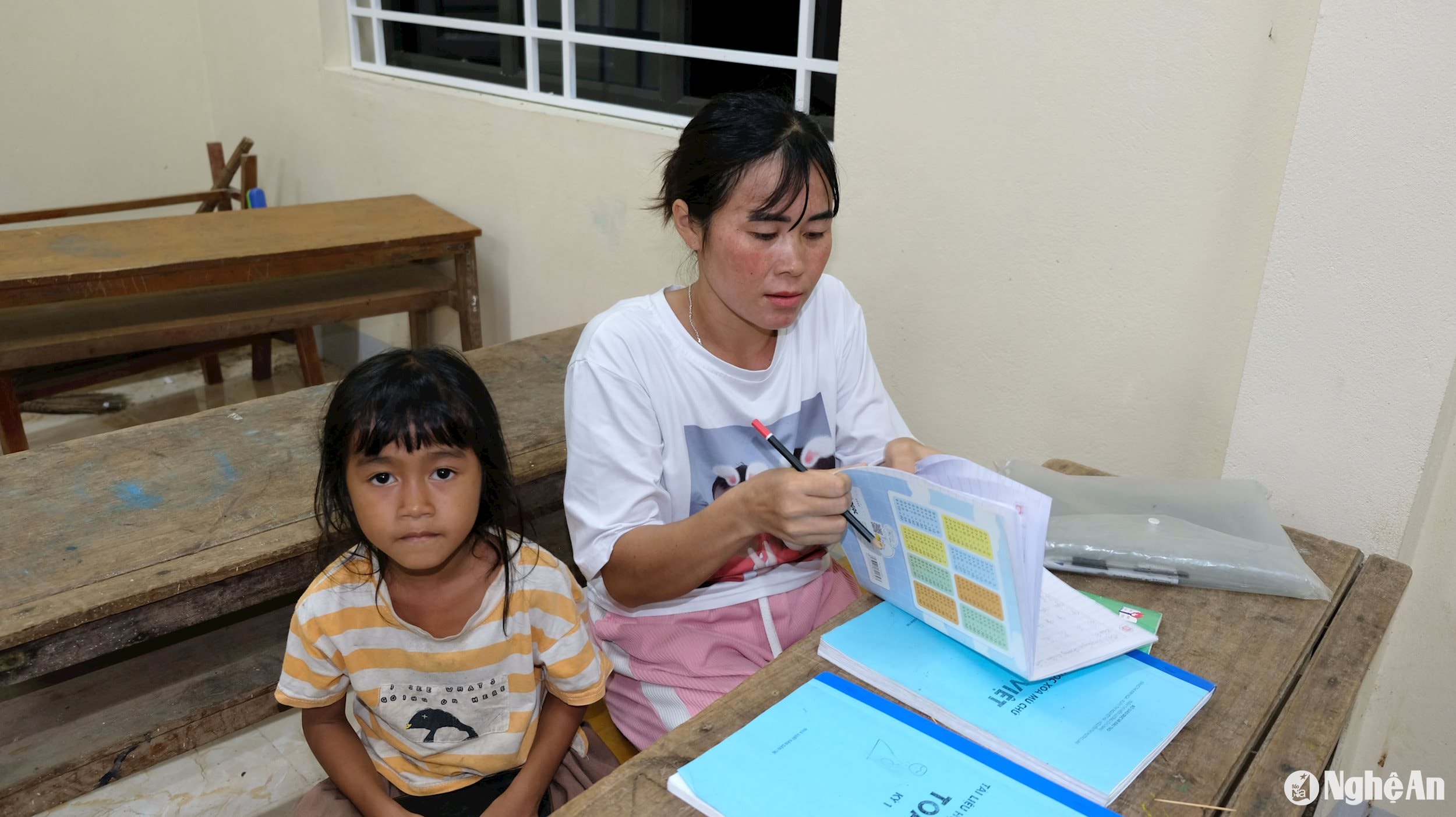
According to Mr. Ho Sy Quy from the Education and Training Department of Que Phong District, the literacy program is usually implemented over 5 semesters, and support is only provided upon completion of the course. However, due to the long duration, the number of students gradually decreases, and only a small number of people are eligible. In 2023, during the first semester, Que Phong District opened 7 classes with 165 students. But by the second semester, the number of classes had decreased by 1 and the number of students had decreased by 75 compared to the assigned plan.
Regarding the above difficulties, Mr. Nguyen Manh Ha - Head of the Political and Ideological Department - Continuing Education - Department of Education and Training, said that the sector is simultaneously implementing many solutions, especially strengthening coordination with relevant departments and agencies such as the Fatherland Front, Youth Union, Women's Union, Farmers' Association, Veterans' Association, Association for the Promotion of Learning, Border Guard, village elders, and heads of hamlets, all of whom are actively participating in supporting and encouraging illiterate people of school age to attend classes, maintaining class sizes; and encouraging illiterate and re-illiterate individuals to attend literacy classes.
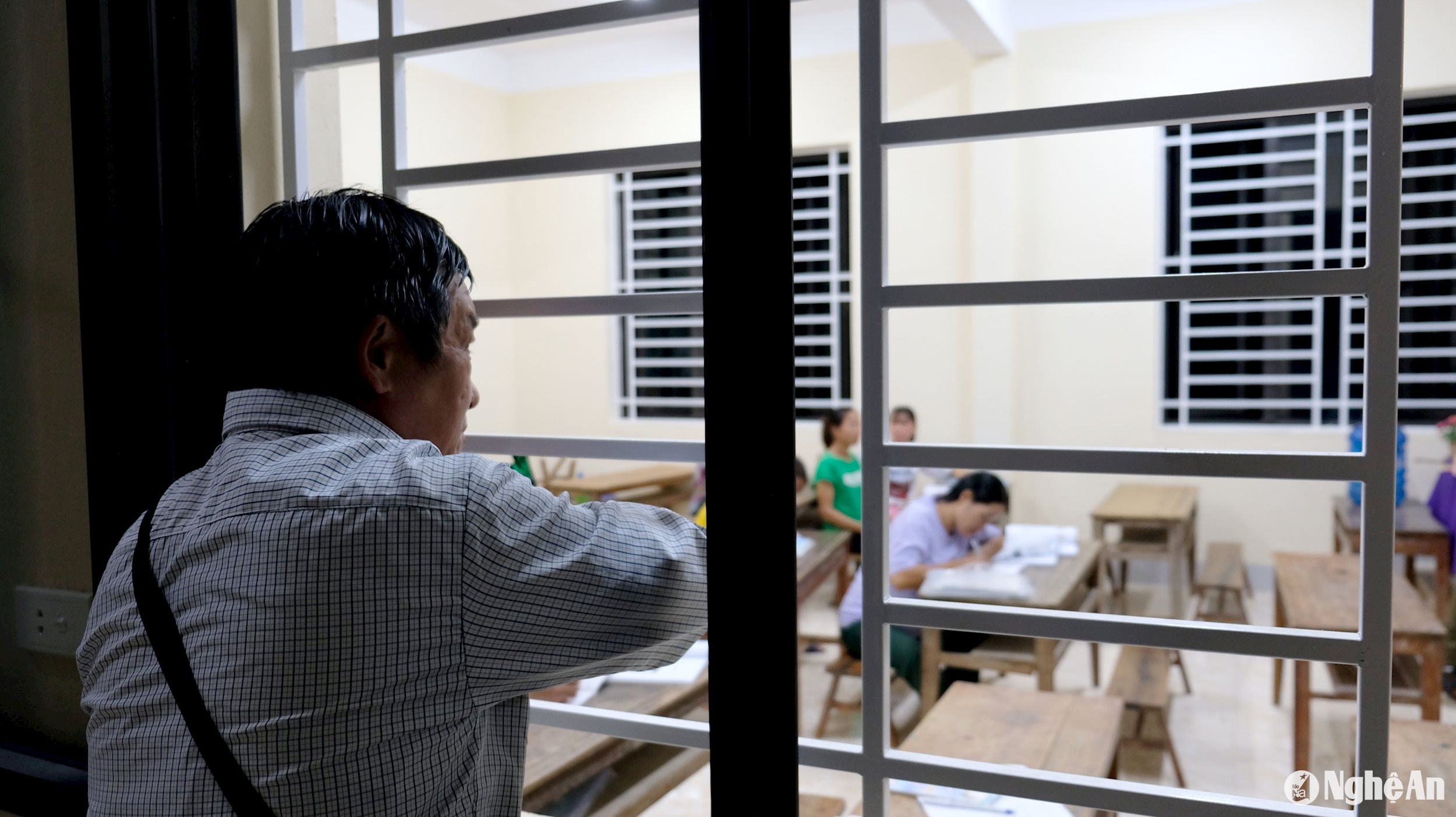
In addition, classes are scheduled flexibly, such as on weekends, at night, between work seasons, and during students' free time. The teaching process involves selecting dedicated and passionate teachers, prioritizing local teachers who speak the local language, understand local customs and traditions, and ensuring the proper implementation of policies and regulations for both teachers and students.
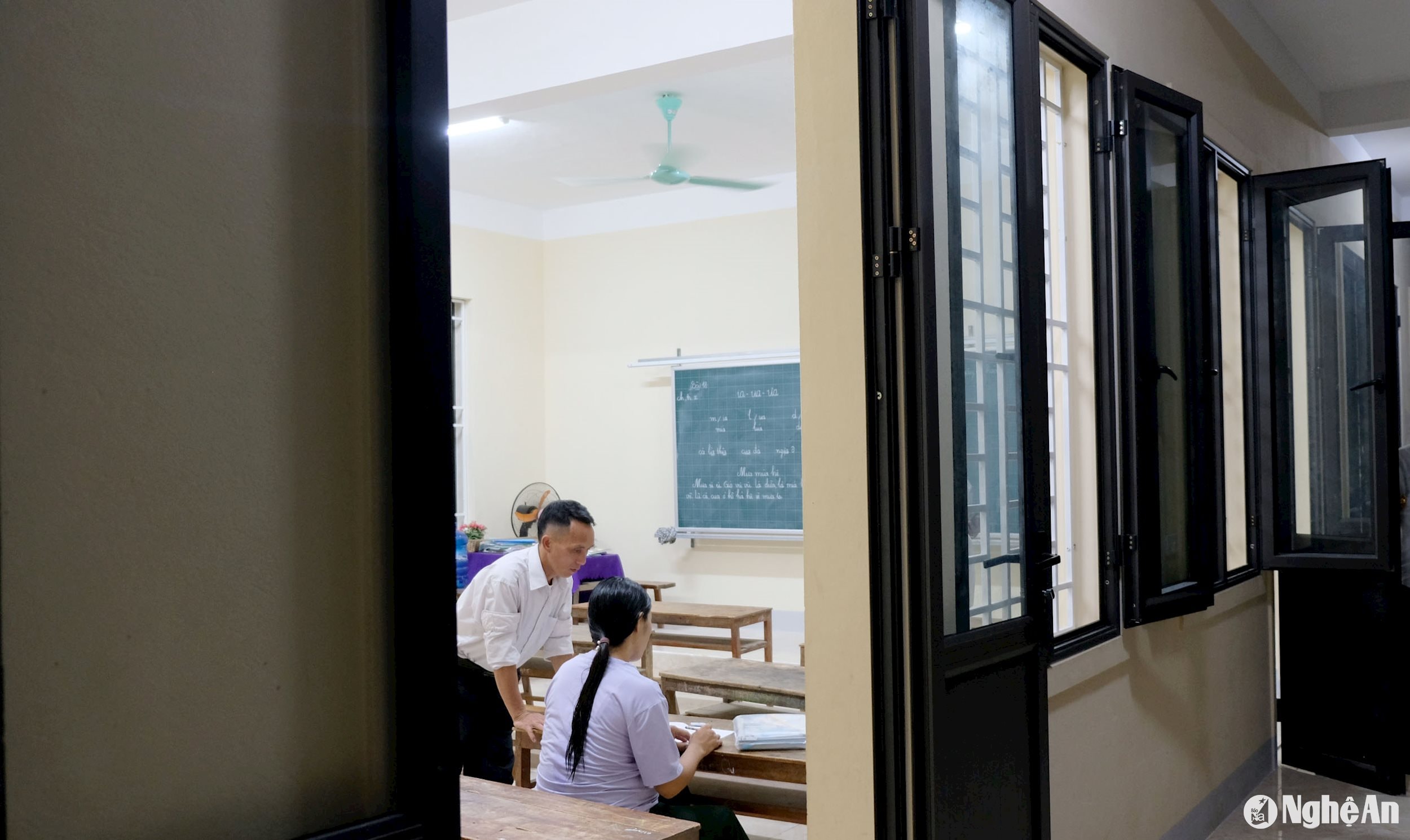
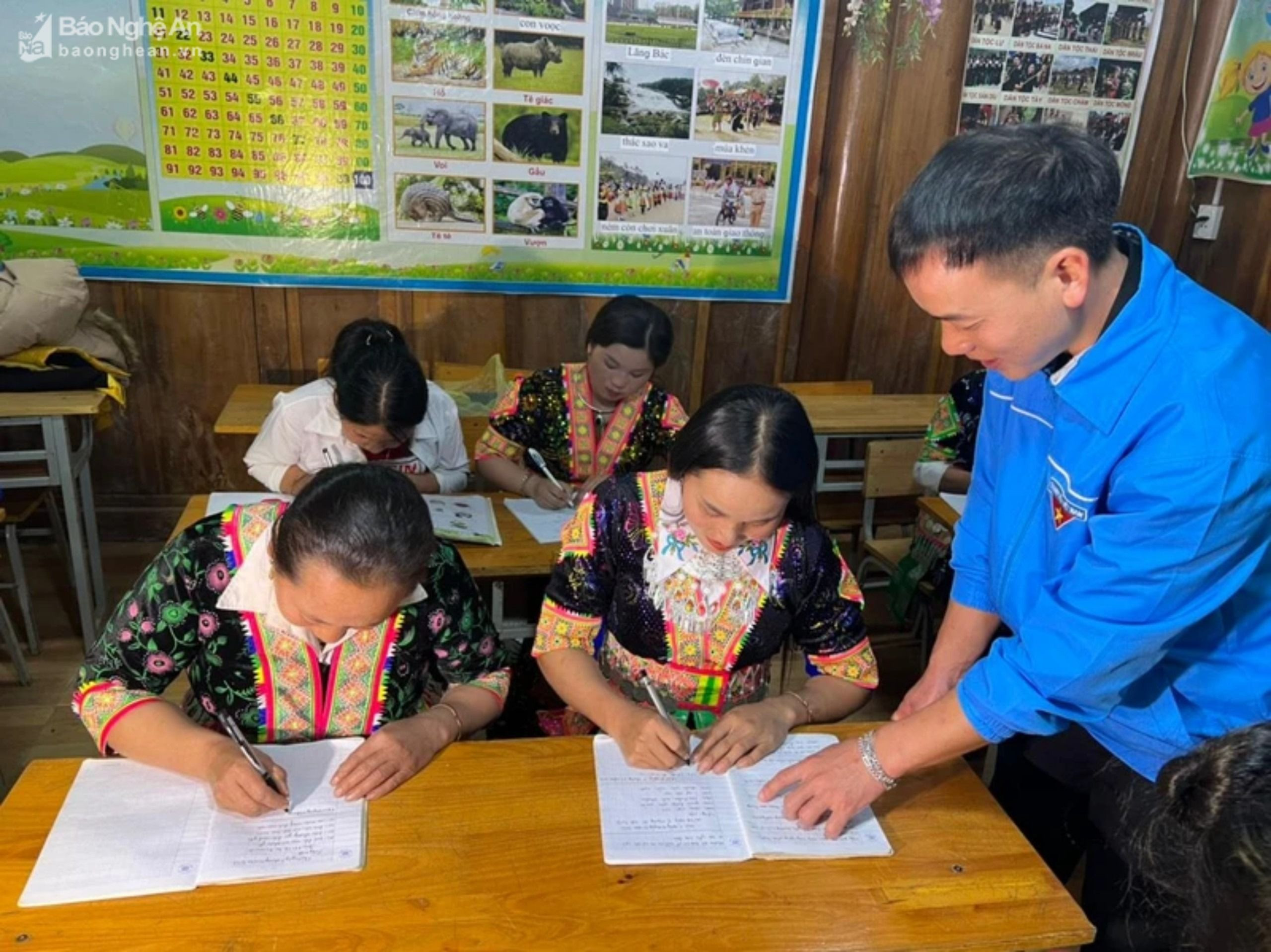
Recognizing that eradicating illiteracy and preventing relapses into illiteracy is a persistent, long-term, and difficult task, we teach using a "hands-on" approach. Teachers are required to illustrate lessons closely related to the learners' daily lives and work, making them easier to understand, remember, and apply to their daily lives. Simultaneously, we must constantly motivate learners through various creative methods to create interest and enthusiasm among the students.


