
Safe reversing skills for new drivers
Reversing a car is considered one of the most important skills, because not knowing how to reverse a car poses a high level of danger to both the driver and other road users.
So how do you reverse a car safely? The following principles will guide you through the specific steps in reversing a car to ensure your safety and the safety of everyone around you.
Basic principles
Left is right, right is left.
This is a rule drivers must remember when reversing. When you turn the steering wheel to the left, the car will reverse to the right, and vice versa. Remember this rule when reversing because even a small mistake can cost you dearly, potentially leading to a collision.
When advancing, hug the back; when retreating, hug the front.
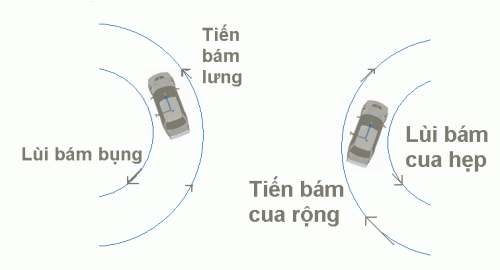 |
| Backing down while holding onto the belly will keep you safe. |
When moving forward, the driver must stay on the wider side of the curve; if turning left, stay on the right edge of the road, and if turning right, stay on the left edge. Reversing is completely different; when reversing to the right, stay on the right edge, and when reversing to the left, stay on the left edge.
Adjust the rearview mirror.
Adjusting your rearview mirrors to eliminate blind spots will help you judge the distance between yourself and parked vehicles.
 |
| Adjust the mirrors to eliminate blind spots when reversing. |
Drivers should widen their rearview mirror field of vision by leaning their head close to the left window. Adjust the mirror until the body of the car almost disappears from view, leaving only the rear of the car visible. Do the same with the right mirror to minimize blind spots.
When reversing, remember to constantly check both mirrors to stay informed of the situation.
Basic steps for reversing a car
Before reversing, adjust your driver's seat and steering wheel to a comfortable driving position that allows you to see your rearview mirrors and everything around you.
First, turn on your turn signal in the direction you want to reverse into, then find a space to stop the car. Get out of the car to visually inspect the space for reversing.
 |
| Check your mirrors when reversing. |
Engage reverse gear and begin parking, gripping the top of the steering wheel and observing your rearview mirrors. Always keep your foot on the brake and drive slowly and steadily when reversing, as reverse is the most powerful gear in the transmission, ensuring the vehicle doesn't spiral out of control.
While reversing, if you notice the car veering off course, you must steer in the opposite direction. If it veers too far, stop the car and move forward to readjust the reversing direction.
If a new driver is not yet used to looking in the mirrors, they can also turn their head to get the most realistic view. However, they should also be careful not to look for too long and forget about what's in front, as steering too far off course could easily lead to a collision.
To become a skilled driver, you need to practice reversing techniques and constantly check both side rearview mirrors. This will reduce blind spots compared to turning your head to look around while reversing.
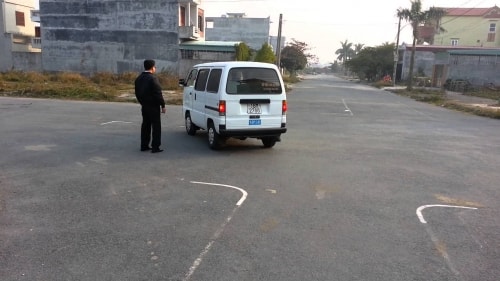 |
| Practice your reverse parking skills in a large open area. |
When beginners practice this technique, they should choose a spacious location with a wide view to ensure accurate positioning. Once they become familiar with it, reversing into tight spaces will be normal.
Once you've mastered these skills, reversing into a parking space will no longer be difficult for any new driver.
According to VNN
| RELATED NEWS |
|---|


