
The votes of the 13th Party Congress and the echoes of 75 years resound.
Seventy-five years ago today, the people of Vietnam entered into a general election to elect a Constituent Assembly, thereby establishing the first Democratic Republic in Asia.
National AssemblyIn that first term, according to the records of Mr. Vu Dinh Hoe, the representativeness was expressed through the numbers:
In terms of social composition: Intellectuals account for 61%; industrialists 6%; traders 5%; craftsmen 6%; farmers 22%.
Regarding political leanings: Marxists had 10 delegates; Socialist Party 27; Democratic Party 45; Alliance Society 22; Vietnam Nationalist Party 26 delegates. In addition, there were independent delegates, including 82 anti-fascists and 90 conservative nationalists.
|
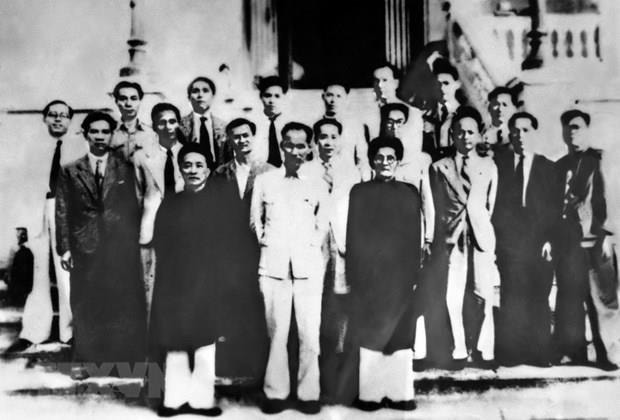
| The Government of the Democratic Republic of Vietnam was elected by the 1st National Assembly, 2nd session (October 28 - November 9, 1946). Photo: VNA archives. |
Regarding age: Delegates aged 18-25 account for 7%, those aged 26-40 account for 70%, those aged 41-50 account for 18%, and those aged 51-70 account for 5%.
Mr. Vu Dinh Hoe (1912-2011) was a member of the first National Assembly and the second Minister of Justice of the Government, from March 1946 to May 1959. The above figures were recorded by him in his book "The Righteous Rule of Law of Ho Chi Minh" (Culture and Information Publishing House & East-West Cultural and Language Center, Hanoi 2001, Vol. 1, pp. 81-82).
It can be said that the figures above reflect the highly representative nature of the first National Assembly, encompassing all social strata and political parties, reflecting the trends and social interests at that time. And especially, these results symbolize the strength of national unity and solidarity for the highest goal: protecting the fledgling independence from the imperialist colonial forces that were poised to return.
This was also the greatest, most concentrated, and most unified need of the Vietnamese people at that time, and it was this need that dominated, influenced, and contributed to determining the outcome of the General Election.
The demands of the nation
It is no coincidence that in recent days, activities commemorating the 75th anniversary of the General Election have been solemnly organized by the central and local authorities from North to South. This is because in nearly three weeks, on January 25th,Congressnational delegatesThe Communist Party of Vietnam will hold its opening ceremony.
That congress will elect the Central Executive Committee - the highest power body of the Party for a 5-year term, which will serve as the political basis for voters nationwide to elect representatives to the National Assembly and People's Councils on May 23rd, and will provide the legal basis for the state apparatus at both the central and local levels for the 2021-2026 term.
|
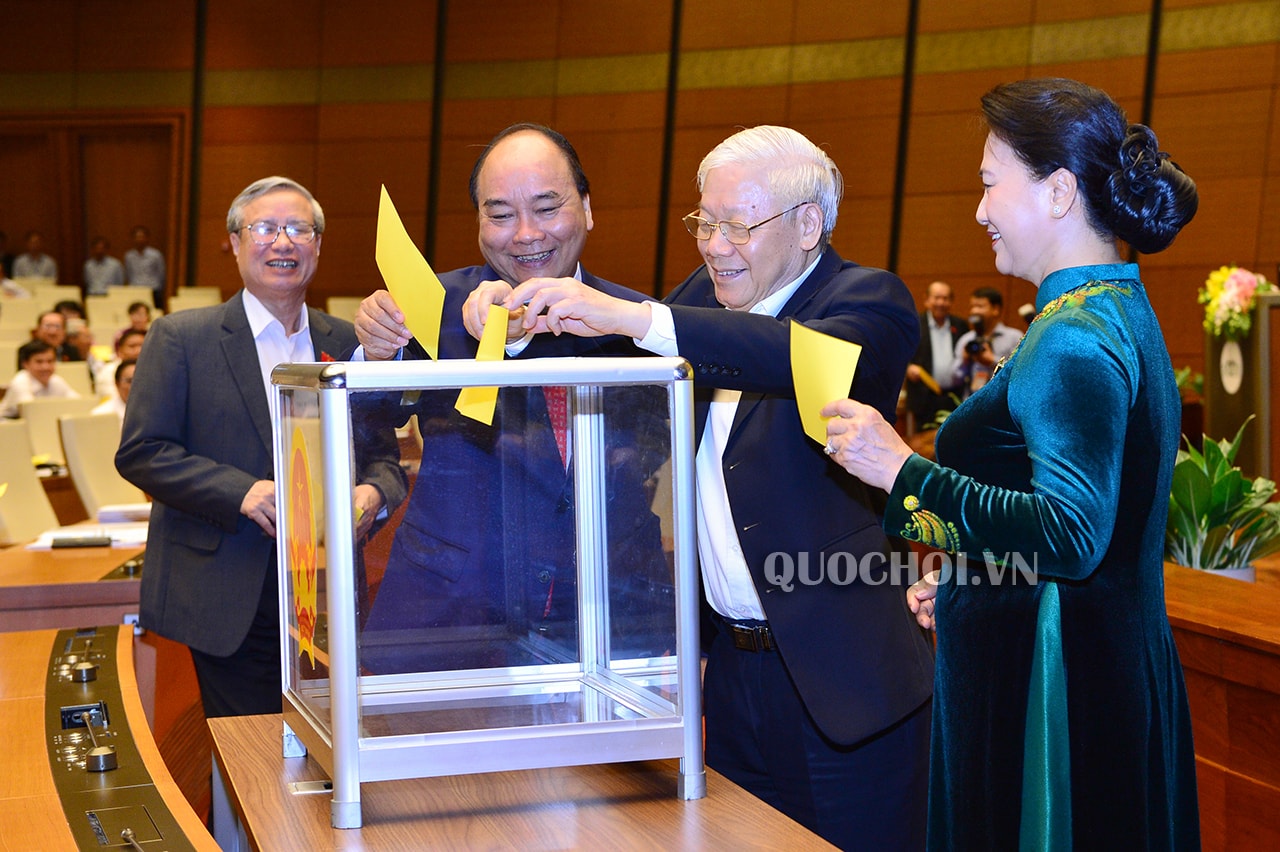
| Members of the National Assembly cast their votes to elect the President of Vietnam in October 2018. Photo: quochoi.vn |
It is difficult and inadvisable to compare the current political and social context with the past. However, one thing is certain: regardless of the election, representation must meet the needs and interests, especially the national and ethnic interests, of the historical moment in which it takes place. And these overarching, universal interests will influence and contribute to determining the outcome of that election.
What issues were the 1,590 delegates attending the 13th National Congress of the Communist Party of Vietnam, including 194 ex-officio delegates, 15 appointed delegates, and 1,381 delegates elected by the congresses of Party committees directly under the Central Committee, concerned about? It is difficult to judge and fully understand this diversity and complexity without a scientific, systematic, and objective study and investigation.
But one thing is certain: the common impetus that has been and continues to be the driving force for the nation's progress will also influence and motivate the delegates. This is because they represent 5.9 million party members (as of December 2019) of the single ruling party, whose representativeness is affirmed in its Charter and Constitution as "...the vanguard of the working people and of the Vietnamese nation, faithfully representing the interests of... the working people and the entire nation."
Witnessing the throngs of people and seas of red flags with yellow stars pouring into the streets in 2018 to celebrate the men's and women's football teams winning the SEA Games championships for the first time in 60 years. Feeling the faith, love, and hope of the vast majority of people in the fight against the Covid-19 pandemic, which has yielded many successes from the beginning of 2020 to the present time. Touched by the aspirations and expectations of 97 million Vietnamese people being conveyed through their votes at the 13th National Congress and in the elections for elected representatives.
That is the aspiration and demand of a nation determined to become strong and prosperous, a country that must rise even more powerfully in a constantly changing and challenging world.
Whether elected from party congresses in the lowlands or highlands, whether civilian officials or members of the armed forces, whether voters in glamorous cities or struggling rural areas, all held in their hands, each a ballot, representing those aspirations and demands.
Those votes, whether directly or indirectly, near or far, will choose the people who will represent both political and legal power, bearing the responsibility of making the nation's dreams a reality.


