
Visiting temples at the beginning of the year - a beautiful spiritual tradition.
(Baonghean.vn) -In the early days of the new year, offering incense as a symbolic gesture or expressing heartfelt thoughts towards the sacred realm are reflections from the depths of a serene spiritual world. At the beginning of Spring 2013 (Year of the Snake), let us join hands with everyone to look towards good things and wish for a peaceful new year.
Ancient tales recount that Nghe An is a land of spiritual significance. The saying, passed down through time, remains: "First, Corn; second, Qua; third, Bach Ma; fourth, Chieu Trung." These regions are deeply ingrained in the consciousness of the people of Nghe An, and remain in the minds of those who have left, forever remembered.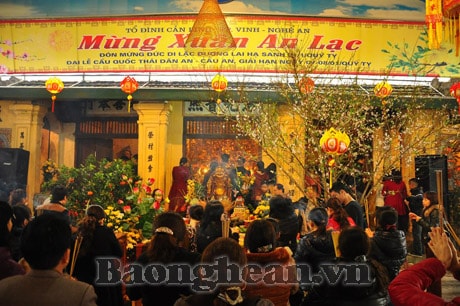
Offering incense sticks to the Buddha at Can Linh ancestral temple.
In the past, Can Linh Pagoda (also known as the Nun's Pagoda) was the largest and most beautiful pagoda in Nghe An province. It has been recognized as a National Historical Monument by the Ministry of Culture, Sports and Tourism of Vietnam. The pagoda was built during the Le Dynasty on land that previously belonged to Lang Vang village, Yen Tuong commune, Hung Nguyen district (now Cua Nam ward, Vinh City). The pagoda worships...Buddha Shakyamuni(the ancestor ofBuddhism) and the monks who used to be abbots of the temple in the area.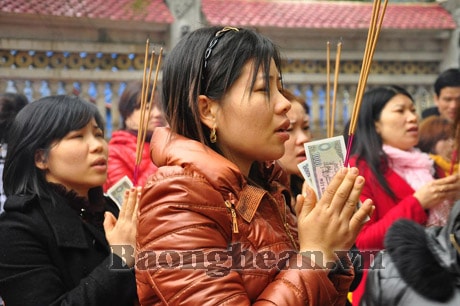
With reverence before the Buddha Avalokiteshvara Bodhisattva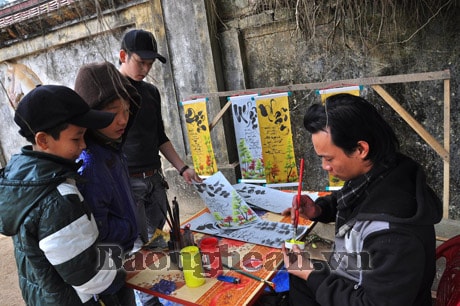
New Year's celebration at Quả Sơn Temple (Đô Lương)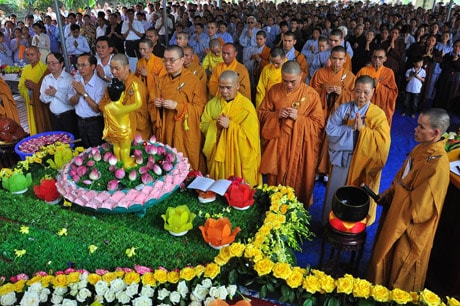
A solemn ceremony at An Hau Temple.
Every year, the temple organizes many major festivals that attract a large number of people and tourists who share a common feeling of the sacredness and majesty of this thousand-year-old temple. However, few know that this place also preserves mysterious stories that have deeply touched people's hearts. History also records the visits of two Nguyen Dynasty kings to this temple. According to historical records, the temple was visited by two kings, Tu Duc and Bao Dai. Tu Duc is considered to be the one who had the idea of changing the temple's name to its current name. Wishing to bring this sacred temple closer to the local people in their cultural and spiritual needs, King Tu Duc presented the temple with a banner bearing the inscription "Can Linh". From then on, Linh Van Temple was renamed Can Linh Temple. In 1992, Can Linh Temple was recognized as a National Historical and Cultural Monument.
In Vinh City, there is also Tap Phuc Pagoda. Built around 1926, the pagoda was constructed by philanthropists from Nghe An and across the country. It worships Shakyamuni Buddha, Amitabha Buddha, Avalokiteśvara Buddha, Saint Tran, and Saint Quan. In the memory of the people, Tap Phuc Pagoda was the largest pagoda in Nghe An at that time and one of the largest pagodas in Central Vietnam. Tap Phuc Pagoda was the site of many important historical events in Nghe An. After 1954, the Nghe An Printing Factory moved into the pagoda for a period. Further towards the sea, Pho Nghiem Pagoda, also known as Hoang Lao or Trung Kien, is located in Trung Kien village (Nghi Thiet-Nghi Loc). Further north is Chung Linh Pagoda, an ancient pagoda (about 500 years old) located on Chua Mountain (Lien Chung hamlet, Phong Thinh commune, Thanh Chuong district). Then there stands the magnificent Dai Tue Pagoda, an ancient temple located on the highest peak of the Dai Hue mountain range, in Nam Anh commune (Nam Dan district)... further north in Dien Chau, we encounter Co Am Pagoda (Dien Minh, Dien Chau), situated within the Len Hai Vai historical and cultural relic complex.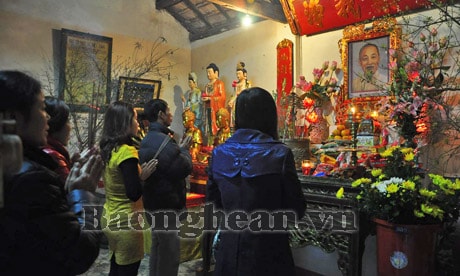
The altar dedicated to President Ho Chi Minh at Can Linh Ancestral Temple.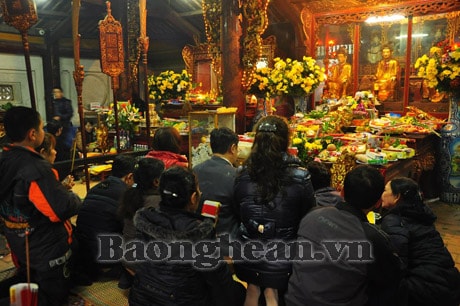
The sacredness of wishes at Ông Temple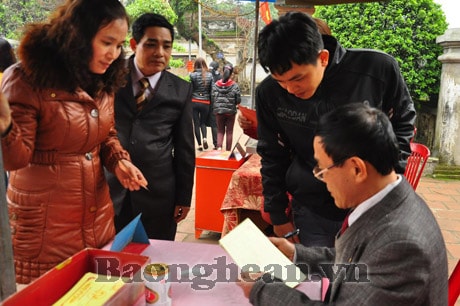
Requesting a written prayer at Ông Temple.
Going to the temple at the beginning of the year is something everyone hopes for. Visiting temples isn't simply about making wishes; it's about finding precious moments to immerse oneself in a spiritual place, leaving behind the hardships and struggles of everyday life. Therefore, whenever one sets foot in a temple, they feel relaxed, peaceful, and connected to their national roots. For a long time, visiting temples at the beginning of the year has been deeply ingrained in the Vietnamese consciousness; it's a beautiful cultural tradition, creating a vibrant tapestry within a progressive culture rich in national identity.
Joining hands to make a wish on the first day of the year is also a heartfelt hope for "national prosperity and peace for the people."
Tran Hai


