
Group interests are manipulating personnel management.
The case of Trinh Xuan Thanh is a prime example of how vested interests are undermining certain aspects of personnel management.Professor Phan Xuan Son, PhD, from the Ho Chi Minh National Academy of Politics, discussed this issue with the press.
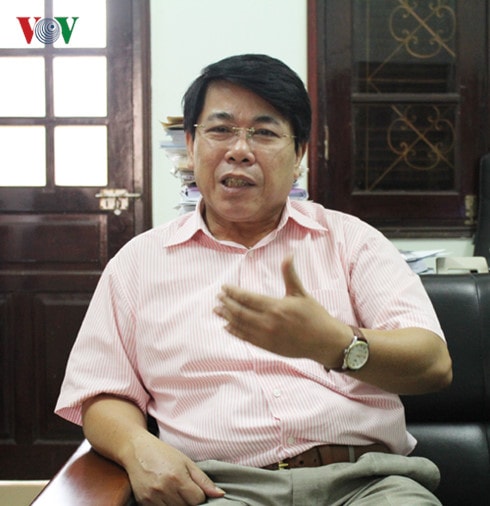 |
| Prof. Dr. Phan Xuan Son, Ho Chi Minh National Academy of Politics. |
Cadres are the foundation of all work.
PV:President Ho Chi Minh once said: "Cadres are the foundation of everything." To build a proactive and action-oriented government, how should cadre work be emphasized, sir?
Professor Phan Xuan Son:Personnel work is the most important task because it is the "foundation of the Party." If the "foundation" is not done well, then the "branches" and "tops" will also not be done well or sustainably. Our Party has a comprehensive leadership role in personnel work. As the Party leads the State, the Party must prepare a team of cadres to hold positions in the system of State agencies.
To have a good cadre, the Party must provide good leadership in cadre work at all stages: identification, selection, training, utilization, and remuneration. If even one of these stages is not done well, we will have a weak cadre. When the cadres are incompetent, the work of the Party, the State, and the Front will also be incompetent, and the people will no longer trust the cadres, the Party, or the State. Once the people's trust is lost, everything can be lost.
PV:The Central Resolution No. 4 of the 11th Party Congress clearly stated that a significant number of cadres and Party members, including those holding leadership and management positions, and even some high-ranking officials, have deteriorated in terms of political ideology, morality, and lifestyle. In your opinion, what are the root causes of this situation stemming from personnel management?
Professor Phan Xuan SonThe Central Resolution No. 4 of the 11th Party Congress acknowledged and assessed that a significant number of cadres and Party members have deteriorated in terms of political ideology and lifestyle. The documents of the 12th Party Congress also clearly indicated that the risk of corruption has not been eradicated, and has even become more complex.
There are many reasons for this situation, including our inadequate understanding of personnel work and the inconsistent implementation of various aspects of personnel work. During the 11th Party Congress term, the Party implemented several specific and newer measures compared to previous terms regarding the planning, training, development, utilization, rotation, and evaluation of cadres…
However, compared to the practical needs of the reform process as well as the cause of national construction and defense, it can be affirmed that personnel work still has many shortcomings and is not yet up to par with the demands of the practical situation in terms of knowledge, skills, moral character, and lifestyle.
There are two key areas requiring significant reform: evaluating officials based on their competence, talent, and contributions; and ensuring they receive benefits and promotions based on those abilities, talents, and contributions. Only in this way can we avoid negative practices in personnel management, prevent corruption—from obtaining degrees and positions to gaining power and immunity from prosecution. Only then can we select talented individuals, not just family members, and ensure fairness in personnel management.
Signs of vested interests in the Trinh Xuan Thanh case.
PV:Being humanthingDespite causing losses of nearly 3,300 billion VND at the Vietnam Petroleum Construction Joint Stock Corporation, Mr. Trinh Xuan Thanh was still promoted and transferred to important positions in the Ministry of Industry and Trade, and then became Vice Chairman of Hau Giang province. What are your thoughts on this phenomenon?
Professor Phan Xuan SonThe case of Trinh Xuan Thanh is not an isolated incident, but a typical example of personnel management. This is related to many weaknesses in personnel management. In particular, the most significant weakness currently is the manipulation of personnel management by vested interest groups.
Mr. Trinh Xuan Thanh is an individual connected to a certain interest group. This group is powerful, comprised of individuals with significant authority, wealth, and expertise in personnel management procedures. Only such connections could enable someone with weak political ideology, poor moral character, and professional competence (resulting in losses exceeding 3,000 billion VND) to slip through the various stages of the personnel management process and achieve such advancement.
It can be said that currently, it's not just Mr. Thanh, but hundreds, even thousands, of such individuals that we haven't discovered yet, or have discovered but haven't been able to deal with.
PV:Why is it that in cases of "problematic" appointments and transfers, people still claim that the process was "correct," sir?
Professor Phan Xuan SonOur process is quite rigorous, but every process can have its "loopholes." The problem is that "interest groups" and self-serving individuals have exploited and found ways to "bypass" the personnel management system while it still appears to be "following the correct procedure." In other words, some stages and processes may be done "according to procedure," but the form lacks substance. For example, the confidence vote process.
As we know, a vote of confidence must be above 50% to be considered valid, but no one controls how the vote of confidence is conducted. Voters can be influenced by interests, emotions, relatives, hometowns… and some may even pay money to buy votes of confidence.
Although our current personnel appointment process is quite rigorous, it is not without limitations; there is still room for arbitrariness, and talented individuals may be overlooked.
PV:Attacking vested interest groups is not easy, but recently, General Secretary Nguyen Phu Trong himself "sounded the drum" to attack vested interest groups and corruption, showing that the political determination is to leave no forbidden zones and to exclude no individual, sir?
Professor Phan Xuan SonIn combating negativity, as well as preventing corruption and waste, our Party advocates for no forbidden zones. Experience worldwide in combating corruption and negativity shows a top-down approach, from inside out, meaning targeting important areas first and less important ones later.
Therefore, combating corruption and vested interests must first begin at the highest levels of government, then work its way down to the lower levels, from the central government to the provincial, district, and commune levels.
That's the principle, tactics, and strategy, but implementing it requires careful steps and meticulous execution to avoid mistakes, injustices, and internal disunity. The General Secretary has publicly stated many times that there are no forbidden areas, no avoidance, and that the work must be continuous, persistent, decisive, and careful.
PV:According to him, should we review cases of "children and grandchildren of powerful people" who move from one position to another for promotion even before their positions are stable?
Professor Phan Xuan Son:Personnel work requires regular reviews of all personnel. Currently, as we are intensifying the implementation of Resolution No. 4 of the 11th Central Committee and Resolution No. 12 of the 12th National Congress, and combating ideological and political degradation, moral decay, negative phenomena, vested interests, corruption, and waste, the review of personnel work needs to be even more frequent. In particular, attention should be paid to cases that the people and public opinion have raised concerns about. The people care deeply about and are very close to the officials, so if they see a problem, they will speak up immediately.
Therefore, when listening to public opinion, we must review it to determine its accuracy. Cases of nepotism and rapid promotion by "children and grandchildren of powerful figures" need to be urgently investigated and made public and transparent for the public to understand.
PV:Recently, speaking at the first session of the new government, Prime Minister Nguyen Xuan Phuc conveyed the message that competitive examinations should be held to find talented people, not relatives; we must ensure that the children of farmers, workers, and the poor all have the opportunity to study, advance, and even have the chance to become leaders of the country in the future. In the context of the controversy surrounding personnel matters, what are your comments on this?
Professor Phan Xuan Son:Throughout our nation's history, especially during prosperous dynasties, we highly valued talented individuals because "talented people are the lifeblood of the nation. When the lifeblood is strong, the nation prospers." Any era that forgot this principle would inevitably lead to national decline. A declining nation leads to suffering for the people, internal strife, foreign invasion, and the ruling power will be unable to protect its own interests. Therefore, valuing talented individuals is a crucial, traditional principle that aligns with global development trends.
Our nation's historical experience shows that we value and select talented individuals from all social strata and regions. Through examinations, any child from any family, social class, or background, if they pass, can become an official. Examinations are a fundamental traditional method of selecting talented individuals in our country. We must be consistent with and value this tradition.
Currently, we have a policy of equality for all ethnic groups and localities in cadre training. There is a policy of prioritizing disadvantaged areas, mountainous regions, remote areas, and children of ethnic minorities so that everyone can participate in learning, examinations, and career advancement.
PV:According to him, how can we cultivate a team of officials who truly care for the people and act in their best interests?
Professor Phan Xuan Son:To cultivate a team of officials who truly care for the people, we must strictly adhere to the teachings of our ancestors and President Ho Chi Minh, which emphasize that officials are the foundation of all work, and that personnel work is the fundamental task of the Party, linking it with the people. Officials who serve the people must be elected, supervised, and evaluated by the people. We need to reform the processes for selecting, training, employing, and rewarding officials.
Each stage requires a vision for the times, clearly recognizing society's needs regarding personnel management, thereby recruiting talented individuals, utilizing their talents, and implementing appropriate policies to reward them. Furthermore, it is necessary to prevent negative phenomena such as buying positions, power, titles, and qualifications. If this is achieved, equal opportunities will be available to everyone.
If we carry out these steps meticulously, we will certainly have a team of officials who are up to the demands of the situation, up to the standards of the nation, and up to the expectations of the people.
PV:Thank you, sir.
According to VOV
| RELATED NEWS |
|---|


