
Thai customary law requires the return of dowry and bride price money upon divorce.
(Baonghean.vn) - After a divorce, according to the customs of many Thai ethnic communities in the mountainous region of Nghe An, the husband's family usually demands the return of the dowry and wedding gifts. Matchmakers, who represent the groom, often play the role of "judges" in handling divorce cases according to Thai wedding customs.
Recently, a young man from the mountains in Con Cuong district got married. His wife had been married before. The story wouldn't be remarkable if the groom's family hadn't had to pay approximately 20 million VND to the family of the girl's former husband. Although the groom's parents objected, they eventually accepted because sometimes, village customs must be yielded to.
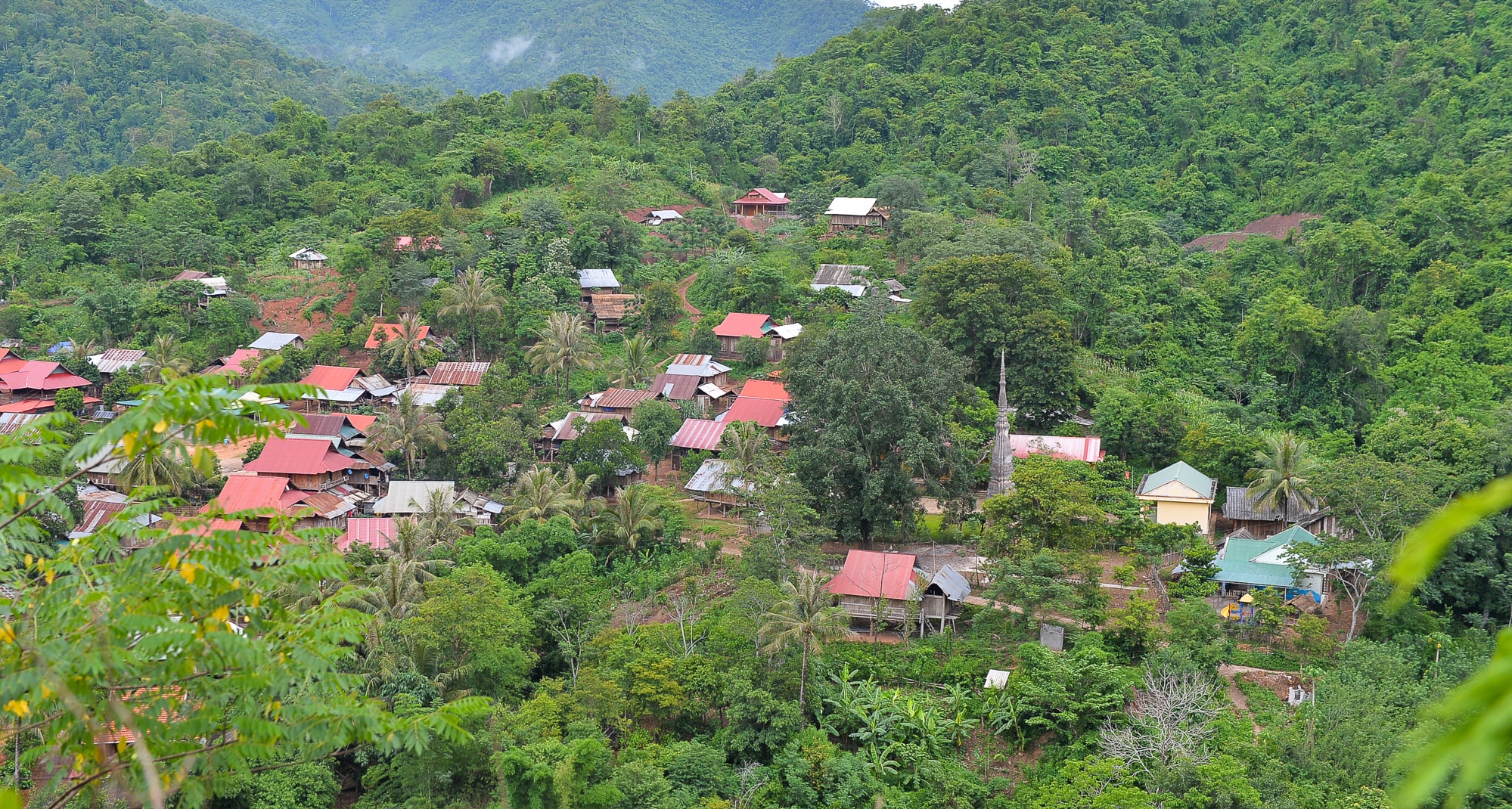 |
| The village of Yên Hòa, with nearly 100 households of the Thái ethnic group, lives alongside the Nậm Nơn River. (Archival photo) |
It just so happens that...indigenous Thai peopleIn some areas of Con Cuong district, the custom of "dowry" is still practiced. About 30 or 40 years ago, this dowry consisted of one silver ingot along with wine, chicken, pork, and fabrics. Nowadays, people usually "dow" in cash. According to the author's research, it currently fluctuates around 10 million dong. This doesn't include the offerings such as pork, chicken, wine, and silver bracelets. From ancient times to the present, there has been a custom that stipulates that if a wife unilaterally leaves her husband, she must return the dowry to the husband's family. Sometimes this includes the wedding expenses as well.
The same applies to the case mentioned above. After a period of living together and finding the situation unsuitable, the woman unilaterally divorced. After completing the legal procedures, she returned to her parents' home. Her ex-husband's family demanded that her family return the dowry and wedding expenses. For various reasons, the wife's family refused to pay even after their daughter remarried. The ex-husband's family then sought to get the new husband to pay. To appease all parties involved, the new husband's family agreed, considering it part of the dowry. However, this also significantly increased the wedding expenses.
That's a rather special case inwedding customsThis is a custom of the Thai community in the mountainous region of Nghe An province. It may seem simple, but completing a wedding or handling a divorce according to local customs involves a rather complex process. In some areas, the Thai people believe that wedding ceremonies require four visits to the bride's family. Similarly, divorce proceedings must follow four steps. If a couple experiences conflict, it's usually due to everyday disagreements. If the conflict is minor and can be resolved with the intervention of both sets of parents, that's the first step in the family conflict reconciliation process.
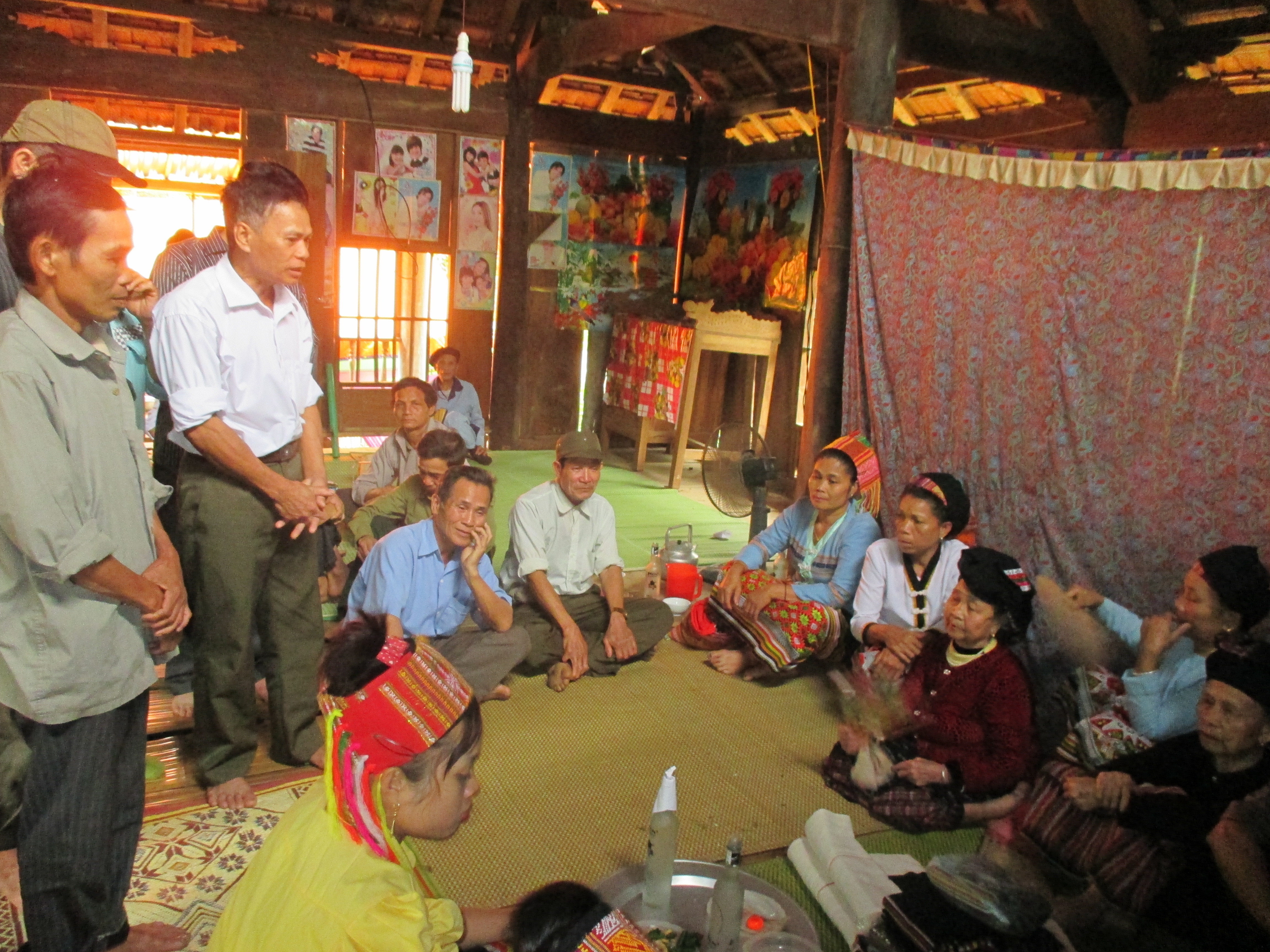 |
| The procedure for the groom's family to ask for the daughter-in-law's acceptance in a Thai wedding in Con Cuong district. Photo: Huu Vi. |
If the conflict becomes more serious, matchmakers are often called upon. In the Thai wedding customs of Con Cuong district, the matchmaker is usually a relative of the groom, possibly his older brother, cousin, or uncle. In Quy Chau district and some parts of Que Phong and Tuong Duong districts, the matchmaker is chosen but usually lives in the bride's village. The matchmaker typically acts as a representative for the groom's family when proposing marriage. Someone from the same village understands the future bride's personality and her parents better. It's also easier to communicate with someone from the same village. Another reason is that the matchmaker often acts as an arbitrator in case of divorce. Choosing someone with a certain close relationship to the bride's family also ensures a more objective outcome.
The mediation step involving matchmakers is usually for very serious conflicts that are difficult to resolve. To resolve such cases, matchmakers must skillfully advise, trying once or twice if that doesn't work, then many times. If the conflict is irreconcilable, the third step is for the groom's family to "return" the bride to her parents' home. At this point, the marriage is considered over. Matchmakers must "choose their words carefully" to gain mutual agreement. The final step is resolving issues related to property. "If the husband unilaterally files for divorce, he usually doesn't suffer any financial loss. Because only the husband's family brings gifts to the wife's family," shared Mr. Vi Ngoc Chan, a researcher of indigenous culture in Quy Chau district. According to Mr. Chan, matchmakers, in the Thai wedding customs, play the role of "judges." "In any case, the agreement of the matchmakers is necessary for the divorce to be considered finalized," Mr. Chan further explained.
 |
| Thai girls immerse themselves in the Lam Toi dance. Photo courtesy of Nguyen Sach. |


