
The Old Continent, the Black Continent, and the Migration Problem
(Baonghean.vn) - The ongoing migration crisis in Europe is a deeply troubling issue, not limited to national or regional impact, but drawing global attention. To halt the flow of migrants from Middle Eastern countries like Syria, many countries are seeking to stabilize the situation in this volatile nation. Meanwhile, recent developments in Africa this past week also demonstrate the EU's efforts to address the illegal migration flow from Africa.
Struggling to realize the dream of the promised land.
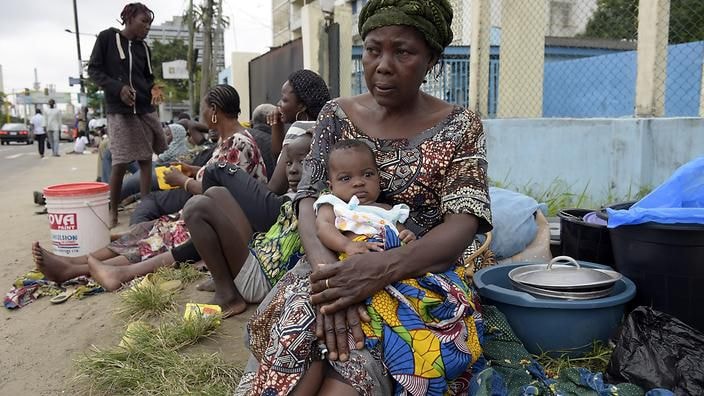 |
| The plight of migrants from Africa trying to reach Europe is sounding an alarm globally. Photo: Internet. |
These days, it's not difficult to find statistics in daily news reports about the number of migrants entering Europe. One million people in 2015 alone, and the number could easily be much higher in the upcoming year of 2016, risking their lives on perilous sea voyages in search of a safer living environment, economic security, and access to a better education.
Looking further ahead, in the last 10 years, preliminary statistics show that up to 50 million people have been forced to leave their homes due to climate change, desertification, and population explosion, which increase instability in their homelands and reduce job opportunities in neighboring countries. In debates about migration, there are complex but often overlooked aspects, namely the hotspots in Africa.
At a recent ministerial meeting of European Union (EU) and African countries held in Malta to address a long-standing and now escalating issue, the biggest question plaguing the delegates was how to manage the massive influx of migrants and refugees.
Sweden, one of the most generous "hosts," has now also run out of temporary accommodation for the less fortunate, and has no choice but to protect itself and impose border controls to avoid instability like the undesirable precedents that have occurred in many other countries.
Meanwhile, in Germany, Chancellor Angela Merkel is also facing a significant challenge in her political career as the European leader's "culture of welcoming" migrants is encountering fierce opposition from many quarters.
Furthermore, on November 12th, European Council President Donald Tusk also implicitly warned that the Schengen Agreement, which allows free movement between the 26 EU member states, is under threat.
From both the perspective of the causes and victims of the current situation – the migrants – they are in an even more difficult position: their lives are threatened as they try to cross borders by sea, they walk for days on end from one country to another, and they desperately try to catch a speeding train to the promised land, even though things often turn out completely differently at their destination than they expected.
Finding solutions for Africa
| Leaders from EU and African countries met at a summit in Valletta, Malta, to discuss the migration crisis on November 11-12. Photo: Internet. |
The EU-Africa summit, taking place against this backdrop, inevitably highlights that the thorny issue of refugees and migration that Europe is grappling with is not simply limited to the crises and wars in the Middle East. In other words, Africa plays an equally important role.
Objectively speaking, the strategies implemented so far have not yielded the expected results. From one negotiation to another, from one multilateral high-level meeting to another, all have only worsened the situation. Evidence of this is the increasingly dense barbed wire fences across Southeast Europe, the increased frequency of patrols in the seas, the colder weather, and the rougher seas, yet the migration flow shows no sign of slowing down; in fact, migrants have found new routes to achieve their goals.
Despite its complexity, the negotiations on November 11th in Valletta yielded little progress. The Guardian even commented that the proposals at the summit were extremely poor: more funding to support African efforts to urgently address the migration crisis, and expediting the repatriation of those whose asylum applications were rejected.
According to this news site, both proposals seem unlikely to yield any different results than previous efforts. For example, Spain tried to cope with the large-scale migration from West Africa to the Canary Islands in 2006, deporting many people, but these people immediately decided to cross the border into Libya. Closing the Libyan border, they then used Turkey as a transit point to reach Greece.
Where there is demand, there will be supply. Inadvertently, the migration crisis has become a breeding ground for transnational crime, necessitating urgent action to address the current problem of human trafficking. Solutions to Africa's management and development issues are being implemented, but they are time-consuming and not guaranteed to be successful. Furthermore, the negative side of economic growth for the continent could occur as people have the means to accumulate money, preparing for their "dream" trip to Europe.
A rarely spoken but widely understood truth is that we cannot stop illegal migration without legal channels. This is what Africa desires, but EU leaders are hesitant to implement it for fear of political repercussions.
However, migration flows from Africa stem from different causes than those in the Middle East, including Syria. Therefore, perhaps the EU needs to change its attitude and implement appropriate mechanisms for legal migration from Africa, such as through quotas or visa lotteries like the US has done. After all, Europe is in great need of young, eager migrants to supplement its aging population.
Thu Giang
| RELATED NEWS |
|---|


