
Reasons why the base salary increased by 30% but pensions only increased by 15%.
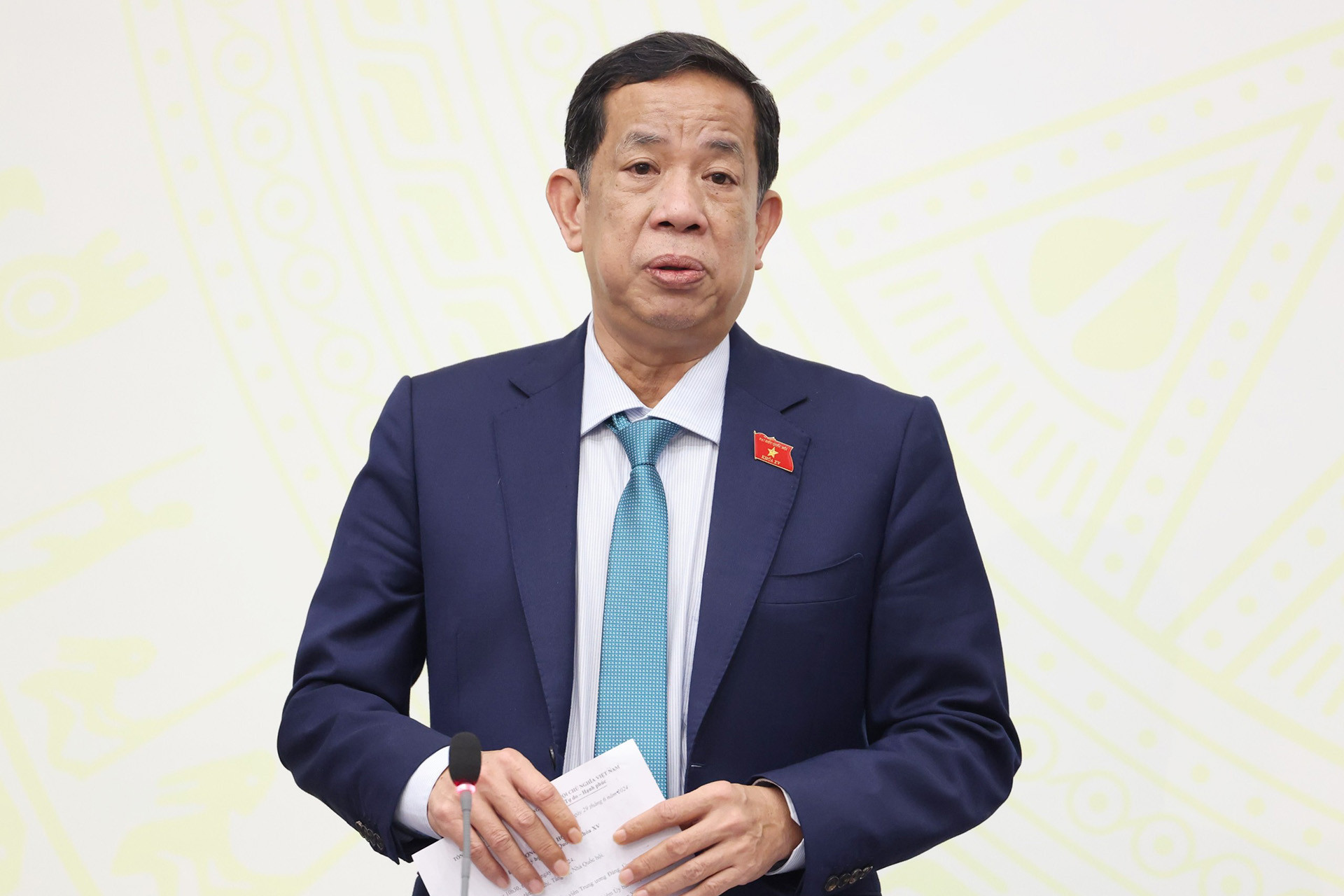
At a press conference announcing the results of the 7th session of the 15th National Assembly, Deputy Chairman of the Social Affairs Committee Dang Thuan Phong explained the reason why the basic salary increased by 30% but pensions only increased by 15%.
The Deputy Chairman of the Social Affairs Committee shared that many retirees have also called him to ask about this issue.
He stated that in recent times, the pension levels of retirees have been continuously increased, based on the increase in the consumer price index (CPI) and economic growth.
According to calculations by the Steering Committee for Salary Reform, with the number of pension increases over the past period, a pension increase of only 11.5% would be equivalent to a 30% increase for civil servants and public employees. However, recognizing the difficulties faced by pensioners and the fact that a pension increase would lead to higher prices, the Steering Committee for Salary Reform carefully considered the matter and decided to increase the increase from 11.5% to 15%.
After calculations, the government decided to increase the base salary by 15%, prioritizing pensioners. However, if the CPI is taken into account, this increase should be more than 30%.
The National Assembly has approved the salary increase, but the new salary scale based on job positions and the new allowance system required by Resolution 27 have not yet been developed.
Addressing this issue, Mr. Dang Thuan Phong stated that salary reform has been postponed three times and has yet to achieve the goals set out in Resolution 27. "We are proceeding cautiously, surely, and effectively. Why has the process taken so long?" Mr. Phong asked.
The Steering Committee for Salary Reform has held 24-25 meetings, of which 4 items have been implemented, while 2 items remain unimplemented.
Specifically, regarding the new salary scale at the grassroots level and job position identification, downsizing the workforce, and determining appropriate salary levels for each position, Mr. Phong stated: The reform process has been lengthy, but job position identification has not been synchronized or standardized across ministries, departments, and localities.
The salaries of the armed forces also fluctuate. For public service units, the percentage of those with full autonomy, including autonomy in recurrent expenditures and investments, is very low, only 30%. The remaining over 70% still has to be covered by the state budget.
If job positions cannot be arranged in such public institutions, it will be very difficult to reform the salary system.
The Steering Committee's view is to postpone the salary reform to allow the Government to carefully consider the matter. The principle is that job positions must be determined based on the downsizing of personnel; only then can different salary coefficients be calculated, and only then can salary reform be implemented.
The government will soon conduct a comprehensive review of salary scales and job positions to make specific calculations.
Another issue is the difficulty in arranging the nine allowance groups. The current salary structure is 40-60, meaning 40% allowance and 60% basic salary. However, according to the new design, when rearranging the nine allowance groups, the ratio will be 30-70.
He emphasized that if the issue is not addressed comprehensively, many people will be at a significant disadvantage. Compared to the current situation before salary reform, the current salary will be higher if the reform is implemented, which will not encourage talent or effort.
Implementing all nine allowances would lead to numerous inconsistencies, difficulties in explaining them, and a lack of compatibility and uniformity among the beneficiaries. Therefore, the Steering Committee has decided to retain this portion for further calculation, research, and refinement.
Furthermore, reforming the salary system would require amending more than 20 legal documents related to the basic salary, which is why the government has not yet been able to submit the proposal.
Mr. Phong further informed that an additional 10% of the reward fund would be allocated, providing motivation for each agency and unit when implementing salary reforms.


