
Power outage following Typhoon No. 5 forces Nghe An province to use generators to drain floodwaters.
Following Typhoon No. 5, many areas in Nghe An province experienced severe flooding. Due to widespread power outages, drainage systems were forced to use generators to open sluice gates and ensure uninterrupted water flow.
On the morning of August 25th, at the Dien Thuy sluice gate (Dien Chau commune), workers had to operate the sluice gates using a 19kW generator. Mr. Nguyen Duc Hanh, Director of the Dien Chau Irrigation Enterprise, said: “The Dien Thuy sluice gate is part of a continuous system including the Dien Thanh sluice gate and the Dien Ky spillway, which is responsible for draining floodwaters from the Vach Nam drainage canal system and releasing floodwaters into the Bung River. From 2 PM on August 25th, the area experienced a complete power outage, so we had to switch to using generators to operate the three sluice gates. Each gate is 8 meters long and is currently discharging floodwater at a rate of approximately 300 m³/s.”
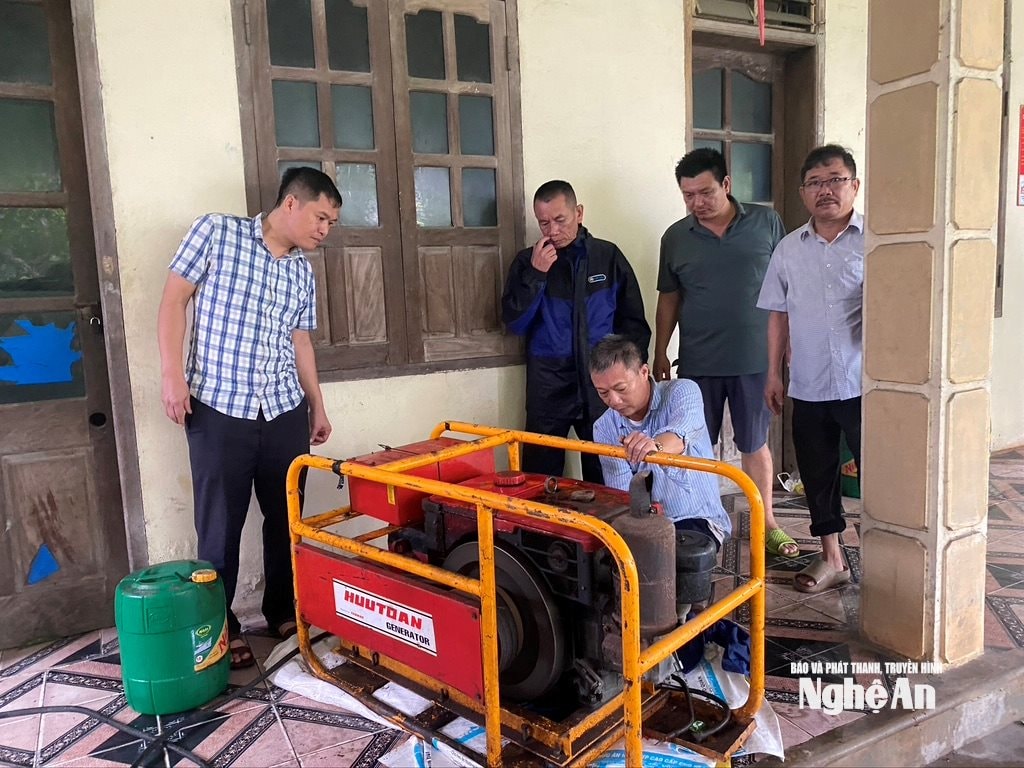
In addition, workers also had to actively remove the dense water hyacinths at the sluice gates to prevent blockages and ensure unobstructed water flow.
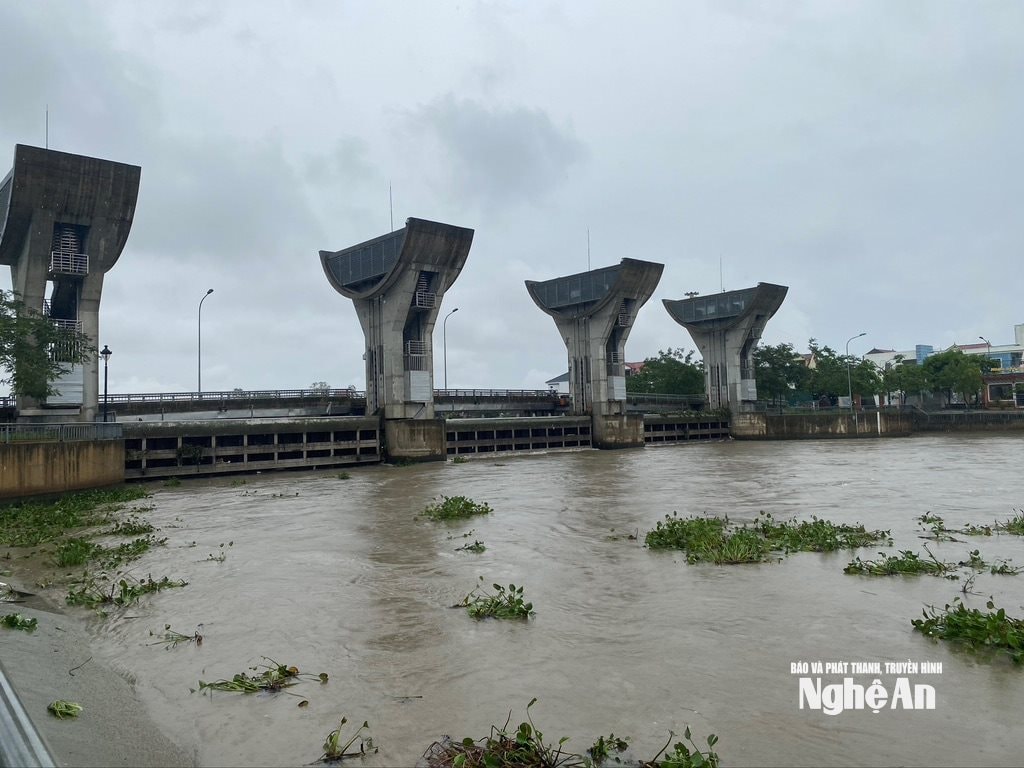
At the Dien Thanh drainage sluice gate, one of the key irrigation projects in the northern part of the province, the situation is no better. According to Mr. Vo Van Thang, head of the Dien Thanh drainage sluice gate station, due to a power outage, the unit had to mobilize a 75kW generator to operate the three sluice gates, each 19 meters long, with a total discharge flow of up to 623 m³/s.
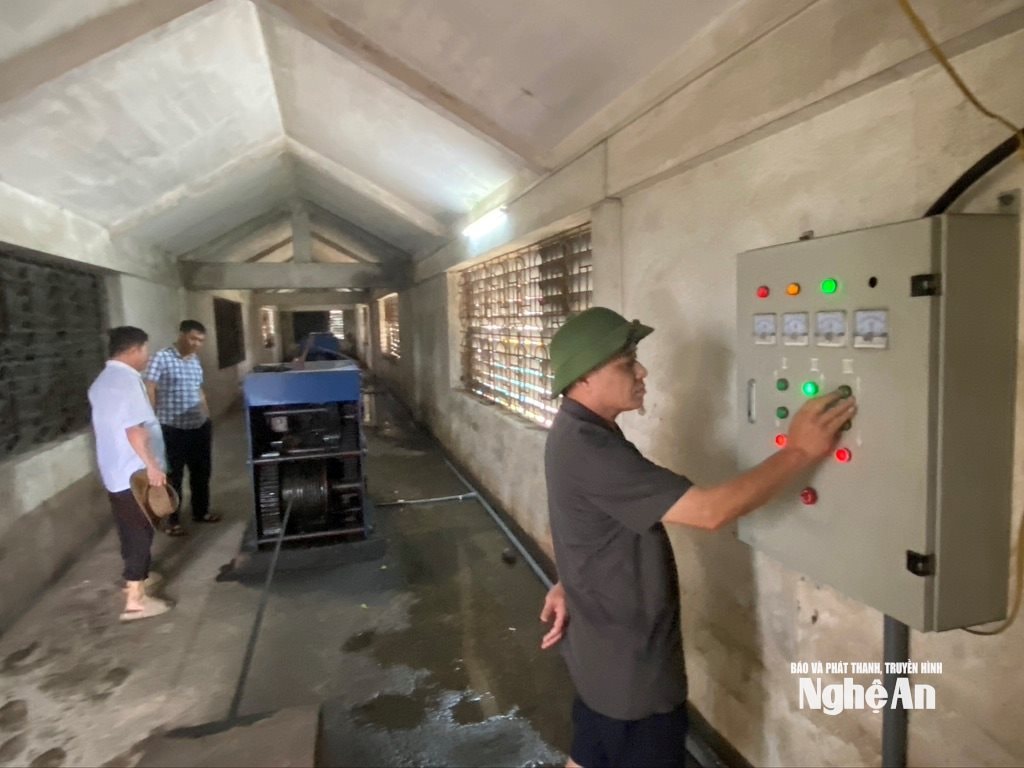
“The Dien Thanh drainage sluice gate plays a particularly important role, responsible for draining floodwaters from more than 20,000 hectares of rice paddies and residential areas in the former Yen Thanh and Dien Chau districts. Previously, this sluice gate frequently deteriorated and could not drain water quickly enough during heavy rains. However, since 2019, thanks to a project supported by JICA (Japan), the system has been rebuilt with a modern electronic control mechanism. Unfortunately, due to a power outage this time, we had to revert to the backup plan using a generator to operate the sluice gate,” Thang shared.
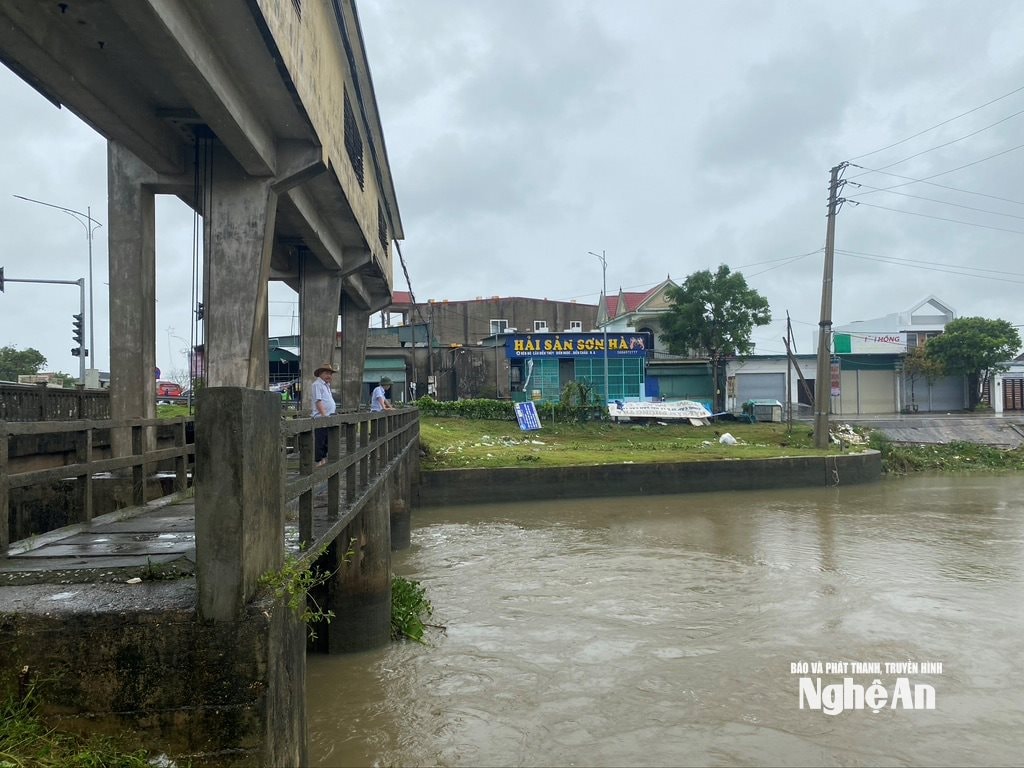
Not only at the Dien Thanh sluice gate, but other drainage systems are also operating at full capacity to cope with the flooding. At the Nghi Quang sluice gate (Hai Loc commune), Mr. Nguyen Dinh Tuan - Head of the sluice gate station said: “This is the largest flood drainage sluice gate in the southern Nghe An irrigation system, responsible for draining floodwaters from the former Nghi Loc, Hung Nguyen districts, Vinh City and part of Nam Dan district. Currently, we are operating 13 sluice gates using a 20kW generator to maintain a discharge flow of more than 400 m³/s.”
.jpeg)
Mr. Tuan also noted that the operation of the sluice gates must closely monitor tidal water levels. "If the water level in the river is higher than in the fields, we must close the gates immediately to prevent saltwater intrusion, which would cause further damage to agricultural production," he said.
At the Ben Thuy three-gate sluice gate – a crucial flood discharge point – workers are currently opening all 10 gates simultaneously, with a total discharge rate of approximately 265 m³/s. Despite the urgent work atmosphere, due to power outages and continuous heavy rain, the operating units are working under extremely difficult conditions.
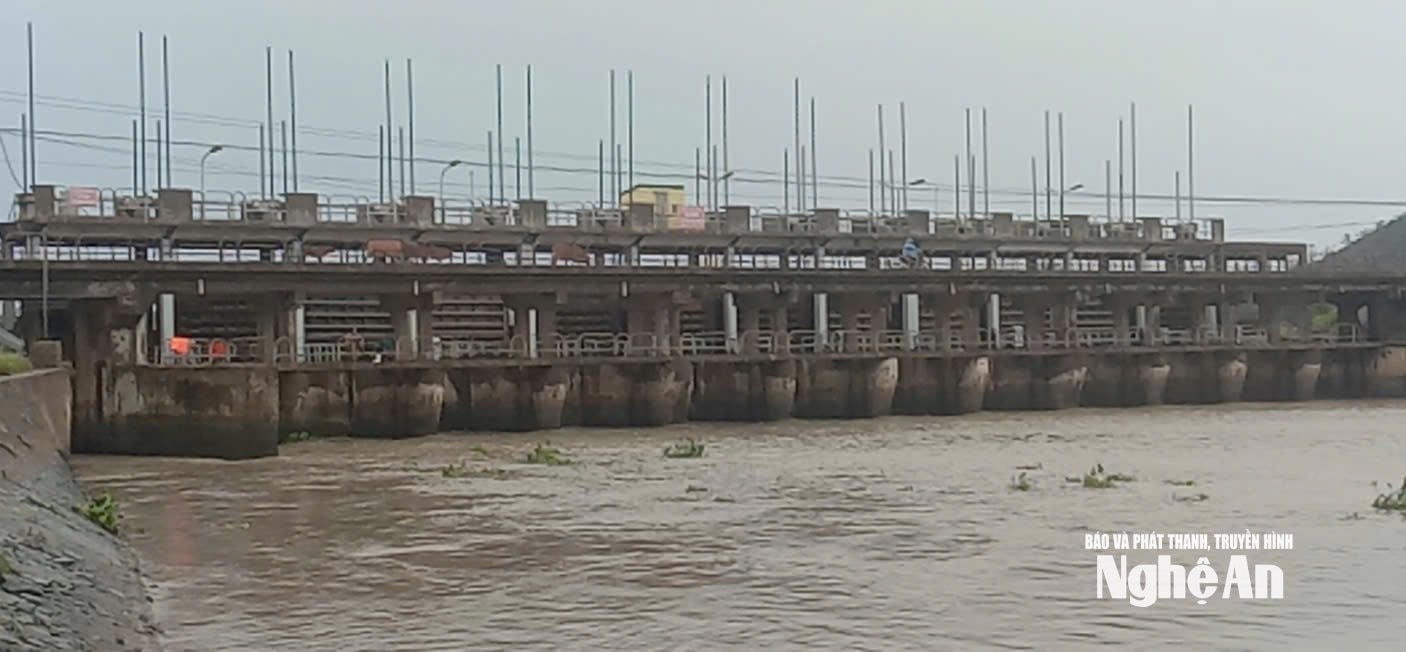
According to a representative from the Nghe An Irrigation Department, the province currently has nearly 20 large and small drainage systems such as the Nghi Quang, Ben Thuy, Thuong Xa, Nghi Xa, Dien Thanh, and Dien Thuy sluice gates. However, only the Dien Thanh sluice gate has been upgraded and modernized. Most of the remaining structures are dilapidated, causing many difficulties in operation, especially during power outages and prolonged heavy rains like the present.
The Sub-Department is directing local irrigation units to be on duty 24/7, closely monitoring the actual situation, and releasing water according to the principle of "draining tides and draining floodwaters". At the same time, they must closely monitor water levels and hydrological conditions to ensure that the water release process does not allow saltwater intrusion into the fields.
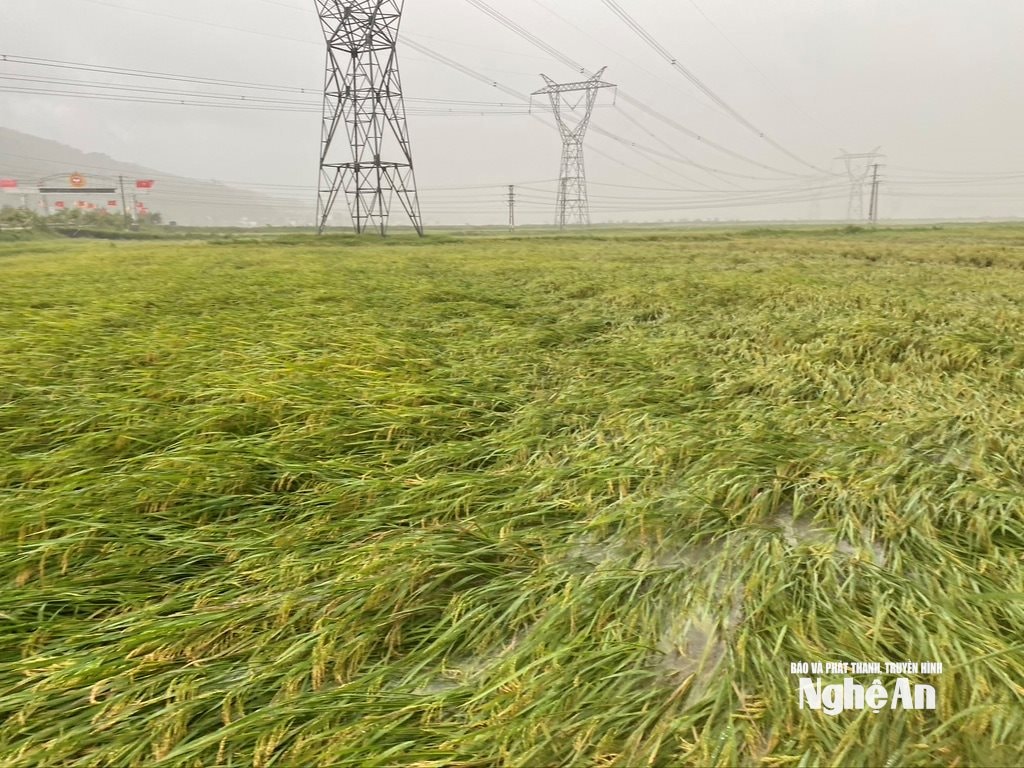
To ensure the effective operation of drainage systems, it's not enough to focus solely on flexible operation during the rainy season; long-term solutions must also be considered. In particular, Nghe An province urgently needs to upgrade its dilapidated and outdated flood drainage systems to meet the increasing demands for flood control in the context of complex climate change. Simultaneously, it's crucial to ensure a stable power supply for all key irrigation systems, reducing reliance on temporary generators as is currently the case, avoiding operational disruptions, and minimizing damage to agricultural production and people's lives.


