
Tips for maximizing fuel efficiency in your car.
(Baonghean.vn) - With advanced technology, cars are equipped with modern devices to save fuel. However, improper use will cause your car to consume more fuel and be inefficient.
The following tips will help drivers improve their driving skills to achieve the best fuel efficiency.
Check the ignition system.
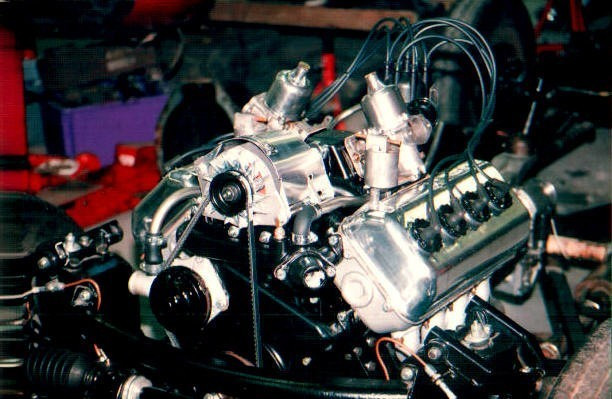
Ignition failures can occur infrequently, but they can result in about 10% higher fuel consumption. Deteriorating spark plugs and high high-voltage wire resistance are common causes of this problem.
 |
Clean the air filter regularly.
According to experts, a clogged air filter can waste 10% of fuel. However, air filters are easy to remove. Therefore, you should clean them and dry them in the sun. If you can't see light passing through them, it means the filter needs replacing. If you see the filter becoming clogged repeatedly, you should replace it with a new one to ensure smooth air filtration and save fuel.
Pay attention to the car windows.
When driving at low speeds, roll down all the windows. However, at high speeds above 80 km/h, opening the windows will increase wind resistance, causing the car to consume more fuel than normal. Therefore, you should close all the windows when driving at high speeds.
No need to fill the tank completely.
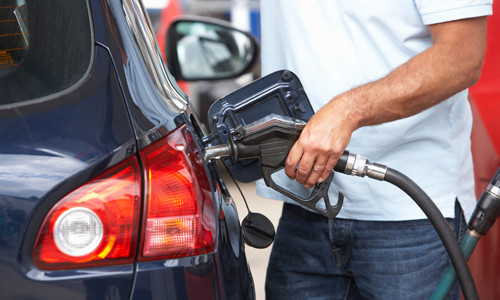
A fuel tank typically holds between 50 and 60 liters, depending on the model, which is equivalent to about 35 to 42 kg. This is quite a lot of fuel, so fill up with just the right amount for your journey. The less fuel you use and the lighter the vehicle, the more fuel-efficient it will be.
 |
Do not drive at high speed.
Reducing speed from 100km/h to 80km/h can help lower fuel consumption by 10% to 15%. Driving in a higher gear with low engine speed (RPM), ideally between 1,500 and 2,500 RPM, will maximize fuel economy.
Avoid pressing the accelerator too hard.
Another term in the automotive world is "revving the engine." Researchers have proven that driving carefully, avoiding constant acceleration and deceleration, can significantly save fuel. According to the U.S. Environmental Protection Agency (EPA), gradual acceleration can save over 33% on highways and 5% in city driving.
Regularly check your tires.
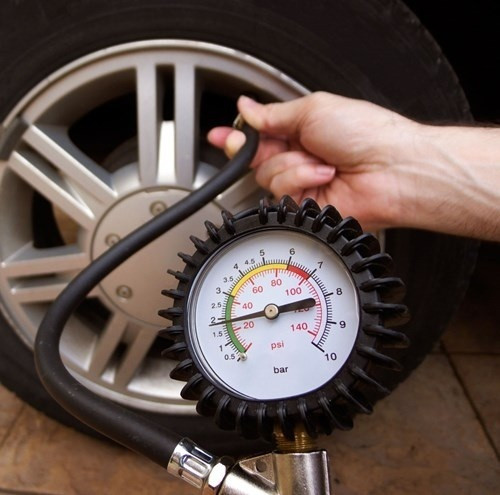
Regularly checking tire pressure is crucial for several reasons. Underinflated tires not only make steering and braking more difficult, but the drag generated by low-pressure tires also increases fuel consumption. Maintain your tire pressure at the manufacturer's recommended level, and you'll save a considerable amount of money.
 |
Turn off the engine when stopped.
Many cars now have a smart Start/Stop function. This function turns off the engine when your car stops and turns it back on when you want to drive again. If your car doesn't have this function, you can do it manually. Modern car engines use electronic fuel injection systems that can very precisely control the amount of fuel delivered to the engine when the car starts, so your car will consume almost no fuel during the starting process.
So how long should you leave your car parked before turning off the engine? The answer is more than 10 seconds. This number also depends on your car model, and is usually higher with older models. Frequent restarts can also have a slight impact on the battery and ignition system.
Utilize aerodynamics
Simply put, wind resistance is the resistance you experience when driving. Increasing wind resistance means your car will consume more fuel. To reduce this, you can pay attention to a few things, such as avoiding opening windows while driving, especially on highways or at high speeds.
For pickup trucks that don't have anything to carry or don't necessarily need to have a cargo bed, simply open the tailgate and remove the roof rails.
Reduce the weight of the vehicle.
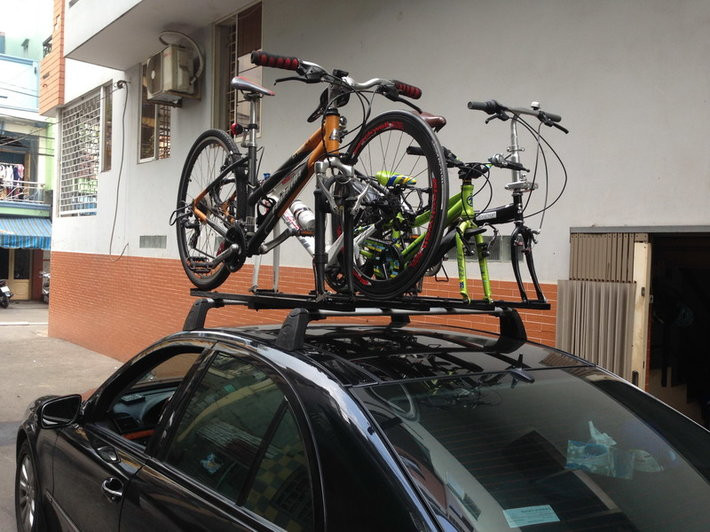
Besides engine factors, vehicle weight is a direct determinant of fuel consumption. The simplest way to reduce unnecessary fuel consumption is to remove all unnecessary items from the car and only keep what is truly essential. Every 50 kg of luggage consumes an additional 2% of fuel.
 |
Use a higher number.
Many drivers often drive in low gears for too long, causing the engine to work harder than necessary and resulting in higher fuel consumption. Shift up/down when the engine speed is at 2,500 rpm for gasoline engines and 2,000 rpm for diesel engines.
Use the correct type of engine oil.
Drivers can save 1-2% on fuel by using the correct type of oil as recommended by the manufacturer. According to the U.S. Environmental Protection Agency (EPA), using 10W-30 oil in an engine that requires 5W-30 will increase fuel costs by $0.04-$0.07 per gallon (3.8L). Additionally, it can help maintain engine performance and extend engine life.
Cruise control
Using this technology when driving on highways helps stabilize speed and increase driving range by 7%. However, it is not effective on mixed roads or city streets.
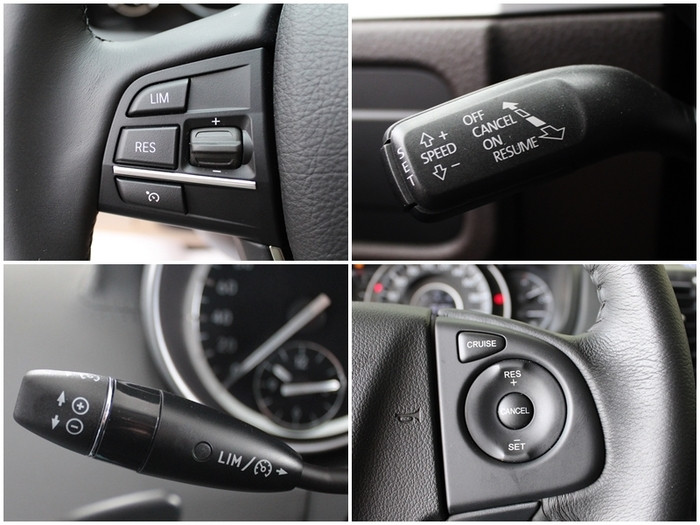 |
Use cruise control.
This is an automatic speed control system that has appeared on many modern cars today. For example, when set to 112 km/h on the highway, the computer will calculate and adjust the throttle to maintain that speed, helping to save fuel.
Even more effective is the Adaptive Cruise Control system, which uses radar to maintain a safe distance from the vehicles in front and behind.
Ngoc Anh
(Synthetic)
| RELATED NEWS |
|---|


