
Montenegro 'obstructs' US-Russia relations.
(Baonghean) - Montenegro has just taken another big step toward becoming the 29th member of the North Atlantic Treaty Organization (NATO), as US President Donald Trump signed the protocol admitting this Balkan nation.
The move, made ahead of a meeting with the NATO Secretary General, suggests that Trump is leaning more toward the alliance, but it also strained US-Russia relations.
The decision was not unexpected.
Despite having a population of just over 620,000, Montenegro occupies a strategically important position in the Balkans and could help NATO expand its borders along the Adriatic coast. These factors have made this former Yugoslavian nation a target of ongoing power struggles between Russia and NATO. At the NATO Summit in December 2009, Montenegro received an action plan for NATO membership. Negotiations on this matter began in 2010.
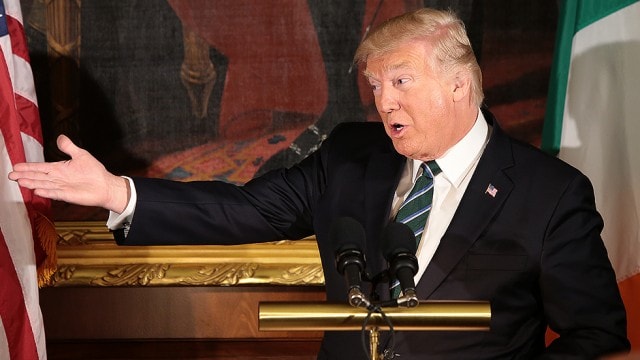 |
| US President Donald Trump has paved the way for Montenegro to join NATO – a move that could strain relations with Russia. (Photo: The Hill) |
Back in May 2016, when the foreign ministers of the 28 NATO member states finalized negotiations and signed the agreement to admit Montenegro, Russia immediately voiced its criticism. Then, at the end of March this year, after a considerable period of indifference, with 97 votes in favor and 2 against, the US Senate approved the decision to admit Montenegro as the 29th member. This was the result of Secretary of State Tillerson's call for the US Senate to take this step.
Furthermore, US President Donald Trump's decision to admit Montenegro into NATO was not considered entirely unexpected. This is because recently, Trump has shown a clear shift in his attitude and statements regarding the military alliance of which the US is a member. During his presidential campaign, Trump repeatedly criticized the old model...
Surely, President Trump understood that the US and NATO remain an inseparable part of each other. The decision to admit Montenegro into NATO was seen as a gesture of goodwill from the US President towards the alliance. For NATO, even though Montenegro has a very small armed force, the alliance does not shy away from any opportunity to expand its territory. Furthermore, NATO Secretary General Jean-Stoltenberg once stated that the 2016 coup in Montenegro demonstrated the importance of bringing the country into NATO. It should be recalled that Russia was accused of involvement in a Western-backed assassination plot against Montenegro's Prime Minister Milo Djukanovic in November 2016.
It's cold before it's even warm.
It can be said that the US President's move will certainly anger Russia, bringing bilateral relations back to square one after a period of seemingly warming relations. On the one hand, Russia certainly cannot sit idly by while NATO increasingly strengthens its presence in the East. Kremlin spokesman Dmitry Peskov once stated, "Russia is always paying attention to NATO's continuous expansion of its operational scope and military infrastructure to the East. This will certainly lead to retaliatory actions from the East, specifically from Russia, to ensure its security interests and promote equal interests." On the other hand, Russia also strongly opposes NATO's attempts to recruit Montenegro, despite the opposition of its citizens.
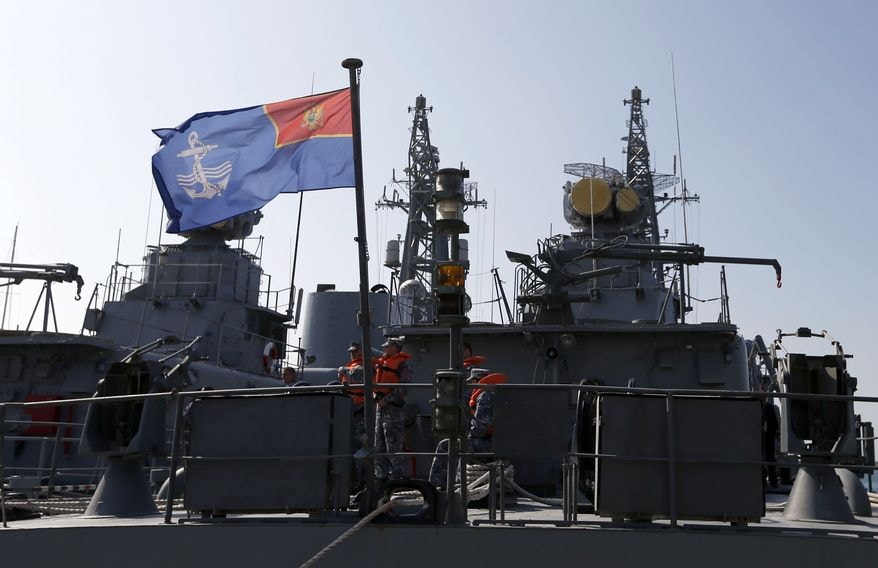 |
| Montenegrin sailors stand on the frigate "Kotor" in Bar harbor, Montenegro, on March 15. Photo: AP |
Public opinion has already witnessed a shift in US-Russia relations since Trump took office. But the decision to attack Syria, and now the admission of Montenegro, is raising questions about President Trump's policy toward Russia.
While unwilling to escalate tensions with Russia, President Trump is still under pressure from the neoconservative forces within the current US administration. However, Trump seems to have his own calculations in mind when making this decision. Despite its strategic location, Montenegro is not Ukraine or Georgia. Many even argue that Montenegro's membership in NATO wouldn't significantly impact Russia's security. The real issue would arise if Ukraine or Georgia, two countries of crucial importance, joined NATO.
Therefore, President Trump's signing of the decree admitting Montenegro is seen as both reaffirming relations with NATO, making it easier to speak during his upcoming meeting with NATO Secretary General Jens Stoltenberg at the White House; yet also avoiding excessive tension with Russia. Of course, the completion of Montenegro's admission to NATO will depend on the approval of the remaining two members, the Netherlands and Spain. Until then, US President Donald Trump will likely have to find a new strategy for his relationship with both Russia and NATO.
Phuong Hoa
| RELATED NEWS |
|---|


