
Sardine season
(Baonghean) - When the kapok flowers begin to turn a reddish-orange color, and when early mornings bring a blanket of fog to the quiet riverbanks, people are already preparing their specialized nets to welcome the year's "river bounty" season. Born in the headwaters of rivers and streams, migrating to the estuaries to live, and then returning upstream to the source for breeding season, that's the most concise way to describe the sardine's life cycle.
Around January each year, the sardines of the Lam River begin their long journey. From the Bai Ngang estuary, the sardines migrate towards Ben Thuy, then up to Hung Nguyen and Nam Dan, and when they reach Thanh Chuong, they breed new generations. The closer they get to the rivers and streams, the more fragrant and fatty their meat becomes. Therefore, fishermen in these areas often anticipate the sardine season early, hoping to reap some benefits from their homeland and earn a little extra to support their children's education.
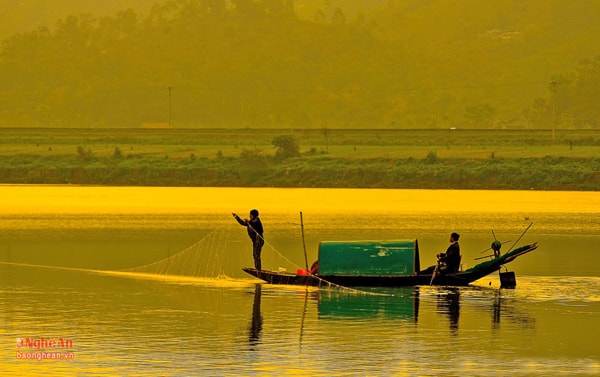 |
| Casting nets on the river. Photo: Quoc Dan |
During sardine season, from early morning to late afternoon, the riverbanks in Hung Nguyen and Nam Dan districts are always bustling with buying and selling. In the past, local women would stand with baskets and wait for small boats to return to buy sardines; nowadays, traders place orders in advance, simply waiting for the boats to arrive, weighing the fish, and paying.
Sardines aren't too expensive, nor too rare, but the sardine season is very short, lasting only a little over a month. When the first few kapok flowers begin to turn red, the sardines start migrating to rivers and streams, and before the kapok flowers have fully bloomed and fallen, the tired, emaciated sardines, after giving birth, return to the river mouth with their offspring, ending a long and arduous journey.
Sardines are also associated with a strange legend: every autumn, pigeons fly to the sea and transform into sardines, and then in spring, the sardines swim upstream into the forest and transform back into pigeons. This legend makes sardines unique and impressive to travelers who have the opportunity to visit the riverbanks from Bai Ngang, Ben Thuy, up to Hung Nguyen, Nam Dan, or Thanh Chuong in Nghe An province.
Although sardines have many small bones, their meat is incredibly delicious and fatty, so when preparing them, home cooks don't need many elaborate spices to make them incredibly flavorful and appealing. Crispy fried sardines dipped in fish sauce with garlic, chili, and a sprig of ginger become a popular, unforgettable snack. Or, sardines braised with turmeric, with a few sprigs of Vietnamese coriander added before turning off the heat, make a perfect accompaniment to rice during the mild days of early spring and summer.
A simpler dish is boiled sardines with a little sour tamarind or dried chayote, dipped in chili salt – an "everlastingly delicious" meal... Dishes made from sardines, though simple, leave an indelible mark on those who have tasted them. Those from the riverside region can never forget the rich, fatty flavor of sardines, a taste that evokes the feeling of home and the love of their homeland whenever they are far away.
One afternoon, the gentle sunlight fell on the bamboo grove, a soft breeze carried the scent of early-season pomelos to the window, Mother carried a pot of sardines stewed with turmeric from the simple kitchen to the side room, a pot of wild vegetable soup and a bowl of pickled eggplant were already waiting on the table, Mother served bowls of fragrant rice... and the children, their cheeks flushed, exclaimed about the rich, spicy flavor of the sardines, the bowls and chopsticks clattering incessantly...
How could I ever forget those meals? How could I forget the warm, happy look in my mother's eyes as she watched her children enjoy their food? How could I forget the taste of sardines—the taste of a poor but peaceful and warm countryside?
Phuong Ngoc