(Baonghean) - The Mong people's custom of making paper for ancestral worship dates back to ancient times and has become a beautiful traditional cultural feature of this ethnic group.
For the Hmong people in western Nghe An province, the most joyful time is from July to September in the lunar calendar. During this period, the familiar sound of pounding bamboo fills the villages. Hmong women carry heavy loads of bamboo stalks on their shoulders, neither too young nor too old. Choosing stalks that are too young will not ensure the paper's durability, while stalks that are too old will lack sufficient starch and binding properties. Once the bamboo is brought home, they split it open, discarding the green outer layer and using only the white inner part before boiling it. The Hmong don't just boil the bamboo; they also mix in flax ash and lime powder. After about a day of boiling, when the bamboo is soft, they remove it, wash it thoroughly, pound it, and squeeze out the liquid. This liquid is poured onto a prepared cloth frame and dried. In this way, the Hmong complete a sheet of paper to place in the most sacred places in their homes, welcoming the new year.
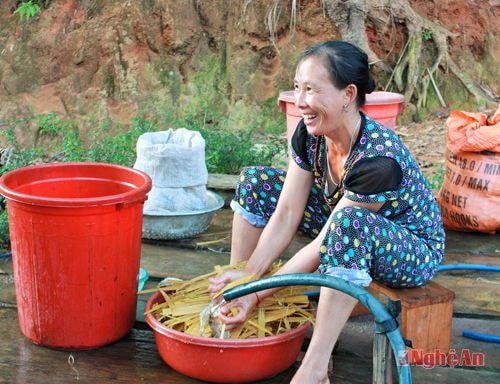 |
| Wash the river. |
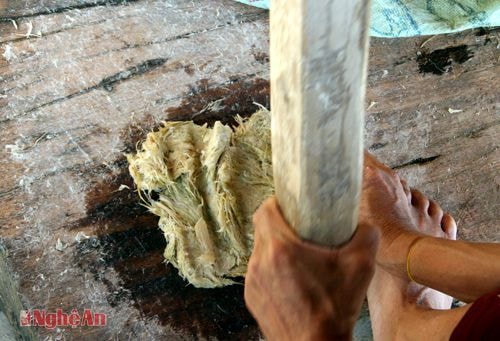 |
| Crush the bamboo stalks to extract the juice. |
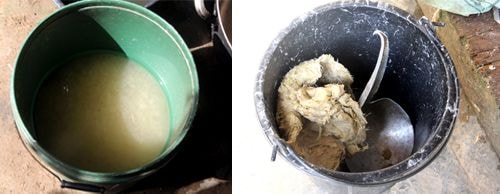 |
| Use a bucket to collect the water from the bamboo plant and the residue from the bamboo stalks. |
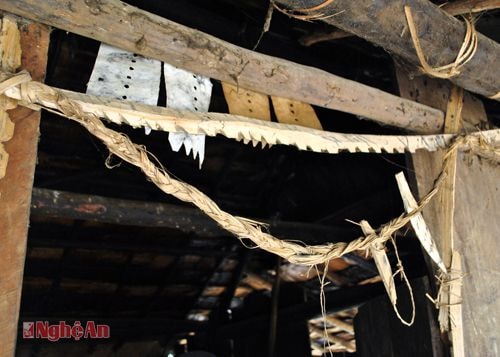 |
| Traditionally, Hmong people paste paper offerings inside their homes or on their doorways. |
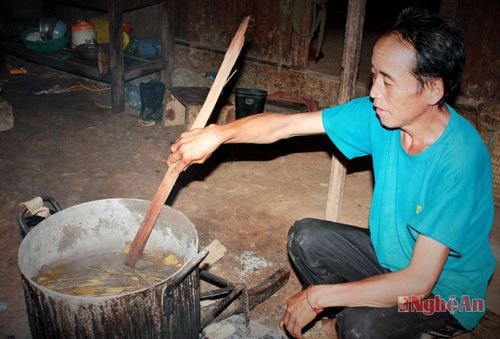 |
| Cooked in bamboo shoots. |
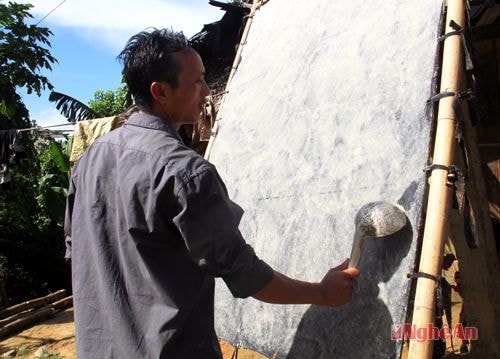 |
| The cowhides, which had been sprinkled with water from the bamboo shoots, were dried to make paper. |
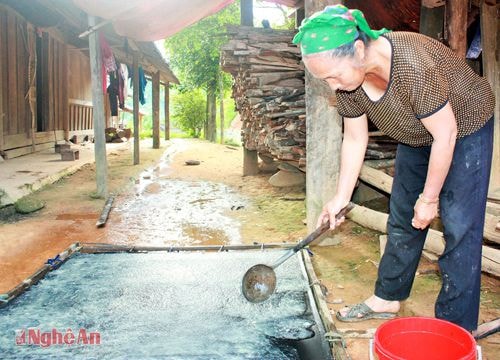 |
| Rinse the cowhide or buffalo hide with water before drying it. |
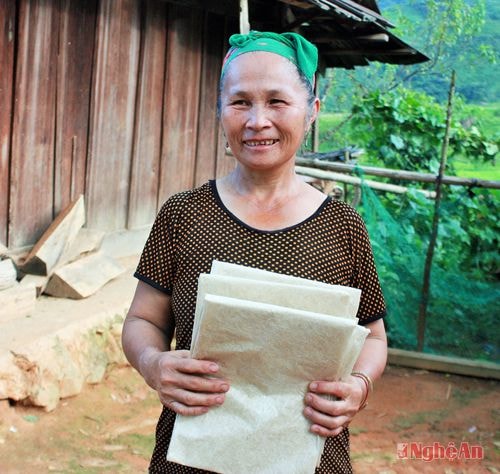 |
| Paper offerings for religious ceremonies made by the Hmong people. |
Photo gallery:Ho Phuong - Dao Tho



