
Textile and garment industry: We must shift from quantity to quality.
At the workshop on August 20th to provide feedback on the draft Vietnam Textile and Garment Industry Development Plan for the period 2020, with a vision to 2030, Deputy Minister Ho Thi Kim Thoa suggested focusing on clarifying development perspectives and orientations, and especially emphasizing investment in and expansion of raw material areas.
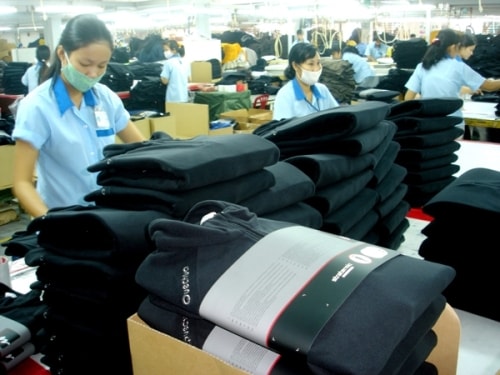
The production of garment models in the textile industry accounts for a high percentage.
In 2008, the Ministry of Industry and Trade issued a plan for the development of Vietnam's textile and garment industry.
Imbalances in planning
Vietnam's textile and garment industry
Vietnamese
However, according to Mr. Nguyen Sy Phuong, Deputy Director of the Textile and Garment Institute, some shortcomings arise from imbalances in textile and garment planning, namely weak supporting technology, with most fabrics and garment accessories depending on imports. Links in the supply chain are weak, and textile and garment industrial clusters and zones have not yet been formed. The high proportion of production is based on outsourcing, resulting in low added value; production management skills are weak; the efficiency of using yarn, weaving, and dyeing equipment is not high; and the collection, analysis, and provision of domestic and international market information are not timely.
Therefore, although investment flows are shifting to Southeast Asian countries, including Vietnam, and the consumer market is expanding and developing thanks to FTA agreements, competition from the Chinese, Bangladeshi, Indonesian, and Cambodian markets is becoming increasingly fierce. In addition,Technical barriers related to hygiene, safety, environment, social responsibility, and anti-subsidy measures are tending to increase. The attractiveness of the textile and garment industry for human resources is weakening compared to other industries."—Mr. Phuong added.
Shift from quantity to quality.
The goal of the new planning is to develop the textile and garment industry into one of the leading export industries, capable of meeting the growing domestic consumer demand; creating more jobs for society, enhancing competitiveness, and firmly integrating into the regional and global economy. In particular, by 2020, the industry aims to build several well-known brands and integrate into the global market.
Speaking on the sidelines of a workshop to provide feedback on the draft plan for the development of Vietnam's textile and garment industry until 2020, with a vision to 2030, Mr. Pham Van Liem, former Deputy Director of the Institute for Strategic and Industrial Policy Research (Ministry of Industry and Trade), stated that the most important factor for the development of the textile and garment industry is expanding and diversifying export markets, while also dominating the domestic market. In particular, the export market is a breakthrough in the industry's development and one of the decisive factors in the growth of Vietnam's textile and garment industry.
According to Mr. Liem, there will be many good development opportunities from now until 2020, but after 2020, those opportunities will gradually decrease.We need to shift from quantity to quality, improve the self-design and fashion styling aspects, and move garment manufacturing to rural areas. Focus on producing raw materials and components such as high-quality fabrics and yarns...."—Mr. Liem contributed his opinion.
During the consultation session, experts also suggested that, to achieve this goal, the textile and garment industry needs to focus on the following groups of solutions: developing and expanding markets; positioning concentrated textile and garment industrial clusters, producing in a specialized manner, and providing complete product packages; strengthening linkages between manufacturers, suppliers, and participants in the industry's value chain; developing human resources; developing supporting industries for natural fibers; and encouraging foreign investment in the development of synthetic fibers, dyes, and auxiliary substances.
According to baocongthuong.PH


