
Nghe An: The effectiveness of policy-based credit for ethnic minorities.
(Baonghean.vn) - After 20 years of formation and development, policy-based credit in ethnic minority and mountainous areas has truly been a bridge and a tool for people to rise up, stabilize their lives, and gradually narrow the gap between regions. Thanks to this, ethnic minority areas and the western part of Nghe An province have developed comprehensively, contributing to border security stability and achieving the national goal of sustainable poverty reduction.
Give them the "fishing rod".
Watching the people of Ky Son flock to the city and industrial zones to work as laborers, Mr. Vu Tong Po (born in 1979) from Muong Long 1 village, Muong Long commune, pondered: "Why are our people so hardworking yet unable to escape poverty and find ways to get rich right in their homeland? Why aren't our strong, worthy specialty products like black chickens, black pigs, local cattle, plums, and peaches becoming marketable goods?"
Driven by these heartfelt concerns, Mr. Pó began his economic endeavors raising native black chickens, applying for a loan of 30 million VND from the Social Policy Bank. In addition, he and his wife planted corn to feed the chickens, both to subsidize feed costs and to produce firmer, sweeter chicken meat.
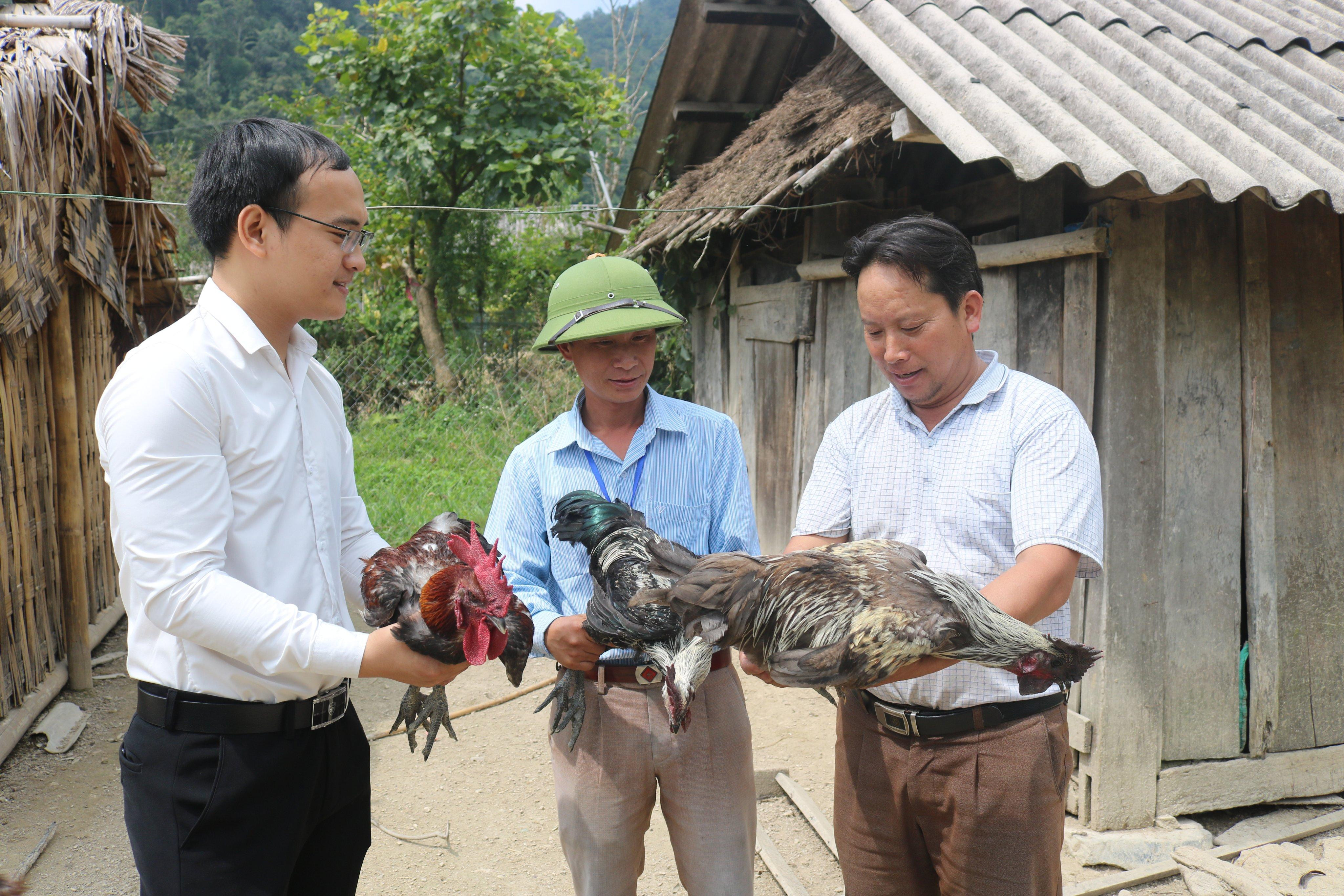 |
Mr. Vu Tong Po, residing in Muong Long 1 village, Muong Long commune, chose to raise native black chickens to develop his economy. (Photo provided by the bank) |
Guided by the Farmers' Association, in 2019, Mr. Pó borrowed an additional 70 million VND in preferential loans from the Social Policy Bank to expand his chicken flock, broaden his services to include selling both broiler chickens and native black chicken breeds, and simultaneously mobilized the establishment of a Farmers' Association for Black Chicken Farming, and then a Farmers' Association Branch for Black Chicken Farming with 15 households (36 members) participating.
Currently, in addition to investing in raising buffalo, cattle, and local black chickens, the family also combines this with a community-based homestay tourism model – becoming one of the first families to register to build community guesthouses to serve tourists visiting Muong Long. Developing tourism, beautifying the landscape, and participating in tourism services in Muong Long commune creates a closed-loop economic model, thereby developing strong products and specialties such as black chickens, local cattle, and clean vegetables; and improving and planting more plum and peach orchards.
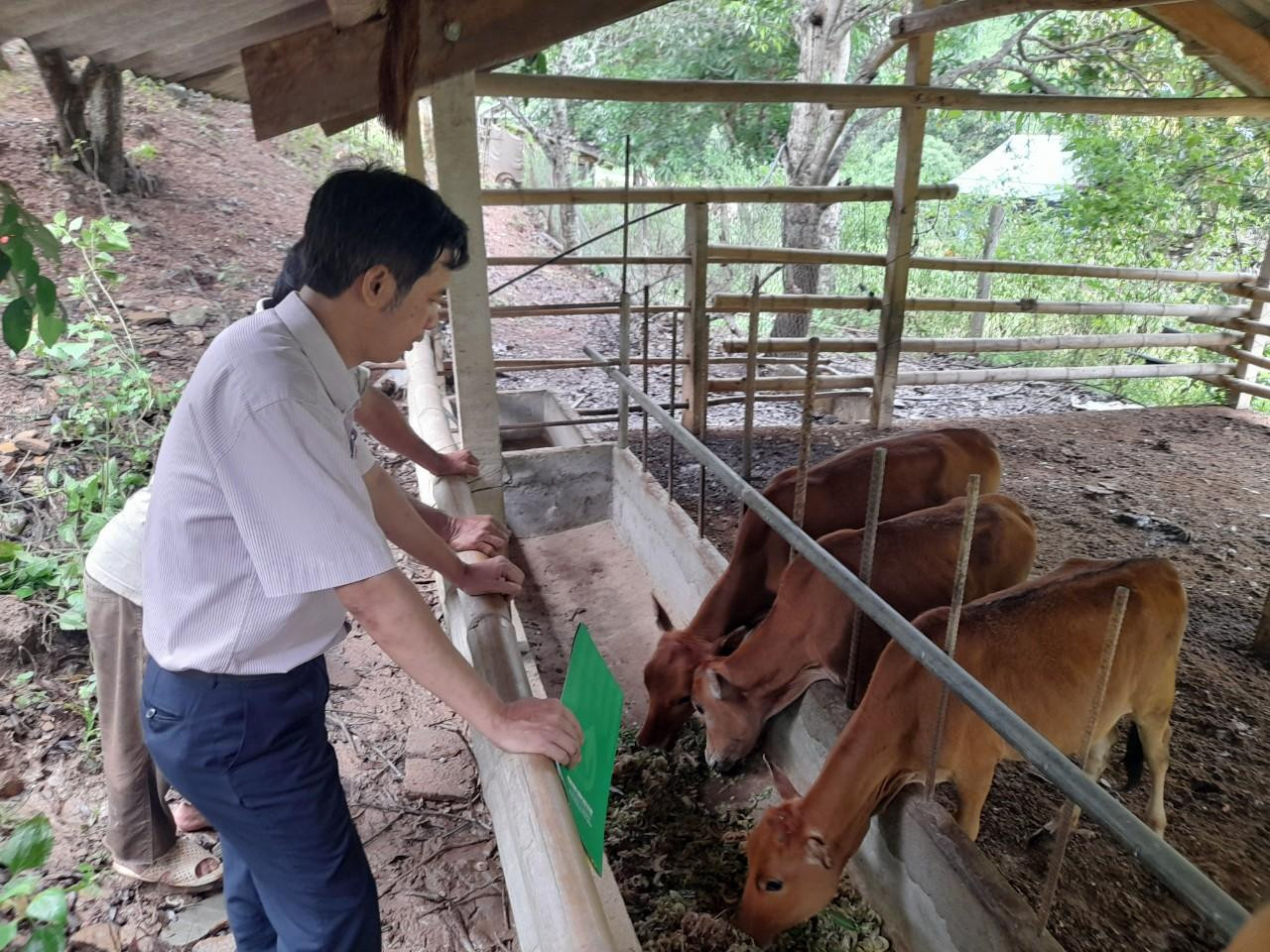 |
| Many poor households borrow capital from the Policy Bank to raise cattle and develop their economy. Photo: Thu Huyen |
Mr. Vu Tong Po's family is a prime example in Ky Son district of using policy-based credit to overcome poverty. With a thriving family economy and a deep understanding of the unique cultural values of the Mong ethnic group, he actively participates in community activities, disseminating the Party's guidelines and policies, as well as the State's laws and regulations, to his fellow villagers.
Mr. Hoang Son Lam, Deputy Director of the Social Policy Bank and Director of the District Branch, stated: "Prioritizing loan capital for poor households and ethnic minority households in particularly difficult and border areas has helped people feel secure in their production and business activities, gradually rising out of poverty sustainably, and the poverty rate has been decreasing annually."
According to the Social Policy Bank of Ky Son district, 5,751 poor households have received loans to escape poverty. These borrowers have invested in purchasing over 80,000 buffaloes and cows, creating over 60,000 jobs for local workers. Policy credit has also helped 415 people obtain loans to work abroad; enabled 655 students to study with peace of mind; helped poor households build 2,615 houses; and, together with the people, built and renovated over 3,000 clean water and sanitation facilities, contributing to raising the percentage of rural households using clean water and standard sanitation facilities compared to before.
As the gateway to western Nghe An province, Con Cuong district's economy has maintained a relatively high growth rate over time; its economic structure has shifted strongly towards ecology and tourism, making it a socio-economic center of southwestern Nghe An. These achievements are largely due to the significant contributions of social policy credit activities.
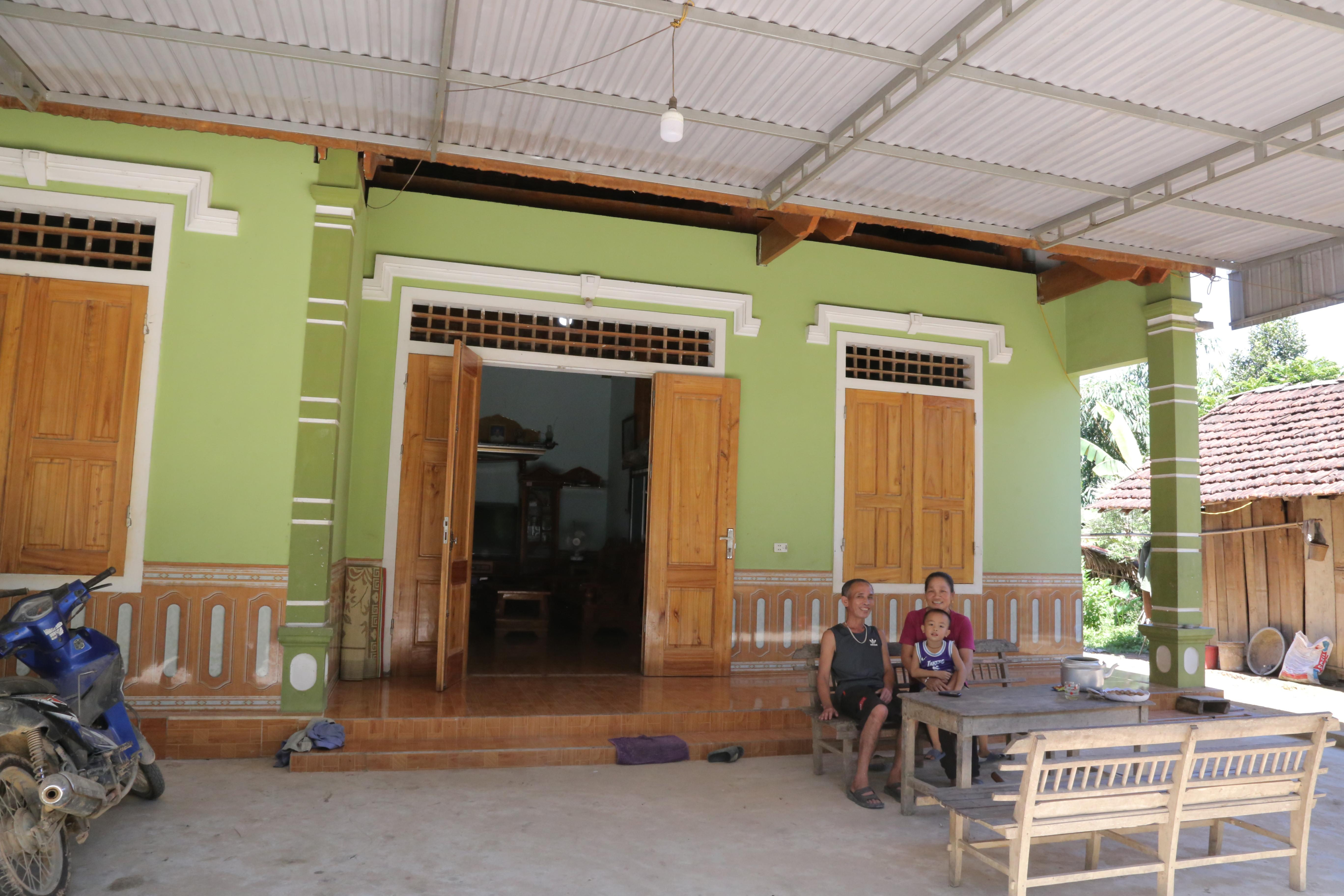 |
| The family of Ms. Lang Thi Luyen in Tong Xan village, Thach Ngan commune (Con Cuong district) stands beside their spacious house. Photo: Thu Huyen |
Ten years ago, the family of Ms. Lang Thi Luyen and Mr. Lo Van Tham in Tong Xan village, Thach Ngan commune (Con Cuong district) lived in a dilapidated, run-down house; every time there was a storm, the family lived in constant fear. Their lives changed in 2019 when they received a 25 million VND poverty alleviation loan and sold acacia trees, buffaloes, and cows to invest in building a new house.
After building a decent house, in 2021, the couple borrowed an additional 50 million VND from poverty alleviation funds to buy buffaloes and cows to develop their economy. “Having been given the opportunity to borrow capital to build a house and stabilize our lives, my wife and I are now focusing solely on economic activities. To have money to repay the bank loan, my family has opened a savings account to pay off the debt,” said Mr. Lo Van Tham.
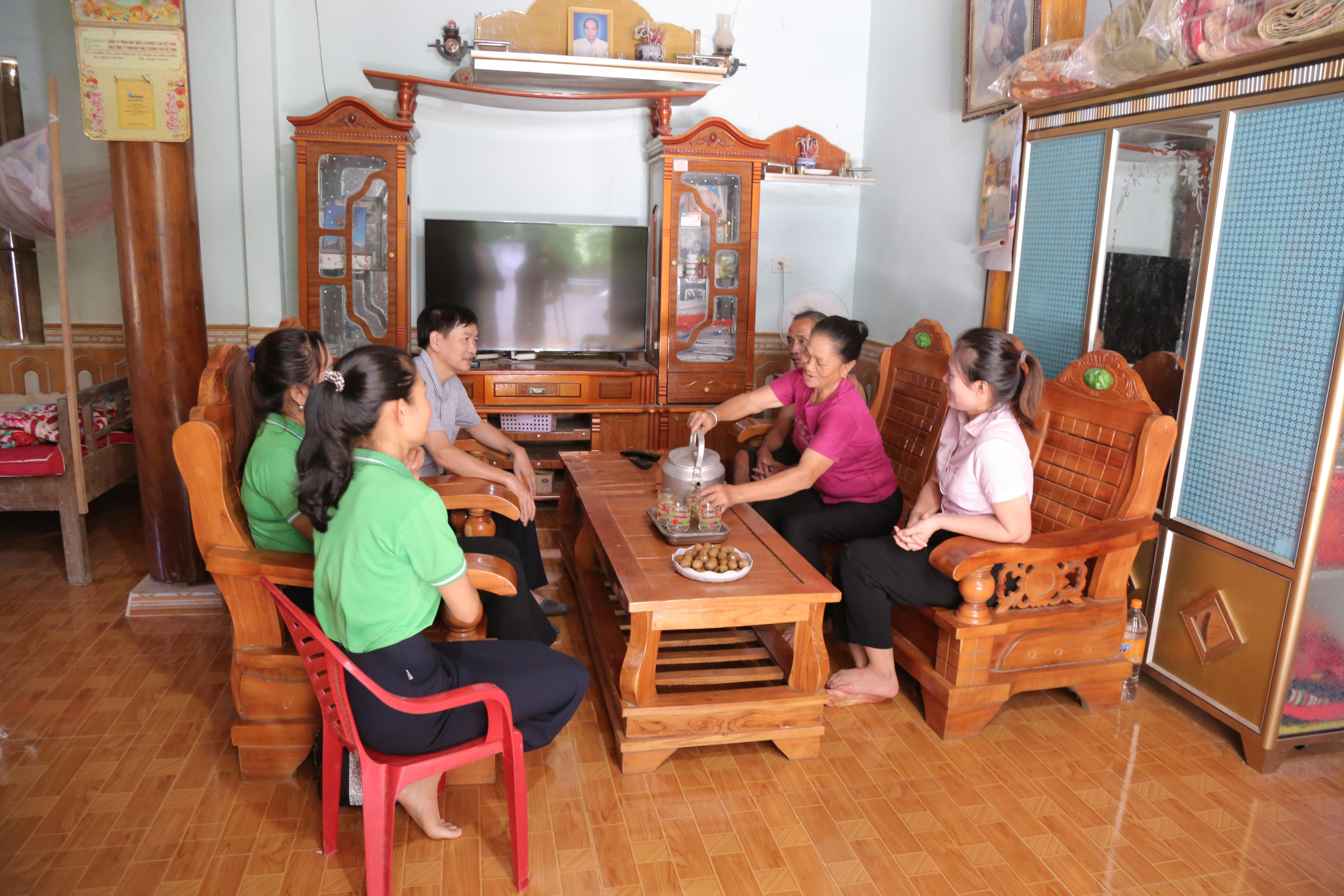 |
Officials from the Social Policy Bank and representatives of savings and loan groups in the area visited the family of Ms. Lang Thi Luyen in Tong Xan village, Thach Ngan commune (Con Cuong district). Photo: Thu Huyen |
Besides providing housing assistance, the most important thing is to create livelihoods for the people, provide training in developing production and livestock farming models, and guide them in science and technology to escape poverty sustainably.
For example, Ms. Vi Thi Lien from Ke Trai village, Thach Ngan commune, borrowed capital from the Policy Bank's poverty alleviation program in 2009 to buy buffaloes and cows. Starting with two piglets, she bred them herself; now she has raised 14 pigs for meat and 11 cows. Recently, she borrowed more capital to plant 2 hectares of acacia trees, cultivate cassava, and dig a pond for fish farming. During the off-season, she takes on odd jobs to earn extra income to cover daily expenses.
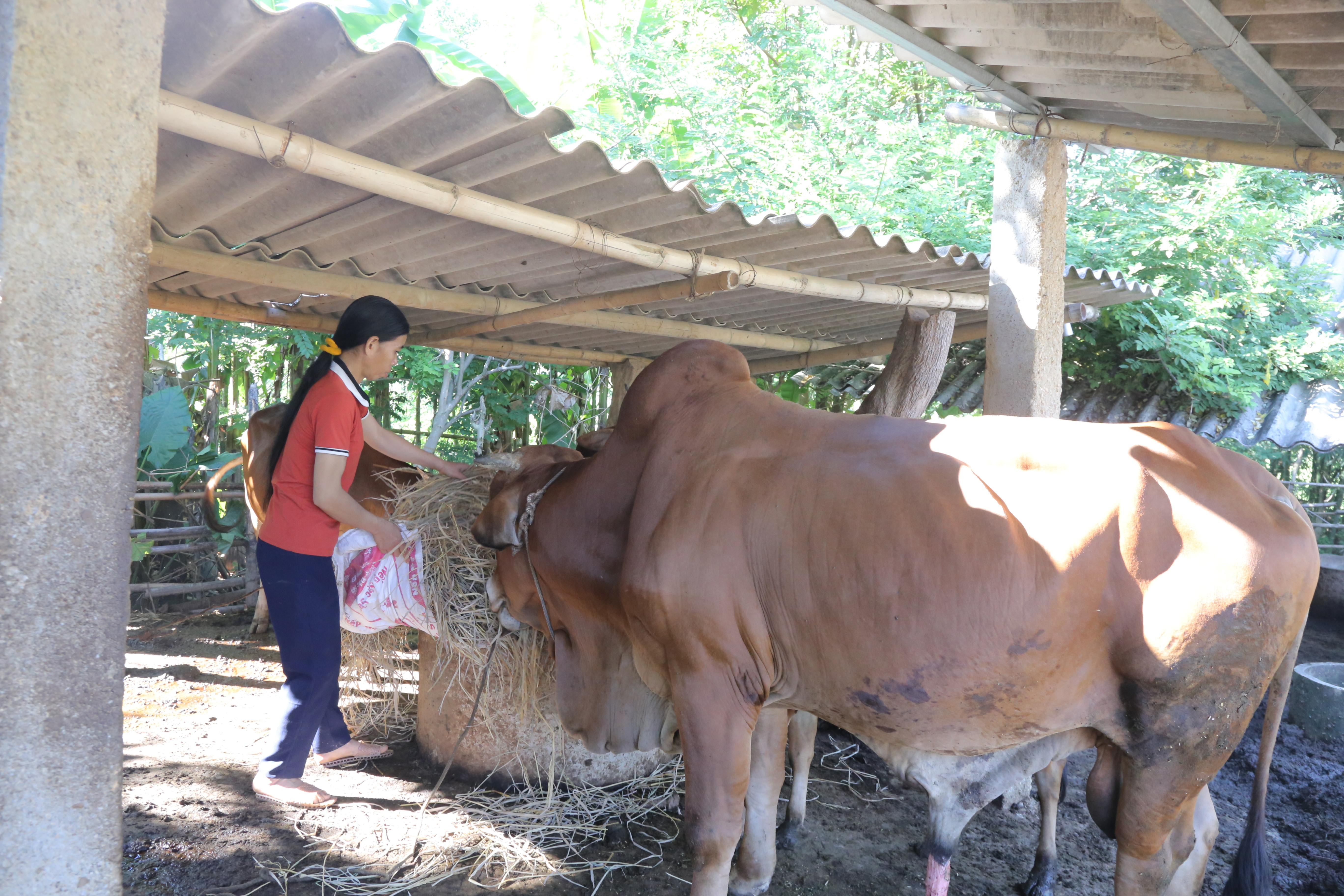 |
| Ms. Vi Thi Lien from Ke Trai village, Thach Ngan commune (Con Cuong district) invested in buffalo and cattle farming using a loan from the Policy Bank. Photo: Thu Huyen |
"The policy loan has helped my mother and me a lot. Life is still difficult, but with the support of the advisory group, I must try my best to escape poverty in the future."
Narrowing the gap between regions.
In supporting ethnic minority communities in their economic development and poverty reduction efforts, the Social Policy Bank branch in Nghe An has implemented numerous credit programs, with loan disbursements totaling hundreds of billions of VND.
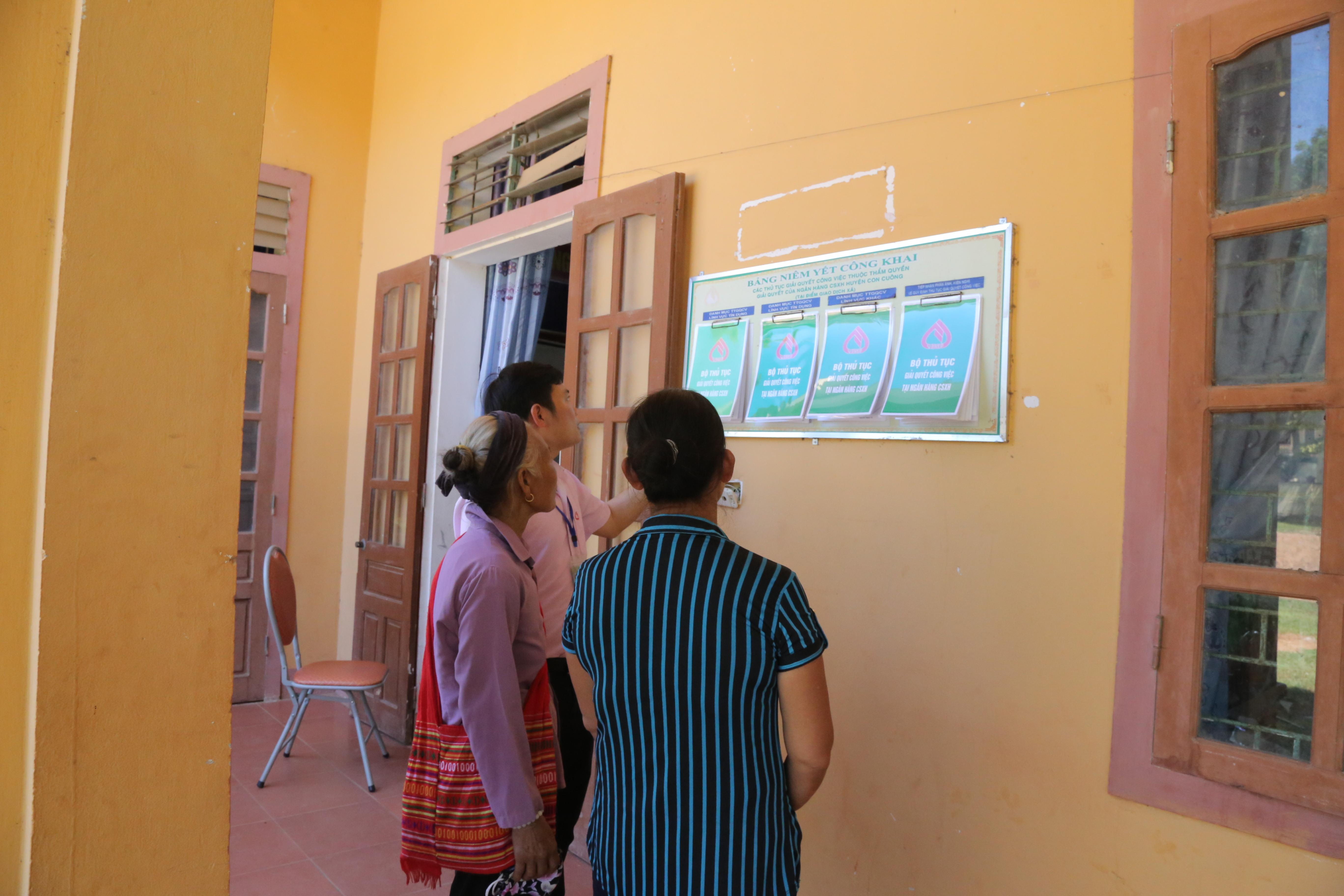 |
| Officials from the Con Cuong District Policy Bank guide local residents on how to apply for policy loans. Photo: Thu Huyen. |
Mr. Tran Khac Hung, Director of the Social Policy Bank of the province, said that in addition to credit serving production and business needs to create livelihoods and jobs, including loans for poor households, near-poor households, newly escaped poverty households, loans for production and business households in difficult areas, loans for job creation, etc., there are many programs serving the livelihoods of ethnic minorities.
These include: the socio-economic development loan program for ethnic minority and mountainous areas according to Decision No. 2085/2016/QD-TTg - a loan program serving poor ethnic minority households to borrow capital for production and business development with preferential interest rates equal to 50% of the interest rate for the poverty alleviation program, implemented by the branch office since 2018; the production development loan program for particularly disadvantaged ethnic minority households according to Decision No. 32/2007/QD-TTg dated March 5, 2007, and Decision No. 54/QD-TTg of the Prime Minister; the loan program for poor ethnic minority households with difficult living conditions according to Decision No. 755/2013/QD-TTg of the Prime Minister; and loans to support ethnic minorities in planting production forests and developing livestock farming according to Government Decree No. 75/2015/ND-CP. Loans are provided to support ethnic minority communities in accordance with Decision No. 2085/QD-TTg of the Prime Minister.
Western Nghe An province accounts for nearly 84% of the province's total area, encompassing 11 districts and towns; including 5 mountainous districts; and is primarily inhabited by ethnic minorities such as the Thai, Tho, Mong, O Du, and Kho Mu.
Policy-based capital has helped ethnic minorities in western Nghe An province develop production, increase income, and address fundamental and essential issues in their lives. Mr. Luong Van Khanh, Deputy Head of the Provincial Ethnic Affairs Committee, assessed that many households, previously hesitant to borrow, have now confidently borrowed capital and expanded effective business models, gradually improving their quality of life. Ethnic minorities have access to social policy credit to conduct business, create jobs, and gradually improve their production and business management skills, as well as their capital management abilities, enabling them to gradually escape poverty and become wealthy, contributing to preventing usurious lending in rural and ethnic minority areas.
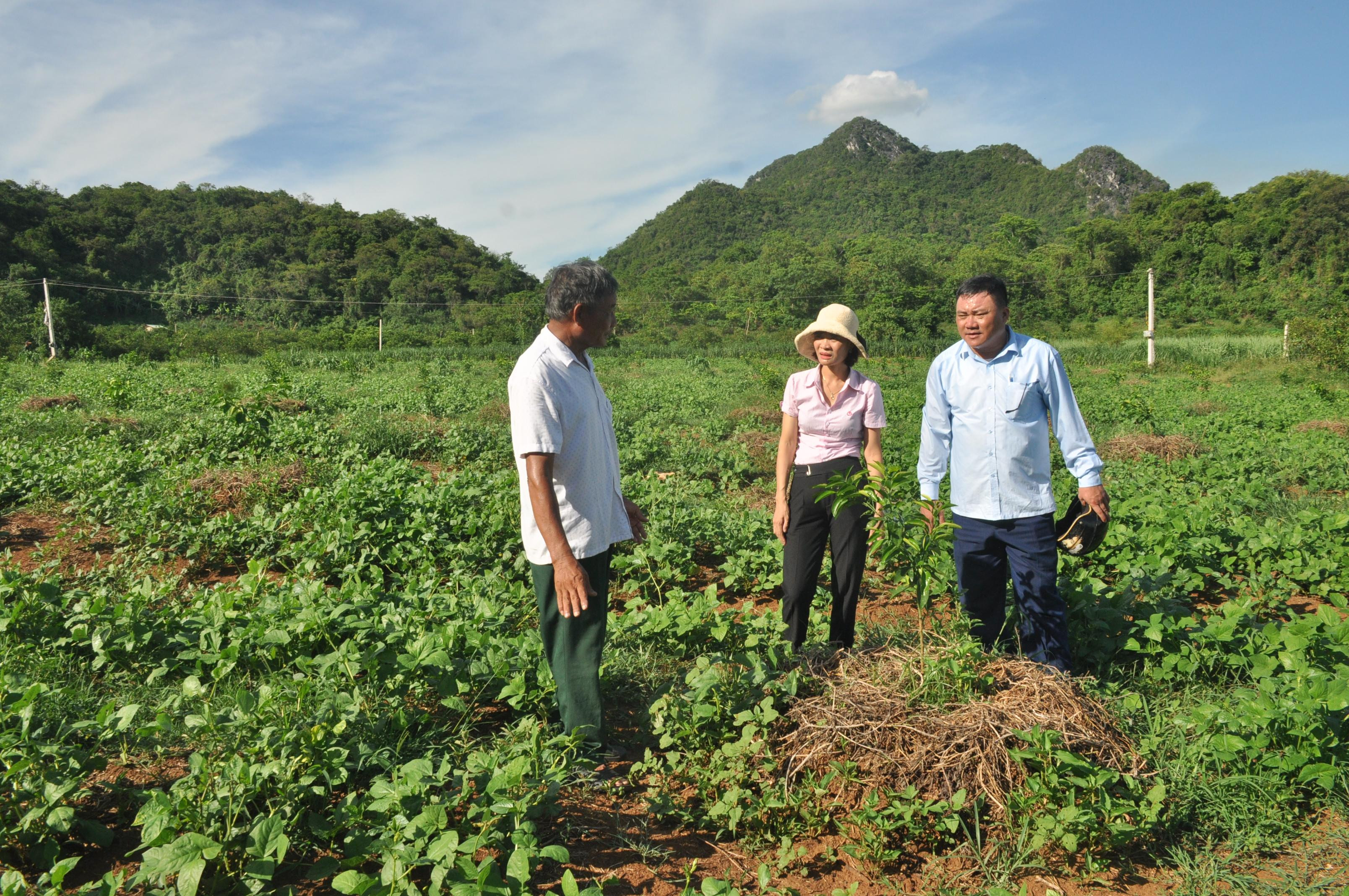 |
| Officials from the Policy Bank of Quy Hop district inspect a production model for households that have borrowed capital in the area. Photo: Thu Huyen. |
However, according to Decision No. 861/QD-TTg dated June 4, 2021, of the Prime Minister, Nghe An has 76 extremely difficult communes; by the end of 2021, nearly 8.18% (according to the poverty standard for the 2016-2020 period) were still in this category, higher than the national average; the mountainous districts alone accounted for 17.24%. In 2022, Nghe An was allocated 150 billion VND to implement the preferential credit program for ethnic minority and mountainous areas; however, to date, the districts have not yet announced the results of the approval of the list of beneficiaries. Therefore, localities need to coordinate and review the capital needs to complete the disbursement plan of this program in 2022.


