
Artists, celebrities, and community responsibility.
Throughout the past week, social media has been buzzing with the story of Hang Du Muc, Quang Linh Vlogs, and beauty queen Thuy Tien apologizing for livestreaming sales with false advertising.
From advertisements like "1 jar of bird's nest (70ml) contains up to 30g of A5 bird's nest" or "1 candy is equivalent to a plate of vegetables," it's clear that they have prioritized profit over the potential harm their misleading advertising can cause to society, especially when dealing with products related to human health. Sadly, most of these are artists and celebrities with significant influence who once enjoyed public favor due to their achievements and contributions..
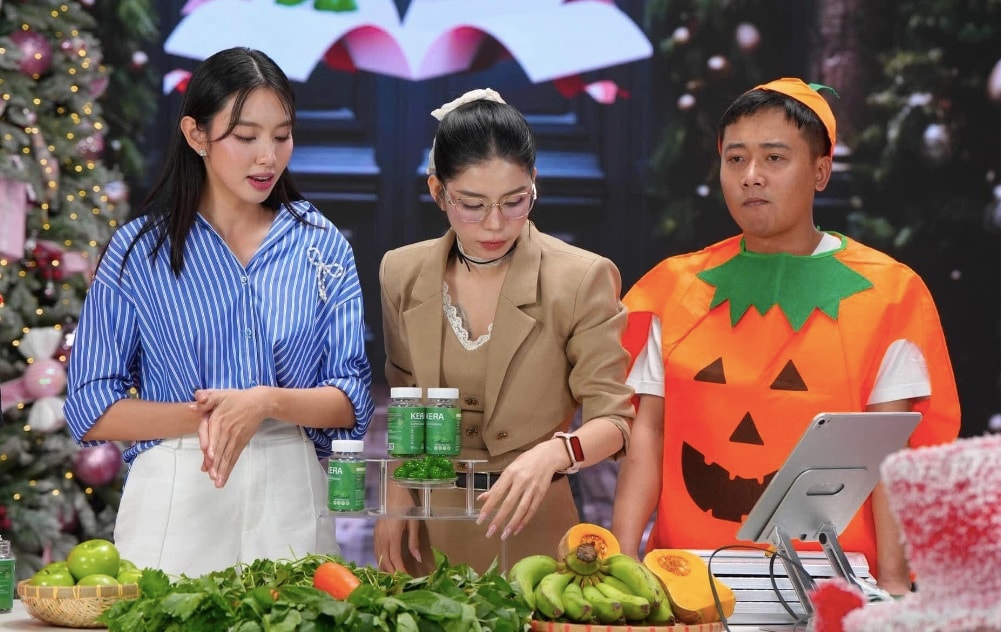
This is not the first time that KOLs (influencers) have appeared.The artist made a false advertisement and then apologized on social media.Previously, artists such as Cat Tuong, Quyen Linh, Hong Van, and beauty queen Mai Phuong Thuy all had to apologize when criticized by the community for exaggerating the benefits of certain types of milk and dietary supplements in advertisements.
After a period of "whitewashing," things went back to normal. Artists and KOLs resumed advertising and live-streaming sales on social media as if nothing had happened.
Therefore, when many famous artists recently simultaneously advertised products such as skin-whitening lozenges, "pure" bird's nest soup, or vegetable candies with exaggerated claims of miraculous effects, they immediately faced a backlash from the public when consumers discovered that the effects of these products were not as described by the artists and KOLs.
The consequences of token punishments.
The reality is that cases of KOLs or artists making false advertisements have historically resulted in administrative fines that are considered very light, compared to the hundreds of millions, or even billions of dong, they receive from advertising contracts with brands on social media. Therefore, this situation has continued to repeat itself for a long time.

Returning to the case of the Rot Sisters group, Quang Linh (owner of the Quang Linh Vlogs channel) and Hang Du Muc were once highly praised by the online community and had a large fan base. Nguyen Thuc Thuy Tien is also a beauty queen with many achievements and has won the favor of netizens. However, last week, all three were criticized by the online community for the controversy surrounding false advertising.
The vegetable candy product advertised by the Quang Linh and Hang Du Muc group has sparked intense controversy, particularly due to Quang Linh's exaggerated claim: "One candy is equivalent to a plate of vegetables." Hang Du Muc has also been repeatedly criticized for providing false information about the advertised products, such as bird's nest and eye-brightening candy.
Consumers exposed the product by releasing test results from the Quality Measurement and Testing Center 2 showing that 100g of candy contains only 0.51g of fiber. Meanwhile, 100g of water spinach already contains about 1.5g of fiber. Therefore, to obtain the same amount of fiber as 100g of water spinach, one would need to eat more than 300g of candy (approximately 90 pieces), equivalent to 3 boxes, costing 450,000 VND.
Images of Quang Linh's group experiencing the vegetable garden – the raw materials for producing vegetable candy – were also dug up by netizens and criticized. The vegetable candy was advertised as being produced at the ASIA LIFE factory, but a company representative stated that they do not have a farm or vegetable garden, only a production line. The controversial candy product was also produced "on order" for the Chi Em Rot Group Joint Stock Company…
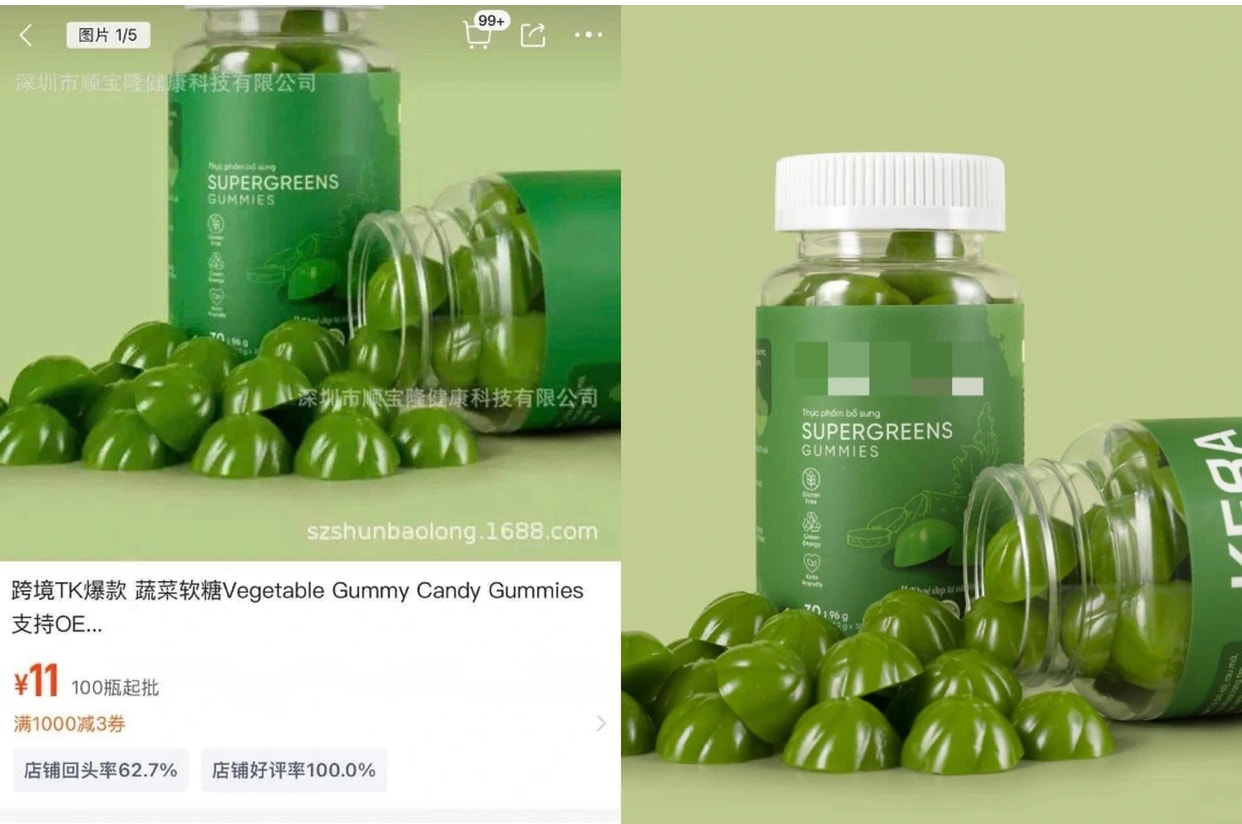
Someone discovered that images of vegetable candy products similar to the ones advertised by the "Sisters of the Rot" group appeared on the Chinese e-commerce platform 1688, but at a much cheaper price.
This information made netizens feel deceived, and they called for a boycott of Quang Linh and Hang Du Muc's "Sisterhood" group. Leaving aside the economic damage and loss of trust, the first thing directly affected is people's health if they consume products advertised in this way.
The more popular you are, the greater your responsibility to the community.
On social media, key opinion leaders (KOLs) often have millions of followers. Therefore, the content they post on these platforms has a very wide reach and significant influence. Their words and actions can even become trends, followed by many. While most consumers lack the time, knowledge, and experience to verify product quality, they largely rely on the reputation of the business, the brand, the endorsements of regulatory bodies, and the credibility of the celebrity who endorsed the product. Thus, celebrities play a crucial role in advertising and product sales, but they can also indirectly cause harm to consumers if products are advertised inaccurately, especially those that directly affect human health.
Vietnam has no shortage of regulations related to advertising, such as the Advertising Law, the Cybersecurity Law, and guiding decrees. False advertising can result in fines of tens of millions of dong, mandatory corrections, or even a ban from participating in advertising… However, violations do not decrease because the penalties are not strong enough to deter celebrities, as the value of advertising contracts they receive is much higher.
Therefore, public opinion suggests that the responsibilities of celebrities when advertising products should be clearly defined, and that false advertising and exaggeration of product benefits should be severely punished. It's not enough to just impose administrative fines or request the removal of infringing content; stronger measures are needed, ranging from banning artists and KOLs from broadcasting for repeated offenses to increasing criminal penalties for serious violations.
Advertising is a part of professional activity, providing a legitimate income for artists and celebrities. However, profit cannot be prioritized over professional ethics. An advertising contract can bring in a large income for an artist, but a single loss of trust can cost them everything. Therefore, artists and KOLs need to demonstrate their responsibility to the community before deciding to accept advertising for any product, especially those directly related to human health and life.


