
When people in positions of power show signs of corruption, the public knows immediately.
People interact with officials in positions of power every day and every hour, so if an official engages in corruption, the public will know immediately.
Combating corruption is one of the top priorities that the Government needs to focus on in order to meet the aspirations of the people as well as the requirements of national development.
After 10 years of implementing the Law on Prevention and Combat of Corruption, this work has achieved certain results: nationwide, 918 heads and deputy heads of agencies have been disciplined for negligence leading to corruption, including 118 criminal cases and 800 disciplinary cases.
To date, the rate of timely declaration of assets and income has reached 99.5%, and the rate of public disclosure has reached 98.3%. Over the past 10 years, more than 4,800 cases have been verified, and 17 individuals who made dishonest asset declarations have been identified and disciplined.
|
| Illustrative image. |
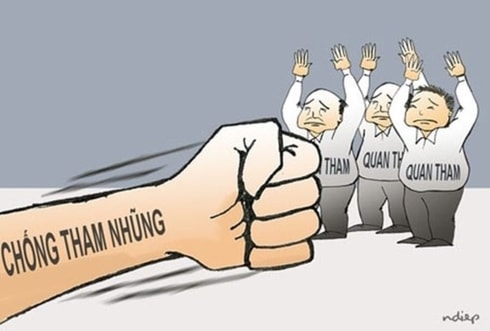
In 2018, corruption continued to be contained and showed a downward trend, while the building and improvement of institutions continued to be promoted. Administrative reform saw many positive changes, the state apparatus was increasingly strengthened and streamlined, and inspection, auditing, investigation, prosecution, and adjudication were enhanced.
The detection and handling of corruption have seen positive changes. Many serious and complex corruption and economic cases, causing significant losses of state assets, have been detected and dealt with strictly, consistently demonstrating the principle of "actions speak louder than words, there are no forbidden zones, no exceptions, regardless of who the person is," thereby continuing to create consensus in society, among Party members and the people.
Highly appreciating the anti-corruption work in the past period, Deputy Prime Minister Truong Hoa Binh - Deputy Head of the Central Steering Committee on Anti-Corruption - directed all levels, sectors, and localities from the central to local levels to continue to promote the strengths and positive results achieved, while resolutely and determinedly overcoming limitations and weaknesses, especially those related to the responsibility of directing and organizing implementation, reviewing and evaluating, and accelerating the development and improvement of legal mechanisms and policies to overcome loopholes in socio-economic management, especially in areas prone to corruption.
“Ministries, sectors, and localities, according to their assigned functions and powers, must accelerate the review and improvement of mechanisms, policies, and laws, and overcome loopholes in socio-economic management. Competent agencies must urgently research and develop a comprehensive anti-corruption legal system with strict sanctions, leaving no forbidden zones and excluding no one,” directed Deputy Prime Minister Truong Hoa Binh.
The fight against corruption will be highly effective if all Party members and officials, especially those in leadership positions, set a good example, demonstrate high levels of self-awareness and unity in will and action, are not afraid of losing prestige or admitting mistakes, and are transparent so that the people know, support, and monitor them.
According to Lawyer Nguyen Van Hau, Vice President of the Ho Chi Minh City Bar Association, emphasizing the responsibility of leaders goes hand in hand with strengthening the effectiveness of anti-corruption efforts. "Recently, the Party has addressed negative phenomena, embezzlement, and corruption in many resolutions; therefore, we must be more determined, resolute, and decisive. When subordinates make mistakes, the leader must bear responsibility," the lawyer shared.
Another issue that has been frequently reported in the media and has caused frustration among citizens and businesses is the practice of lobbying and favoritism when dealing with government agencies to resolve matters.
This situation necessitates that the government further accelerate administrative reforms and promote the implementation of e-government. Only when the procedures related to citizens and businesses are improved, simplified, and made more transparent will the risk of citizens being harassed or subjected to excessive demands be reduced.
Therefore, this is one of the solutions that the government needs to pay special attention to in the coming period.
|
| Mr. Hoang Ngoc Giao. Photo: Tuoi Tre newspaper. |
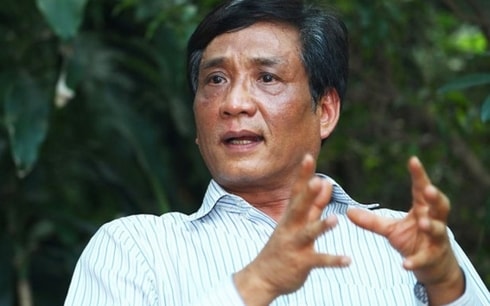
Dr. Hoang Ngoc Giao, Director of the Institute for Policy, Law and Development Research (under the Vietnam Union of Science and Technology Associations), believes that administrative reform is a breakthrough step to promote socio-economic development and is an important factor contributing to the fight against corruption in order to build a clean and strong state.
“Administrative reform is very important, but the issue is how responsible officials are in handling work thoroughly, especially the procedures for issuing administrative decisions... It is the issuance of such regulations that creates conditions for executive officials to arbitrarily abuse their power, issue privileges incorrectly, issue documents with incorrect content, and even issue documents that violate the law,” said Dr. Hoang Ngoc Giao.
The key point in the fight against corruption, as affirmed by experts, is that all solutions must be subject to public scrutiny and based on the people's support.
Mr. Dinh Van Minh, Director of the Institute of Inspection Science (Government Inspectorate), believes that effectively implementing grassroots democracy, allowing citizens to know, discuss, participate, and monitor, along with organizing effective citizen reception, establishing suggestion boxes and hotlines to receive feedback and handle complaints about corruption, are all measures to encourage citizens to actively participate in this work.
“More than anyone else, the people have daily and hourly contact with public authorities, so they immediately know about acts and manifestations of corruption. Another way that state agencies lack is for the people to monitor Party members and officials in their living quarters. Because the people live and eat together, they can immediately detect abnormal behavior, rapid enrichment, or moral decay of officials and report it through very effective channels. In fact, many major corruption cases have started from denunciations by the people. Of course, the denunciations by the people are initial information, but they are often extremely valuable,” said Mr. Dinh Van Minh.
Hopefully, with the resolute leadership of the Prime Minister and the strong involvement of the entire government system, our country will truly have an honest government, a public administration that says no to corruption, wholeheartedly serves the people, and creates momentum for the country's reform and development process.


