
Journalists play a key role in shaping information on social media.
"Regardless of your capacity, disseminating prohibited information is a violation of the law. Information and documents classified as state secrets, whether shared by a Facebook user or a journalist, are equally subject to legal responsibility."
That was the response of Deputy Minister of Information and Communications Truong Minh Tuan to a reporter's question about how to handle the current "flow" of information in the press and on social media.
With the responsibility of managing state information and the press, do you feel overwhelmed by the multifaceted information landscape today? Besides the information in reputable, publicly known publications, there is also a massive amount of information on social media, and it seems that this torrent of information on social media is increasingly captivating readers.
Deputy Minister Truong Minh Tuan:Vietnam is one of the Asian countries with a rapid internet development rate. The internet environment brings many benefits to society, especially information. This is also an inevitable trend in the media industry. However, alongside the conveniences that the internet brings, the risks and negative impacts from the internet are present and very diverse. Common problems related to information on the internet have been identified as copyright infringement, invasion of privacy, defamation, disguised advertising, image manipulation, corrections, and hyperlinks to external networks.
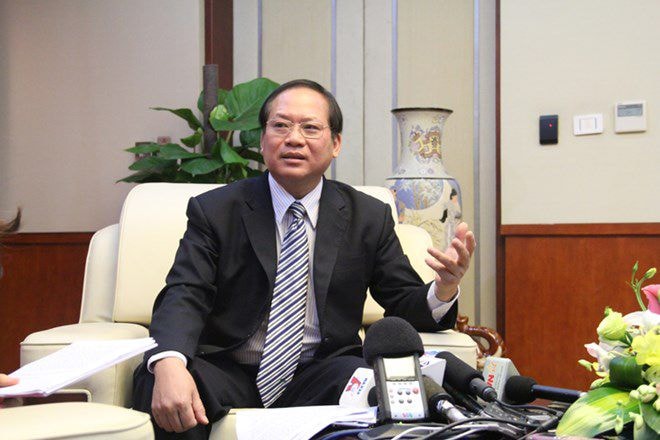 |
| Deputy Minister Truong Minh Tuan answers questions from news agencies and the press. Photo: MIC |
The threat of cyber espionage has become complex and dangerous. Attacks that paralyze or take control of websites are very serious. We also see the evident risk of using the internet to spread fabricated, unverified, and unreliable information to slander and defame individuals, organizations, and brands; to sow seeds of terrorism and sabotage. Unfortunately, this information is often read, shared, and spread, causing negative effects and consequences in society.
The current problem with information on social media in Vietnam stems from lax laws and poor legal awareness among social media users. As the state agency responsible for media management, the Ministry of Information and Communications is actively developing and adjusting policies to minimize the harm caused by the negative aspects of the Internet while creating conditions for a healthier Internet environment.
On a narrower scale, just on social media, this information highway flows relentlessly, touching every aspect of life, and sometimes, just one "slip-up" and the reader will be swept away by its stream of information, regardless of whether it's true or false, truthful or fabricated...
Deputy Minister Truong Minh Tuan:Essentially, information on social media can create a "butterfly effect." However, it's also important to remember that the internet is a very verifiable environment. A smart reader will equip themselves with the skills to search for and gather information effectively. I believe fabricated information will be exposed immediately!
Is there no way to stop the flow of information on social media and filter it for the community using legitimate information from the press?
Deputy Minister Truong Minh Tuan:Why should we block the flow of information on social media? Social media aims to facilitate communication and information sharing across geographical boundaries, build an online identity to serve common public needs and community values… We respect established values that are recognized by the community. Therefore, positive values should be strongly promoted, while negative impacts from online media must be eliminated or limited. Mainstream journalism is an important, accurate, and responsible source of information. However, using mainstream journalism to combat the majority of inaccurate information on social media is not a fundamental solution. We must correct misinformation that negatively impacts individuals, organizations, and communities… within the framework of law and ethics.
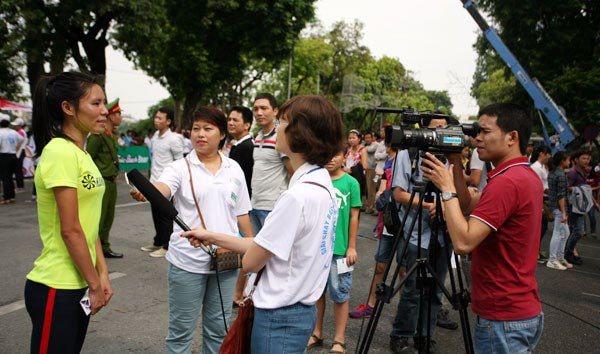 |
| Reporters from newspapers and television stations at work. Source: Hanoi Moi |
Let's be frank about this: the biggest challenge for mainstream journalism is that not every piece of news can be published, whether for national interest, state secrets, or international diplomatic purposes. Meanwhile, social media is free to publish whatever it wants; in fact, news that mainstream media restricts becomes even more heated on social media, leading to speculation, rumors, and the manipulation of readers.
Deputy Minister Truong Minh Tuan:Anything stipulated in the law must be followed. What the law prohibits must not be done. Press agencies or social media platforms, journalists or netizens alike, are entitled to equal access to information. As I said, our laws are not strict enough, social media users have poor awareness of the law, and their sense of responsibility to the community is low, leading to information conflicts between press agencies and social media. Regardless of your capacity, if you disseminate prohibited information, you are violating the law. For information and documents classified as state secrets, a Facebook user or a journalist who publishes such information must bear equal legal responsibility.
Along with the press, organizing information on Facebook pages or blogs of reputable intellectuals to attract transparent information is certainly another way to orient readers. Of course, no one forces them to present information in a certain way, but surely, given their name, social prestige, and intellectual integrity, they know what information needs to be conveyed and how.
Deputy Minister Truong Minh Tuan:On social media, people have the right to choose what to read, how to write it, and what information to share, whether to believe it or not. Good information spreads very quickly, but misinformation and bad information also spread terribly. Therefore, it is essential for individuals with social credibility and community influence to use social media to provide information, comment, and verify information in order to build a decent information society.
Personally, I also encourage everyone to use social media, especially journalists. It's a useful information channel for the profession. More fundamentally, journalists are people who understand the law, have professional reporting skills, and a sense of responsibility to the community. The tens of thousands of social media accounts of journalists today also constitute a useful community that plays a role in guiding information.
Participating in social media is a personal matter; it is not prohibited by law, nor is it prevented by state authorities. However, currently, with the law not yet fully developed to keep pace with the reality of social media growth, the issue of responsibility and social awareness is something that participants need to further enhance with a constructive spirit.
Thank you, Mr. Deputy Minister!
According to Infonet


